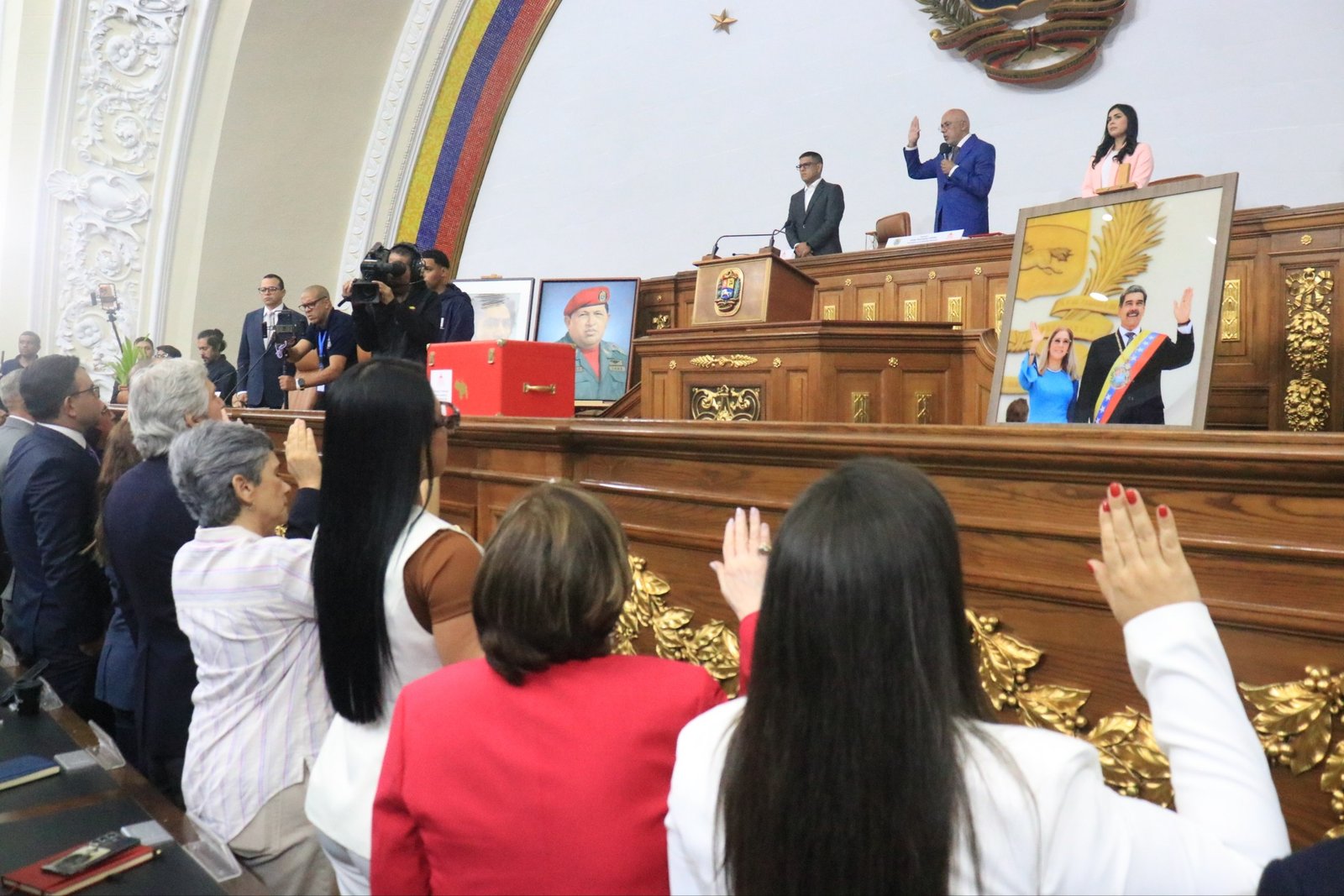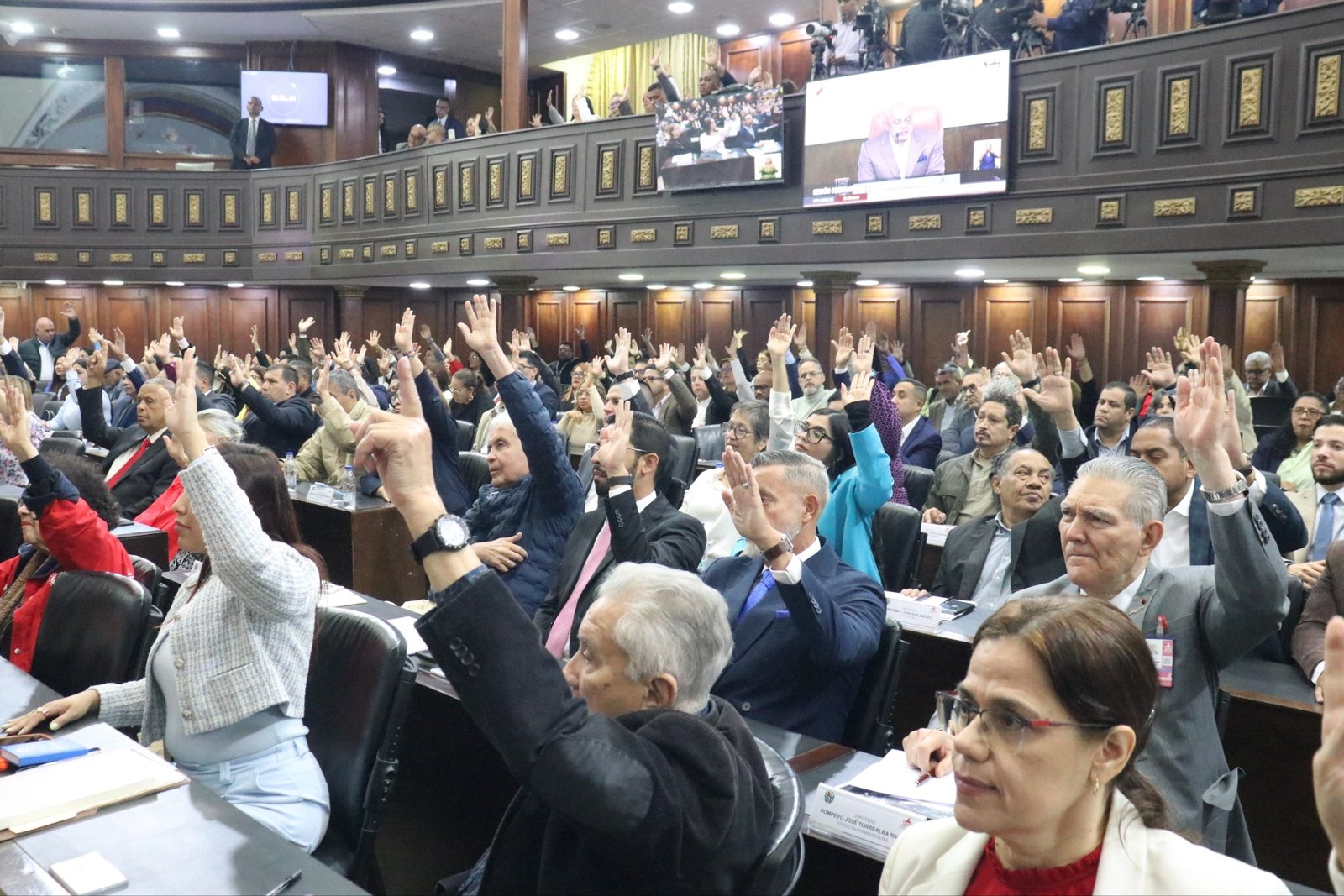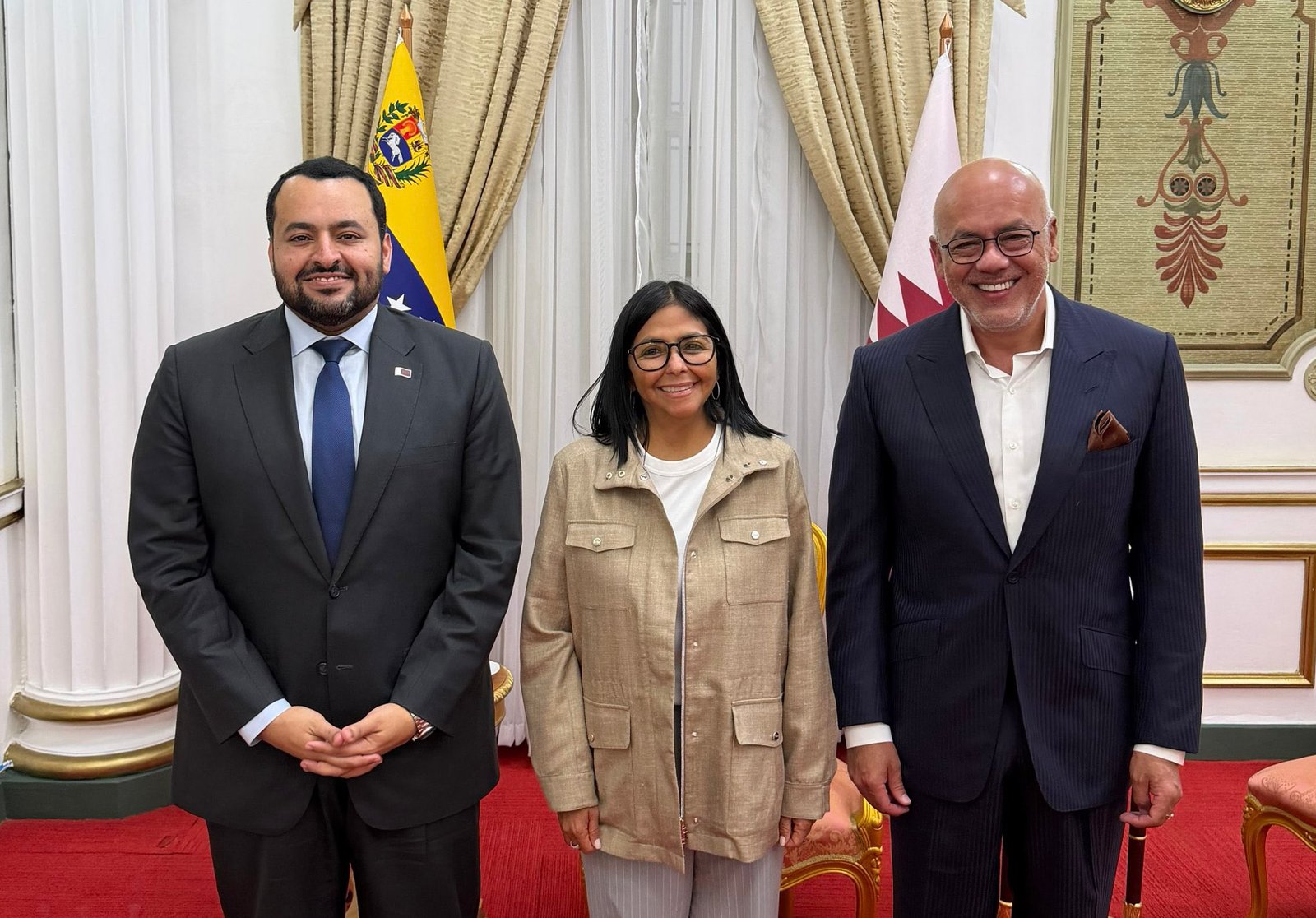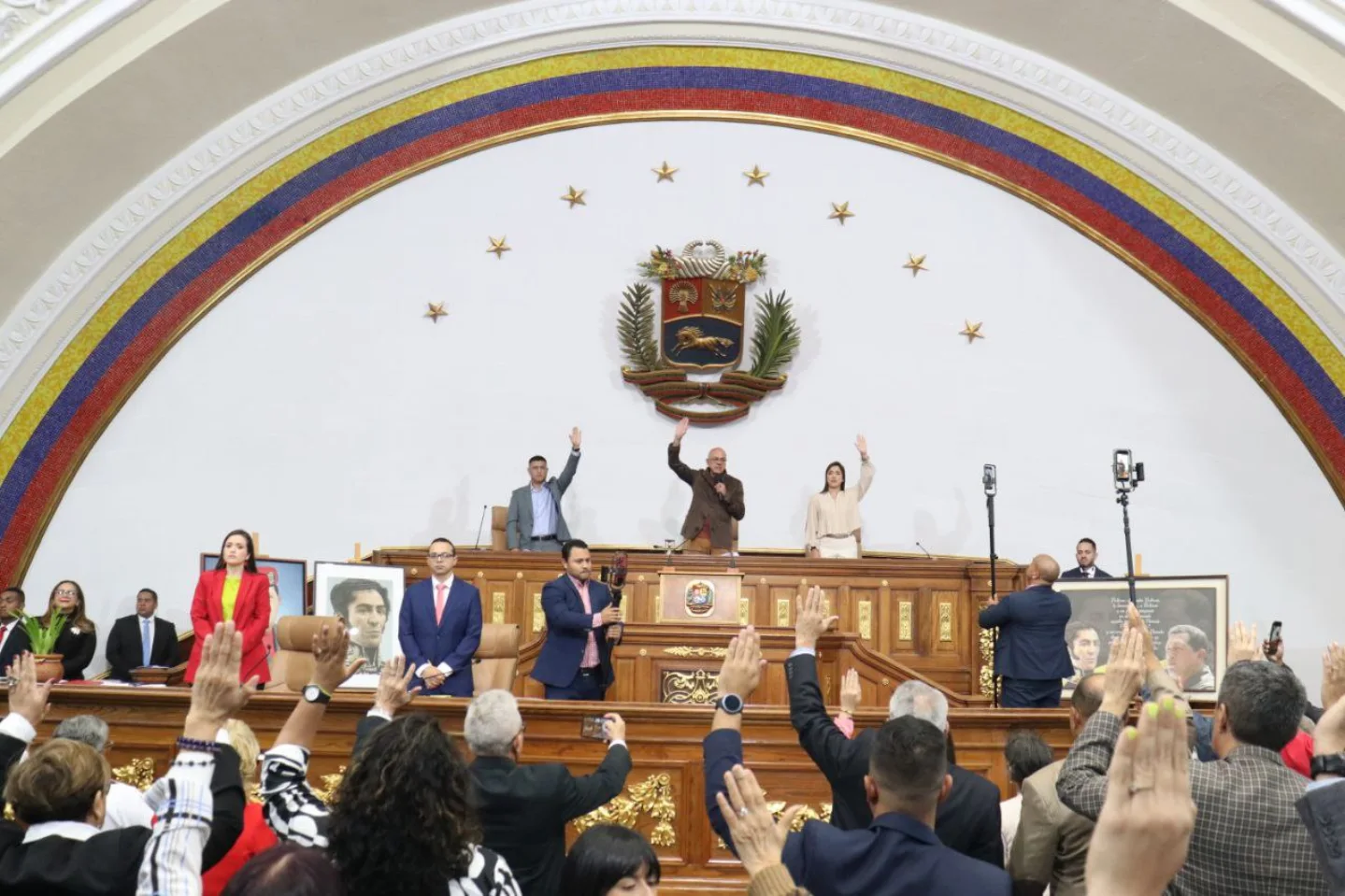
Venezuela’s National Assembly votes to exit the International Criminal Court on December 12, 2025. Photo: Asamblea Nacional.
Guacamaya, December 12, 2025. The National Assembly approved unanimously this Thursday the Law for Palestine and Humanity and the Law Repealing the Rome Statute, a step that initiates the formal process to withdraw the country from the International Criminal Court. The document was sent immediately to the Executive Branch for evaluation and diplomatic execution.
The initiative, presented by Deputy Roy Daza, formalizes the beginning of a process that could culminate in Venezuela’s withdrawal from the Rome Statute. The president of the AN, Jorge Rodríguez, ordered the text to be sent immediately to the Executive Branch, recalling that it is the responsibility of the national Government to carry out the diplomatic procedures to advance towards the eventual denunciation of the treaty.
The decision comes after more than two decades of relationship with the ICC’s founding treaty. Venezuela signed it in 1998 and ratified it in the year 2000, integrating into the Court since its inception. Although it initially supported its mission against the most serious crimes, the relationship began to strain starting in 2017, when the Prosecutor’s Office opened a preliminary examination for alleged crimes against humanity in the country. Since then, the official position has experienced a shift culminating in this legislative initiative.
A change that touches the heart of the Venezuelan legal order
Until now, the Rome Statute was part of Venezuela’s constitutional framework. The 1999 Constitution established in its Article 23 that human rights treaties ratified by the country—like this founding treaty of the ICC—have constitutional hierarchy and prevail over internal law when they offer greater guarantees to individuals. With the ratification of the Statute in the year 2000, Venezuela fully incorporated its norms into the legal system, under that superior rank.
The legislative decision of December 2025 does not immediately eliminate that relationship. What the Assembly approved was the repeal of the internal law that endorsed adherence to the Statute, a necessary step to activate the withdrawal process, but one that does not equate to the international denunciation of the treaty. For Venezuela to formally cease being a State Party, the Executive must notify its decision to the United Nations. Only after that communication does a one-year period begin for the exit to take effect.
Other points on the parliamentary agenda
Parallel to the debate on the ICC, the Assembly also approved the budget of the Central Bank of Venezuela (BCV) for 2026, which contemplates more than 35 trillion bolivars in income and more than 114 trillion in operational expenses. The expenditure distribution allocates 38% for current expenses, 11.45% for capital investments, 18.16% for staff social security, 30.7% for strategic projects—including technological modernization—and nearly 2% for adjustments.
Parliament also gave its approval to the budget for its own operation during the 2026 fiscal year, a figure exceeding 700 trillion bolivars.