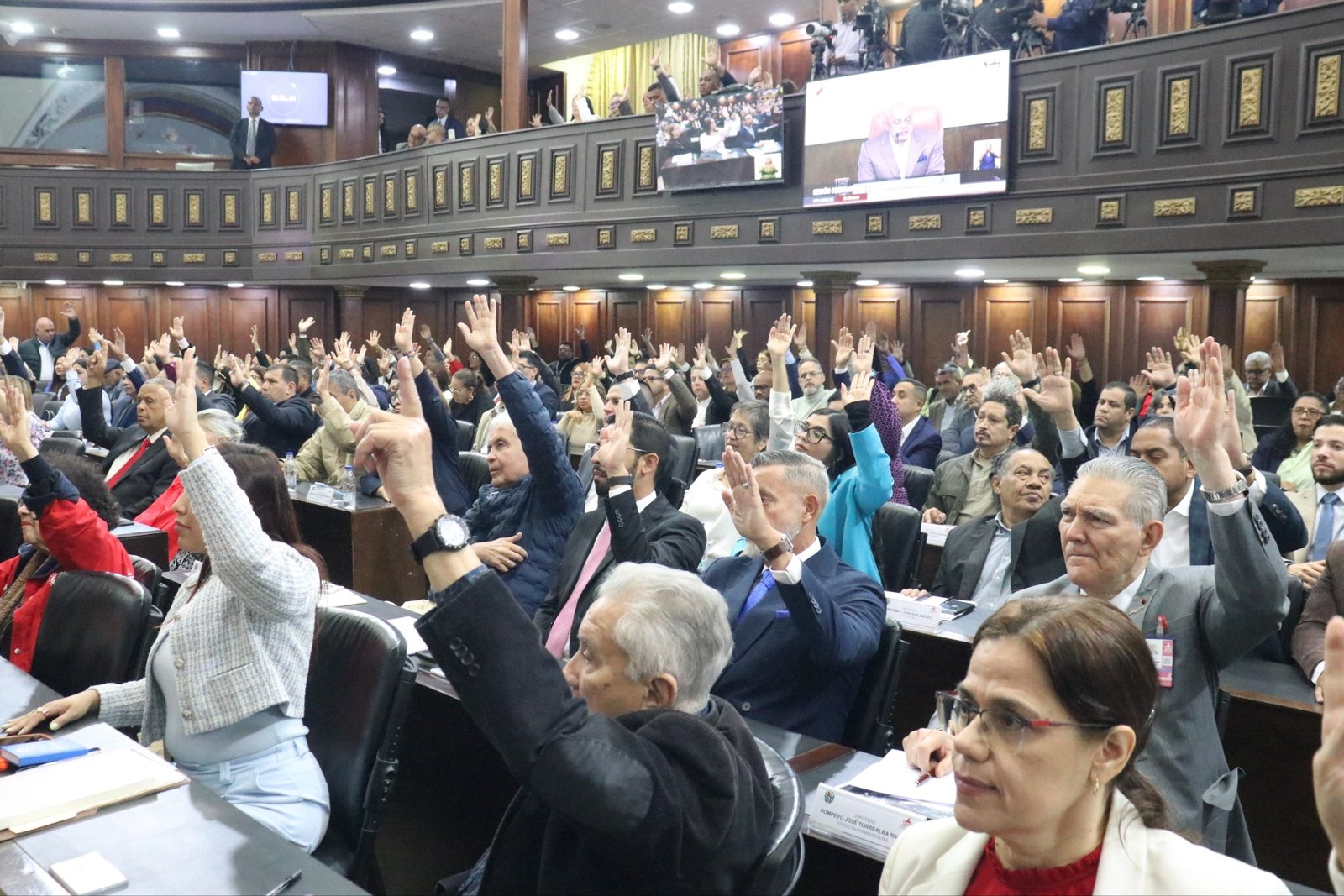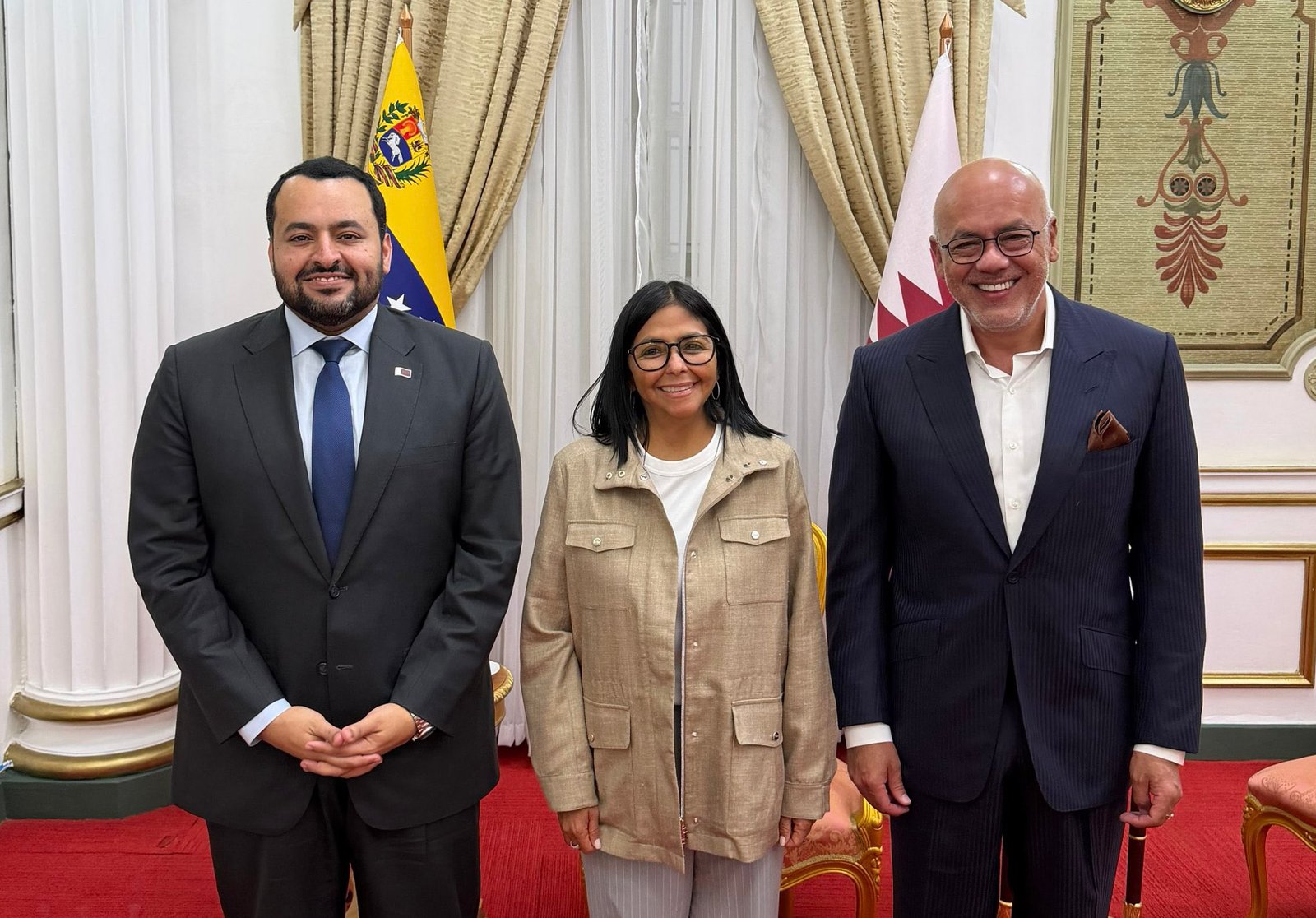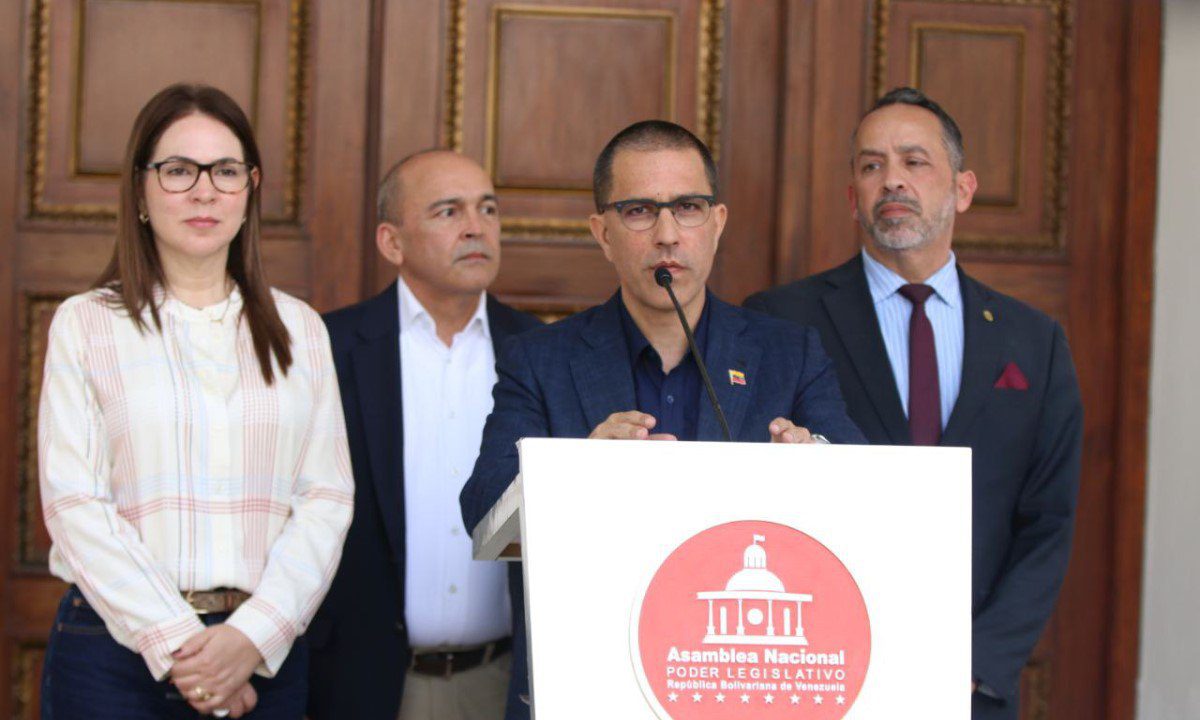
During the presentation of the report, the president of the Commission in charge of monitoring the law, Jorge Arreaza, appeared accompanied only by pro‑government members of the parliamentary body. Photo: Venezolana de Televisión.
Guacamaya, February 24, 2026. The Special Commission for Monitoring the Amnesty Law for Democratic Coexistence shared on Wednesday afternoon a summary of the progress made in implementing this legal instrument since its approval. On paper, the measure has been executed at a dizzying pace, but it leaves open deeper questions about its real scope, its political use, and the role of judges amid the reconfiguration of state institutions.
From the Federal Legislative Palace, the parliamentary body—headed by Deputy Jorge Arreaza—reported that 4,203 applications for amnesty have been received, all deemed admissible. The data is based on reports from the Supreme Court of Justice, validated in turn by the Ministry of Penitentiary Services, according to the document.
In total, 3,231 people have been granted full freedom. Regarding the status of those eligible, 179 people remained deprived of liberty, while 3,052 were under precautionary measures. Another 964 cases were still under review at the time of the report, and 8 were definitively rejected, despite all applications being considered procedurally valid.
Arreaza framed this rollout within a prior political consensus. He recalled that “the Amnesty Law was approved unanimously by the National Assembly on February 19 and entered into force upon its publication in the Official Gazette.” Since then, he emphasized, the Commission has received multiple requests and has worked “to respond in the shortest possible time.”
The distribution suggests that the process has been massive, fast, and guided more by administrative logic than by judicial reasoning. In this sense, the priority appears to be processing and counting applications rather than ensuring transparency in criteria or discussing proportionality. Arreaza stressed that the implementation of the law “seeks to advance democratic coexistence and national reconciliation.”
However, the deputy explained that certain crimes are excluded from the benefit—such as intentional homicide and armed conspiracies against the State—and that “applicants must still file their request before the corresponding courts.” Regarding military jurisdiction, he noted: “Military justice has its own codes, oath, and procedures. Some cases are also under review.”
Warnings About Judges and Demands for Greater Speed
The dynamics of the law’s implementation have raised alarms within the opposition, particularly in the Libertad parliamentary faction, which has demanded greater speed from judges and prosecutors. It is worth noting that the Public Prosecutor’s Office and the Public Defender’s Office account for most amnesty applications, though private defense attorneys and other entities may also file them.
Deputy Antonio Ecarri was blunt about an operation still being coordinated by the highest levels of the State. “We will not allow the judges of this country to do whatever they want. We have already raised—thanks to complaints from the National Journalists’ Association and the National Press Workers’ Union—that the anti‑terrorism judges did not work today,” he said.
Ecarri called for oversight and evaluation of the Judicial Branch and the Citizen Branch. “Any judge who does not comply with the amnesty law is a judge we will request to be investigated. The same goes for prosecutors in the Public Prosecutor’s Office,” he added. He also noted that 2,104 cases have already been identified as eligible for amnesty because “the law is already in force.”
Deputy Stalin González urged the relevant institutions to act swiftly. “Amnesty is not an ornament or a headline: it is a key piece of a broader process to rebuild the country. For it to work, all parties must show willingness to contribute to democratic coexistence and justice,” he said on X.
The report, however, presents figures without explaining criteria or detailing the types of acts being amnestied, making independent evaluation difficult. González also sent a message of hope to those awaiting the benefit: “My solidarity with the families of detainees and those who have applied for amnesty. You are not alone. We will continue demanding that the law be enforced quickly and transparently.”
Caracas as the Epicenter of the Amnesty
The territorial dimension of the report reveals another conclusion worth analyzing: in practice, the amnesty is a Caracas‑centered phenomenon. Of the 179 effective releases nationwide, 135 correspond to the Capital District, and of the 3,052 precautionary measures, 2,780 were also concentrated in the capital.
Amazonas, Bolívar, Delta Amacuro, Mérida, Sucre, among others, appear with zero beneficiaries—whether releases or precautionary measures. This suggests either very few politically related cases in those regions or that mechanisms for filing, information, and legal representation have not been activated uniformly across the country.
More than a “natural” reflection of political conflict in the capital, this overrepresentation can be explained by a structural reason: in recent years, many cases related to protests, political persecution, and associated offenses have been centralized in courts and prosecutors’ offices based in Caracas—even when the events occurred in other states.
Many victims and their families come from very different regional realities and continue to face barriers to accessing justice in their own territories. This not only positions Caracas as the epicenter of political conflict but also of judicial conflict. Still, this does not settle the question of whether the promise of “democratic coexistence” is being applied where the political cost is highest.
As a political instrument, the Amnesty Law offers the government and the National Assembly a narrative and a space for openness and reconciliation. Monitoring not only the numbers but also the doubts and opacity along the way will be crucial to determining whether it becomes a true turning point for democratic coexistence.
How an Amnesty Request Is Processed
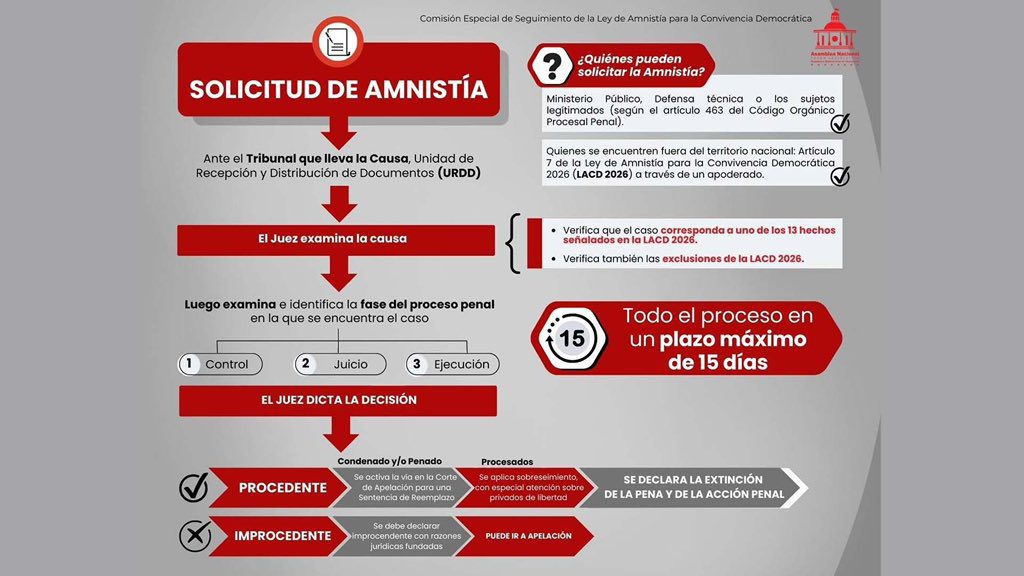
Initially, the Public Prosecutor’s Office, the defense attorney, or any party legally authorized under Article 463 of the Organic Code of Criminal Procedure may formally request amnesty for the beneficiary. For those outside the country, the request may be filed through a legal representative, according to Article 7 of the 2026 Amnesty Law.
The process begins when the request is submitted to the court handling the case or to the Document Reception and Distribution Unit (URDD). The judge then examines the file and determines the stage of the criminal process: control, trial, or execution.
If the judge’s decision is favorable, two routes apply:
- For convicted individuals, the case is sent to the Court of Appeals for a replacement sentence.
- For defendants, the judge issues a dismissal, which results in their release.
In both cases, the penalty and criminal action are extinguished.
If the decision is unfavorable, the judge must provide legal grounds, and the decision may be appealed.