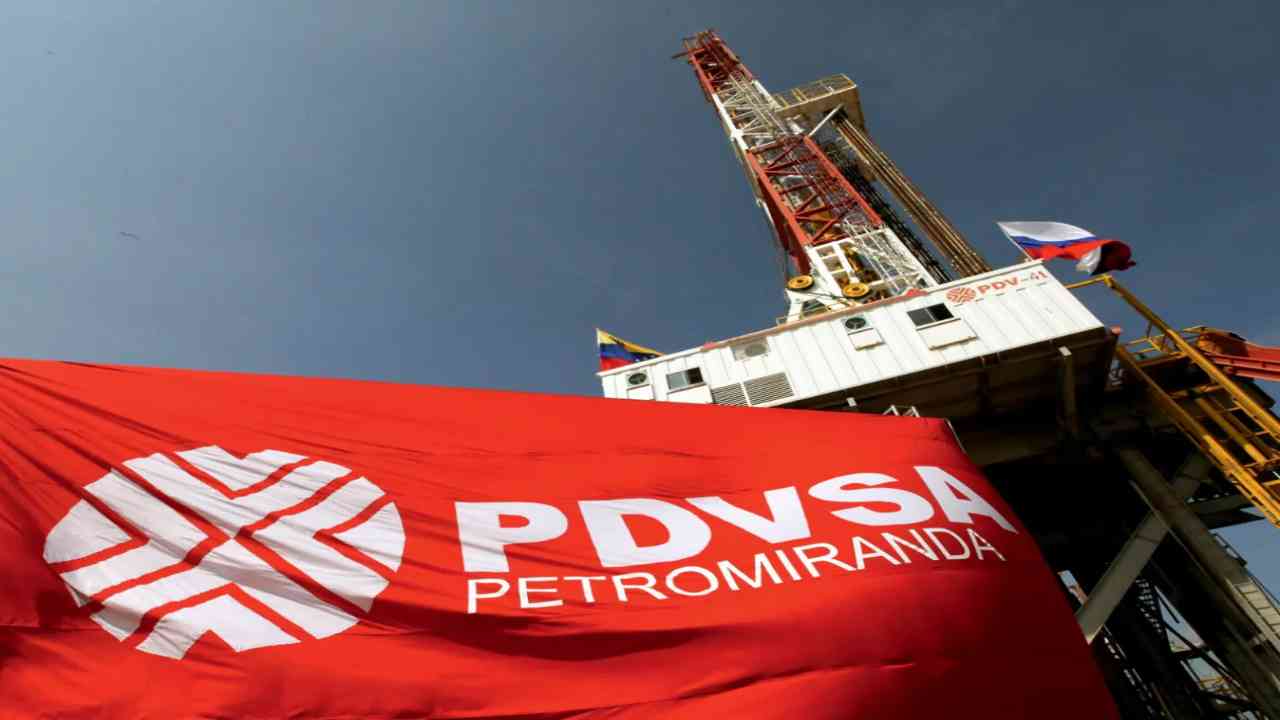
Citgo is the crown jewel of PDVSA’s foreign assets: it has the seventh-largest refining network in the United States and thousands of service stations through its franchise. Photo: Tyler A. McNeil.
Guacamaya, March 17, 2026. The state-owned oil company PDVSA has once again reorganized the leadership of its subsidiaries in the United States, reaffirming Asdrúbal Chávez Jiménez as the head of PDV Holding and its subsidiary Citgo, amid the complex political, legal, and economic crossroads that Venezuela is facing.
This move comes as the refiner, key to both the Venezuelan economy and the U.S. energy system, remains caught up in an auction process generated by legal disputes with Venezuela’s international creditors.
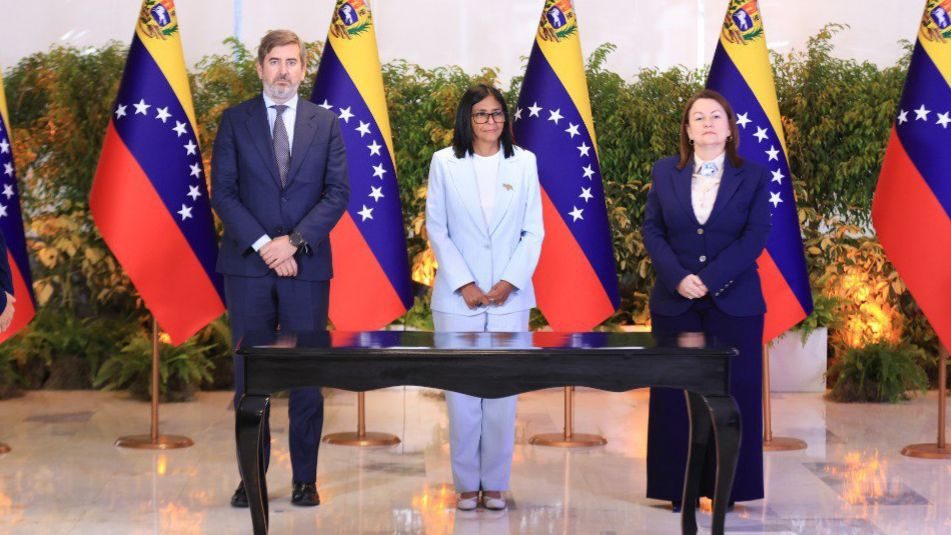
The decision also comes shortly after the Trump administration reaffirmed its recognition of Delcy Rodríguez as the “sole Head of State” of Venezuela, thus beginning to break seven years of the representation crisis of the country’s Government: PDV Holding is in the hands of the board of directors of the “PDVSA Ad Hoc,” appointed by the self-proclaimed 2015 National Assembly.
The situation reflects how Citgo, more than a corporate asset, has become a strategic instrument at the intersection of politics, sanctions, and energy security.
A New Move in the Leadership of the Subsidiaries
The state-owned Petróleos de Venezuela S.A. (PDVSA) ratified Asdrúbal Chávez Jiménez as president of its main subsidiaries in the United States — PDV Holding, Citgo Holding Inc., and Citgo Petroleum Corp. — in a decision aimed at consolidating operational and strategic control over its foreign assets.
As part of this restructuring, Nelson José Ferrer Sánchez, Alejandro José Escarrá Gil, and Ricardo Javier Gómez Rincón were also incorporated as new directors, thus strengthening the directive structure of the subsidiaries.
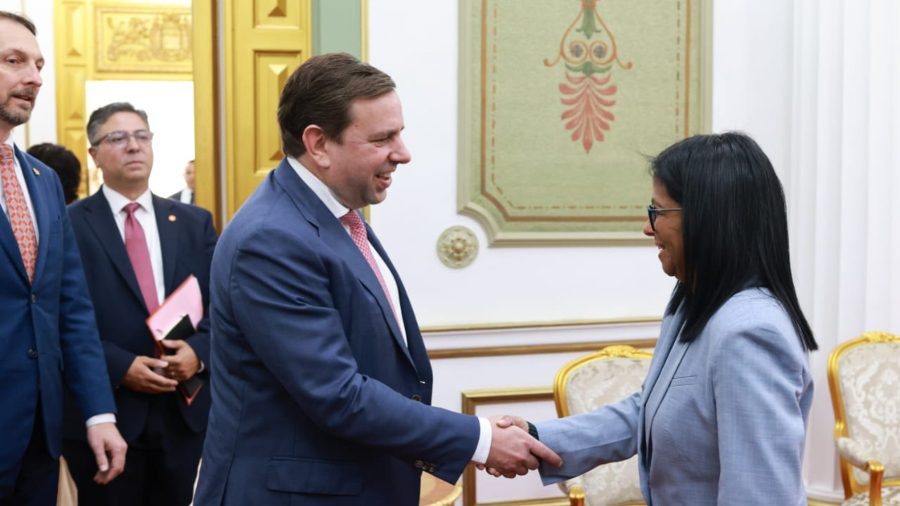
Chávez’s return coincides with a key moment in the political-legal arena in the United States. The U.S. Department of Justice and the U.S. Department of State recently filed a communication with a federal court in New York that validates Delcy Rodríguez’s representation in matters related to Venezuelan assets abroad, including Citgo.
History and Geopolitical Relevance of Citgo
Citgo Petroleum Corp. traces its origins back to 1910 under the name Cities Service, evolving over time to become a key player in fuel refining and distribution in the United States.
Its incorporation into the Venezuelan framework occurred in two phases: in 1986, Petróleos de Venezuela S.A. acquired 50% of the company, and in 1990 it completed the total purchase. This strategy responded to the need to secure markets for Venezuelan crude oil in the world’s largest energy consumer, also allowing value capture throughout the entire chain, from production to distribution.
Over time, Citgo consolidated itself as a relevant player in the U.S. energy system, with key refineries in Texas, Louisiana, and Illinois, as well as an extensive infrastructure and marketing network. For Venezuela, it has been a strategic asset for generating income and securing a presence in the U.S. market; for the United States, it represents an important piece in its refining capacity, especially for heavy crude oils.
Citgo under the “Ad Hoc” Board: “Interim Government” and “2015 National Assembly”
Citgo’s situation changed dramatically in 2019, following international recognition of the interim government led by Juan Guaidó and the U.S. non-recognition of Nicolás Maduro.
In this context, the U.S. Department of the Treasury blocked the Maduro government’s access to assets on U.S. soil, allowing them to be administered by representatives appointed by the 2015 National Assembly.
This led to the formation of the “Ad Hoc Administrative Board” of PDVSA, which took control of PDV Holding and, by extension, of Citgo. Its primary objective was to preserve the asset from international creditors and ensure the company’s operational continuity.
During this period, Citgo became a central front in legal disputes, facing claims from companies and debt holders seeking to seize Venezuelan assets abroad.
However, the legitimacy and sustainability of this scheme always depended on international political recognition. As that support eroded and Washington changed its stance, a new scenario opened up in which control of Citgo once again came into dispute, marking the transition to the current situation.
Over time, the “Ad Hoc” board received strong criticism from other political sectors, even within the opposition, for lack of transparency.
Creditors and the Constant Threat over Citgo
Citgo has been the main target for international creditors seeking to collect Venezuelan debts using foreign assets. Among the most prominent cases is that of Crystallex, which succeeded in U.S. courts to seize shares of PDV Holding.
This process has been joined by other actors such as ConocoPhillips and holders of PDVSA 2020 bonds, creating a highly complex legal web.
Courts in Delaware have pushed forward mechanisms to organize the auction of PDV Holding with the aim of satisfying claims exceeding $20 billion, keeping Citgo under constant threat of a change in ownership.
Thus, the dispute with creditors is not only a financial matter but a central element in the geopolitics of Venezuelan assets. Citgo’s fate will largely depend on how this conflict is resolved between collection rights, judicial decisions, and strategic considerations of the U.S. government, which sees the company not only as an economic asset but as a key piece within its energy system.
The Ruling on PDVSA 2020 Bonds
At the end of 2025, Judge Katherine Polk Failla determined that the PDVSA 2020 bonds are valid under Venezuelan legislation, strengthening the creditors’ position.
Since these bonds were backed by shares of PDV Holding, the ruling increases pressure on the protective structure surrounding Citgo, in a context where the auction of the parent company is progressing in Delaware courts.
OFAC and the Regulatory “Shield” over Citgo
Despite creditor pressure, the sale of Citgo still depends on approval from the Office of Foreign Assets Control (OFAC) and, therefore, on the foreign policy guidelines of the White House.
Starting in 2019, when Washington imposed sanctions on the Venezuelan oil sector, Citgo became protected by a web of licenses issued by OFAC that, in practice, have blocked any attempt at seizure or transfer of ownership without express authorization from the U.S. government. This mechanism has functioned as a “legal shield,” freezing the ability of creditors — including holders of Petróleos de Venezuela S.A. (PDVSA) bonds — to execute guarantees on the company’s shares.
Since 2019, this body has issued licenses blocking any attempt to execute assets without express authorization. These measures have especially protected Citgo against PDVSA 2020 bondholders, preventing them from executing guarantees on the company.
In December 2025, the United States again extended these protections, which have been in effect for over six years. This licensing system has functioned as a mechanism of political and strategic control, preventing a disorderly transfer of the asset.
The decision to extend these protections — as happened last December — reflects a broader political calculation by Washington. On one hand, it seeks to avoid a disorderly transfer of a strategic asset to private actors or even foreign interests; on the other, it maintains room for maneuver regarding Citgo’s future based on the evolution of policy towards Venezuela.
In this sense, any auction process or change of ownership progressing in U.S. courts remains, ultimately, conditional. Without the “green light” from OFAC, no transaction can be finalized. This makes the U.S. Department of the Treasury a decisive actor in Citgo’s fate, above even the creditors themselves.
The Presence of Rosneft and the Geopolitics of Oil
The presence of Rosneft in Citgo’s structure, through the guarantee on 49.9% of its shares, represented a critical point at the intersection of finance and geopolitics.
This agreement, derived from a $1.5 billion loan granted in 2016, implied that a Russian state-owned company could have acquired a stake in key U.S. energy infrastructure in the event of default.
In 2023, the “Ad Hoc” board of PDVSA managed to recover that share certificate. Initially, Rosneft Trading claimed it was unaware of the loan’s status after transferring its assets in Venezuela to a company linked to the Russian government amidst sanctions. However, on June 21, 2023, an agreement was reached to return the certificate, which was held in custody in New York, to PDV Holding, based in Houston.
This entire process was supervised and authorized by the Office of Foreign Assets Control, within the framework of the sanctions regime in force.
The indirect participation of Rosneft in Citgo Petroleum Corp. — through the guarantee on 49.9% of its shares — was much more than a financial operation: it constituted a revealing episode of the growing intersection between geopolitics, sanctions, and energy security.
Firstly, that presence represented Russia’s entry into a critical asset within the U.S. energy infrastructure. Although Rosneft did not exercise direct operational control, the fact that a significant portion of Citgo was pledged as collateral meant that, in a default scenario, a Russian state-owned company like Rosneft could have acquired a relevant position in the U.S. refining sector. This raised concerns in Washington not only for economic reasons but also for national security implications, especially after the outbreak of the war in Ukraine.
From Venezuela’s perspective, the agreement with Rosneft evidenced the shift in its traditional alliances. Faced with financial restrictions and U.S. sanctions, Petróleos de Venezuela S.A. turned to Russian financing, using one of its most valuable foreign assets as collateral. In this sense, Citgo ceased to be solely a commercial instrument and became a piece in a broader network of geopolitical support, in which Moscow emerged as a key actor for sustaining the Venezuelan economy.
For Russia, the operation offered several strategic advantages. On one hand, it allowed it to secure influence over heavy oil flows and downstream assets in the U.S. market, something unusual for a Russian company. On the other, it reinforced its presence in Latin America at a time of growing rivalry with the United States, using economic tools to project power in the Western Hemisphere.
However, this dynamic also accentuated Citgo’s vulnerability to regulatory and political pressures. The possibility that Rosneft might execute the guarantee was one of the factors that led to increased vigilance by U.S. authorities, especially the Office of Foreign Assets Control (OFAC), which ended up playing a decisive role in any move related to the company’s ownership.
Ultimately, Rosneft’s presence in Citgo symbolized the transformation of Venezuelan energy assets into instruments of geopolitical negotiation. More than a simple financial guarantee, that 49.9% reflected a triangle of tensions between Caracas, Moscow, and Washington, where energy, sanctions, and strategic influence became directly intertwined.
An Asset at the Crossroads of Geopolitics, Law, and Energy
Today, Citgo represents much more than a refining company. It is a node where energy interests, multi-million dollar legal disputes, and U.S. foreign policy decisions converge.
The company’s future will depend not only on the courts or creditors but also on political decisions in Washington, which continues to see Citgo as a strategic asset within its energy system and its relationship with Venezuela.