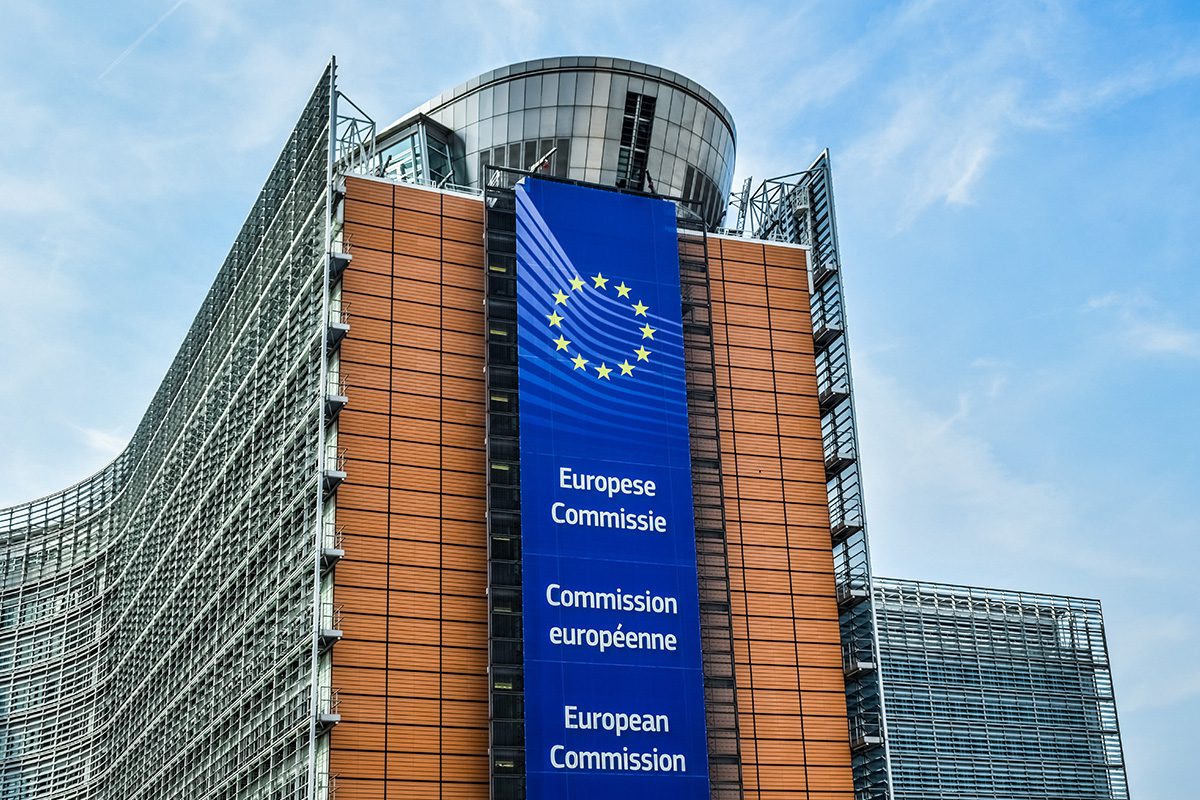
The European Commission will extend restrictive measures against 69 people, mainly Venezuelan government officials. Photo: European Commission press area.
Guacamaya, December 15, 2025. Brussels will maintain restrictive measures until January 2027, while the Venezuelan government denounces the policy as “illegal” and “contrary to International Law.”
The European Union has decided to extend the existing restrictive measures against Venezuela for another year, until January 10, 2027. The EU considers that actions undermining democracy and the rule of law persist, along with human rights violations and repressive practices against civil society and the political opposition. The Council’s decision is also adopted in light of events related to the presidential elections of July 28, 2024, and their subsequent development.
Currently, 69 individuals are listed as sanctioned by the EU. These measures include the freezing of assets and a prohibition on making funds or economic resources available to them, directly or indirectly, as well as travel restrictions within European territory.
The European sanctions against Venezuela were introduced in November 2017 and include an arms embargo and a ban on equipment deemed usable for what the bloc denounces as internal repression, along with individual sanctions targeting designated persons and entities considered responsible for human rights violations or for undermining democracy and the rule of law.
As the EU has reiterated in official statements, including one on January 10, 2025, the objective of these measures is to support a negotiated and democratic solution to the Venezuelan crisis. Brussels maintains that it has not adopted sanctions that directly affect the population or the country’s economy and emphasizes that the lifting of the restrictions will depend on tangible progress in the areas of human rights, the rule of law, genuine dialogue, and democratic transition.
The extension was met with frontal rejection by the Venezuelan government. In an official statement, the Foreign Ministry described the sanctions as “illegitimate, illegal, and contrary to International Law,” considering that they violate the principles and purposes enshrined in the charter of the United Nations.
The text asserts that the policy of unilateral coercive measures adopted by the European bloc lacks legal basis and responds to a logic of confrontation that, in Caracas’s view, is unproductive. According to the communiqué, European leaders “have regrettably chosen to accelerate their own political decay,” by insisting on what they describe as a “line of sterile hostility” against Venezuela.
The Venezuelan Foreign Ministry also questions the coherence and autonomy of European foreign policy, stating that it is “lacking autonomy and subordinated to interests alien to the peoples they claim to represent,” which—according to the government—undermines the European Union’s credibility as an international actor.
Furthermore, the communiqué states that, after years of application, the sanctions regime “has proven to be a resounding failure,” having significantly deteriorated political and diplomatic relations. In this context, Venezuela maintains that these measures confirm the “growing irrelevance of the European Union as an international actor capable of acting with independence, rationality, and respect towards sovereign States.”
With this new extension, the EU reaffirms its strategy of selective pressure, while Caracas maintains its denunciation of what it considers a sanctions policy lacking legal legitimacy and political efficacy, thereby deepening the estrangement between the two parties.
The European Union’s individual sanctions are framed within the Common Foreign and Security Policy (CFSP) and constitute one of the bloc’s primary instruments of diplomatic pressure. Unlike broad economic embargoes that have humanitarian consequences, these measures are not formally directed against states or entire sectors of an economy, but against specific individuals and legal entities whom the EU attributes direct responsibility for serious human rights violations, the weakening of democratic processes, or the undermining of the rule of law.
In addition to the Venezuelan case, the European Union has systematically resorted to this mechanism in other scenarios of high political and geopolitical tension. Similar individual sanctions regimes are currently applied against Russia in response to the war in Ukraine; Belarus for what the European bloc qualifies as “internal repression and the disregard for electoral processes”; Iran for what it considers human rights violations and its nuclear program; and Myanmar following the military coup and what the European community has denounced as persecution of the opposition and ethnic minorities.
The EU maintains individual sanctions against officials and entities from countries such as North Korea, Libya, Sudan, Zimbabwe, and Nicaragua, among others. In all these cases, Brussels maintains that the objective is to modify the behavior of governing elites, promote negotiated political exits, and defend basic international norms, while avoiding a direct impact on the civilian population. However, the real effectiveness of these sanctions and their indirect effects—including their impact on internal political dynamics and diplomatic relations—remain subjects of debate both within the European Union itself and among academics, international organizations, and the affected states.