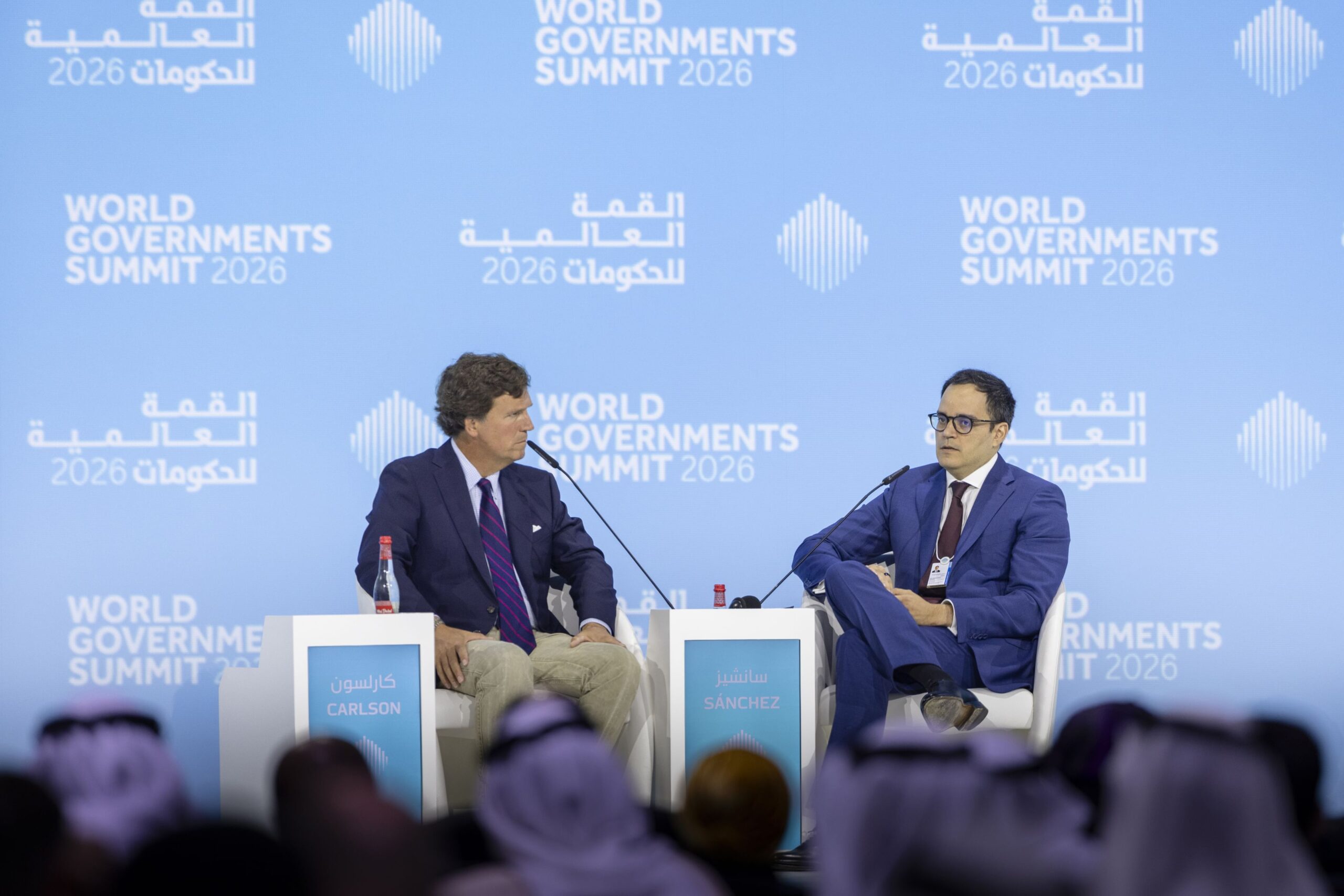
Calixto Ortega, Venezuela’s Vice President for Economic Affairs, told U.S. commentator Tucker Carlson that Venezuela can move forward after January 3 and that the return of investment to the country depends on the lifting of unilateral sanctions, pointing to what he describes as the “Dubai model.” Photo: Emirates New Agency.
Guacamaya, February 4, 2026. Venezuela is seeking to move beyond its image as the country with the world’s largest crude oil reserves and position itself as one of the leading global oil producers, amid a political and economic shift that has reshaped its relationship with the United States and revived interest from major international energy players.
Speaking at the World Governments Summit in Dubai, the country’s chief economic adviser, Calixto Ortega, said Venezuela’s strategic objective is clear: “We know that Venezuela is known as the country with the largest oil reserves. We want to stop being known only for that and to be recognized as one of the countries with the highest levels of production.”
He added that the authorities aim to “use the model, for example Dubai’s, which uses these revenues to diversify the economy.”
The new scenario unfolding in Venezuela was developed in greater detail by Ortega in an interview with journalist Tucker Carlson, where he outlined the vision of the Venezuelan government led by Delcy Rodríguez following recent political changes.
Ortega argued that, despite U.S. sanctions, Venezuela succeeded in defeating hyperinflation, achieving in 2024 its lowest inflation levels and most stable exchange rate in four decades. He also said the country led GDP growth in Latin America in three of the last five years, as evidence of economic resilience under external pressure.
One of the central pillars of this strategy is the reform of the Hydrocarbons Law, designed to offer favorable conditions and legal certainty to international investors, with the goal of attracting capital and technology to sustainably increase oil production.
In the interview, Ortega stressed that Venezuela wants to move from being defined by the size of its reserves to being recognized for its actual production capacity, an ambition that directly aligns with renewed interest from U.S. refiners and the revival of exports to that market.
He also explained the creation of two sovereign funds: one dedicated to citizen welfare—salaries and direct assistance—and another focused on strategic infrastructure such as electricity, roads, and public services, as part of an effort to channel oil revenues toward economic recovery.
Ortega was particularly critical of the impact of sanctions, arguing that they failed to produce political change while directly harming the population by restricting access to resources and state-owned assets. Drawing on his experience as a former Central Bank head, he highlighted the difficulties of managing monetary policy without access to international reserves and called for the immediate return of those assets.
Finally, he said Venezuela is a “natural market” for its neighbors, including the United States, and that lifting sanctions is the final major obstacle to large-scale investment. His central message was that if Venezuela is allowed to operate as a “normal country,” free from external restrictions, it could achieve extraordinary growth and become a globally observed case of economic recovery.
Taken together, the return of oil revenues, interest from U.S. refiners, and the stated ambition to increase production place Venezuela before an unprecedented opportunity: to transform its vast energy wealth into an effective engine of stabilization and growth, amid a geopolitical context defined by shifting relationships and the search for energy security.
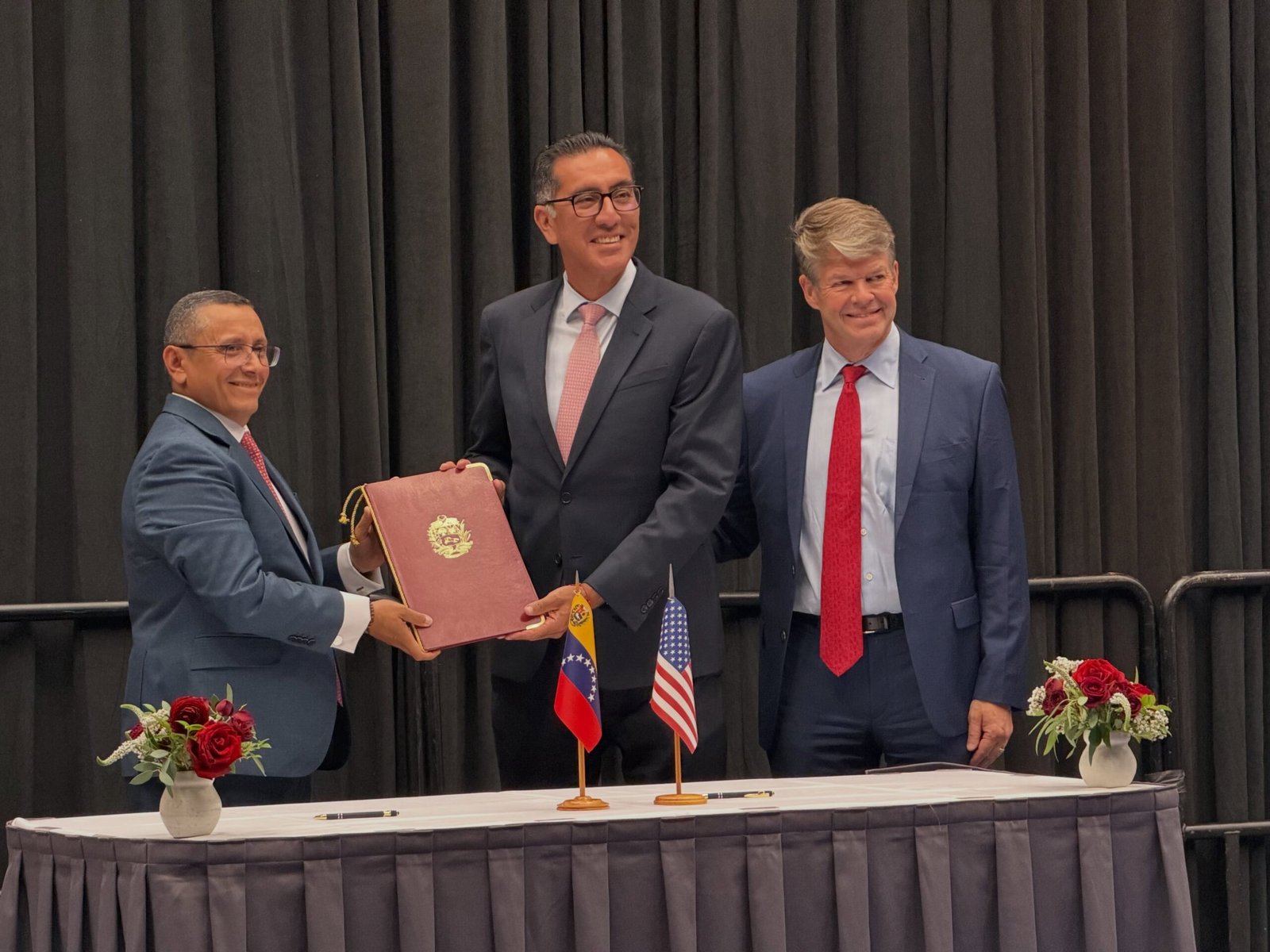
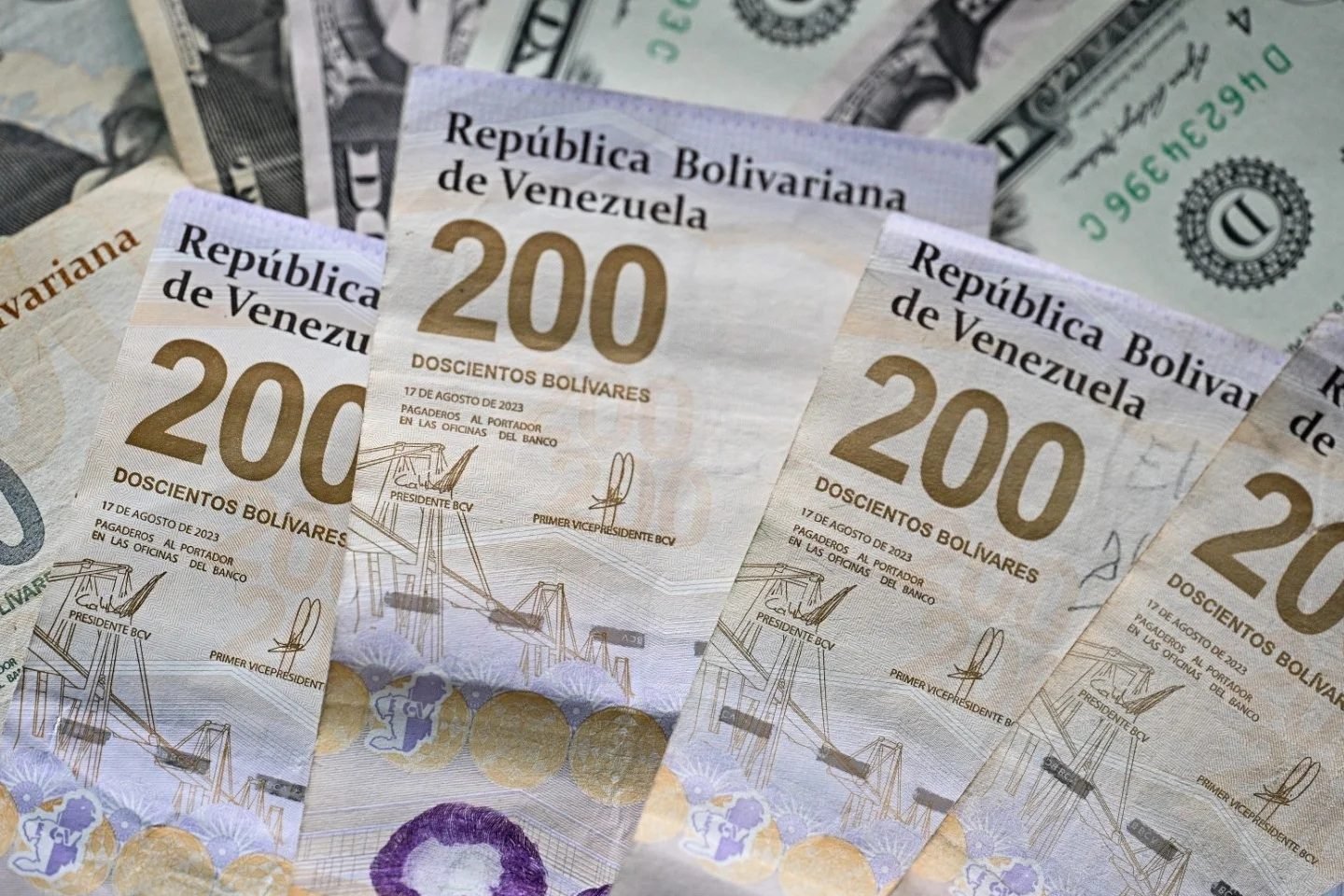
That message coincides with a new framework of understanding between Caracas and Washington. This week, the United States returned $500 million to the Venezuelan government from an initial oil sale agreed last month. The final $200 million was transferred recently, according to a U.S. official speaking on condition of anonymity. The agreement followed the capture of President Nicolás Maduro in a U.S. military operation on January 3, an event that marked a turning point in bilateral relations.
At the same time, the U.S. energy sector is repositioning itself toward Venezuelan crude. The chief executive of Phillips 66 said the refiner has the capacity to process up to 250,000 barrels per day of Venezuelan oil, amid energy policy easing and a reconfiguration of heavy crude flows to the U.S. Gulf Coast.