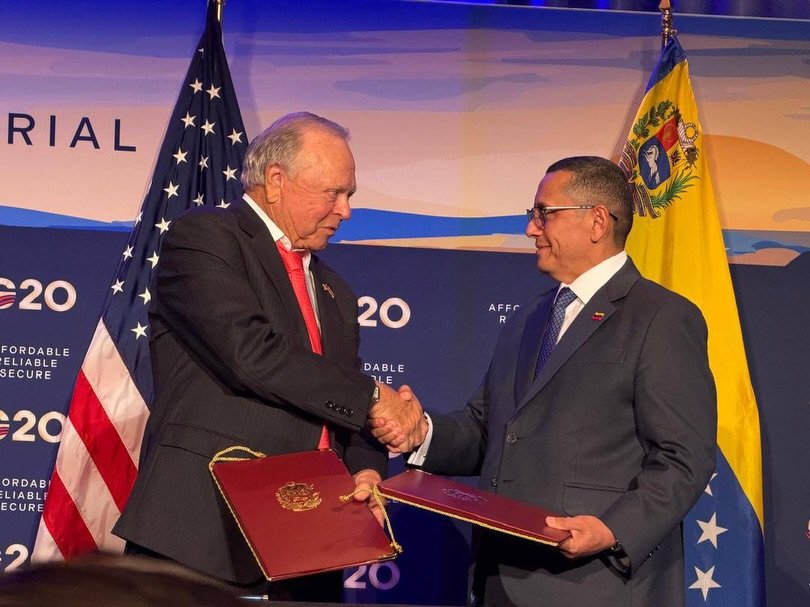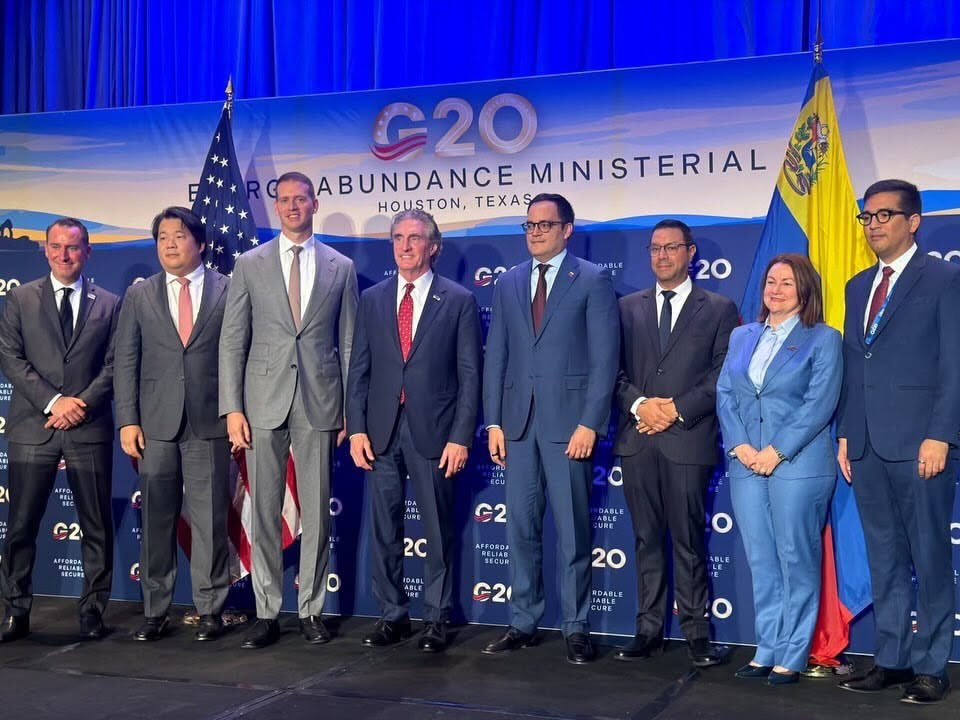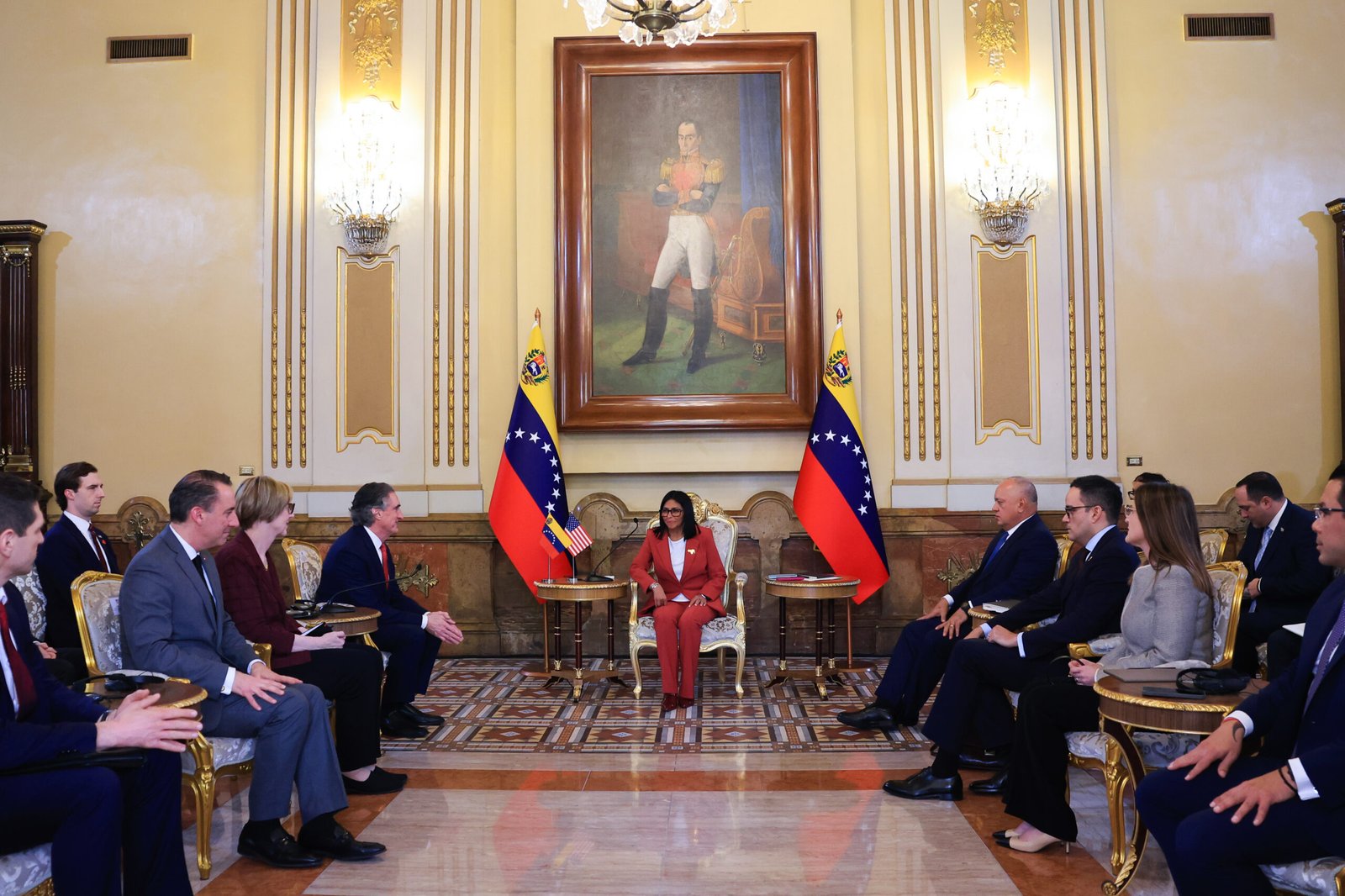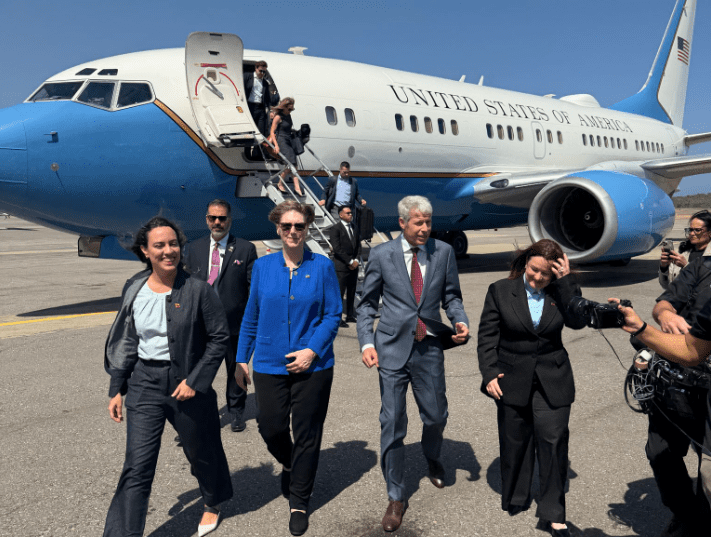
U.S. Energy Secretary Chris Wright (centre-left) arrives in Maiquetía International Airport, near Caracas, Venezuela, on February 11 to discuss changes to PDVSA’s management and meet acting President Delcy Rodríguez, escorted by Chargé d’Affaires Laura Dogu (centre-right). Photo: U.S. Embassy in Venezuela.
Guacamaya, February 11, 2026. The U.S. government issued three sanctions waivers on Venezuela’s oil and transport infrastructure on Tuesday, in the wake of Energy Secretary Chris Wright’s visit to the South American country.
The Treasury Department’s Office for Foreign Assets Control (OFAC) issued general licenses 48, for oil exploration and production activities; 30B, for transactions involving Venezuelan ports and airports; and 46A, which builds on top of and supersedes recent General License 46 to allow for the payment of taxes, permits or fees in trading oil.
As part of his agenda, Wright seeks to discuss improvements to PDVSA’s management. He has said that he plans to “start the dialogue” with Venezuelan officials on the future leadership of the company, but noted it is ultimately a “Venezuelan company.”
In an interview with POLITICO, the Energy Secretary argued that “PDVSA was a highly professional, technically competent oil and gas company 30 years ago, and it hasn’t been one for quite some time.”
After the military operation of January 3 that led to Maduro’s capture, the Trump administration has focused on rebuilding the OPEC member’s oil industry, but giving U.S. investors the lead. Recent sanctions waivers have given priority to U.S. law
Almost simultaneously with the publication of new licenses, the Venezuelan National Assembly discussed and approved a reform to its Hydrocarbons Law, introducing the most extensive liberalisation of the oil industry since the first wave of nationalisations in the 1970s.
On Tuesday, Chevron CEO Chris Wright was also reported to have landed in Venezuela to accompany Wright in his tour. This energy giant plays an influential role in the country’s reconfiguration of the oil industry, as it is the largest U.S. corporation present and has a 100-year history in Venezuela.
The two are expected to visit Chevron-operated fields in the Orinoco Oil Belt, a basin containing one of the largest single deposits of hydrocarbons in the world.
The U.S. imposes a new framework for the Venezuelan oil industry
Licenses 48 and 46A explain not only a list of rules, but also the Trump administration’s vision for Venezuelan oil, where Washington, DC exercises a high degree of control.
First and foremost, in contracts to produce and export Venezuelan oil, U.S. law applies, not local legislation. Then, most payments—except taxes and certain fees—must be made to special, White House-supervised accounts rather than to PDVSA and the government in Caracas.
Payments in gold or in cryptocurrencies, and debt swaps are forbidden, as are transactions with entities in Russia, Iran, North Korea, Cuba, and China.
Venezuelan-origin oil exported to countries other than the U.S. must be reported to the State and Energy departments, including quantities, dates, and any payments made to the Government of Venezuela. The same applies to goods, technology, software, and services sold for the exploration and production of oil in the South American country.
General License 30B has been brought in to support the other two by allowing for certain transactions involving the use of ports and airports in order for Venezuelan barrels to flow out of the country.