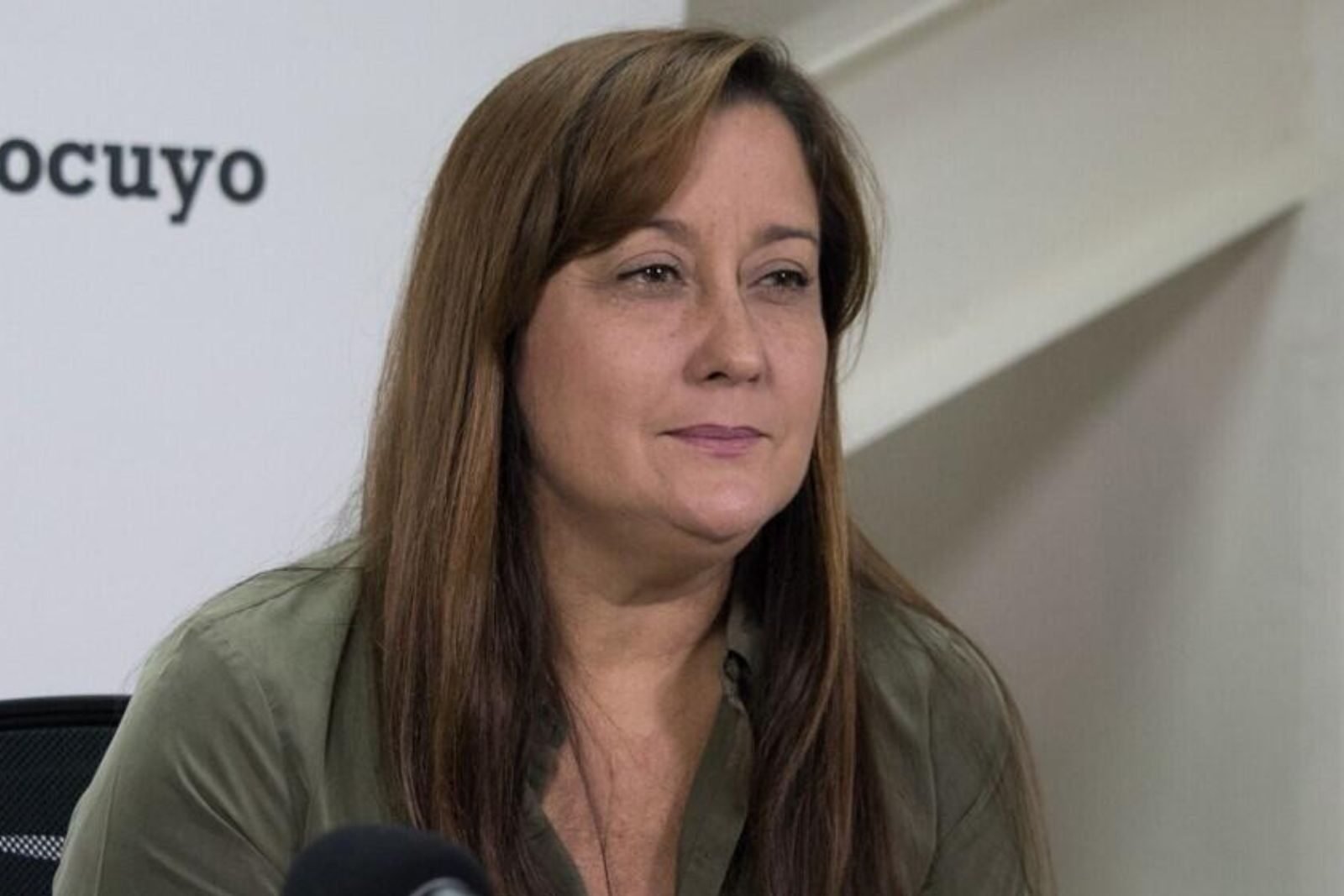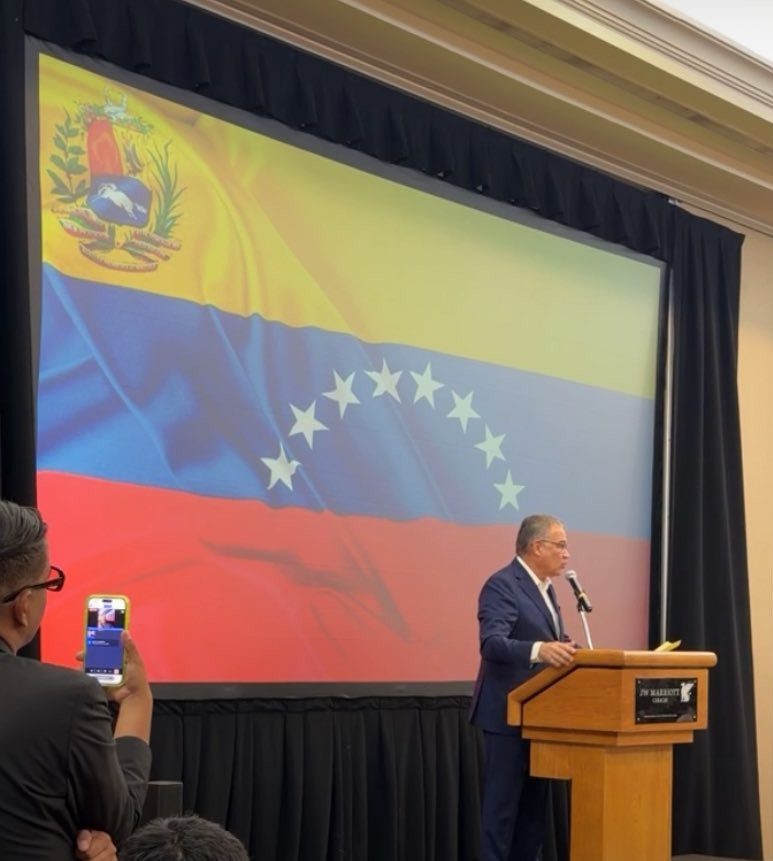
The press conference took place at the JW Marriott Hotel in Caracas, the same hotel where the U.S. diplomatic delegation headed by Laura Dogu is staying. Photo: X / @ENRIQUEMARQUEZP.
Guacamaya, February 27, 2026. From the Marriott Hotel in Caracas, Enrique Márquez took a position on the resignation of the Attorney General and the Ombudsman, defended a profound transformation of the justice system, backed the Amnesty Law as a first step, called for the lifting of sanctions, ruled out immediate electoral aspirations, and defined himself as a bridge between opposing sectors. He also highlighted the international role of Gustavo Petro and José Luis Rodríguez Zapatero in the Venezuelan process.
In a lengthy press conference held at the Marriott in Caracas, Márquez addressed the institutional situation following the resignation of the Attorney General and the Ombudsman, arguing that the country is facing an opportunity that must not be wasted. “We were surprised to see the Attorney General and the Ombudsman resign. That is positive. Let’s not miss the opportunity to do things properly,” he said, stressing that Venezuela needs authorities who represent “the people and the Constitution, not the government.”
Márquez recalled that he met Tarek William Saab in 2000, when he was regarded as a human rights defender. “Today he has become one of the most rejected figures in the country. A gray character who moves in the shadows,” he stated. He openly questioned the possibility of the current Attorney General aspiring to become Ombudsman and called for rejecting even his appointment as interim. “Is that what Venezuelans aspire to? That prosecutor denied rights and accused honorable people in Venezuela of terrorism and treason,” he said, urging the National Assembly to act responsibly: “I hope they listen to us.”
On economic matters, he considered the recently proposed reforms to be welcome. “It’s the same government, but different policies, changes that are being proposed,” he said. He mentioned the approval of a new Hydrocarbons Law, which he described as “not perfect, but good for what Venezuelans need.” However, he warned that any opening must have a real impact on the population: “This opening cannot be only to benefit capital. Where are the people? Where are the wages? It cannot be just another opening. The people must remain vigilant.”
The opposition leader insisted that since 2024 he had warned that the country was heading in the wrong direction. “For asking for an Amnesty Law, the result for me was prison; for the people, it was misery. We demanded respect for the Constitution and the result was prison,” he said. In his view, Nicolás Maduro had multiple opportunities to change course. “The country asked him, the international community asked him. There was no way; he did not listen.”
Regarding the recently approved Amnesty Law, Márquez expressed his support under the terms in which it was passed, though he made clear that he sees it as only a starting point. “It is a first step, not the definitive or final one,” he said, recognizing the work of the National Assembly and opposition lawmakers “who are fighting there.” He added an explicit assessment of the measure’s scope: “I celebrate the Amnesty Law. It is not enough, but it is something. We cannot reject what is good because it is not perfect. I recognize the work of the National Assembly and of the opposition lawmakers who do what they can. Forgiveness? I agree with forgiveness. We cannot only move toward freedom, but also toward reparation.”
Márquez recounted his own judicial ordeal, noting that he was charged with terrorism, incitement to hatred, and treason. “I suppose it was because I defended institutions after July 28, because I always called for dialogue and because I demanded respect for the Constitution,” he said ironically. He indicated that he spent ten months incommunicado, without contact with the outside world.
As for his political future, he was categorical: he does not see himself joining the current government or returning to the National Electoral Council (CNE). “I don’t see myself in the CNE or in the current government. I do not foresee elections in the short term, therefore I am not a candidate,” he stated. Instead, he offered a symbolic definition of his aspirations: “I have two candidates: the Constitution and democracy. I will work to make my two candidates win.”
He reiterated that he feels useful in the political arena and that his role is “alongside the people, seeking solid changes.” He said he would not contribute to a transformation process by joining the Executive. “My experience at the CNE has already been lived; I did the work I had to do there,” he added.
Regarding his relations with other political actors, he said he has not spoken with María Corina Machado since his release from prison, nor have they discussed the United States. He also called for abandoning the notion that some Venezuelans are “better than others,” and defended the need for a government of national unity. He said he maintains ties both with the Democratic Unitary Platform and with lawmakers in the National Assembly, whom he said he knows and appreciates.
“Let’s put our egos aside. Everyone has the right to be here. The government has tried to eliminate the opposition… And the opposition has tried to eliminate its adversary. Both have ruined the country. We can’t continue like this.”
Márquez defined himself as someone capable of acting as a bridge between opposing sectors. “I want to be a bridge, yes,” he affirmed. He publicly expressed his affection for former Spanish Prime Minister José Luis Rodríguez Zapatero, thanking him for the support given to his wife during his imprisonment. “President Zapatero plays a major role in Venezuela and I hope time will vindicate him. He has played an important role and I am not going to deny my friendship with him,” he said.
He also announced that he plans to meet with Colombian President Gustavo Petro, whom he thanked for efforts related to his release. He said he has scheduled an international tour that includes European countries, aimed at promoting the formation of a Group of Friends of Venezuela to accompany the current political process.
On the international front, he called for the lifting of the sanctions that still weigh on the country. “If we all have the right to change, lift the sanctions once and for all. There should be no more sanctions so we can move forward,” he stated. In his view, all Venezuelans share responsibility for the crisis and are obliged to reach agreements “not to please someone, but for the future of Venezuela.”
Finally, he stressed that the process must culminate in a democratic election, but warned that the necessary institutional conditions must first be built. “No one is going to do it for us. The international community can be a driving force, but the changes have to be made by us,” he said, adding that institutions must be renewed and questioning the viability of holding elections with the current CNE: “We cannot.”
He thanked Donald Trump for the invitation to the Capitol address and reaffirmed his support for the path outlined by U.S. Secretary of State Marco Rubio.
With that message, Márquez closed his remarks by reaffirming his commitment to institutionalism, dialogue, and the construction of broad consensus as the path to overcoming Venezuela’s crisis.
The press conference took place at the JW Marriott Hotel Caracas, located in the El Rosal business district. The hotel currently hosts the U.S. diplomatic delegation in Venezuela, headed by Ambassador Laura Dogu.