
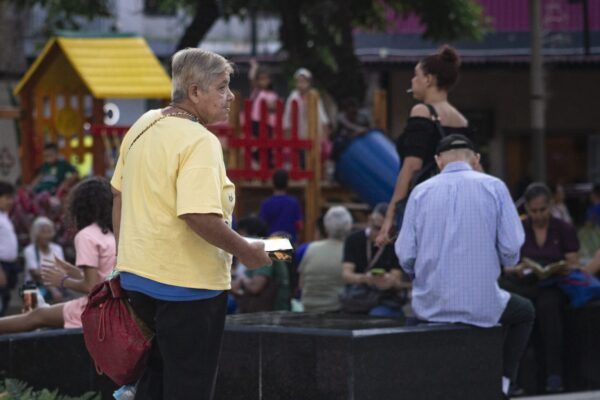
Caracas Residents in the Face of the US Military Deployment: Hope, Indifference and Resignation
In the country’s capital, the population’s desire to maintain social stability in the midst of uncertainty generated by the threats…


In the country’s capital, the population’s desire to maintain social stability in the midst of uncertainty generated by the threats…

Venezuela’s National Assembly on Thursday approved extensions for two joint ventures with Russian state-owned company Petromost, Petroperijá and Boquerón, allowing them to continue their production from 2026 until 2041.
The growing US military presence in the Caribbean Sea has raised alarms beyond the region. European governments, multilateral organizations, and international political blocs are questioning the legality of US operations and warning about the risks of a confrontation that could destabilize Latin America. Amid calls for dialogue, open criticism, and demands for respect for international law, the tension is becoming a new point of global friction.
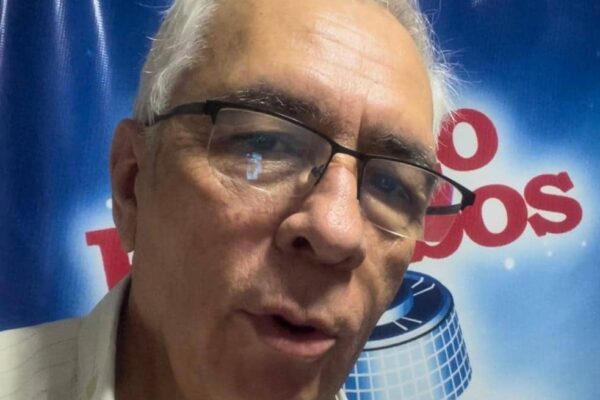
The release of the former president of Fedecámaras, Noel Álvarez, this Tuesday, November 18, has reignited demands for freedom for all political prisoners in Venezuela. His family, civil organizations, and opposition figures highlighted the suffering endured during his detention and reiterated that there can be no talk of peace as long as practices of persecution and imprisonment for political reasons persist.

The United States government confirmed that the Cartel of the Suns will be added to the list of Foreign Terrorist Organizations (FTO) starting November 24. The measure is announced in a context of increasing military deployment in the Caribbean and new anti-drug operations, while Washington insists on linking the group to Venezuelan President Nicolás Maduro, an accusation that Caracas rejects as fictitious.

The President of France, Emmanuel Macron, announced on Sunday the release of Camilo Castro, a French citizen detained in Venezuela since June.

Guillaume Long is a senior researcher at the Center for Economic and Policy Research (CEPR) and a professor at Sciences Po. He also serves as a diplomatic advisor to The Hague Group.

The National Assembly approved the Comprehensive National Defense Command Law on November 11, a central instrument of Venezuela’s new military doctrine that expands the shared responsibility between the State, the Armed Forces, and the citizenry in the country’s defense. The enactment occurs in a climate of regional tension marked by the deployment of the US aircraft carrier USS Gerald Ford in the Caribbean and the initiation of “Operation Southern Lance,” announced by Washington. The regulation has generated official support and strong criticism from opposition sectors who consider it an instrument of internal control.
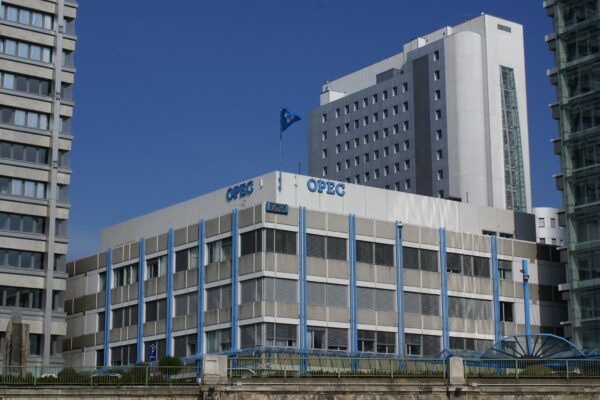
The latest monthly OPEC report, which records October’s production, shows a divergence between the figures from the Ministry of Hydrocarbons, which show an increase of 27,000 barrels per day, and secondary sources, which estimate a drop of 7,000 bpd.
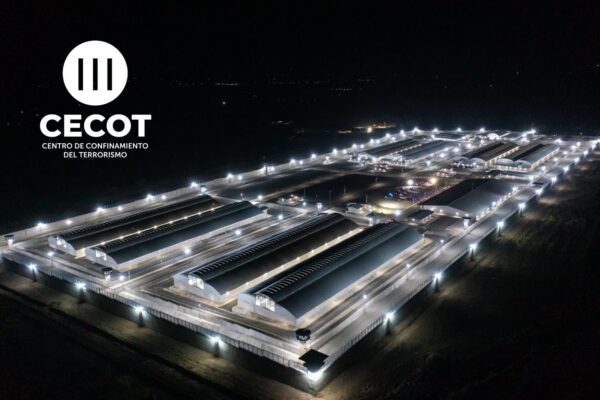
A joint report by Human Rights Watch (HRW) and the salvadoran organization Cristosal denounces that 252 Venezuelan migrants deported by the United States between March and April 2025 were held in inhumane conditions in the Center for Confinement of Terrorism (CECOT), the megaprison built by the government of Nayib Bukele.