Reuters: Venezuelan crude labeled as Brazilian upon arrival in China to evade sanctions
In the last year, more than $1 billion worth of Venezuelan oil has been labeled as Brazilian crude upon arrival in China.
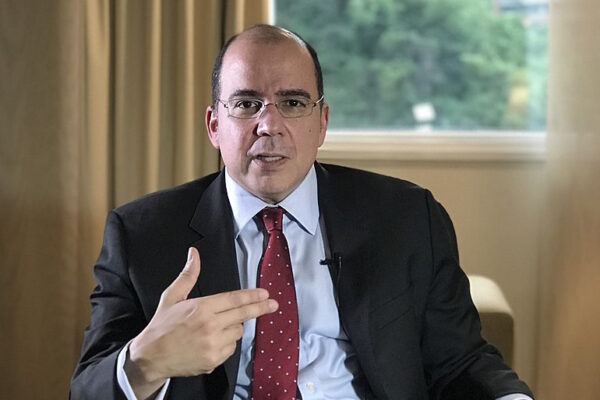
Interview: Luis Florido was a founding member of the party Voluntad Popular, which he left in 2018 after disagreeing with the decision to abstain from that year’s presidential elections.
On May 1, the International Court of Justice (ICJ) reaffirmed its previous decision prohibiting Venezuela from holding elections or any similar activity in the disputed territory of Essequibo, which is currently administered by Guyana. While Caracas does not recognize the ICJ’s authority and maintains its historical stance, Georgetown welcomes the ruling and is bolstering its military capabilities amid rising tensions in the region.
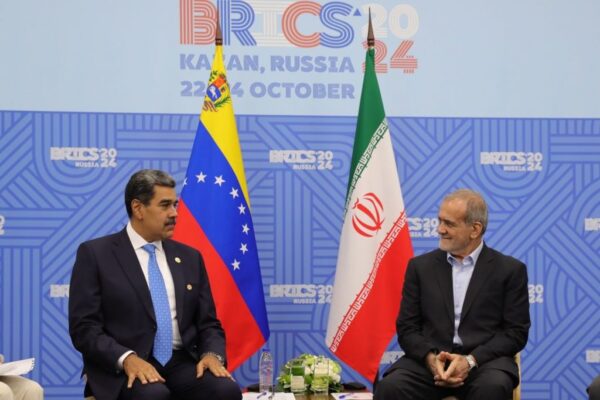
The BRICS nations are speaking out against unilateral decisions and calling for urgent reform of the global order. The latest meeting of Foreign Ministers took place this week in Rio de Janeiro, where members of the group—now expanded to 11 countries—made it clear that deep changes are needed in the institutions governing the world. They also discussed strategies to counter the trade war initiated by the United States, advocating for a more balanced approach and alternatives to the use of the dollar.
The project, operational as of this week, promises improvements in transportation, agriculture, and infrastructure while strengthening the technological alliance with Moscow.
The report published by the United Nations Development Programme (UNDP) states that Venezuela ended 2024 with growth driven by oil expansion, but the country faces an uncertain 2025 following the withdrawal of Chevron’s and other oil companies’ licenses.
The visit occurs in a global context dominated by geopolitical competition between the United States and China. While Washington reimposes oil sanctions aimed at isolating the government of Nicolás Maduro, Beijing maintains its strategic support, evidencing a bet to strengthen its influence in Latin America and the Caribbean, consolidate its access to energy resources at preferential prices and erode American hegemony in the hemisphere.
In recent days, Nayib Bukele visited the United States. Photo: Presidential House of El Salvador Guacamaya, April 21, 2026. Salvadoran…
Amid the recent revocation of oil licenses for Western companies, and the imposition of secondary tariffs for buyers of Venezuelan crude, Executive Vice President Delcy Rodríguez met with Chinese Ambassador to Venezuela Lan Hu to review and “deepen” bilateral agreements.
In a context of geoeconomic tensions and accelerating rhetoric around the energy transition, Russia has solidified its strategic roadmap for the energy sector through 2050. Approved in April 2024, this document not only redefines domestic priorities but also articulates a forceful narrative about the future of global power. Through the case of Rosneft, the state-owned oil giant, a structural challenge to the Western-led energy and financial model emerges, posing both a conceptual and practical test for the international order.