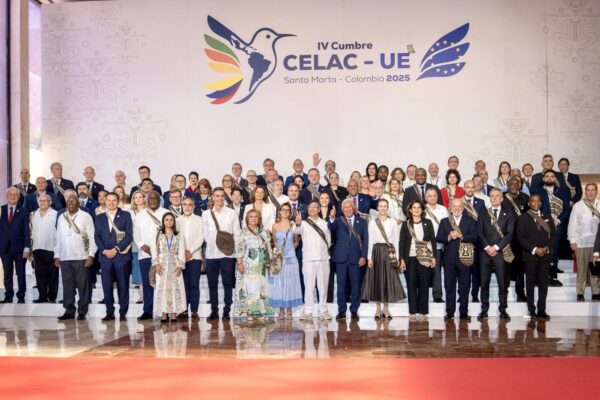
Gustavo Petro calls on “Nicolás Maduro and María Corina Machado to find the Venezuelan way out of the conflict”
The President of Colombia delivered a speech at the United Nations General Assembly in which he criticized what he described…
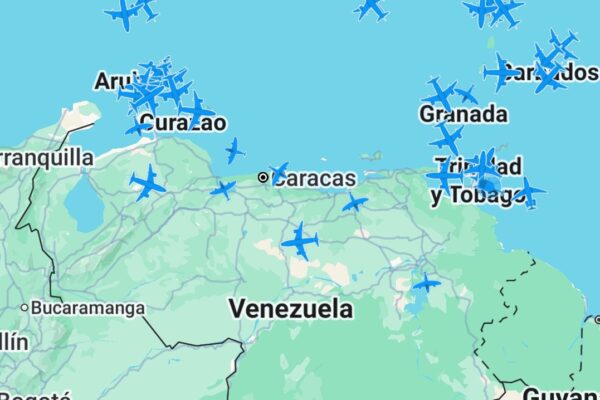
Amid an increasingly intense climate of confrontation between Washington and Caracas, a bipartisan group of U.S. senators has launched a legislative offensive to limit President Donald Trump’s power to order military operations in Venezuela without Congressional authorization. The move comes after the American president confirmed covert CIA operations on Venezuelan soil and the announcement of the withdrawal of the head of the Southern Command, in a context marked by warnings from Beijing and denunciations from Caracas at the UN.
The Egyptian city of Sharm El Sheikh became the epicenter of international diplomacy this Monday with the Gaza Peace Summit, co-chaired by US President Donald Trump and Egyptian President Abdel Fattah Al-Sisi. The meeting marks the official end of the Israeli offensive in Gaza after two years of devastation and the entry into force of the 20-point plan promoted by Washington, which includes a ceasefire, the release of prisoners, and a new governance mechanism for the Palestinian enclave.
At the “One Democratic Venezuela” event, held at the Central University of Venezuela (UCV), political, union, and business leaders, as well as journalists and academics, agreed on the need to promote national unity, peace, and respect for human rights.
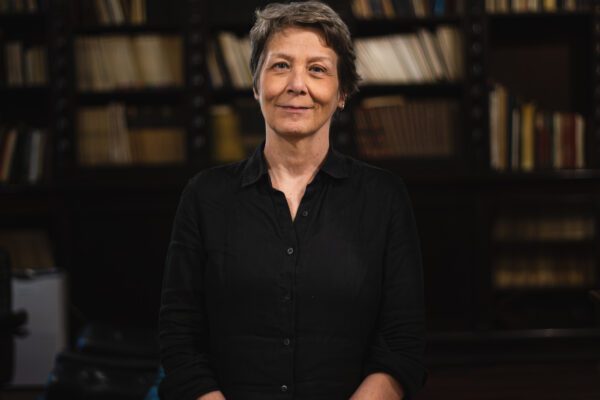
The head of UNCTAD and candidate for the UN Secretary-General, Rebeca Grynspan, warned about the risks that a military action in Venezuela would entail, following recent US airstrikes against vessels that departed from the Caribbean nation. The Costa Rican economist defended the historical position of Latin America against armed interventions and called for preserving international law as a principle of regional stability.
Russia warned this Friday that a U.S. military action against Venezuela would constitute an “irreparable mistake” and would confirm Washington’s view of Latin America as its “backyard.” The alert occurred during a meeting of the UN Security Council, where the Russian representative, Vasily Nebenzia, denounced the deployment of more than 4,000 U.S. personnel in the southern Caribbean, including destroyers, nuclear submarines, and patrol aircraft.
A group of senators is once again bringing the debate about the limits of presidential military action to the table. A coalition of senators, headed by Adam Schiff, Tim Kaine, Ron Wyden, Bernie Sanders, Jeff Merkley, and with the support of Republican Rand Paul, introduced Resolution 83, which seeks to end the use of the Armed Forces for operations in the Caribbean without explicit Congressional authorization.
The Gulf emirate, known for its role as a mediator in international conflicts, is keeping a communication channel open between the United States and Venezuela amid tensions over the US military presence in the Caribbean.
The Secretary of War, Pete Hegseth, stated in a post on X that the action is part of a series of similar operations carried out in recent weeks. According to the official, this is at least the fourth such attack in a month.
The Spanish oil company Repsol is in advanced talks with the Donald Trump administration to receive more than 330 million euros (about 387 million dollars) in crude oil and derivatives as part of the payment for the debt that Petróleos de Venezuela S.A. (PDVSA) has with the company.