Carlos Delgado Flores is a journalist, professor at UCAB, and researcher in knowledge society and digital culture.
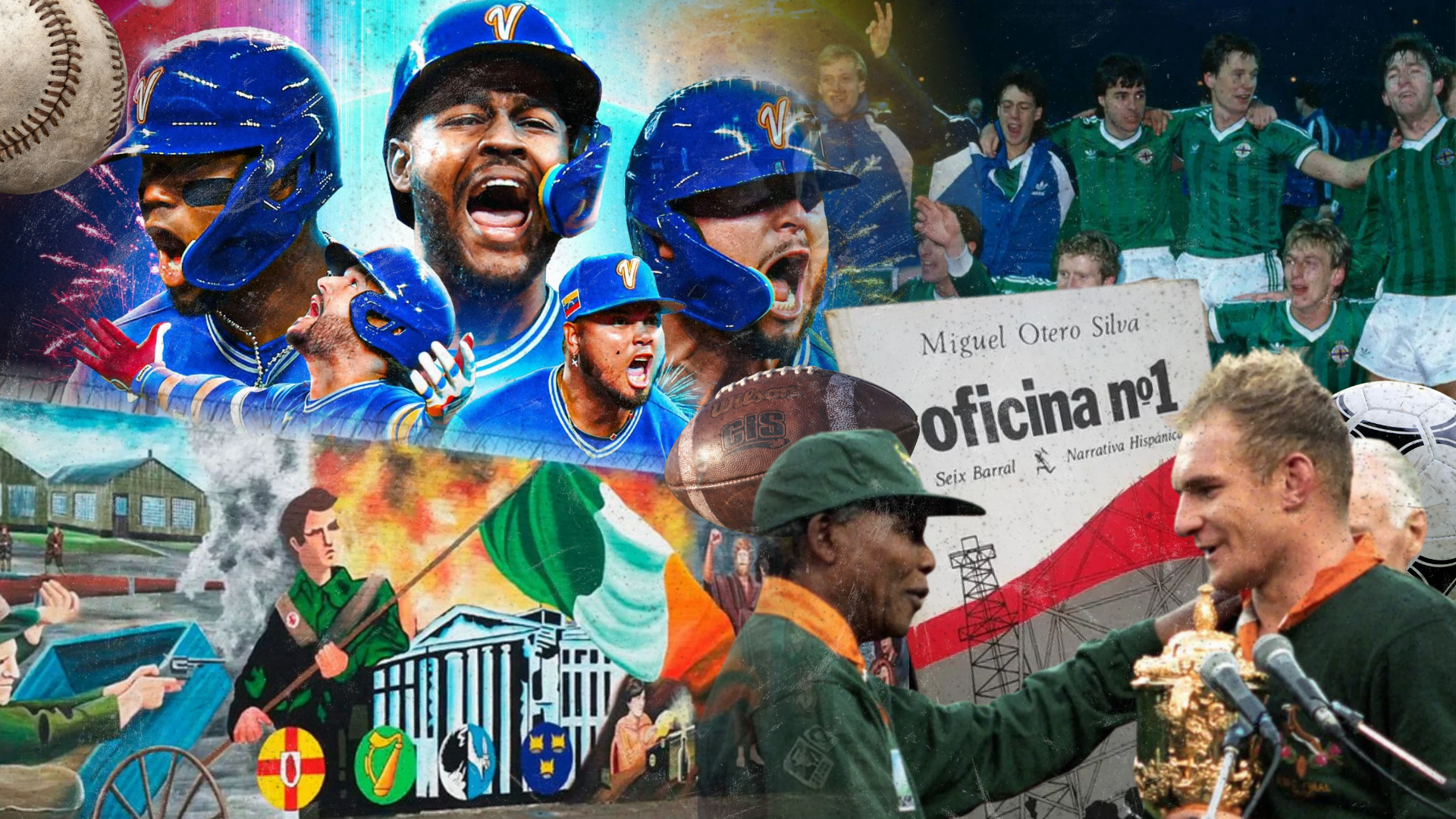
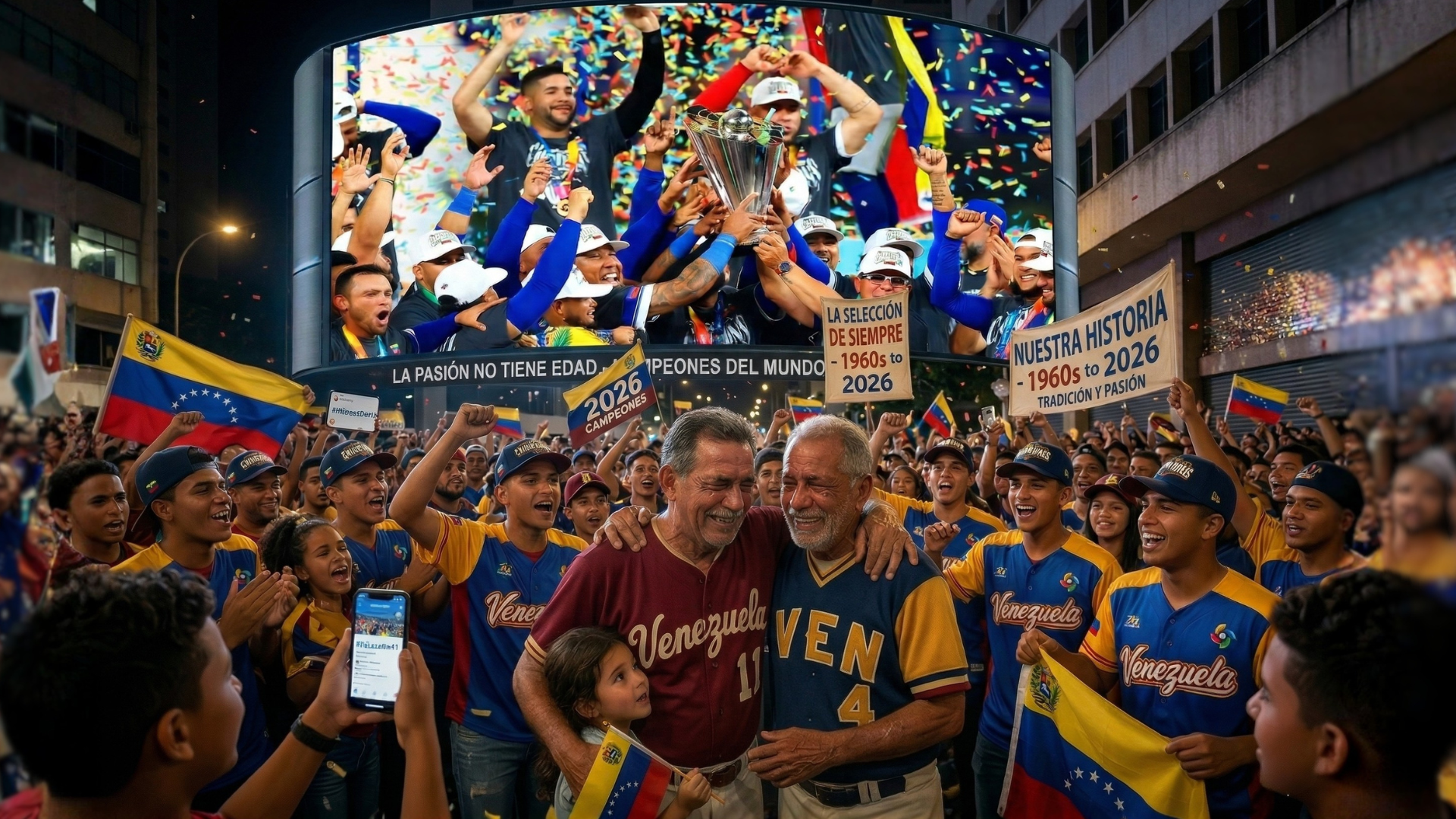
Guacamaya, April 7, 2026. That morning, a dear friend, sharing her joy over Venezuela’s victory in the World Baseball Championship, told me: “These are the grandchildren of the heroes of ’41.” Perhaps not blood-related nor linked by any other legal bond, but united with them in the same memory and the same timeline: 100 years after the black gold rush of 1926 and the installation of the oil fields that brought baseball, a team of dark-skinned, experienced players, articulated as a single man, gave Venezuela the long-awaited world championship.
Omar López, manager of the Venezuelan team, could not have said it more clearly: “We did this so that all Venezuelans can be happy again.” But he also opened up the invictus effect, referencing the film about the South Africa Rugby World Cup, declaring that “together we are going to rebuild our country.”
Generations and reconstruction, victory from what we are. This leads me to this anonymous manifesto, ten years in the making, which many hands have passed through and which is worth making known.
MANIFESTO OF THE THREE GENERATIONS
There are three generations of Venezuelans on the streets of Venezuela and the world, fighting for the future; a future that a bureaucracy kidnapped, but which we are determined to recover for ourselves, for our brothers, for our parents, and for our children.
In Venezuela, the future is a construction that changes every instant, until the moment we manage to fix it on a course beyond contingencies. We discover ourselves as a country of migrants, not just now but from a century ago, when following the phantasmagorias of oil rent, we abandoned our crops and moved to cities and oil fields, where we swelled the peripheries and formed ghettos, due to the lack of welcome from the host communities; and a century ago, migrating from the countryside to the city was like going from one country to another, navigating the fiction of a jurisdiction we believed was that of a nation-state: on the margins of shantytowns and houses without plaster, we experienced, in democracy, the same xenophobia our ancestors suffered.
In Venezuela, it is a challenge to set a safe course for the future. One hundred and fifty years of incomplete modernization and almost seventy years of a liberal democratic republic constituted by a pact of elite conciliation show a balance with red ink. Our grandparents emigrated from the countryside, from the old world destroyed by wars, escaping the terrible southern dictatorships or the never-declared civil war in Colombia that has already lasted 80 years, seeking modernity. The cities did not welcome everyone, and a gap formed among us, as a people, which some saw as normal and not worth correcting because it obeyed the imperatives of nature. Seventy years later, 8 million Venezuelans from three generations do not go beyond the first year of high school; for every employed man, there are two unemployed women, while 3 million university professionals have migrated, taking with them their frustrations, as well as their hopes of continuing the search for family modernity. Today we have communities of Venezuelans on every continent, lacking an identity that we can all appropriate, one that would allow us to consolidate as a true community capable of facing the challenges of a people fighting to find – to find themselves in – their promised land.
However, we often say that we come from the future, as a reminder to the communities that receive us, that the present is the future of the future and that timeless realism, made of mathematics, authority, and confirmation biases, prevents us from knowing that we do not know, while condemning us to die for the cause of comfort zones.
A vision of a possible future has shown us pranes (prison gang leaders) constituted as a faction, who have formed a state within the State and organized an almost feudal regime, controlling the country from prisons and peripheries, with the approval of bureaucrats; their future is the fragmentation of the territory, its Balkanization, and the lordship of the mafias that control the migrant ghetto, here in the territory or wherever we go. The pran is the new caudillo who does not antagonize the institutionalized, nor the bureaucrats, nor the corporatists who wage fourth-generation warfare, because he is inspired by them, associates with them, serves them.
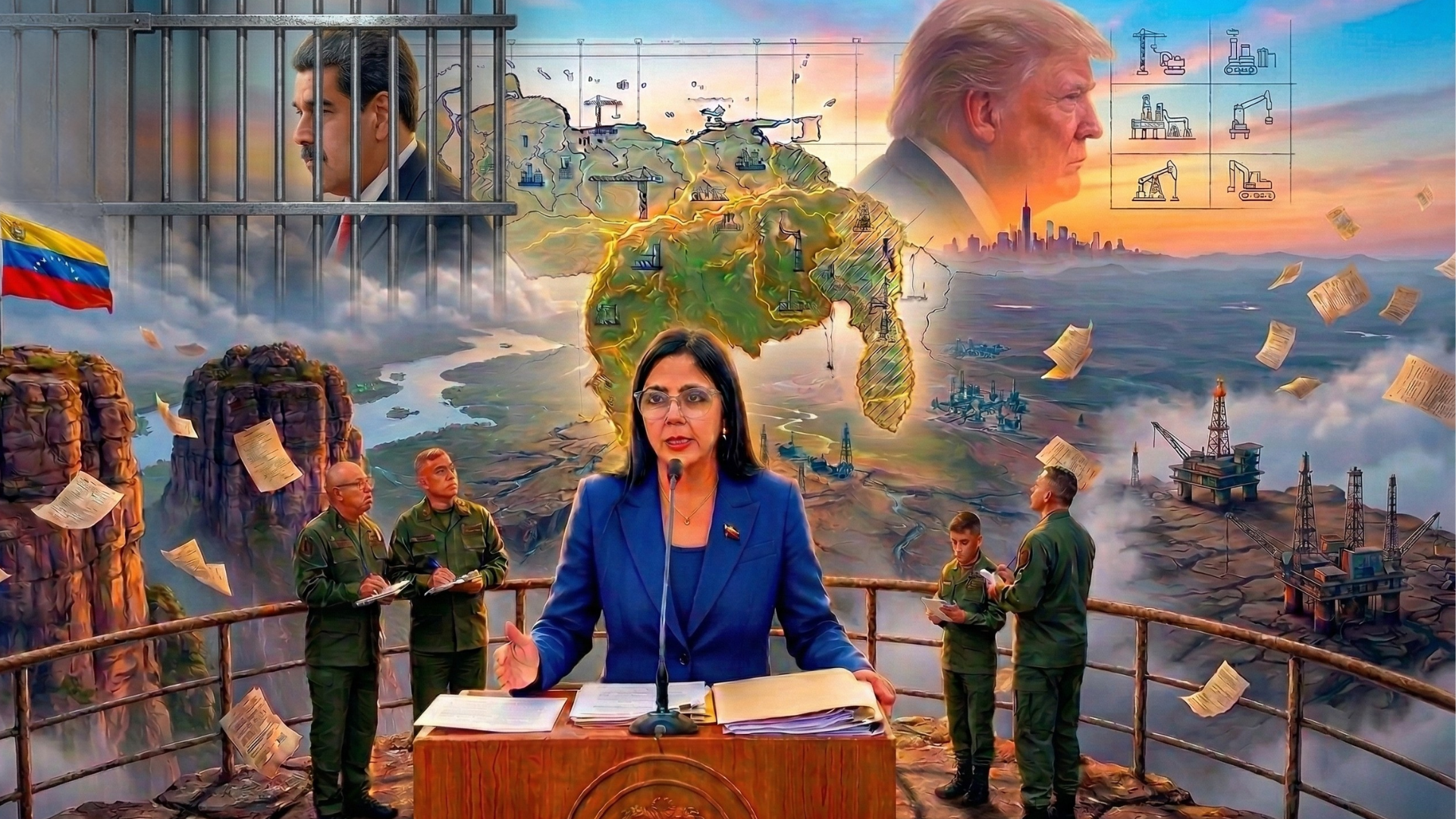
We are survivors of a fourth-generation war, which has taken place mainly in our minds and shows the world new, increasingly subtle forms of domination. The struggle of factions was followed by forced migration constituted as an exercise in social engineering, in response to a Complex Humanitarian Emergency generated by the prolongation over time of a political conflict that has not been resolved, as in conventional wars, by the predominance of one faction over another. The tyranny of bureaucracy has explored how far the idea of democracy can stretch without breaking, to use it as a cover for a policy of fait accompli, as an argument for abandonment, as a flag for the concentration camp; meanwhile, a new world conflagration begins and Venezuela, which was debating between being declared a pariah state or returning to being a reliable energy provider for the West, for which the decision seems to turn back time to the political and economic conditions of 1943, when the destiny of oil rent was decided, dedicating it to financing consumption, not production.
We can understand that part of the international community may have looked favorably on the Bolivarian Revolution, because it did not assume an open conflagration, but a hegemony aimed at changing the mode of production; because there was successful propaganda that reminded the world of liberal values, from a leftist periphery that won adherents among those who wanted to see in the process their own aspirations rather than the realities. But the truth of the facts shows us that the supposed revolutionary vanguard became a corrupt bureaucracy first, then an ominous tyranny, committing outrages even worse than those it denounced from its original insurgency in 1992. The tyranny’s corruption goes beyond disposing of the Republic’s assets as if they were its own; it has taken pleasure in debasing all citizens, turning any dealing with the state into a criminal act, making us a society of accomplices to the point of exasperation, systematically and daily trivializing evil, instilling learned hopelessness in us, forcing us to flee, abroad, or into insilio (internal exile), within each one of us; thus, it has made our interiority shrink, made us lesser people, and made it easier for us to fear one another in order to justify their control.
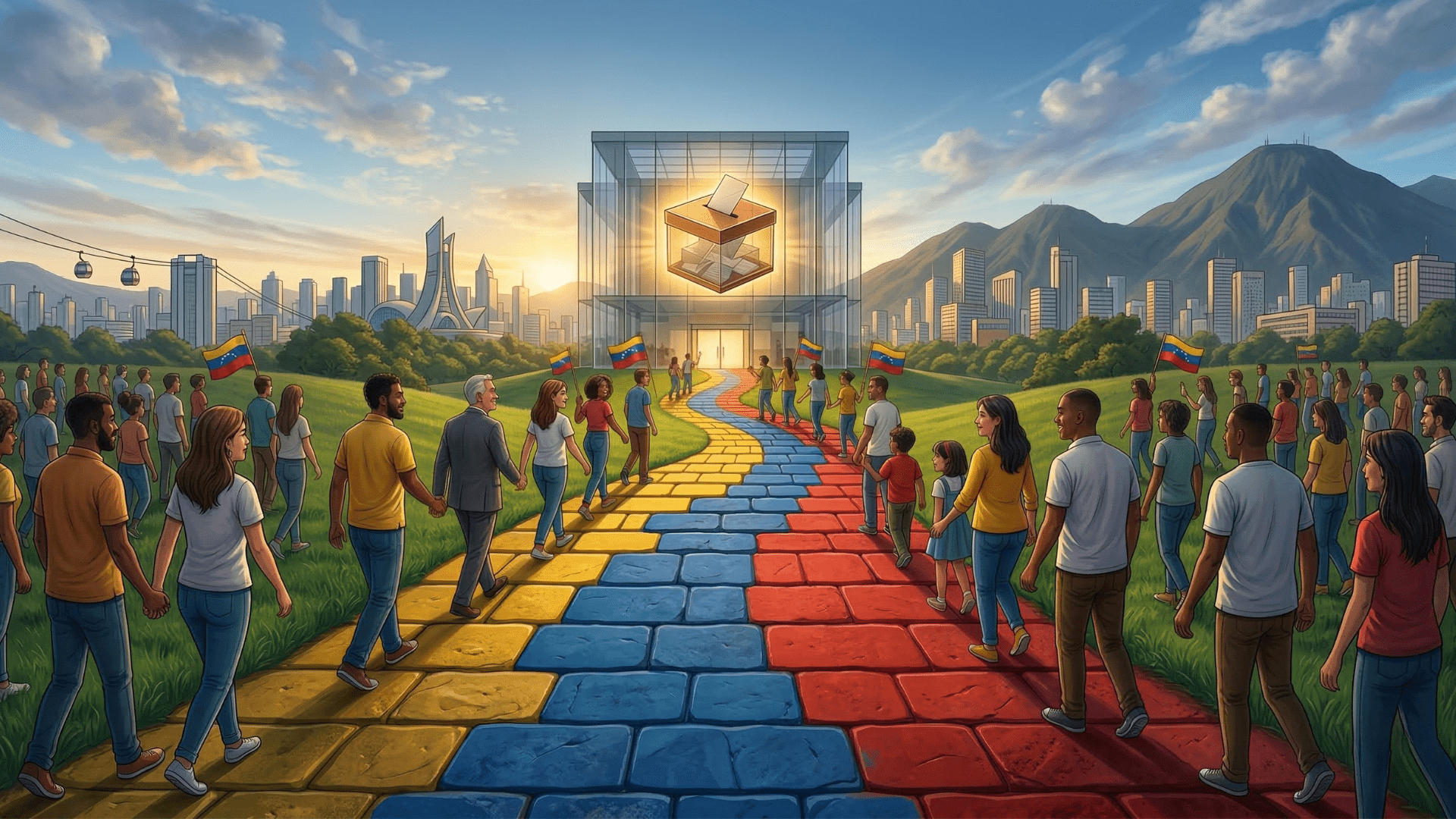
The policy of fait accompli has brought us to an unpredictable outcome, where the enemy becomes an ally, where forgiveness precedes justice, where revolutionary hegemony gives way to a sustained program of reforms, and where the opportunity has arisen, once again, to set the course towards a common future.
Our future will then depend on the decisions we make in our present. If the bureaucracy found continuity between war and politics, to arrogate an exercise of sovereignty that does not correspond to it, if in the name of this exercise it elaborated a catastrophe to establish its tyranny, today it is the people’s turn to rebuild themselves in the face of this simulacrum of a destiny; it is the political class’s turn to become skilled in rebellion and institutionality, to promote the necessary changes based on a consensual diagnosis that goes beyond the immediate, accounts for the depth and historical extent of the Venezuelan crisis, and demands structural solutions, serious commitments to innovation in the face of reconstruction; for leadership, to raise the quality of its decisions; and for civil society, to generate a roadmap that contemplates intergenerational commitments, as parents, mothers, brothers, and children that we are. These commitments must bring together our personal aspirations with the creation of a community that conceives the country as everyone’s home; commitments that must constitute agreements among ourselves, that we can sustain over time, and that allow guiding future politics in favor of a new historical project, a shared horizon as a nation.
These are commitments that three generations can assume as a virtuous principle of our nation in reconstruction:
1. MODERNITY FOR EVERYONE
Countries understand modernity as civilization and incorporate themselves into it through modernization processes. Our attempt to reconcile the heritage of our traditions with the novelties of the era left several generations of Venezuelans out and projected into the present old vices never eradicated, such as racism, classism, or other forms of segregation. The political thought of Venezuelan elites naturalized difference by installing the prejudice expressed in the idea that the people cannot govern themselves, therefore it is necessary to govern for them, but not with them.
We must build a vision of a plural and pluralistic society that does not yield to the siren songs of unique, easy, or practical solutions, which guarantee voluntarist leaderships that there are no effective political reasons to argue against political will or the authority of office. We must build a society with sufficient rationality so that citizens can deliberate and agree on aspects of the government of the Republic, delegating to representatives the decision, but not the supervision of what they do.
2. A NATIONALITY WITHOUT MYTHS
In the nation, which is everyone’s home, foundational myths have educational utility; they are not used to legitimize abuses in the name of sovereignty. They remind us of the past that was, the origin, and do not configure an exclusive identity, which pretends to become an essence, a devotional object of a state religion.
The magical realism of the notion of the State and the elements of the virtues that constitute it must be disconnected from antagonistic commitments to the democratic, civilist, and liberal traditions of the founding fathers and grandfathers of Venezuelanness. The myth of the necessary gendarme, the neo-caudillismo enabled by mafias, bureaucracies, and technocracies; the acceptance, as necessary, of the democracy of exclusion or the socialism of salvation; must be overcome by a vision of a common-sense rule-of-law state that cannot serve to violate the general will. We are parents, mothers, brothers, and children, continuators of the generations who weave their lives in a common home. We are what we do, and we deserve to be able to do more to be more.
3. A NEW COMMON SENSIBILITY
The old ways of constructing nationality led to assuming it as a false identity, more a product of propaganda than the living updating of ancestral, heritage knowledge. The failures of the teaching state during modernization, coupled with insufficient promotion of culture as a device of sensibility, generated a way of being with little sensitivity and subjectivity that operates with a limited capacity to assign value.
In the nation, which is everyone’s home, taste is educated, heritage is taught, and sensibility is cultivated so that there are citizens with enough self-love, capable of making good public use of reason.
4. A STATE ADJUSTED TO CITIZENSHIP
If we are going to build the nation as everyone’s home, it is necessary to guarantee that citizen participation has governmental effects, for which it is necessary to transform the State.
The State that administers the Republic cannot continue to be, as up to now, centralist, presidentialist, with indefinite reelection for executive positions, because this perpetuates in the present the ills inherited from the caudillos, now disguised in the voluntarism of personalist leaderships and the obsequiousness of officials. As parents, mothers, brothers, and children we can aspire that, with State reform, the distance between citizens and their representatives takes the correct scale: neither too much so that representatives consider citizens as subjects, nor too little so that the margin for deliberation and administration are confused, leaving space for tyrannies and corruptions.
A nation that regenerates and wants to heal wounds must seek to travel the long road of building trust in its institutions, recognizing a past that was but cannot continue to be the horizon to respond to the challenges of the present. The new sense of the State must be marked by profound republican pillars that are removed from any risk of corporatization; the professionalization and promotion of politics with vocational roots will allow betting on public servants who guarantee governmental firmness and the stability of the constitutional thread.
With adequate State reform, the nation can articulate itself more and better in its political action, and the citizen can assume the protagonism that corresponds to them, in a much more organic, legitimate, and fair way than under an idea of sovereignty that until now has forced us to live outside our own body: in the body of the ancient sovereigns who cannot completely disappear in the multitude of concrete men.
5. NEW WAYS OF DOING POLITICS
In the nation, which is everyone’s home, political parties organize electoral politics and propose representatives and work agendas for popular representation positions; intermediary societies group the interests of guilds, unions, and other work-life corporations, without being co-opted by the parties; civil society organizations develop activism focused on public interest issues; and this is possible because the forms of aggregation foreground communities of practice, their knowledge and doings, before laws, norms, and duties. Democratic governability is possible because anyone can publicly air issues of common interest and submit them to the deliberation of citizens and representatives, because politics is service before being a mere exercise of power and democracy is a way of life before being a form of government.
The necessary repoliticization of our society requires betting on collective intelligence, rescuing historical memory, encouraging citizen participation in the intersubjective public space, and restoring trust so that public opinion restores the communities denied by the symmetry of limited rationalities that reduce the value of the human condition to the mere estimation of the utility of their behavior. Especially, we must discern the sense of hope that arises in our young people, understanding their realities, betting on them, on each generation that continues fighting day by day; and, likewise, share a sense of humanity in total openness towards others, with supportive solicitude for the most fragile, understanding the humanizing sense of accompanying the construction of life projects with civic aptitude. From our democratic vocation, it is our responsibility to reach the margins of the peripheries, and go out to meet young people, articulating the meeting of the separated and the recognition of the different, so that it is never forgotten that we are a community.
6. SOLIDARITY EDUCATION TO CLOSE THE SOCIAL GAP
If we want to build a nation of equals, we cannot maintain the main source of inequities, which is the difference in years of schooling. Each one of us must teach those who do not know, in solidarity, so that those who have no schooling learn and add their know-how and thus empower their life projects and from them, build the common home.
Solidarity education will bring capabilities for employment and entrepreneurship, but mainly it will allow generating trust to restore the social fabric, deteriorated by decades of neglect and by the war that bureaucracy has waged against the country. Solidarity education can generate agreements in communities, to close the gaps that exclusion opened, but which the negative modeling of crime deepened. If we want justice and peace, neither can be imposed but must be built from the recognition of a repertoire of shared meanings. The training of new teachers and the professional updating of the teaching body will require the development of new educational policies that allow achieving quality education with international competencies and standards, with a humanizing sense, focused on mastering soft skills, but supervised and coordinated by the communities of a society that conceives itself as an educator.
7. AN ECONOMY BASED ON WORK
In the country, which is everyone’s home, everyone lives from their work, empowers their life project, supports their home, and pays their taxes with which they capitalize the Republic and provide the state with resources to guarantee rights and provide services in such a way as not to compromise the heritage of future generations.
For this to be so, parents, mothers, children, and brothers must guarantee an end to the rentier state, dismantle the rentier culture, and change the conception that rent is a sovereign right of the people; to promote policies that lower the cost of employment, guarantee good education, health, and social security services with universal coverage, encourage domestic savings, competitiveness, and economic complexity; guarantee private property and rationalize profit. And all this driven by a conception that allows seeing economics and morality as continuities in the way of creating value within the community, because both must be expressions of self-love rather than heartless greed.
8. ANOTHER WAY OF BEING IN THE WORLD
For the country, which is everyone’s home, the orientation of foreign policy must transcend historical approaches and place itself in a change of era that puts three factors in tension within the civilizational framework: the crisis of liberal globalization, the jurisdictional challenges to the system of nation-states and their government instances, and the emergence of the knowledge society. These tensions will realign the actors of world geopolitics, and in this framework, the country must do much more than oil diplomacy if it wants to effectively transform its economic model and positively insert the country into the concert of nations.
We must configure a peace diplomacy that advocates for the main civic ideals, guarantees human rights, and stands firm against the despotic attitudes of local governments worldwide, in order to guarantee the promotion of democratic ideals.
9. A NATION IN DISPERSION
The Venezuelan diaspora has placed us in the situation of being able to learn to be a nation outside the territory, to build communities that share identity and ways within a foreign nation.
Since the process of building the country that is everyone’s home does not imply the immediate return of the displaced to the territory, it will be necessary to build structures that allow them to participate actively, as parents, mothers, children, and brothers that they also are. Betting on Venezuelan communities beyond the homeland’s borders requires a national interest because, to the extent that their care mechanisms and a culture of good treatment among fellow citizens can be strengthened, Venezuelans abroad will be able to walk with greater firmness and possibility of success in the different places of the world where they settle, while contributing to building the future of the nation, now as overseas Venezuelans.
10. A KNOWLEDGE SOCIETY
To have the country, which is everyone’s home, the State must depend on society and not the other way around. The strength of society will be given by the greatest amount of quality knowledge available within that society; knowledge that will allow effective deliberation, generate a complex, competitive, and fair economy, whereby life projects are empowered from the solidarity of a society that preserves its internal bonds.
THESE ARE THE COMMITMENTS that three generations can assume, to transform our destiny and build the country that is everyone’s home. They constitute a reason, a purpose, for those who are dispersed to unite their forces to win. They are ideas, but they want to be driving ideas that help shape the reconstruction. With that hope, we invite everyone to discuss these ideas and to institutionalize them as an agenda in political organizations, in the military corps, and in Civil Society.