In Venezuela’s recent history, the state of Carabobo became its industrial heart. Following the economic collapse of the last decade, many factories have closed or operate below their installed capacity. In this chronicle, Jorge Barragán visits an industrial plant in the region for its Christmas celebration.
Jorge Barragán is an international analyst. He graduated from the Central University of Venezuela (UCV).
Guacamaya, December 21, 2025. I leave Caracas before dawn, heading to the centre of the country. The sun is just breaking over the Central Regional Highway–connecting Valencia with the capital. We are going to a manufacturing plant celebrating its Christmas party today. Travelling to the industrial heart of Venezuela is, in many ways, a journey to both the past and the future at the same time.
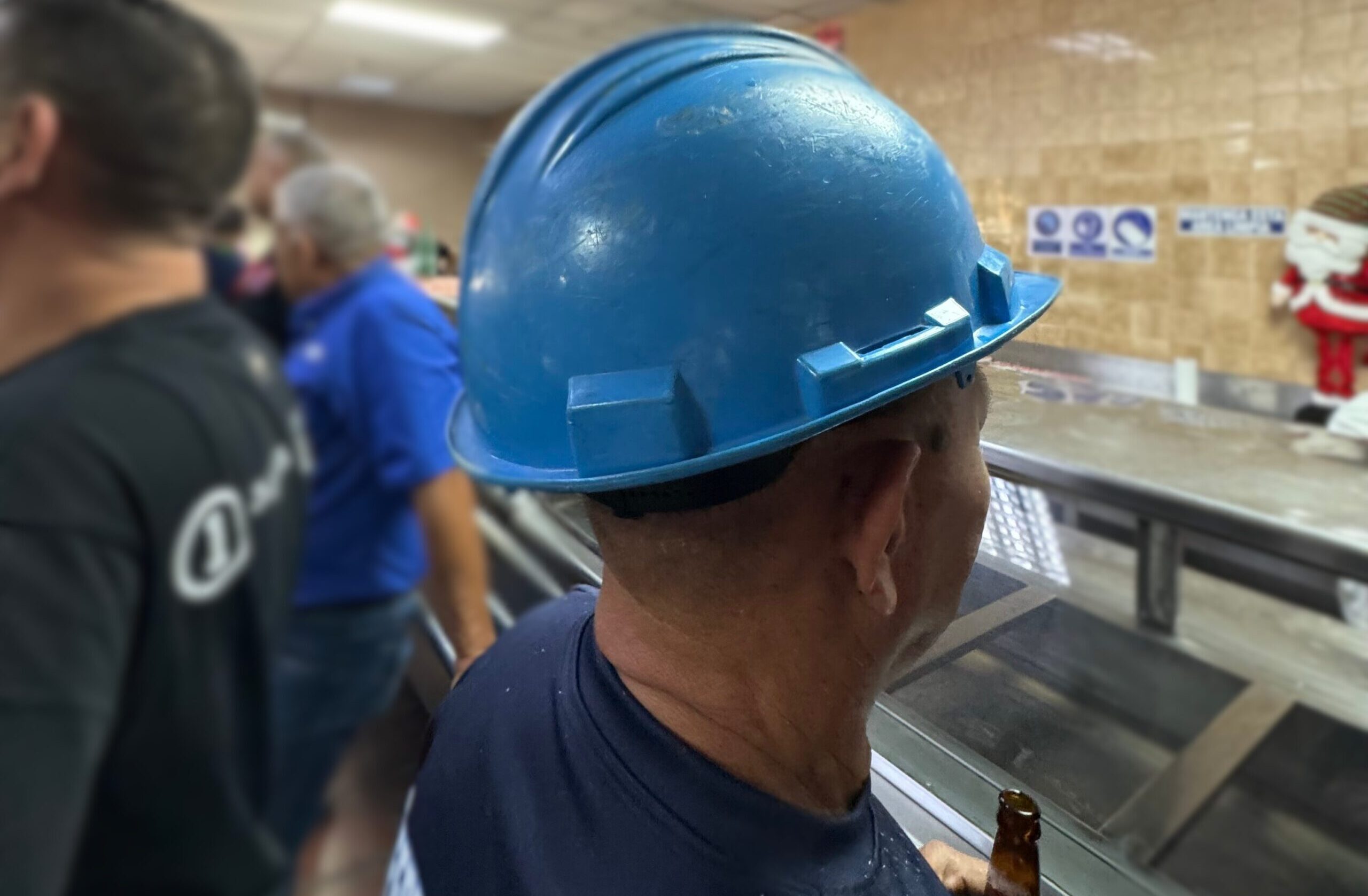
I’m going to meet its workers, observe their daily lives, and listen, from the inside, to the pulse of an industry that has survived almost everything. Today, I’m not here for technical analysis, but to eat hallaca with those who keep the machines running.
As I cross the factory gate, the noise of the country seems to stay outside. It’s not just the sound of engines; it’s the attitude. Here, the confrontational discourse that for decades separated the “boss” from the “worker” has dissolved under a reality that crushed them both. The rentier state died, and the value of the private sector imposed itself out of necessity.
This paradigm shift has a mathematical explanation felt in the pocket. While the public sector has been reduced to salaries barely scraping US$ 4 or 5 monthly (supplemented by bonuses that don’t cover 30% of the food basket), private industry has emerged as Venezuela’s labour “refuge.”
According to data from Conindustria for the third quarter of 2025, the average income of a private industrial sector operator or laborer is around US$ 217 to 235 monthly, a figure that, while still battling the cost of living, exceeds the average public sector compensation by over 150%, which barely reaches a comprehensive income of US$ 161 (almost entirely based on bonuses with no impact on base salary).
Today, the industrial sector is the best-paying in the country. That’s why, upon entering the plant, I don’t see employees clocking in; I see people guarding a treasure. Capitalism didn’t triumph in books; it triumphed at the worker’s table, where they know their well-being depends on that machinery not stopping.
The country built its factories with oil dollars, lived a rapid boom, faced successive blows with nationalisations, devaluations, hyperinflation, and suffocating regulations, and many companies closed. Others, however, remained standing. Through the obstinate will of their owners and workers to keep producing, even when oil stopped subsidising everything.
The managers tell me clearly as we walk the production line: “People first, brand and machinery after.” In an environment where goods are hard to differentiate, and competition with imported products is fierce, the only competitive advantage is human efficiency.
Many industrial plants around this one closed; it’s one of the few still operating. Others were bought by Chinese capital, the employees tell me, “surely to set up a warehouse, but not to put it into production.”
That’s why “People care for their jobs like never before,” a supervisor tells me. 80% of the payroll lives in the surrounding area. For them, the plant is not just an income source; it’s their microcosm, the place where things do work when outside everything seems to be falling apart.
There is a silent phenomenon occurring in Venezuelan society. The rentier state, the one that promised security in exchange for loyalty, has crumbled. As a result, the Venezuelan worker has rediscovered the value of private enterprise.
The Christmas lunchtime arrives. There is music, a birthday is celebrated, and the typical smell of hallaca fills the dining room. But the conversation at the tables doesn’t ignore reality. Everyone agrees: 2025 has been tougher than 2024. The devaluation is felt in the pocket, and the electricity crisis forces the plant to burn diesel to keep from stopping. Yet, there is no defeatism. There is a strange, almost stubborn energy, a desire for things to go well.
In the midst of my first hallaca of the year, I spoke with Carlos and Juan, union members. With 30 years in the sector, they explained the difficulties they’ve faced this year at the plant and how they’ve managed to overcome them. When touching on union topics, their expressions change; there is no trace left of the ideological combativeness of the past.
“It’s not like before anymore,” Carlos tells me with a mix of realism and relief. He explains that the government’s attempt to control every union movement ended up draining them of purpose. His conclusion is a statement that summarises the new Venezuela: “Son, what I want is for the company to do well next year. If the company grows, we all win.”
After the meal, the boss takes the floor. His speech doesn’t talk about politics, but about growing regardless of what happens in the country. It’s the philosophy of the survivor: to overcome the environment so as not to be devoured by it. They are focused on launching new products to market next year, which generates happiness and pride in all the workers.
Amid the celebration, I met Andrea, now the company’s head of purchasing; she has spent 35 years growing within the institution. She entered at age 15 through the INCES program, a practical training program born in 1959 under the vision of Master Luis Beltrán Prieto Figueroa, a former political leader.
She has survived monetary reconversions, scarcities, and fierce devaluations, but her compass has always pointed in the same direction: to make the factory grow. Andrea is not just a boss; she is a reference point. Her colleagues look at her with a mix of affection and respect. For her, and for many here, the company is an anchor; their way to progress in a sea that is always choppy.
The most emotional moment came with the presentation of awards. The management calls the veterans to the stage. Names are mixed with figures that seem impossible in such a volatile country: 25, 30, 35 years of service. The applause is long, genuine, and heavy. In a country where everything seems ephemeral, these men and women are proof that something can be solid.
At the end of the day, as dusk falls over the parking lot and the workers begin to say goodbye, I think about what this place represents. It’s not just a factory that endures. It’s a Venezuela that learned, the hard way, the value of work, that without work there is no future. A Venezuela that doesn’t expect miracles from oil, but bets with discipline, routine, and effort to build something that depends on itself. And that is only achieved if there is harmony and cohesion between employees and employers.
Here, far from Caracas and the political noise, lives a country that wants to produce. At least that’s what it feels like spending the day at this factory, listening to and sharing with its workers and managers. I can’t say that this is the reality of the entire Venezuelan industrial sector, but it is in this specific place, where work still structures daily life.
For years, official narratives sowed the idea that the private sector was the enemy of the people. That entrepreneurs were “exploitative bosses.” Public employment was the supreme ideal of the rentier state. That model collapsed. The irony is resounding: the project that sought to eradicate private enterprise ended up elevating its social prestige.