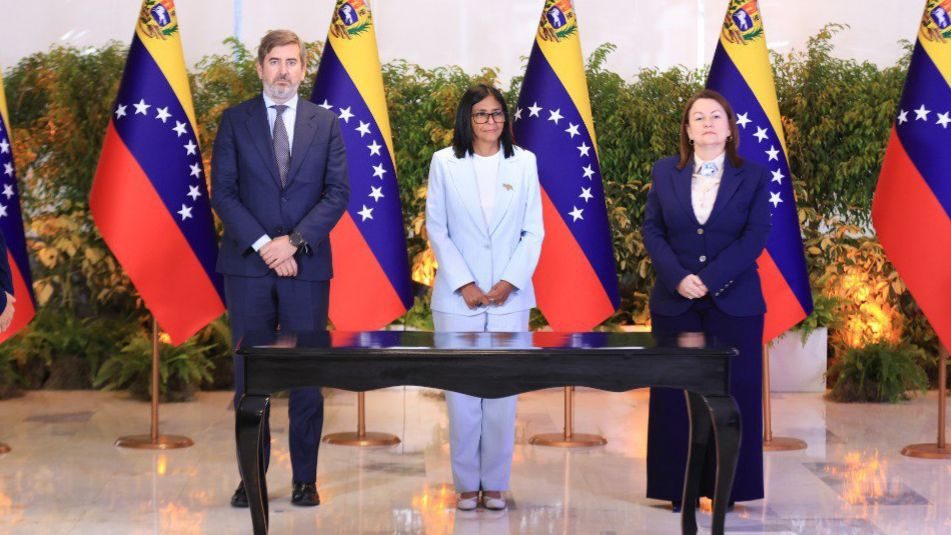
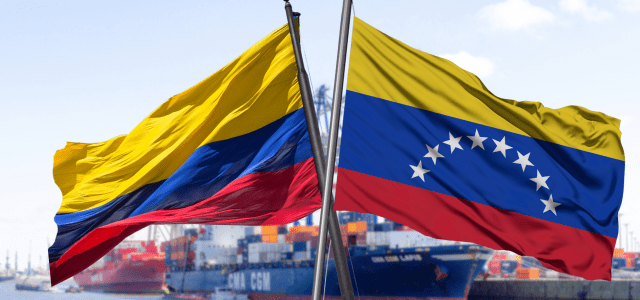
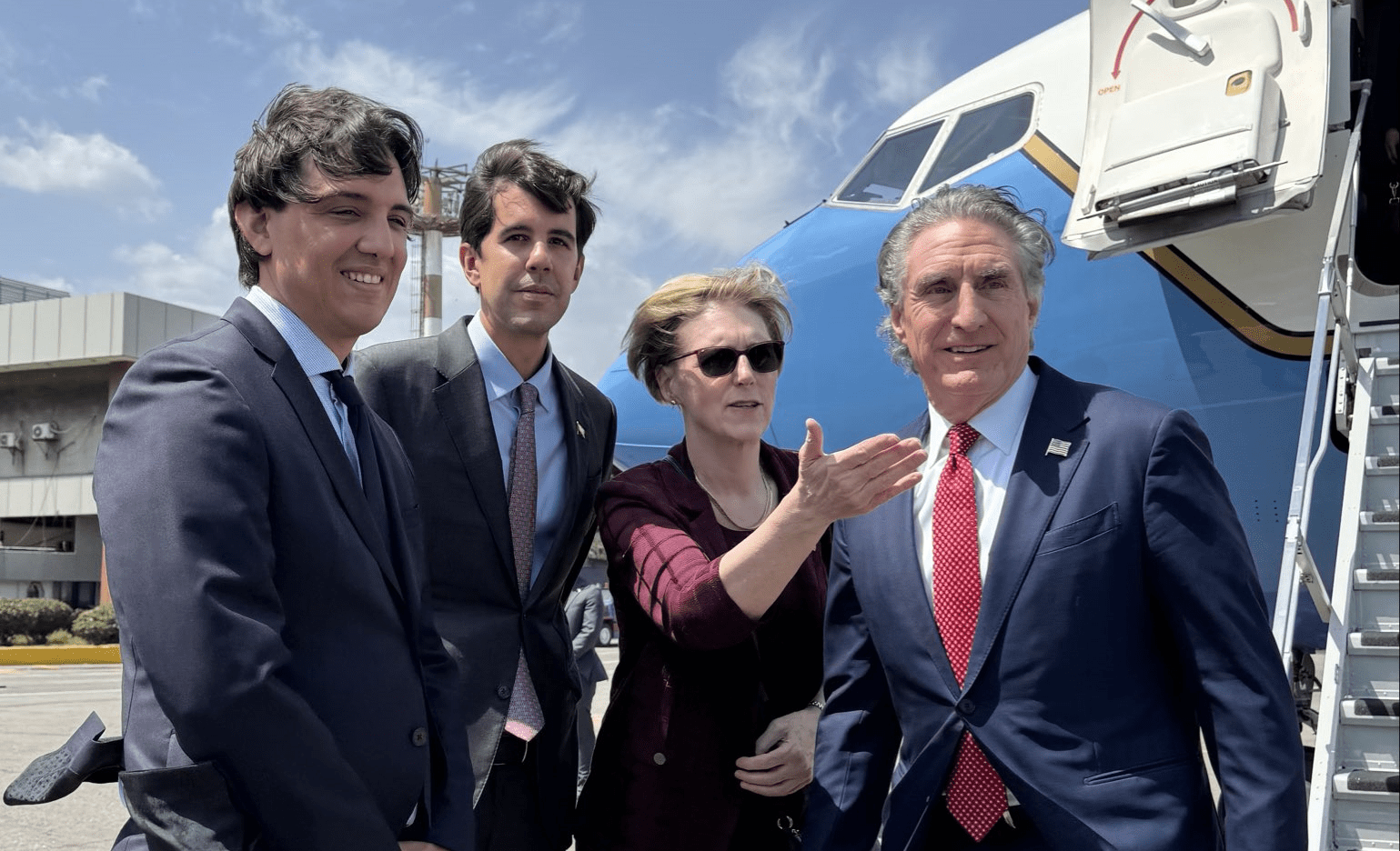
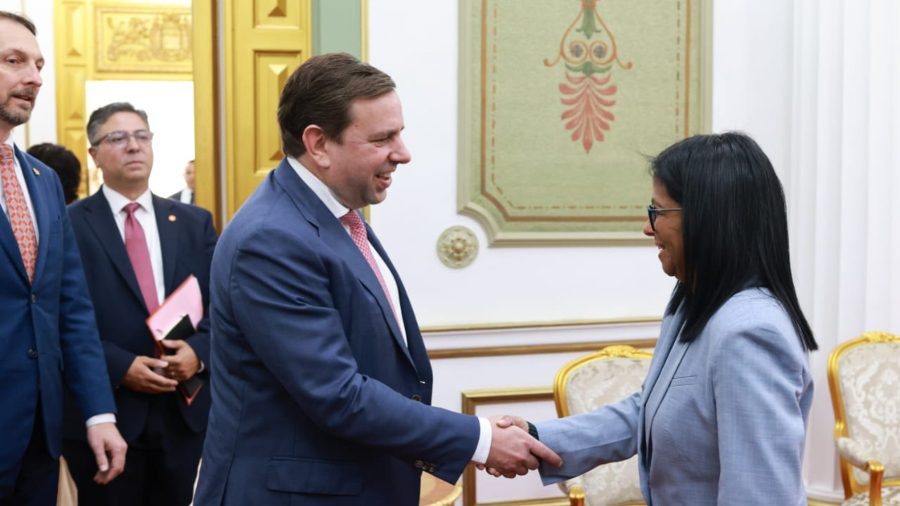
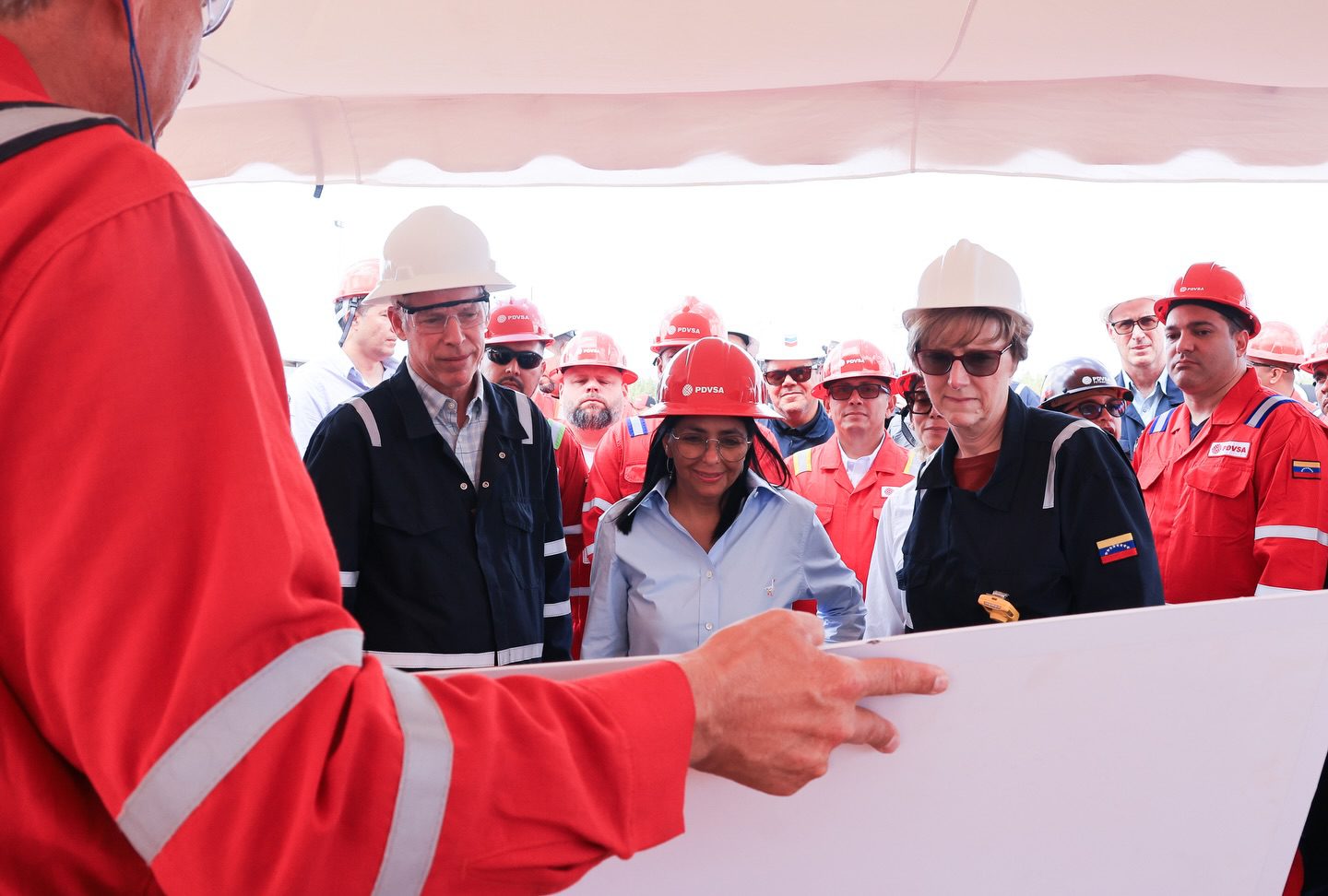
Venezuela is seeking to revitalize its mining sector after years of informal gold trade and international sanctions. Acting President Delcy Rodríguez is promoting legal reforms, institutional restructuring, and agreements with actors like Trafigura to attract foreign investment. The United States is pushing for lower royalties and safe corridors to protect investments and workers in areas such as Bolívar. Meanwhile, inspections and maintenance at facilities like the Chocó Plant are part of efforts to modernize production and meet international standards. Photo: CVM / X social media
Guacamaya, March 16, 2026. Venezuela is at a turning point in its mining sector: after years of informal gold trade routes and international sanctions, the country is implementing a series of legal reforms, institutional reorganizations, and strategic agreements with international actors such as Trafigura. Acting President Delcy Rodríguez seeks to modernize the Mining Law, formalize artisanal mining, and attract foreign investment, while the United States pressures for lower royalties and to ensure security in extraction zones. With safe corridors, corporate mergers, and responsible sourcing schemes, Venezuelan gold is once again becoming a focal point of geopolitics and the global economy.
Trafigura-Minerven agreement: A new starting point
The recent agreement between the Swiss trading company Trafigura and the Venezuelan state-owned company Minerven to develop a responsible gold sourcing program marks a new attempt to reorganize and formalize Venezuela’s gold sector after years in which the metal was traded through alternative circuits to circumvent international sanctions.
According to Reuters, the agreement involves a prepayment scheme for gold doré—a semi-pure alloy that is later refined—under which Minerven would supply between 650 kilograms and one metric ton of gold exclusively from its operations, destined for the U.S. market. This initiative comes after the United States authorized the purchase of gold produced by Minerven, its subsidiaries, and the Venezuelan government, allowing the metal to be sent to refineries on U.S. soil.
Trafigura stated that the agreement will be limited exclusively to Minerven’s own production, aiming to ensure traceability and compliance with labor and regulatory standards. The program seeks to raise standards in Venezuela’s state gold sector so that its production can eventually be integrated transparently into international markets.
The decision to restrict purchases to state operations also aims to prevent the inclusion of gold from third parties, particularly from the Arco Minero del Orinoco, a vast mining region in southern Venezuela where United Nations investigations have documented the presence of informal mining linked to criminal networks, labor exploitation, and severe environmental impacts.
Institutional reorganization of the mining sector
Alongside this new commercial channel, the Venezuelan government has begun an institutional restructuring of the state gold industry.
Through Presidential Decree No. 5,266, published in the Extraordinary Official Gazette No. 6,994 on March 6, 2026, the merger by absorption of Minerven into the Venezuelan Mining Corporation (CVM) was ordered.
The decree establishes that CVM will be the surviving entity and assume all of Minerven’s assets, liabilities, and obligations. The corporation must also carry out the necessary organizational adjustments—especially in human talent—within 30 days of the decree’s publication.
Execution of the process falls under the responsibility of the Ministry of Ecological Mining Development and Basic Industries, while the Executive Branch appointed Héctor José Silva Hernández as acting president of the corporation.
Legal reform to open the mining sector
The corporate reorganization is complemented by a structural reform of the legal framework regulating mining in Venezuela.
Acting President Delcy Rodríguez announced that the Executive will promote a comprehensive reform of the Mining Law in force since 1999, aiming to modernize regulations and facilitate new international investments in the sector.
The National Assembly of Venezuela approved in first reading a draft Organic Mining Law intended to replace current legislation and establish new rules for the entire value chain of the country’s mineral activity: exploration, exploitation, processing, transport, and commercialization of mineral resources.
The draft law proposes strengthening legal security to attract foreign capital, including specialized mediation and arbitration mechanisms for dispute resolution, as well as the creation of a National Mining Superintendence responsible for supervising operations, promoting investment, and organizing the sector institutionally.
The reform also includes the creation of a mining social fund, aimed at financing social security for workers in the sector and ensuring greater social benefits linked to extractive activity.
Another objective of the project is to regulate artisanal mining, a widespread phenomenon in southern Venezuela. According to official estimates, over 200,000 informal miners currently operate in areas such as the Arco Minero del Orinoco, so the new legislation seeks to incorporate them into the fiscal system and offer social protection through registration and formalization mechanisms.
Adjustments requested by the United States
The Mining Law reform is also taking place under the direct influence of the United States. Sources consulted by Guacamaya revealed that the White House has requested the elimination of the joint venture system and the National Mining Fund, as well as the reduction of mining royalties from 13% to a maximum of 5%, aiming to incentivize foreign investment and ensure more competitive conditions for investors.
In parallel, Guacamaya has learned that in private discussions, the U.S. has requested the creation of safe corridors in Bolívar state, intended to protect both investments and workers from the presence of criminal organizations in areas such as the Arco Minero. This measure seeks to provide a secure operational environment for international companies, reducing risks associated with informal mining and violence in regions where irregular groups such as the ELN and criminal gangs are present.
These external recommendations aim to reinforce Delcy Rodríguez’s government efforts to formalize artisanal mining, guarantee traceability in gold production, and provide legal and social frameworks to integrate the sector into the global market.
Informal gold routes from Venezuela
The effort to formalize the gold trade comes after several years in which Venezuela relied on alternative trade routes to place its gold on the international market.
Investigative reports and international agencies have indicated that part of Venezuelan gold was exported to African countries such as Uganda, Mali, and Burkina Faso, where it could be refined or blended with local production before being sold in global gold trading hubs like Dubai.
One well-known episode occurred in 2019, when Ugandan authorities investigated the arrival of 7.4 tons of gold, valued at around $300 million, linked to shipments from Venezuela. The gold reportedly arrived in two shipments—3.8 and 3.6 tons—on charter flights from Caracas, according to reports cited by Reuters and other international media.
Passing through African refineries allowed the origin of the metal to be diluted, mixing it with local production to obtain export certificates different from Venezuelan ones before its commercialization in the global market.
Turkey: the key partner for venezuelan gold
Before these African routes consolidated, the main destination for Venezuelan gold was Turkey, which became a strategic partner for Caracas in the metal trade from 2018.
Data from the Turkish Statistical Institute, cited by Reuters, indicate that Venezuela exported at least 20.15 tons of gold to Turkey between January and May 2018, with a value of around $779 million. Subsequent investigations estimated that up to 73 tons of Venezuelan gold were sold that year to companies in Turkey and the United Arab Emirates.
Much of this gold was refined in facilities in Istanbul before being marketed internationally.
Trade was also articulated around a gold-for-goods scheme, through which Venezuela obtained food and basic products for the social programs known as CLAP.
Turkish investments in the Arco Minero
The Caracas-Ankara relationship has not been limited to metal trade. In June 2024, the Venezuelan government signed agreements with Turkish companies to participate directly in the exploitation of mineral resources in the Arco Minero del Orinoco.
Among the most relevant actors is the industrial conglomerate Yildirim Group, which participates in gold exploitation projects through alliances with Minerven.
The agreements also include investments in the rehabilitation of industrial facilities linked to iron and steel, as well as petrochemical projects related to ammonia production. In many cases, these projects operate under compensation trade schemes, where foreign investment in infrastructure or technology is paid directly with mineral resources or future production.
A sector in Transformation
Official data cited by Reuters indicate that Venezuela’s gold production increased 37% in 2025, reaching 9.5 tons, while the Central Bank of Venezuela held 47 tons in official reserves at the end of the year.
At the same time, the country maintains a legal dispute with the Bank of England over access to 31 tons of Venezuelan gold stored in London, whose control has been the subject of litigation in British courts.
In this context, the agreement with Trafigura, the legal reform of the mining sector, U.S. pressures, and the institutional reorganization of state-owned companies seem aimed at rebuilding a formal channel for Venezuelan gold exports, with higher standards of traceability, international investment, and global oversight.
After years in which the metal circulated through informal routes connecting South America, Africa, and the Middle East, Caracas’ challenge will be to transform this system into a mining industry capable of fully reintegrating into the global market under rules of transparency, legal security, and social protection.