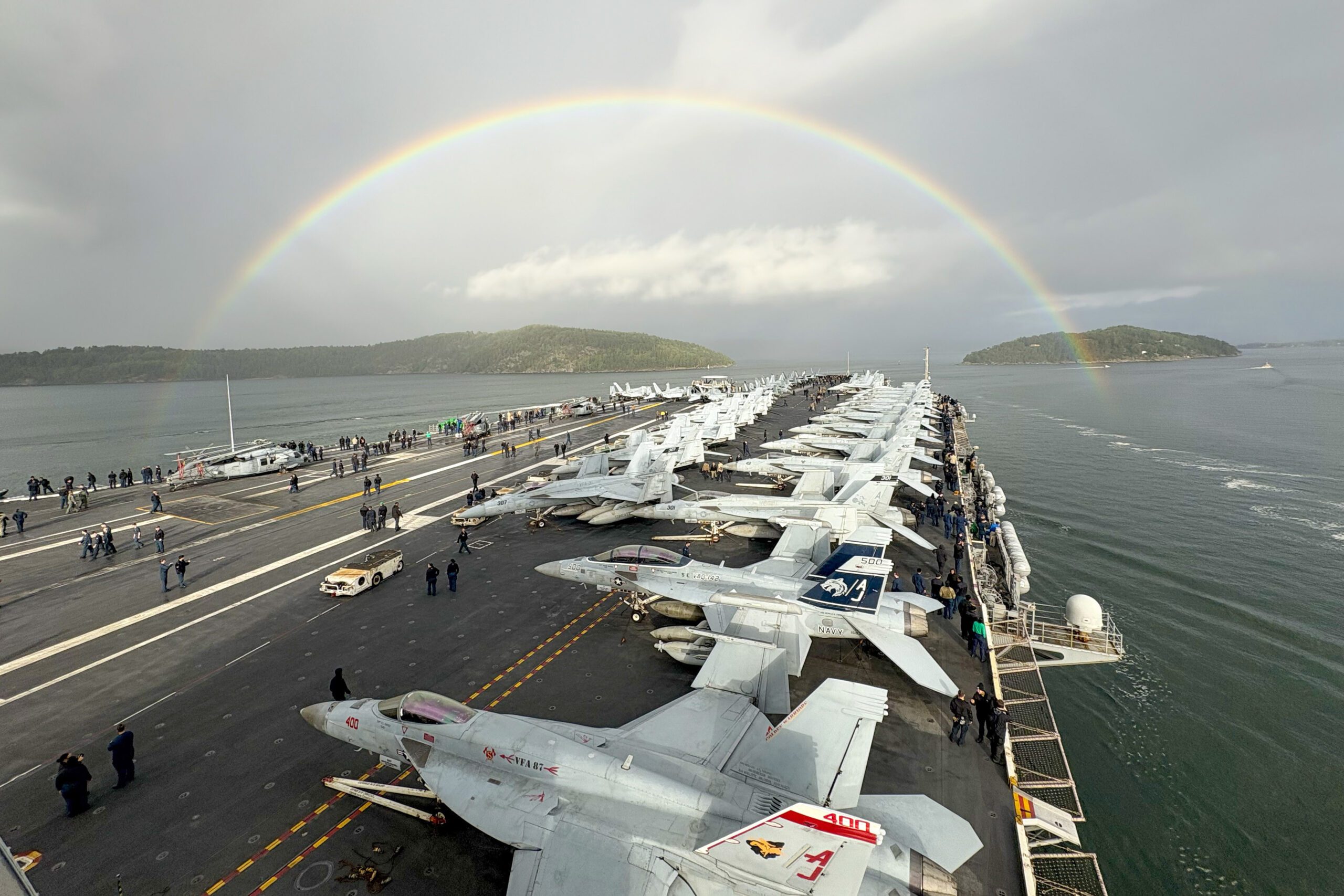
Tensions between the United States and Venezuela continue to escalate following an announcement by Donald Trump that Venezuelan airspace is closed. In the image, the USS Gerald R. Ford in Norway in September 2025. Photograph: U.S. Navy / Weston Mohr.
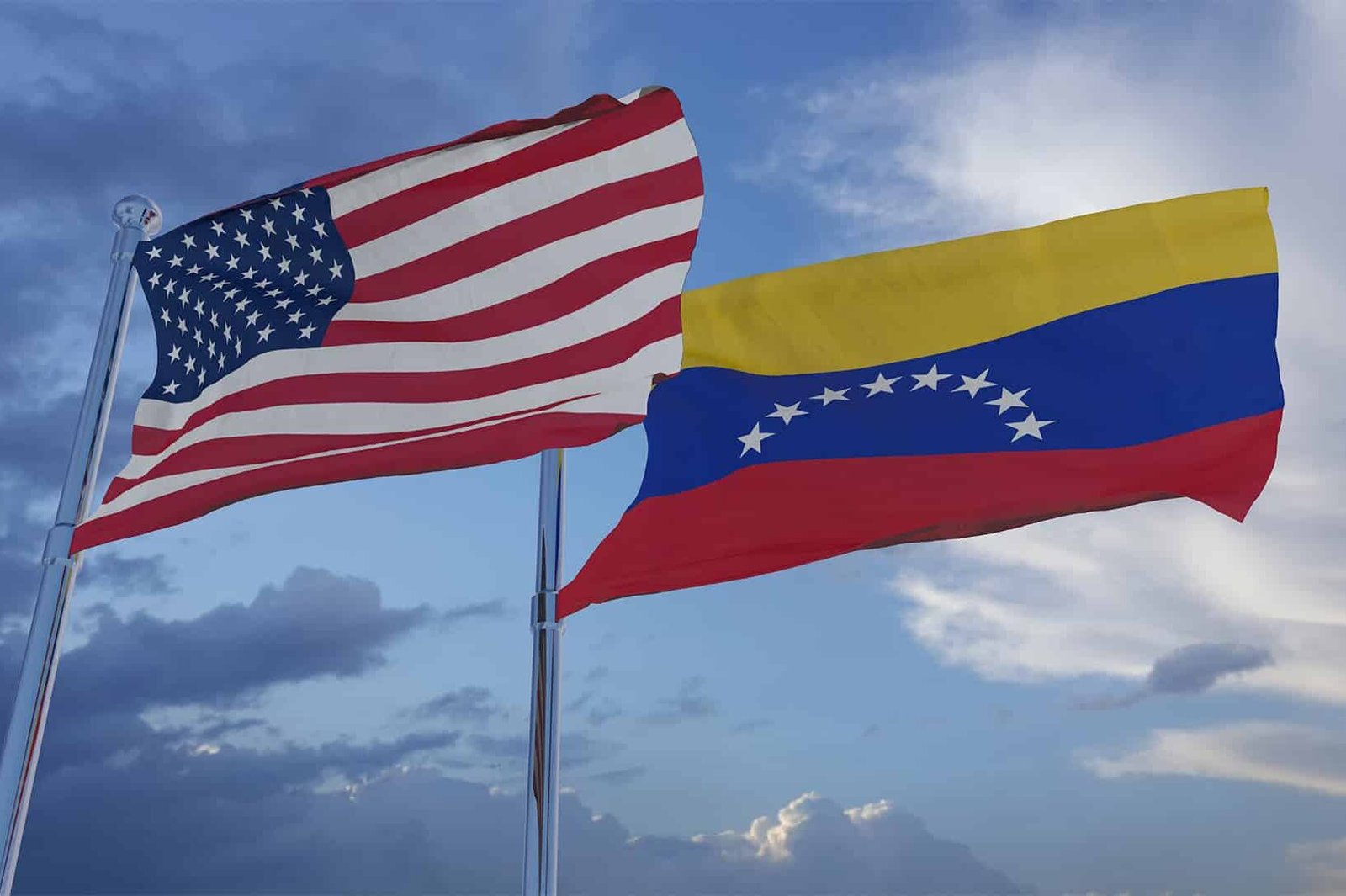
Guacamaya, November 29, 2025. This Saturday saw a significant escalation in tensions between the United States and Venezuela, marked by a post on X from President Donald Trump in which he declared that Venezuelan airspace was “closed in its entirety” to airlines, pilots, traffickers, and other operations. The publication thus denoted a potential airspace closure as a prelude to an imminent military action.
The message from the U.S. leader coincided with the recent suspension of international flights to Venezuela following alerts from the U.S. Federal Aviation Administration (FAA) about security risks. This is in addition to the recorded electromagnetic interference that affected communications and air navigation over the country, which led to the diversion of commercial flights.
Trump’s post appears to be a direct response to the confirmation that he held a phone call with Nicolás Maduro, revealed days ago by international media. According to information verified by Guacamaya, after consulting with connected sources, the call allegedly occurred last Friday, November 21, and during it, the possibility of a face-to-face meeting between the two was evaluated.
The escalation in Trump’s message also generated publications and analyses of possible imminent attacks on Venezuelan territory in the coming hours, announced by sources linked to defense and security such as “South Asia Index” or “US Homeland Security News,” and by news portals like CNN Brazil, creating a state of maximum alert in the region.
The State and Defense Departments, and the White House press office, did not respond to Guacamaya’s requests for information to confirm whether there was indeed an intention to enforce a closure of Venezuelan airspace by force.
Another Weekend, Another Low-Cost Escalation
This is the umpteenth time that members of the Trump administration have introduced an element of escalation against Venezuela, especially when the weekend arrives, but using a minimum of resources. The actions have been limited mainly to statements and symbolism, without acting directly and militarily against the Venezuelan state.
On Saturday, November 22, it was leaked to the American press that “a new phase of operations related to Venezuela” was supposedly about to begin, and later an anonymous official claimed there was a plan to drop leaflets from planes for Nicolás Maduro’s birthday the next day. On Saturday, November 15, likewise, an anonymous administration official said that “the table is being set” for military actions in the region. The next day, the State Department declared its intention to designate the “Cartel of the Suns” as a “Foreign Terrorist Organization.” On Friday, October 24, the deployment of the USS Gerald Ford to the Caribbean was announced.
In this way, the Trump administration has not yet made decisions that are more contentious for its base, such as a military expedition abroad, nor is it taking serious risks, such as assuming the possibility of American soldiers dying.
Venezuela Condemned the Airspace Closure
In reaction to Trump’s warning, the Venezuelan government, through the Ministry of Foreign Affairs, issued a statement categorically rejecting the U.S. leader’s assertions, describing them as an “explicit threat to use force,” an act that also represents a violation of sovereignty and international law, according to the document.
In turn, given this context, the Foreign Ministry’s statement denounced the “unilateral suspension” by the U.S. of the repatriation flights for Venezuelan migrants that were being carried out regularly and weekly through the “Return to the Homeland” Plan. The Venezuelan government reiterated that no one outside the country has the authority to restrict the use of Venezuelan airspace.
Air Movements on the Border with Brazil
One of the most discussed points was the unexpected landing of a Conviasa Airbus A319, an aircraft previously used by President Maduro, at the Santa Elena de Uairén airport on the border with Brazil. Given this situation, some media outlets suggested a possible escape by Maduro, which could nullify the planned American attacks.
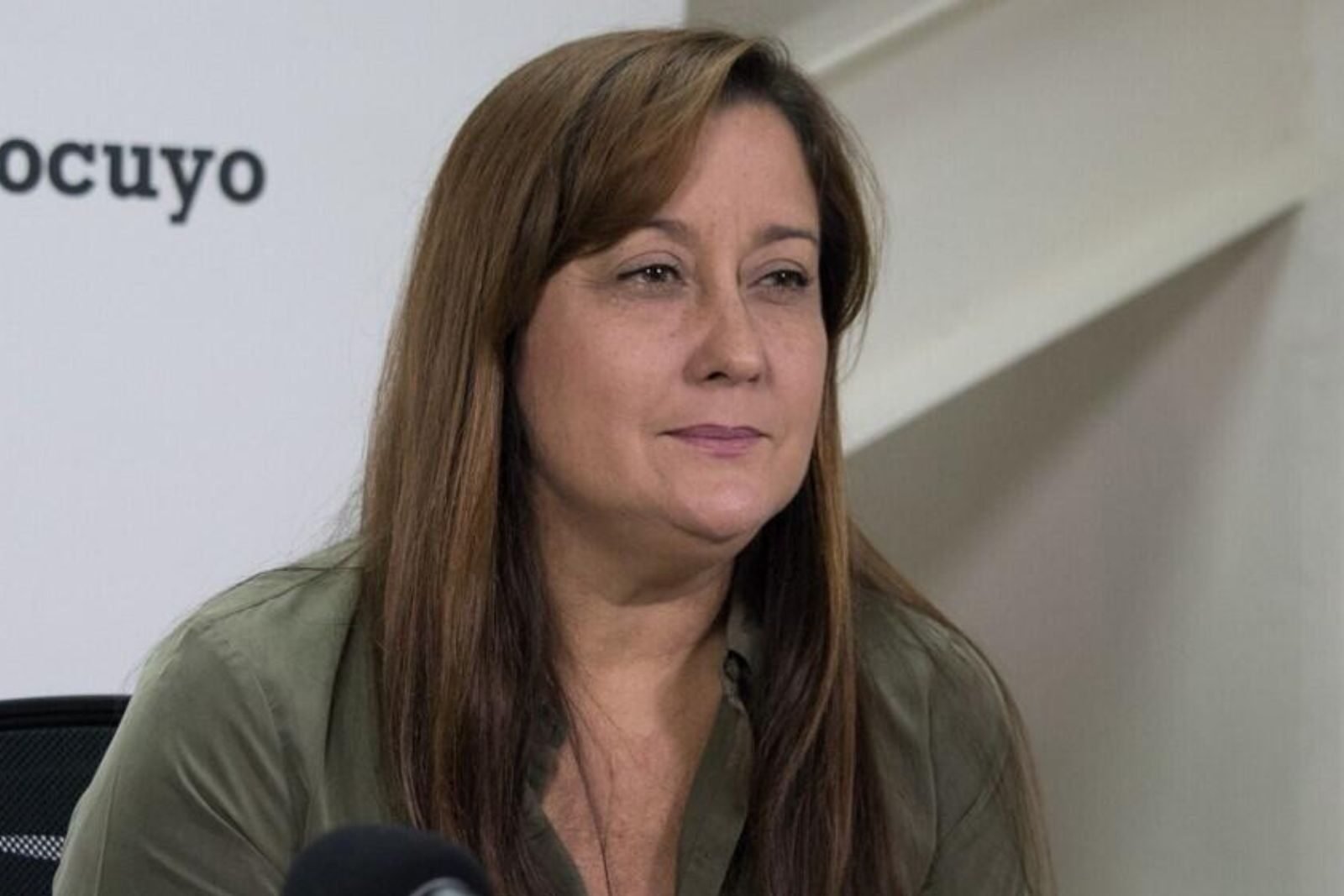
However, regarding this event, local sources reported that this movement was not of a political or military emergency nature, but rather the temporary arrival of a small group of tourists, possibly Russian, staying at a hotel in the area after traveling by helicopter to Roraima. This version was disseminated by Oscar Murillo, general coordinator of Provea.
Copa and Wingo Maintain Flights Over Venezuela
On the other hand, despite the security alerts and warnings, airlines such as Copa Airlines and Wingo continue operations over Venezuela. This fact indicates that the airspace closure measure has not been universally heeded and that a sector of commercial aviation is attempting to, or has permission to, continue operating within the complex reality of the region, despite the risks and political tensions.
Thus, it is possible that the total closure declared by Trump refers more to a strategic pressure measure than to an effective blockade. Nevertheless, the situation could change rapidly if the tension translates into military actions. The atmosphere this Saturday reflected a relative calm on the ground, but future movements must be observed cautiously.
Elías Ferrer collaborated with the writing of this article.