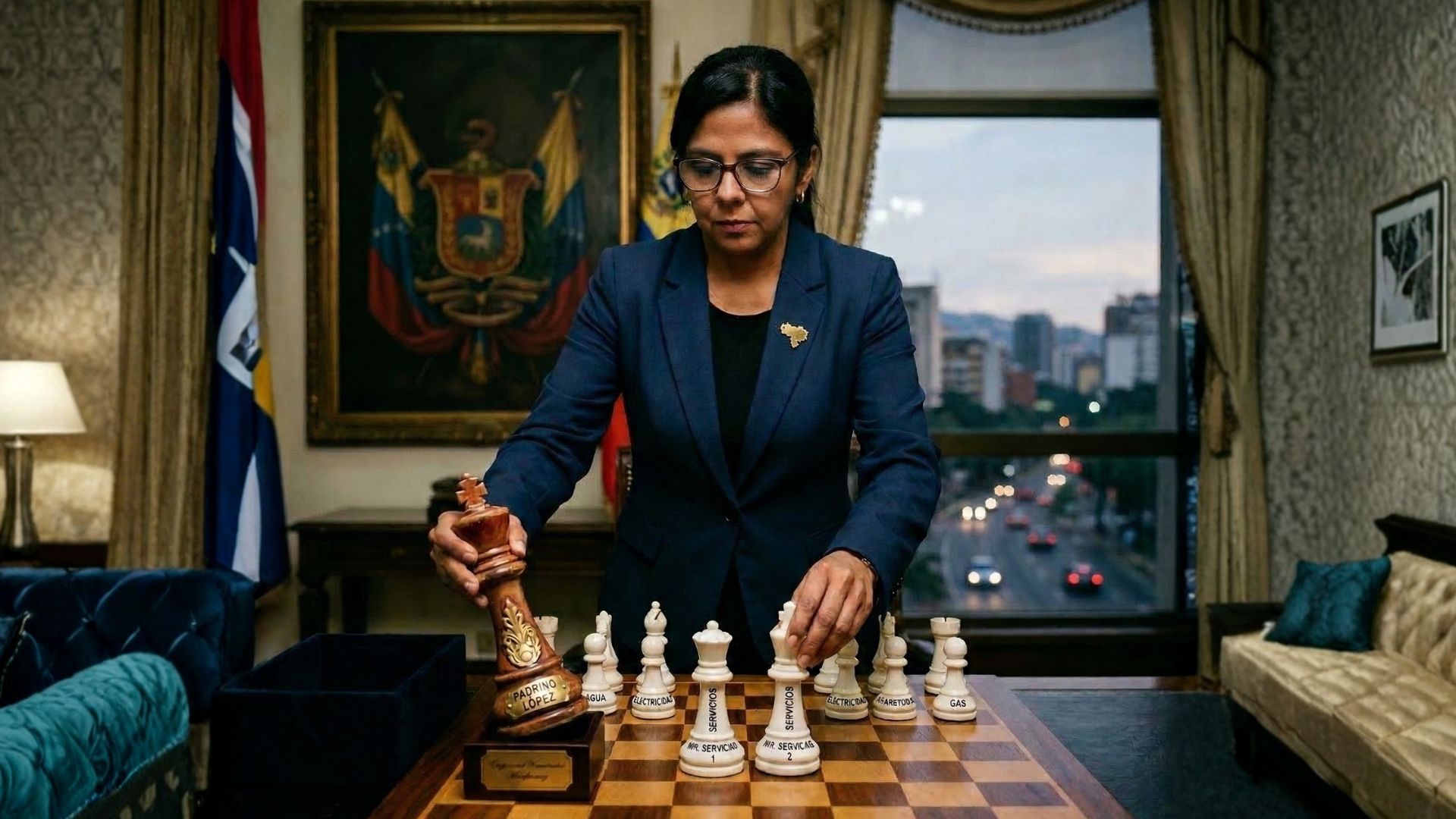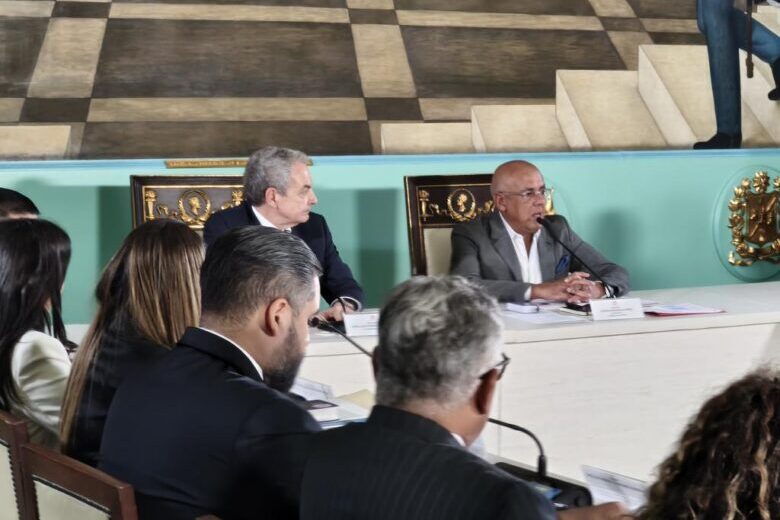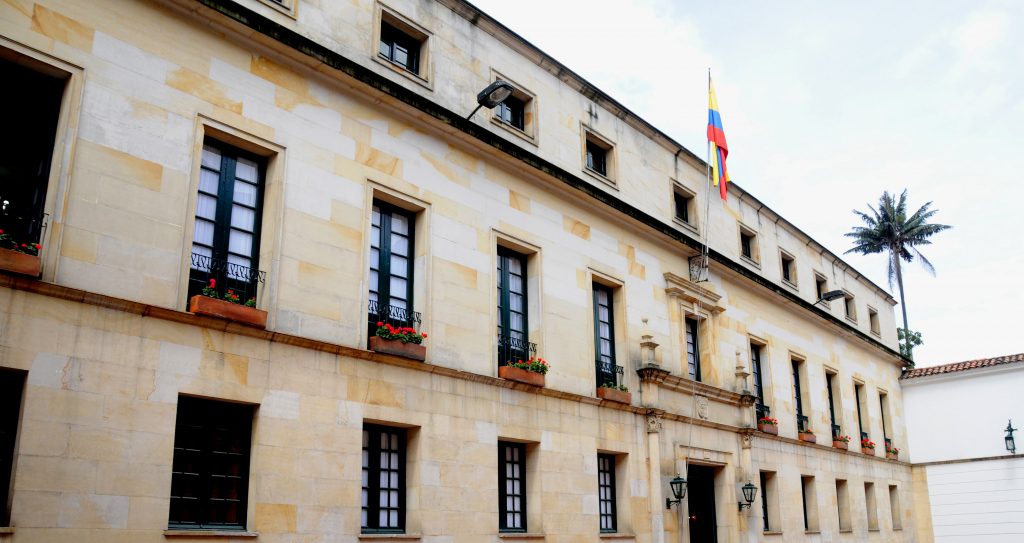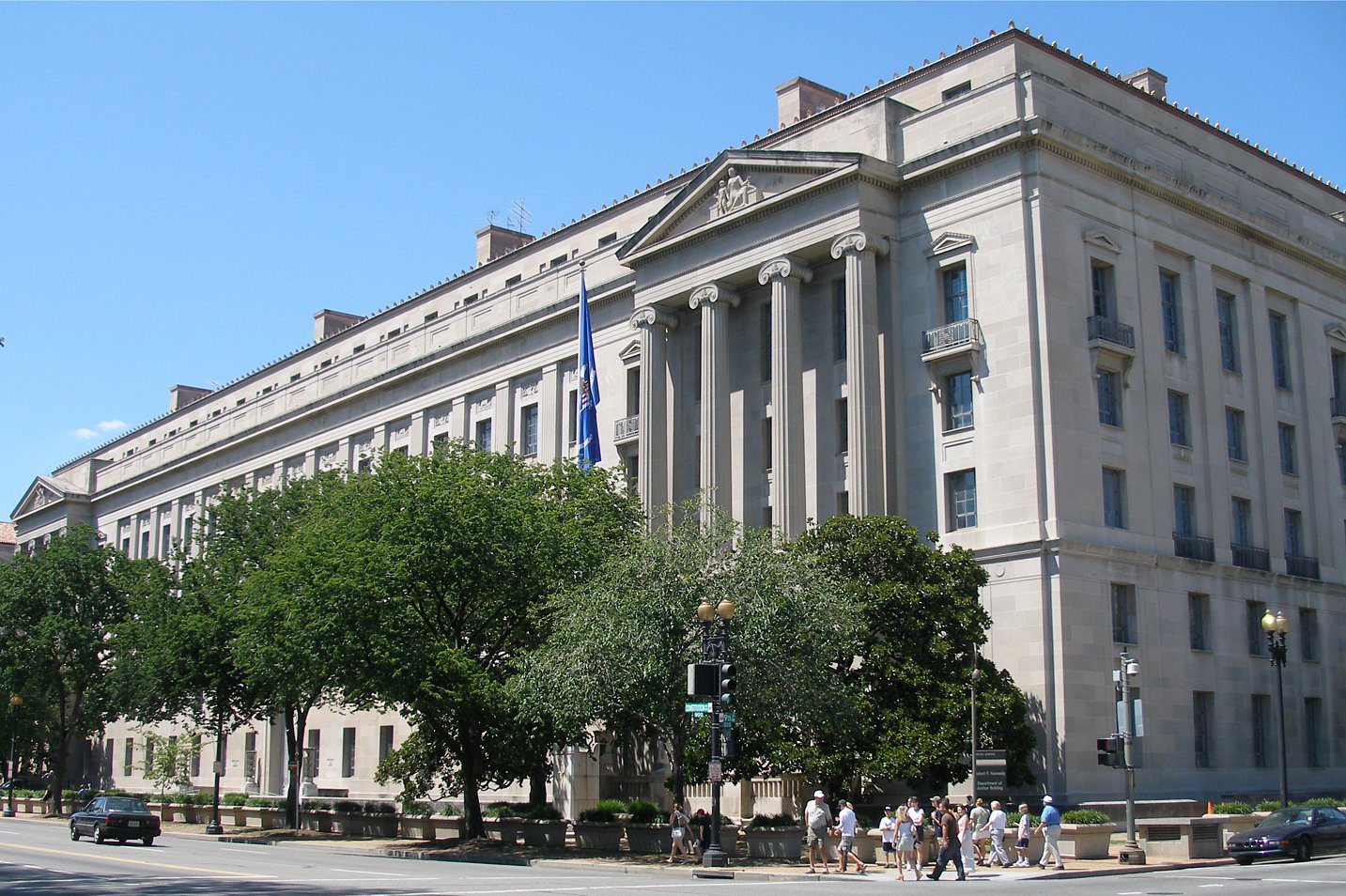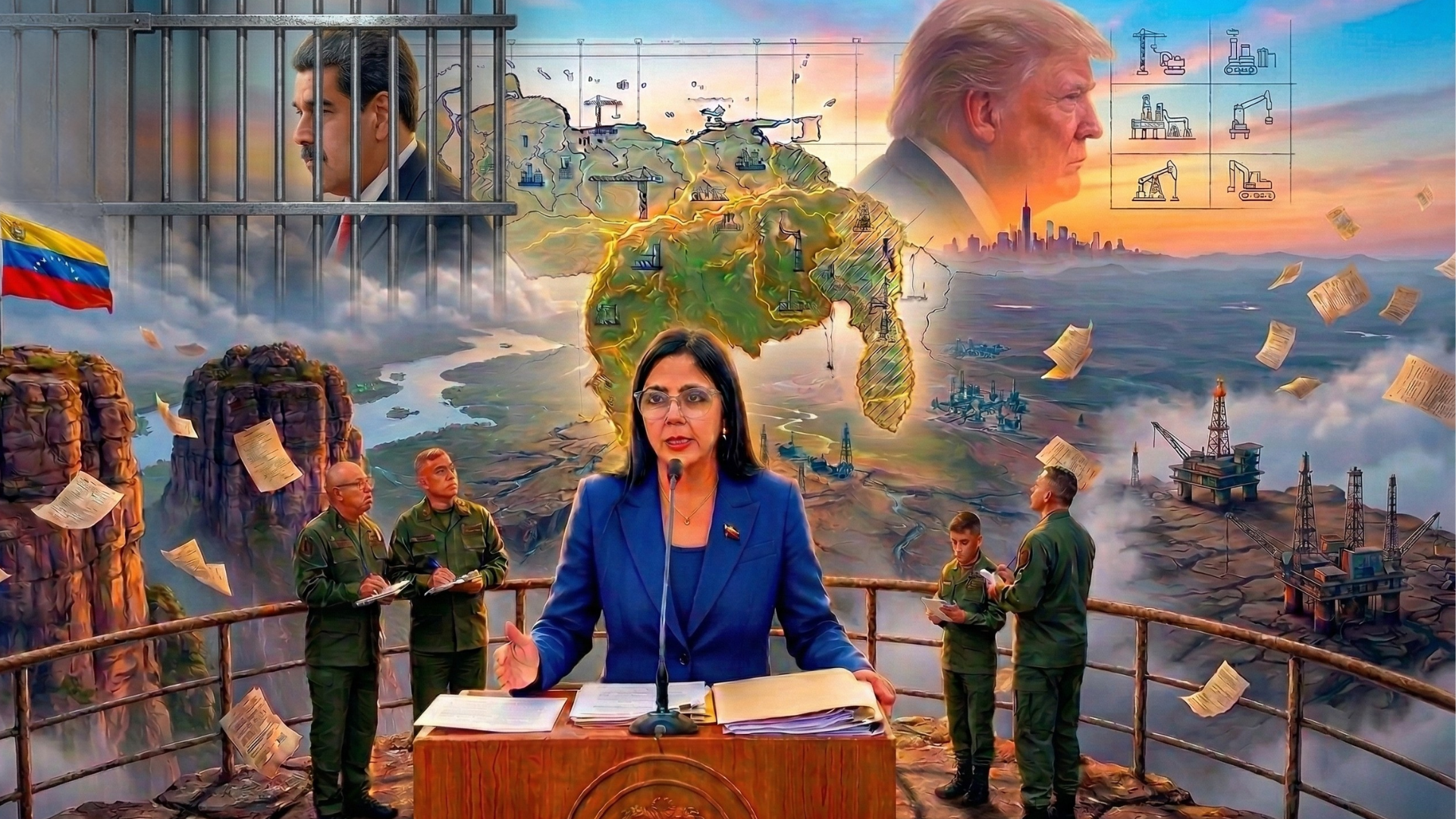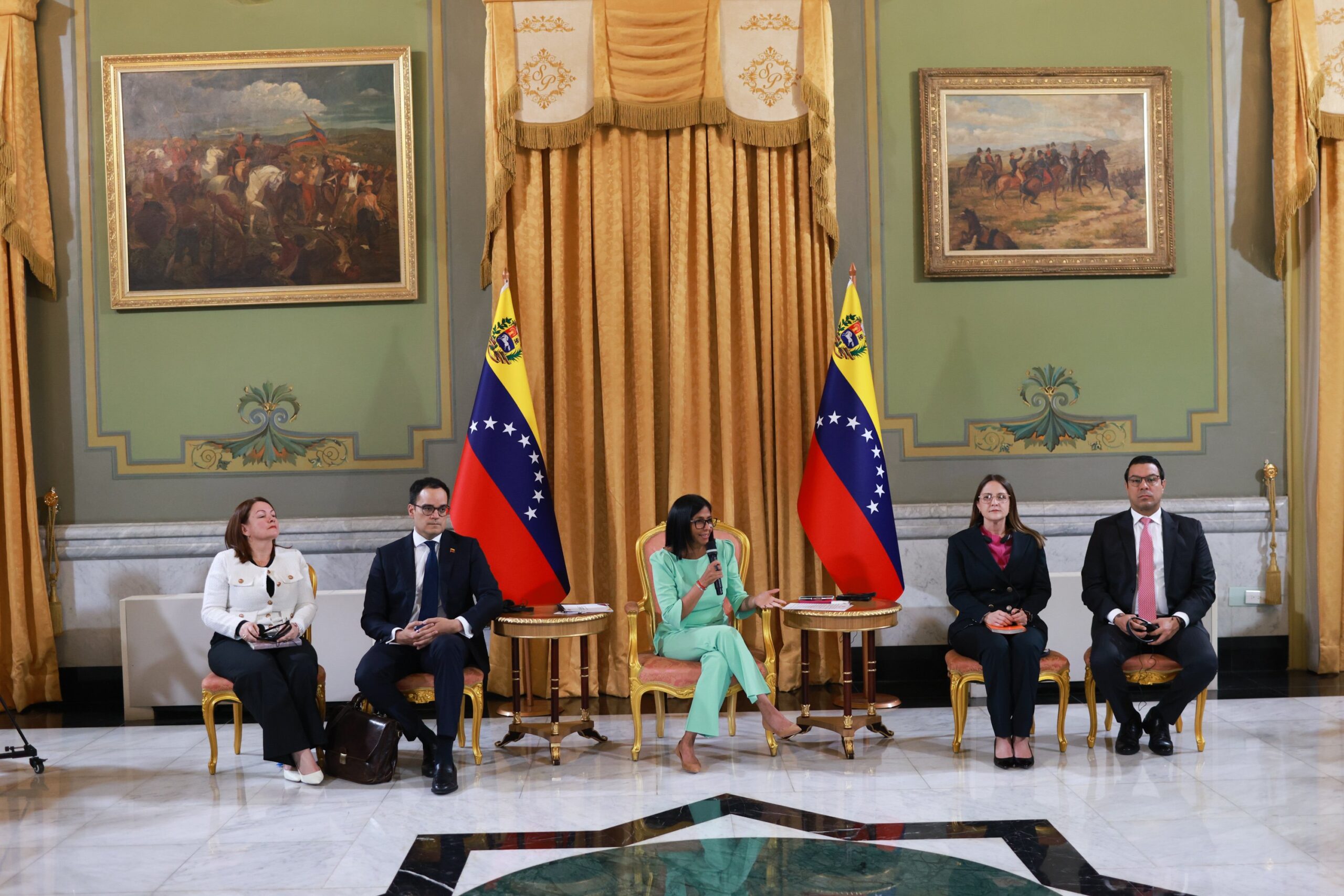
The acting president announced, during a meeting with foreign investors, the dispatch of a Venezuelan diplomatic mission led by Félix Plasencia to Washington, just hours before the OFAC license was made public. Photo: Instagram / @delcyrodriguezv.
This article has been updated with new information at 18:00 GMT-4.
Guacamaya, March 24, 2026. Venezuela’s acting president, Delcy Rodríguez, will participate in the FII Priority Summit in Florida, while she announced the reopening of the embassy in Washington.
If her in-person attendance is confirmed, Rodríguez’s participation would mark a turning point in relations between Caracas and Washington, even with Chavismo in power. It would be the first time a Venezuelan leader has set foot in the United States since 2018; it was after the elections that year that the White House’s formal recognition of Miraflores was broken.
On Tuesday, the acting president also announced, during a meeting with a group of investors brought in by Signum Global Advisors, that a diplomatic delegation led by Félix Plasencia would travel to Washington in the coming days, with the aim of advancing the reopening of relations between Caracas and the United States government.
The announcement was immediately followed by General License 53 from the administration of Donald Trump, authorizing the transactions necessary to resume the diplomatic mission.
Rodríguez’s presence at the forum, occurring in a context of diplomatic rapprochement, reinforces the link between the political agenda and the attraction of foreign investment, amid recent signs of sanctions relief.
In that same context, she reiterated the call to President Donald Trump’s administration to lift economic sanctions against Venezuela, pointing out that these measures affect both the national economy and the interest of potential foreign investors.
“We have asked President Trump that there be no sanctions against Venezuela or its economy,” she stated.
OFAC general license opens diplomatic space for Venezuelan embassy in Washington
Parallel to these announcements, the United States Department of the Treasury, through the Office of Foreign Assets Control (OFAC), recently issued General License 53, which authorizes transactions linked to diplomatic missions, which in practice would allow the operation of official Venezuelan representations on U.S. soil.
This type of license is a tool used by the U.S. government to permit activities that would, in principle, be restricted by the sanctions regime, including those related to diplomatic operations.
This development is part of a broader process of easing some sanctions and a gradual rapprochement between the two countries, opening the door to potential agreements on political, economic, and energy matters.
A history of friendship and separation
Diplomatic relations between Venezuela and the United States entered a stage of rupture in 2019, when Washington recognized Juan Guaidó as Venezuela’s interim president. From that moment on, the Venezuelan embassy in Washington became the subject of dispute.
Officials and representatives linked to the government of Nicolás Maduro left the diplomatic headquarters, while a group of activists and allies of the then-interim government took control of the building with the backing of U.S. authorities. This situation generated a legal and political dispute over the ownership and use of the property.
Subsequently, U.S. authorities assumed control of the building, and the official diplomatic presence of the Venezuelan State in Washington was practically suspended. In parallel, consular operations were reduced and formal channels of bilateral communication were limited.
Since then, contacts between the two countries have been maintained intermittently and at reduced levels, with episodes of rapprochement and negotiation that did not lead to a full normalization of relations.
Venezuela’s first diplomatic representations in the United States emerged after the country’s independence at the beginning of the 19th century, when Caracas needed to obtain international recognition and open channels for trade and financing. Initially, the missions were informal and were managed by agents or chargés d’affaires located in strategic cities such as Washington D.C., New York, and Philadelphia, combining diplomatic, consular, and commercial functions. During this period, Venezuela was also part of Gran Colombia, so diplomacy towards the United States was coordinated within that entity, until the definitive separation in 1830, when Venezuelan representation as an independent state began to consolidate.
Throughout the 19th and early 20th centuries, the Venezuelan embassy evolved into a more formal structure, adapting to internal political changes and the growth of international trade, especially with the export of coffee and cocoa. The professionalization of diplomacy was consolidated with the rise of oil, when the embassy in Washington became a strategic actor in bilateral relations, reflecting both the consolidation of the Venezuelan State and the growing importance of Venezuela in the international system.
Currently, diplomatic representation between Venezuela and the United States may be key not only for conducting bilateral political and economic relations, but also for facilitating investments, commercial exchange, and cooperation in strategic areas. Likewise, it is expected to play a fundamental role in serving the Venezuelan community on U.S. soil, providing consular services, assistance with legal procedures, and support in emergency situations, making it an essential link for protecting the rights and interests of Venezuelan citizens abroad.