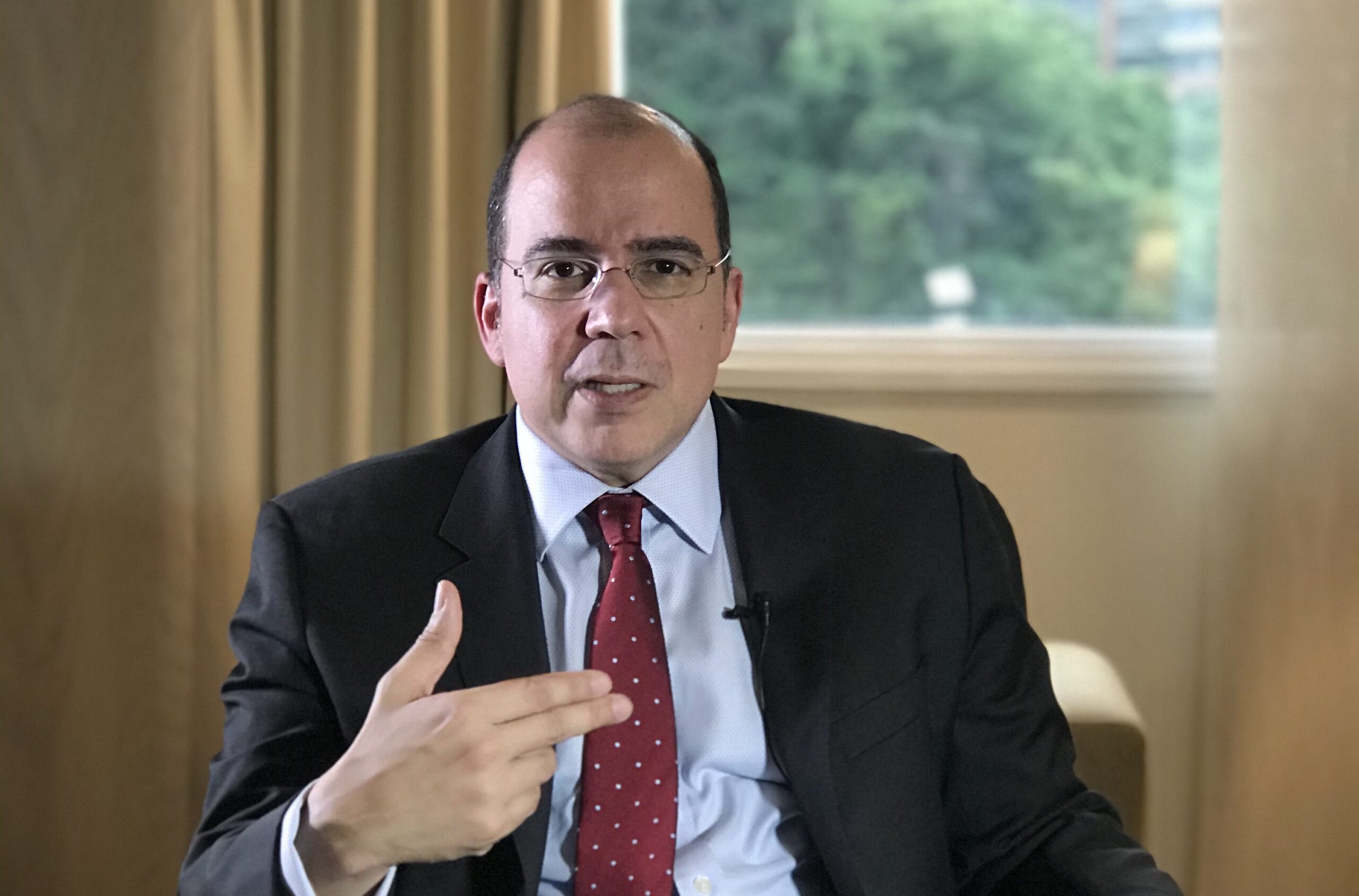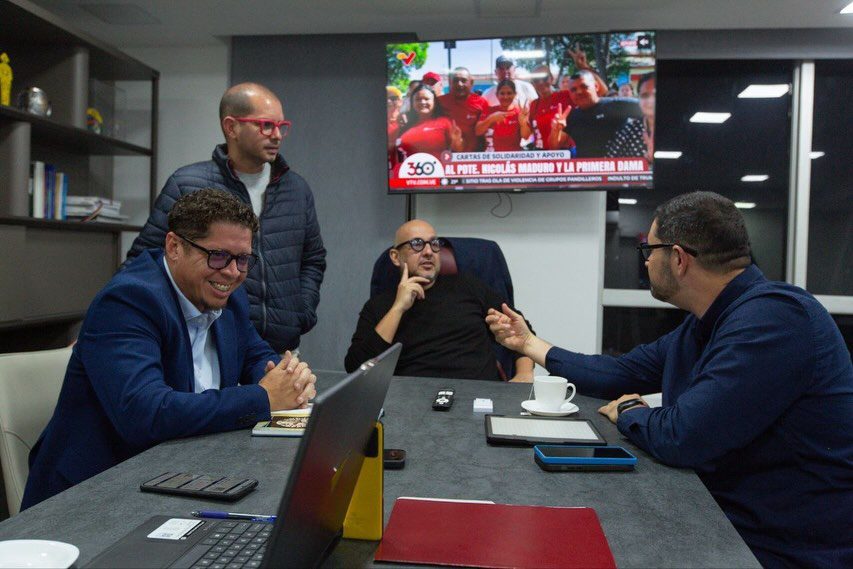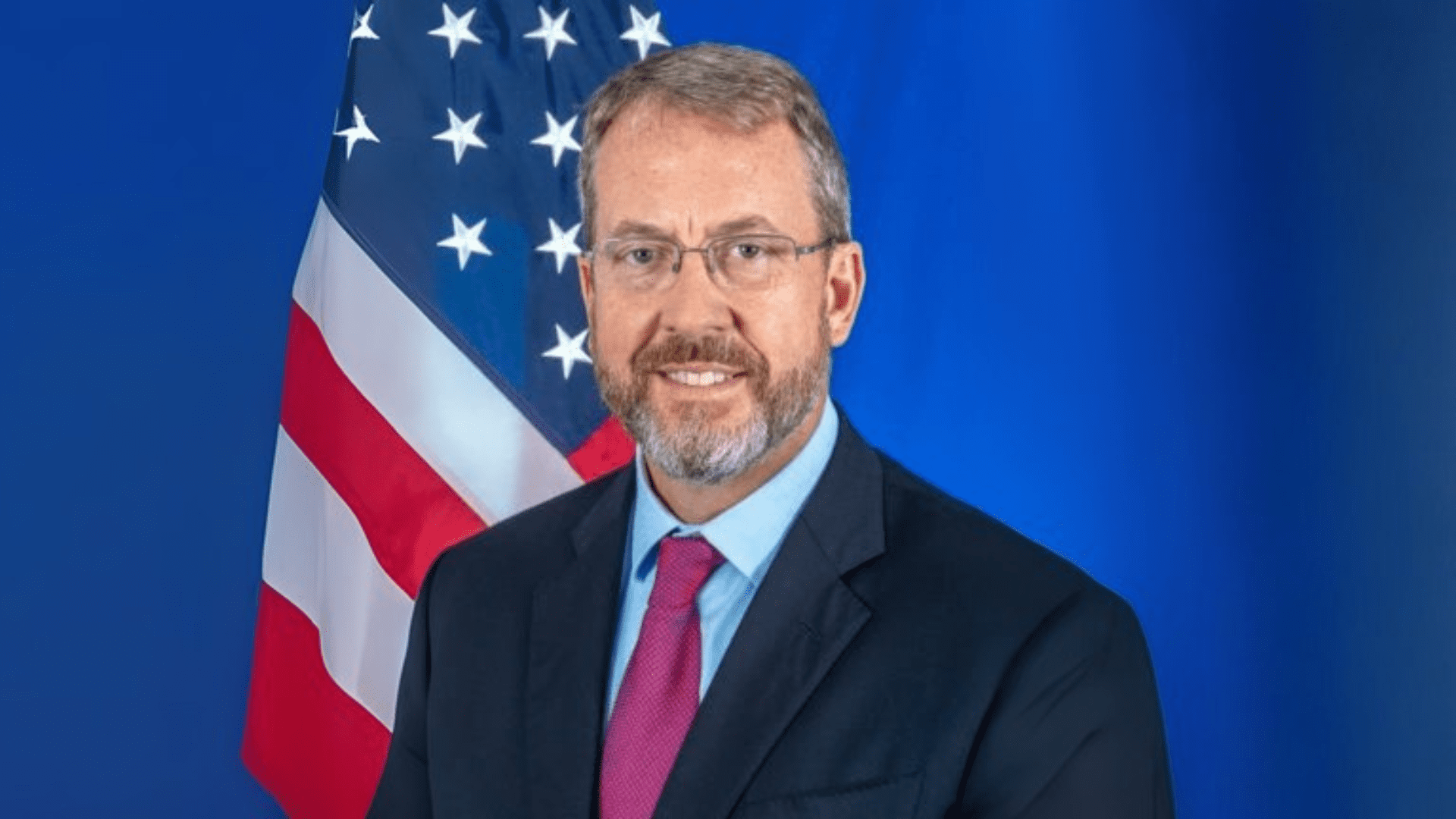
Guacamaya, August 28, 2025. James B. Story was the United States ambassador to Venezuela from July 2018 to May 2023. However, starting in 2019, he served in Bogotá, after the first Donald Trump administration closed the embassy in Caracas. He is now retired.
We asked him about the events of 2019, starting with when Nicolás Maduro issued a 72-hour ultimatum to the US diplomatic corps, continuing with the “Interim Government” period, the “maximum pressure.” What does he think about the sanctions, and when Venezuela has been closest to political change?
Q: You were in the U.S. Embassy in Caracas right during some of the riskiest moments. You were there when Nicolás Maduro gave American personnel 72 hours to leave Venezuela. How do you remember those days?
A: Those were very difficult days, of course. We made the decision that if we no longer recognize Maduro as a legitimate leader of Venezuela, but rather constitutionally we recognize Juan Guaidó as interim president, then there was no reason for us to take orders from him. Secretary of State Pompeo agreed, and allowed a group of us to stay behind.
So the families left, most of the embassy departed. My wife, my son, other people’s families left within 72 hours, but 28 of us stayed behind and continued to keep the American flag flying over the embassy.
“[In 2019] I advocated very strongly for the Embassy to stay.”
Q: There was a disagreement in the Trump administration back then on whether they should bring you, the remaining personnel, home or leave you there. Do you think the White House made the right decision? And then do you think you later missed out on intelligence by not having any presence in the country?
I think that most observers, even those who wanted us to leave the country and close the embassy in 2019, now say it was a mistake. That staying on the ground in the embassy allowed us to fly a symbol of freedom, which is our flag—our embassy is on a hill over the valley. It also enabled us to engage directly with the democratic opposition as well as, to the extent practicable, with the regime.
These are tough decisions to make. Hindsight’s always 20-20, right? And certainly, I advocated very strongly to stay. I believed that we were safe, and we should continue to stay, because we were doing our best to support the democratic opposition and the Venezuelan people.
But it became a tough situation, especially after the Maduro regime indicated that there were people seeking to have me killed, in order to precipitate hostilities between the United States and Venezuela.
You’ll recall the death of Ambassador Stevens in Libya, and of three other people. This was a very difficult moment for all of us. And Secretary Pompeo was a congressman from Kansas when that when that happened. So, he had very strong views about protecting us in the field. I didn’t believe that what the Maduro regime said was true. But when they said that it was time to go, unfortunately we had to leave.
Did we miss out on our ability to really have a better sense of what was happening on the ground? Yes. You always want to be there. Having said that, even though we ended up closing the embassy and moving to Colombia, we still had exquisite insights into what was happening on the ground in Venezuela because we had built such a such a large network.
Q: In January 2019, the U.S. recognized Juan Guaido and his Interim Government. What did you expect on day one?
A: Well, we expected that the regime would react negatively, right? And even though it’s quite clear constitutionally that Juan Guaidó was the interim president, as speaker of the National Assembly.
I did not believe that he would ask to close the entire U.S. mission. I figured that I would be PNG’d (declared persona non grata) myself and potentially a couple of other people, but we were taken by surprise when he decided to shut down the entire the entire embassy. Obviously, we knew he would do something, but that was a surprise to us for sure.
Q: I wanted to direct the question more to what were you, as a representative of the U.S. government, thinking about, by supporting Juan Guaidó?
A: We were supporting a constitutional move by the legitimate government of the country, right? We were supporting the opposition. It was an opposition plan. It was a decision that they took. We were supportive of them seeking to restore their democracy.
Now, how was that going to work in practice? If that’s your question, what was the theory of change? Obviously, we believed at the time that enough other Venezuelans, even within the regime, would recognize the abuses of the Maduro regime and support Guaidó, the opposition, the 2015 National Assembly, in changing the government.
Q: I wanted to move on to February 23, 2019 when there was an incident on the border bridge in Cúcuta. There was an expectation that part of the Venezuelan military would break with Maduro and turn on him, or at least desert him. There was a handful of soldiers that crossed the border. Did you know of a deal with the military? If it existed, what went wrong?
A: I didn’t know anything about a deal with the military to back Guaidó, although there were plenty of people in the military who did.
Even when you go to April 2019, Leopoldo López doesn’t leave house arrest without the collusion of SEBIN officials, right? I mean, they’re responsible for protecting him. So, there were plenty people within the regime who recognized that there was a problem.
I’m not going to get into specifics of some of the internal conversations that we had.
What I found telling was clearly illegal actions by Iris Varela when she put guns in the hands of formerly incarcerated people or people that she brought out of jail purposely to intimidate people in Cúcuta. I don’t think enough has been made about her role. I mean she did some really nasty things.
I saw the photographs of people who were desperate and remain desperate for humanitarian assistance in Venezuela. We were unable to get any assistance across the bridge. So that was the regime saying “we’re going to control the people of Venezuela. We’re going to use the CLAP program to control the people of Venezuela and we don’t want anybody to help.”
If you’ve been to a hospital, then you know exactly what I’m talking about. I can’t imagine things have gotten better. People with money can get help, but people without money are unfortunately left out.
“I think the Cuban intelligence service certainly has been very helpful to Maduro.”
Q: On April 30, 2019, as you already briefly mentioned we have a similar situation. There was the idea that some soldiers were going to act against Maduro again. Leopoldo Lopez claims that Maikel Moreno, who was at the Supreme Court and Defence Minister, Vladimir Patrino, were part of the plan. Was this true? Did they trick Leopoldo López or did the opposition fool everyone else?
A: I’m not going to speak to it. I’m not going to speak to it. I wasn’t on the ground, so I’m just not going to speak to that.
What I will say is that there is documentary evidence that Maikel Moreno was attempting something. I think there was a document that I saw circulating where Maikel Moreno was involved with opposition actors at one point in time. I think it’s an indicator that there were plenty of people around Maduro who believed his time was up.
But I can’t speak to what exactly happened around April 30, unfortunately.
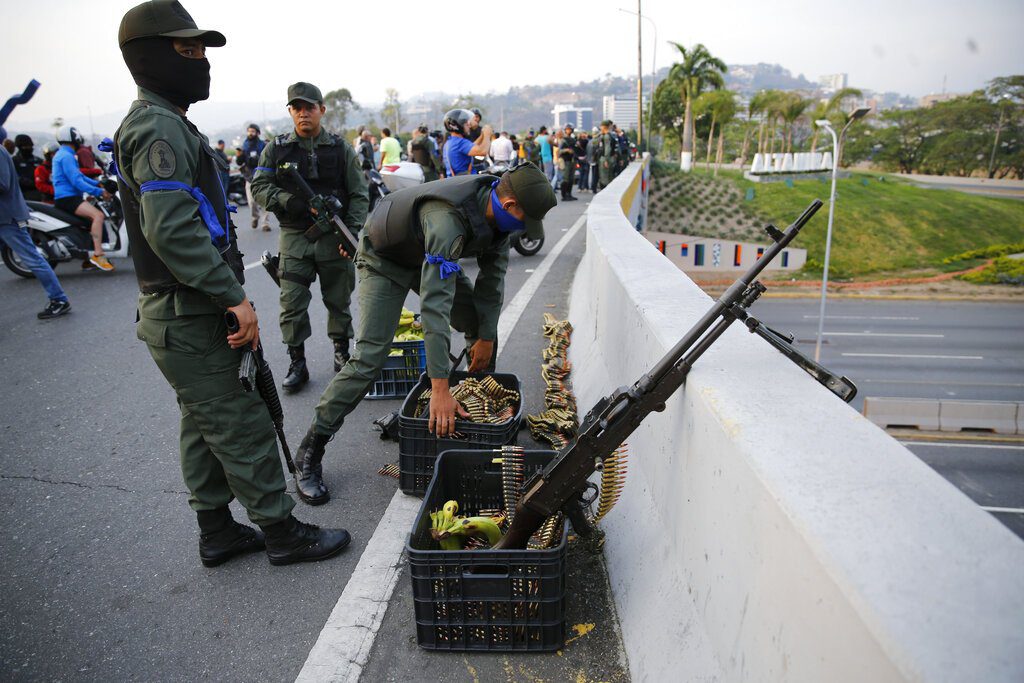
Q: You have been saying that there were many inside the military and the civilian government that thought Maduro’s time was up. And there were various moments where they hinted they would switch sides. What do you think kept them in line with Maduro?
A: I think the Cuban intelligence service certainly has been very helpful to Maduro. And the fear of moving against the head of a criminal organization is always real. So, you’ve got people who weren’t happy but were scared.
There’s a reason why people like General Raúl Isaías Baduel, spent years in prison and then died there. It’s an advertisement. It’s laying out for other people that this could be you. Fear is a powerful motivator.
Q: I also wanted to ask, to what extent do you attribute this to Russia and other allied states, besides Cuba?
A: I think Cuba had the biggest role at that point in time, because Venezuela for Cuba is existential. I mean Cuba right now is going through a significant problem with their power grid, and they are basically surviving off free Venezuelan oil for decades now. And so, to lose that would be to put the revolution in Cuba under duress. So the Cubans certainly played a very big role. Cubans have been teaching the tactics and techniques for torturing dissidents at the Helicoide.
Now, the Russians kind of play in this space, the Chinese play in the space, Iran is now playing in the space, but Cuba is certainly the most directly engaged. I said in an interview not that long ago that when Maduro talks about colonialism, I kind of laugh. Because, if you define a colony as a country that sends its exports for free to the mother country, then Venezuela is in fact a colony of Cuba.
“I don’t think that within the U.S. government there’s ever been a big appetite for military intervention.”
Q: There was a negotiation process in Barbados in 2019, after the events we have discussed. Maduro hinted he was ready for a power-sharing agreement, and we have interviewed Stalin González, who said that was the point when the government and the opposition were closest to reaching a deal. But then, Stalin González also said that maximum pressure and sanctions ended that possibility. Do you agree with his view?
I think that you have to recognize that for the regime not being totally in power is existential for them. In 2015, when the opposition won a super majority in the National Assembly, what did they do? They kicked out three indigenous representatives from Amazonas state so that there wouldn’t be a super majority. Then they set up the Constituent Assembly.
This was done because they recognized that they couldn’t share power. That was power sharing. I mean they controlled the Supreme Court, the CNE, the military, the executive branch. And they were unwilling to allow the opposition to control the legislative branch.
I don’t think anyone who studied Venezuela believes that the Maduro regime or Chavismo itself is willing to share power. That’s evidenced by the fact that they just stole an election in July of last year. To say that we were close, or they were close, I think is to not understand history.
We’ve certainly had moments in the most recent negotiation, that did create at a minimum the circumstances around which a primary was allowed to be held, and eventually a national vote which laid bare the theft of the election by Maduro and company. This is making it difficult for even his apologists in the region to say that Maduro was the legitimate president of the country. You know, where are the actas? So no, I don’t think there’s ever been a point in time that you could say they were close.
I know people sometimes point to Barbados, they point to the Dominican Republic, in other points in time, but this regime has shown itself.
Q: There have been a few books coming out of the first Trump administration’s cabinet. They said a military intervention in Venezuela was considered, though we know it never happened in the end. Was this something requested by the opposition? Or was this coming from what we could call “national security hawks”?
A: I don’t think that within the U.S. government there’s ever been a big appetite for military intervention.
So, there are parts of the opposition that recognize that they’ve done protests, they’ve done recall referendums, they’ve won elections, and yet Maduro’s still in power. So what else is there left to do? And I understand that point of view. But I’ve never seen a great deal of interest in military intervention.
Q: What do you think is the objective of the current U.S. Navy deployment in the Caribbean? In 2020, when the 1st Trump administration indicted Maduro, there was a similar deployment. Are they all for symbolic value? Or is the idea to have a real threat of military action?
This deployment while substantial, poses little risk to Maduro. It is insufficient for military action outside of long-range missile attack. It’s a show of force and could provide some modest counter-narcotics support.
Q: The think tank CEPR recently published a study in The Lancet, where is said that economic sanctions have a similar effect to wars, as they cause just as many deaths. In Venezuela, they hurt the economy, but they failed to bring any kind of political change. So, do you think that the sectoral sanctions imposed in the first Trump administration make sense even today?
A: At first, the premise that sanctions are some form of blockade is wrong. There are no sanctions against the import of humanitarian goods. I recall very well Rafael Lacava trying to explain to Vladimir Villegas how he imported U.S. school buses into Venezuela, if there was a blockade. And Lacava was unable to answer the question. I mean, explain to me how there’s a blockade if people are using door-to-door and they’re receiving food orders from Costco.
Explain to me how there’s a blockade, when specifically the sanctions language says that it doesn’t apply to food or medicine. So, I take exception with the idea that the sectoral sanctions somehow created more misery inside of Venezuela.
Now, if we look at the migration issue. Some people believe that if you fix the economy, that will somehow keep more Venezuelans at home. Perhaps, but the long-term piece of this is the political issue. The fact that you don’t have liberty in the country. A free seeking people will seek freedom. And they will leave the country, regardless if the economy’s working or not.
So I disagree in principle with The Lancet. And you can say the office management of budget said the same, I disagree with the office of management of budget.
The government of Venezuela, the regime of Venezuela, the dictatorship in Venezuela, can make decisions on importing things that they need. And in 2019, their decision was to burn the humanitarian assistance at the bridge, rather than let it in. So, who’s ultimately at fault here?
“[Sanctions] were designed to hurt the economy, sure. They was designed to compel them to begin to negotiate.”
Q: The Maduro government is at fault for many things. Yes, sanctions are not a full blockade where there is absolutely no trade, but there are sectoral sanctions which target the areas where money is coming in, like the oil sector, or the government’s ability to issue debt. So, would you not say that they hurt the economy?
A: They hurt the economy. And they were designed to hurt the economy, sure. They was designed to compel them to begin to negotiate. And they made the decision not to. We made some overtures and then they didn’t work, right? It didn’t end up where we wanted it to end up. The fact of the matter is that companies like Chevron and others continue to produce oil, which is sold on the black market.
For me an interesting story is, what happened to Tareck El Aissami? My belief is that the license granted to Chevron under the Biden administration and then continued into the Trump 2 administration—there’s no real difference in these—created a level of transparency in the oil sector. It allowed Maduro to see exactly how much money Tareck El Aissami was stealing by transporting oil in the black market to China via Malaysia. And that resulted in him being disappeared. No one talks about him anymore. And he was he was a member of the inner circle. Where is Tareck El Aissami? I don’t know. No one does.
Q: Where I wanted to get to with this question, is do these sectoral sanctions make sense today? What is the point of keeping them in place after all these years?
A: I think that sanctions are a tool to be used in order to drive negotiation. If they’re used as purely punitive, they’re not going to work. The efficacy of sanctions is short-lived.
Now, there there’s some who believe, for instance, that if we just tweak our sanctions on Cuba after 60 years, it will finally lead to change. We have experience in sanctions. Sanctions have worked. Most people say they don’t, but they have worked in some places. They worked in Sudan, in South Africa, and in other countries.
But sanctions, generally speaking, should be direct, finite in scope and not infinite in application. So, you have broad sanctions, maybe you have secondary sanctions, but if they’re not followed with a “and we will relieve the sanctions if you do the following, we have to have a sit down,” then it’s punitive. And punitive sanctions aren’t going to work, because they’ll find workarounds.
Right now, the Russians are able to work around the SWIFT system. The Venezuelans have been able to work around the oil sanctions with ghost ships, from flag-of-convenience states, laundering the oil and selling it on the black market. So, if it’s sanctions for sanctions’ sake, then no, they don’t work. If it’s sanctions as part of a broader policy move, then they can be effective in driving conversations.
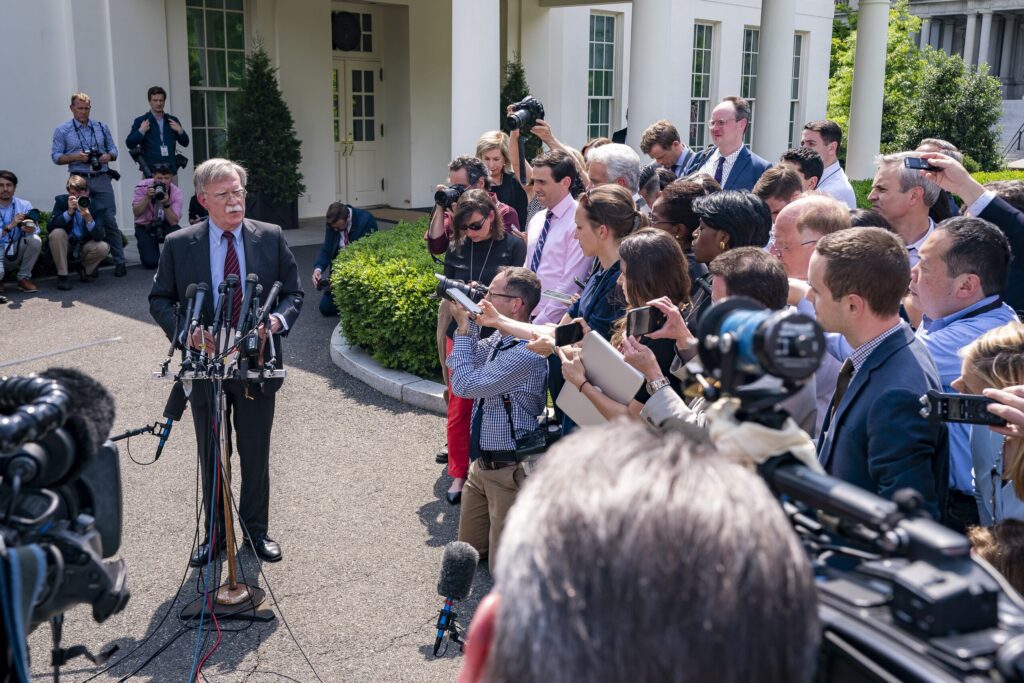
Q: in John Bolton’s book, Trump is quoted as saying that efforts to topple Maduro failed because “he’s too smart and too tough.” Do you think the U.S. is underestimating his ability to keep ruling over Venezuela? If he’s too smart and tough, what can you do?
A: I think Maduro was clever, not smart, and I think he’s a survivor, and I think that he gets good coaching from Cuba. I mean, who were the happiest when he was chosen by Chávez to lead the country?
What do you do? What should the policy be? That’s a great question. I am sympathetic to lots of the views that are out there. I think the first step is that the democratic opposition led by María Corina Machado needs to publish their vision of what Venezuela would look like in the hours and days after Maduro leaves power.
Because right now, if there’s an internal fracture, and Maduro and Jorge and Delcy and others no longer are in charge. Who’s in charge? And what does that look like? Recognizing that Maduro is basically the mayor of Fuerte Tiuna. He invited into Venezuela the FARC-D (dissidents of the Colombian guerrilla) and the ELN. He is okay with some of the criminal groups such as the Tren de Aragua. He runs his own criminal enterprise, the “Cartel de los Soles”. Any number of bad actors in the country. If suddenly the whole structure fell apart, what would happen? Would it just be chaos?
If I were María Corina, I would be saying, “Hey, if Maduro, Padrino Lopez, Tarek William Saab, Rodríguez siblings, and you name it, are no longer here. This is this is how we would set up an interim government. This is when we would have elections. This is how we would make for all political point of views.”
You’re also looking to reassure people within the regime who were not complicit in crimes against humanity, but who for various reasons have stayed around, that they’re not immediately going to go to jail. That there’s life for people after Maduro leaves. Because there’s a fear in going against Maduro, not only for what he can do, but also for what happens after he’s gone. And that creates a stickiness to Maduro, that’s been hard to undo.
Q: In a previous interview with Guacamaya, Juan González said that possibilities for a transition in 2024, when the presidential election was due, were very low. He claims that his idea was to push for slower, more gradual change. Do you think he was on the right path?
A: This view indicates that you believe that the Maduro regime is willing to power share. And I’ve already stated that they’re not willing to power share. That’s how I’m going to answer that question.
Q: There’s an informal debate going on in Caracas. Is it possible that an embassy could still grant asylum protection to someone, even if it was closed down, without any diplomats inside?
I don’t think so.
There are people who believe that the U.S. embassy is somehow harboring different people from the opposition, I believe. Is what you’re alluding to?
Q: Yes.
A: I can assure you that the U.S. embassy in Venezuela is under constant surveillance from the Maduro regime. It would be difficult for something like that to happen.
Q: Do you still keep up with events in Venezuela? What’s your go-to news site?
I kind of hit a little bit of everything. La Guacamaya, I’ve got to say, because you’re here. El Pitazo, NTN24… There are all the different sites, but then I get a lot of news just individuals who reach out to me and let me know what’s happening. I also speak to people with regularity. I’m very proud of the work that Leopoldo Lopez is doing with the World Liberty Congress. He’s trying to help other freedom-seeking people to figure out how to deal with dictatorships. I think he’s doing a marvelous job with that. And of course, any number of other people that I’ll keep private, kind of let me know what’s happening on the ground in Venezuela. I still feel as if I’ve got a very good handle on how things are there.
Q: Do you ever think about returning to Caracas?
A: They would never give me a visa and it’s a “Level 4: Do not travel country.” And I would recommend that no American citizen travel to Venezuela especially because Maduro has proven himself to be a kidnapper.
You know in 2022, we negotiated the release of all illegally detained American citizens and in 2025 they’ve negotiated the release of all American citizens yet again, right? A different 10. So, uh so what’s to say that there won’t be 10 more next year and then Maduro is going to look to grab.
So, I this is my advice to any American or American passport holder considering traveling to Venezuela, just don’t do it.