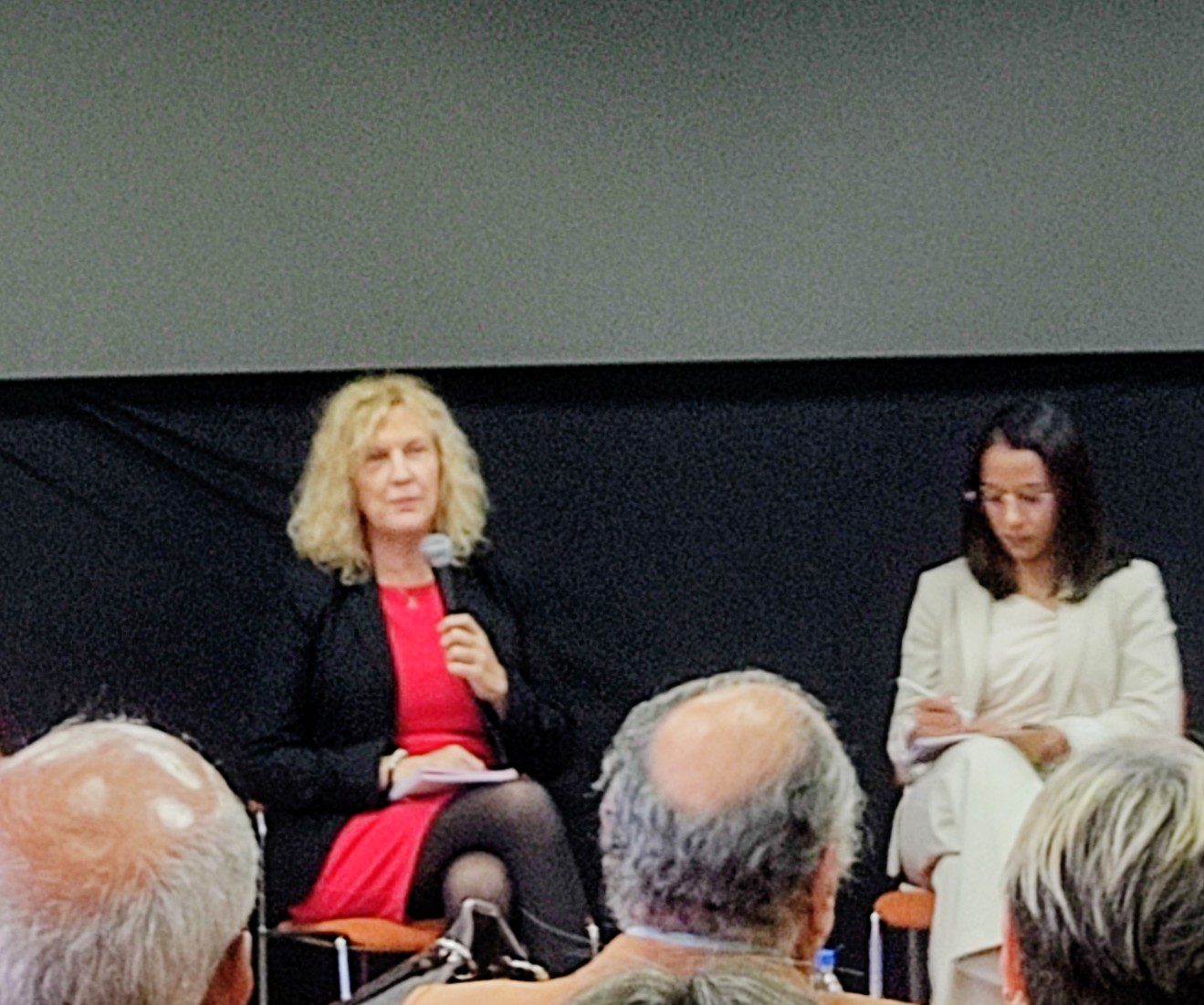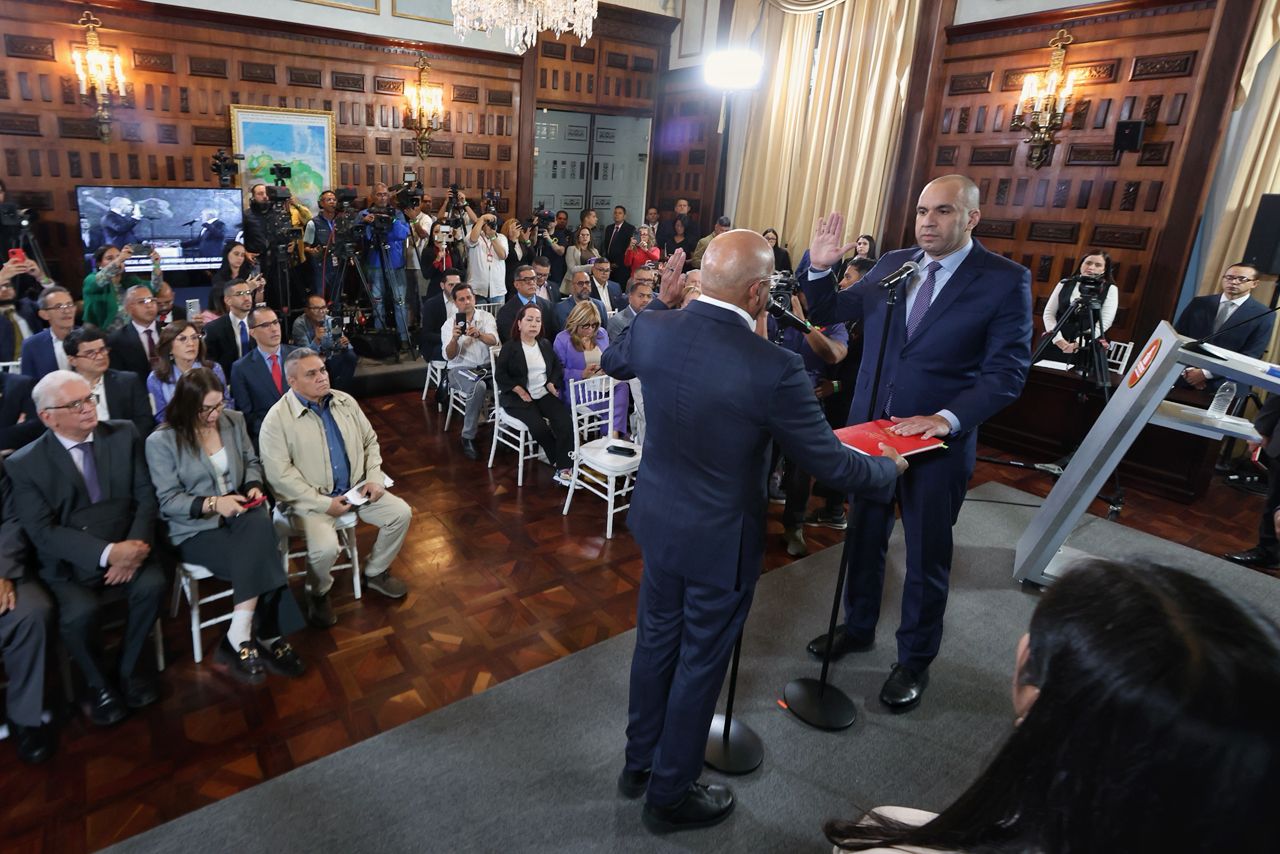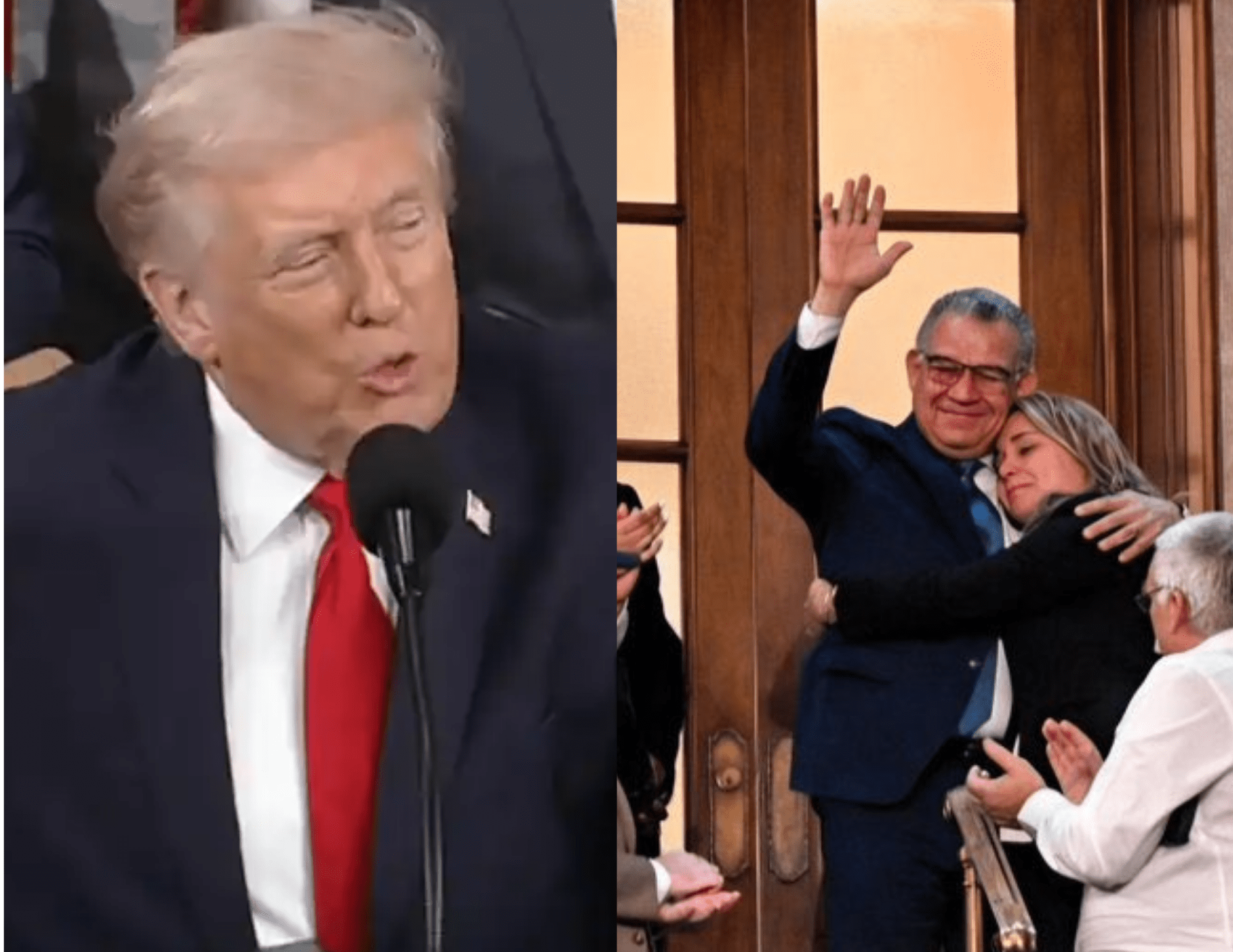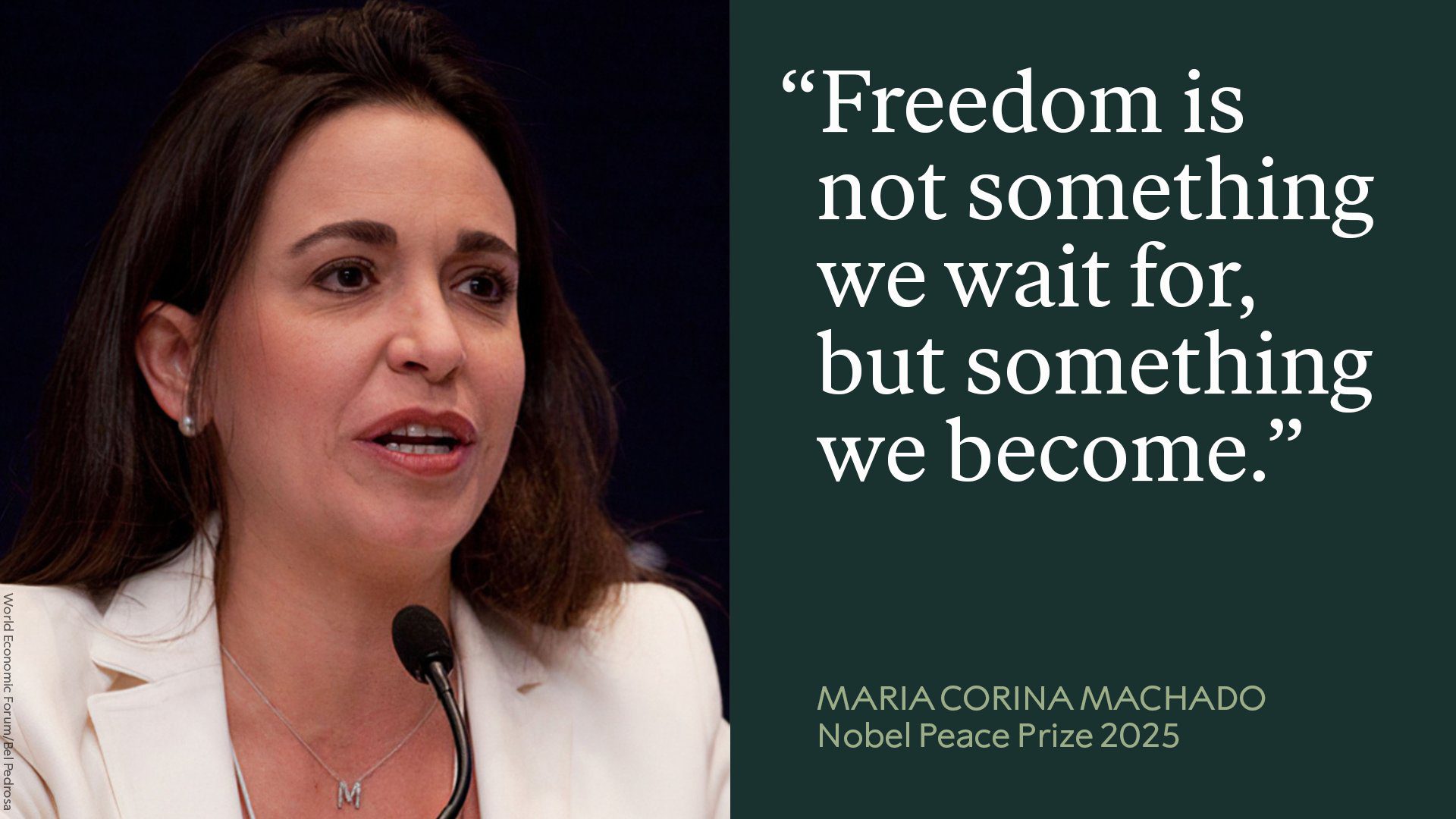
María Corina Machado, the opposition leader, received the Nobel Peace Prize through her daughter at wednesday’s ceremony. Photo: X / @NobelPrize.
Guacamaya, December 10, 2025. The 2025 Nobel Peace Prize ceremony was marked by the absence of the laureate,María Corina Machado, whose daughter, Ana Corina Sosa Machado, read the acceptance speech on her behalf.
The reading took place hours after The Wall Street Journal reported that Machado had left Venezuela for Curaçao by boat, in an operation that—according to U.S. officials cited by the outlet—was organized to ensure her safety. The Bloomberg agency added that it involved internal collaboration from officials linked to the administration of Nicolás Maduro.
The context of her departure and her inability to attend added further weight to a speech focused on the country’s historical republican trajectory, the contemporary political situation, the human rights landscape, and the social processes that have marked Venezuela in recent decades.
On Sunday, the President of Panama, José Raúl Mulino, traveled to Oslo, Norway, to attend as a special guest the ceremony in which the Venezuelan opposition leader participated. In an official statement, Mulino indicated that his presence responded to the importance he attributes to the Venezuelan political process and the international recognition the opposition leader has received. The president was accompanied by the First Lady, Maricel Cohen de Mulino.
The President of Ecuador, Daniel Noboa, also attended the ceremony, along with Edmundo González Urrutia, a candidate in the 2024 Venezuelan presidential elections, who currently resides in Spain.
For his part, the President of Argentina, Javier Milei, arrived in Oslo on Tuesday. After participating in the award ceremony this Wednesday, he is scheduled to be received by King Harald V of Norway.
The speech written by María Corina Machado was focused on the republican and social political evolution of Venezuela
The speech began with the presentation of a general historical framework on the construction of the Venezuelan state, emphasizing the constitutional principles adopted in 1811 and their influence on the development of republican institutions in Latin America. It highlighted the role of education, the social advances of the 20th century, and the country’s capacity to receive migrants and refugees from different regions of the world.
The text then described the political changes that began in the late 20th and early 21st centuries, pointing to institutional transformations, variations in the functioning of the state, and modifications in the country’s political and economic organization. It mentioned practices of power centralization, restrictions on critical actors and organizations, a shrinking of civic space, and a deterioration in economic and social indicators widely documented by international bodies.
In the speech read by Sosa Machado, it was stated that Edmundo González won with 67% of the votes and that thousands risked their lives to safeguard the voting records. In that vein, she denounced that the response of the power establishment was “state terrorism,” pointing to the more than 2,500 people detained after July 28, an event she labeled a “kidnapping,” denouncing torture and mistreatment of adolescents.
One of the central themes of the speech was the reference to the increase in Venezuelan migration. The figure of more than 9 million people who have left the country in recent years was cited, presenting it as a phenomenon with profound demographic, family, and economic implications for both Venezuela and the receiving countries.
Account of recent political processes
The speech dedicated a significant segment to the political events of 2023 and 2024. Regarding the 2023 opposition primaries, it explained the logistical difficulties, the limitations inherent to the context, and the social mobilization linked to that process. It described participation both within the country and in the diaspora, and the work of volunteers who organized basic infrastructure for the consultation.
Regarding the 2024 elections, it presented the position of the leader and her political team regarding the results and the safeguarding of electoral records. It also referred to denunciations by international and national organizations regarding detentions, restrictions on freedom of expression, and inappropriate treatment of persons deprived of liberty in detention centers. These statements included specific mentions of facilities such as El Helicoide, frequently cited in human rights reports.
The closing of the speech set forth the aspiration for a political process that would allow for the restoration of democratic institutions, the guarantee of fundamental rights, and the creation of conditions for the return of the migrant population. It also proposed a vision of national reconciliation based on mechanisms of justice, memory, and the reestablishment of the rule of law.
The speech closed with a phrase: “Peace is,ultimately, an act of love.” And with a vision of the future, synthesized as: open prisons, reunited families, students debating without fear, and, above all, the massive return of the diaspora—a key point in María Corina Machado’s campaign speeches during the 2023 primaries and the 2024 presidential elections.
Statements from the norwegian Nobel committee
During the ceremony, Jørgen Watne Frydnes, Chairman of the Norwegian Nobel Committee, delivered a speech with direct observations on Venezuela’s political situation. He stated that President Nicolás Maduro should heed the will expressed by voters in the 2024 elections and make decisions that would allow for an orderly and peaceful transition process.
Frydnes expressed concern about humanitarian conditions and the continuation of practices documented by international bodies that affect civil and political rights. He also mentioned that, according to estimates handled by various agencies, around a quarter of the Venezuelan population resides outside the country, making Venezuelan migration one of the most significant globally.
The Committee also alluded to the situation of persons detained for political reasons, noting that many of them remain incommunicado or under restrictive regimes. In his message, Frydnes pointed out that these individuals could not hear the ceremony and emphasized the need to guarantee due process and independent oversight in detention centers.
He labeled El Helicoide as “the largest torture chamber in Venezuela” and remembered the innocents locked in “dark cells” who could not hear the speech.
The combination of the speech read by her daughter, the denunciations by the Nobel Committee, and the leak of María Corina Machado’s clandestine departure from the country creates an event with global impact, placing Venezuela at the center of international attention while a significant military deployment in the Caribbean and pressure on Nicolás Maduro remain.