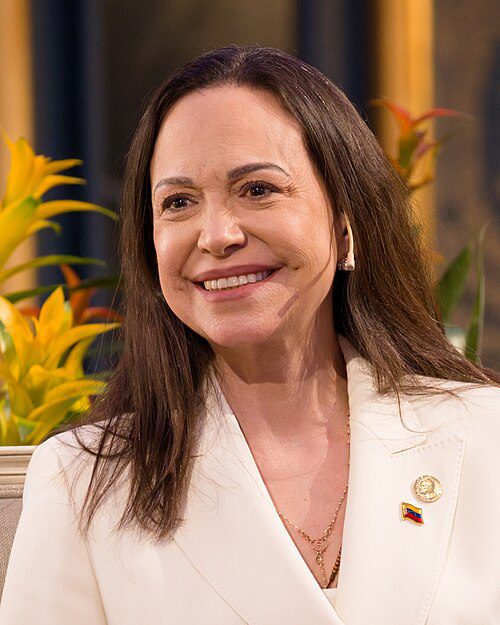
María Corina Machado after winning the Nobel Peace Prize. Photograph: Social media
Guacamaya, January 20, 2026. The opposition leader and Nobel Peace Prize laureate emphasized the urgency of dismantling repressive structures and ensuring the full freedom of those imprisoned.
Opposition leader María Corina Machado spoke out about the situation of political prisoners in Venezuela, where dozens of family members have spent nights outside detention centers waiting for news or new releases. In statements to the press, Machado stressed that advancing toward an effective political transition requires dismantling the Chavista repressive structure and closing all torture centers in the country.
Machado described her meeting with the Secretary General of the Organization of American States (OAS) as positive and thanked the Inter-American human rights mechanisms for continuously denouncing crimes committed under the regimes of Hugo Chávez and his predecessor. She also urged OAS member states that have remained silent to act with greater determination in response to the human rights crisis in Venezuela.
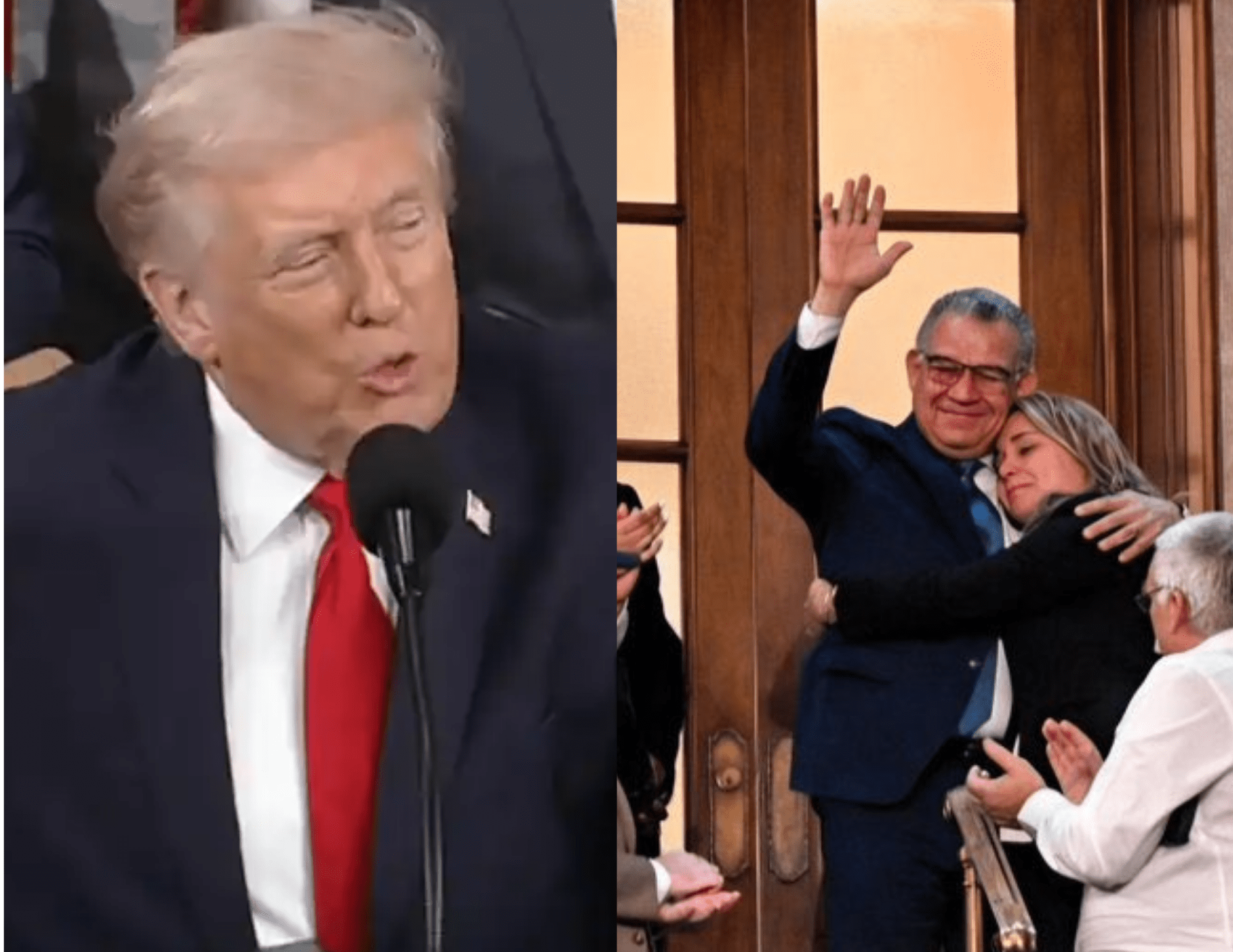
The opposition leader, continuing her agenda in Washington after meeting with U.S. President Donald Trump, reaffirmed her confidence that Venezuela can move toward an orderly and stable transition. According to Machado, the country is united and cohesive around the goal of overcoming the current situation without a real risk of violent confrontation, highlighting that Venezuela has legitimate leadership and an organized society.
Machado also addressed the specific situation of political prisoners, noting that dozens of family members have been staying overnight for more than a week around detention centers awaiting new releases or at least information from authorities. She emphasized that the first step toward a democratic transition is the release of all political prisoners, not just partial measures. “Some prisoners have been released, but they are not free, and they must release them all,” she said, adding that those currently in hiding or being persecuted must be able to express themselves freely and return to the country if they wish, without fear of becoming new prisoners.
Machado’s statements come in a context where some political prisoners have been released as gestures by the government, although human rights organizations argue that the number of freed individuals is far lower than officially announced, and hundreds of detainees remain imprisoned under conditions that include restricted legal access and allegations of mistreatment.
The OAS as a historical mediator in Venezuela
Historically, the Organization of American States (OAS) has played an active role in dialogue and mediation processes in Venezuela. During Hugo Chávez’s presidency, the OAS acted as a mediator in negotiations following the 2002-2003 Oil Strike and the events of April 11, 2002, when a brief coup temporarily ousted Chávez.
In that context, the organization appointed César Gaviria, then former president of Colombia, as the chief mediator. His role focused on facilitating dialogue between the government and opposition sectors, with emphasis on normalizing oil supply, restoring institutional order, and opening channels of political communication. These interventions included creating negotiation tables, monitoring agreements, and promoting international guarantees for the parties involved.
The OAS’s historical role provides a framework to understand the relevance of its current human rights mechanisms and its role in supporting violation complaints, mediating conflicts, and providing diplomatic accompaniment. Gaviria’s experience as mediator demonstrated that even in highly polarized and tense political contexts, the OAS can act as a neutral facilitator and communication bridge between the government and opposition—a role the organization continues to attempt in addressing the current situation of political prisoners and calls for a democratic transition in Venezuela.