Leopoldo Puchi is an analyst and former political leader.
Guacamaya, September 14, 2025. When analyzing the current confrontation scenario between Venezuela and the United States, which even opens the possibility of an armed conflict, it is common to fall into the idea that we are facing a “war between two countries.”
However, this approach is mistaken and distorts the true nature of the conflict.
In reality, this is not a conventional war between states, but an act of domination in which a power seeks to subdue a weaker nation for geopolitical interests and to control its resources.
War of Domination
Historically, colonial wars are not about a clash between equals, but rather campaigns undertaken by major powers against territories with lesser military and economic capacity, with the goal of imposing a new order and subjugating them to their rule, whether openly or covertly.
The power does not simply seek a piece of territory, but aims to convert resources into its own patrimony, transform the country’s economy into a captive market against its rivals, and reaffirm its global hegemony.
From India to Algeria, from Grenada to Iraq, the same logic repeats over time: the violent imposition of domination.
Conventional Wars
A war between states, such as the First or Second World War or regional ones like the War of the Pacific between Peru and Chile, follows a different logic.
The involved countries, though unequal, dispute concrete interests: borders, resources, political influence, or strategic supremacy.
Here, the outcome translates into territorial concessions, political agreements, or new power balances. There is no systematic project of cultural or economic subordination of the defeated.
The goal is to impose conditions within a shared framework.
Washington’s Objective
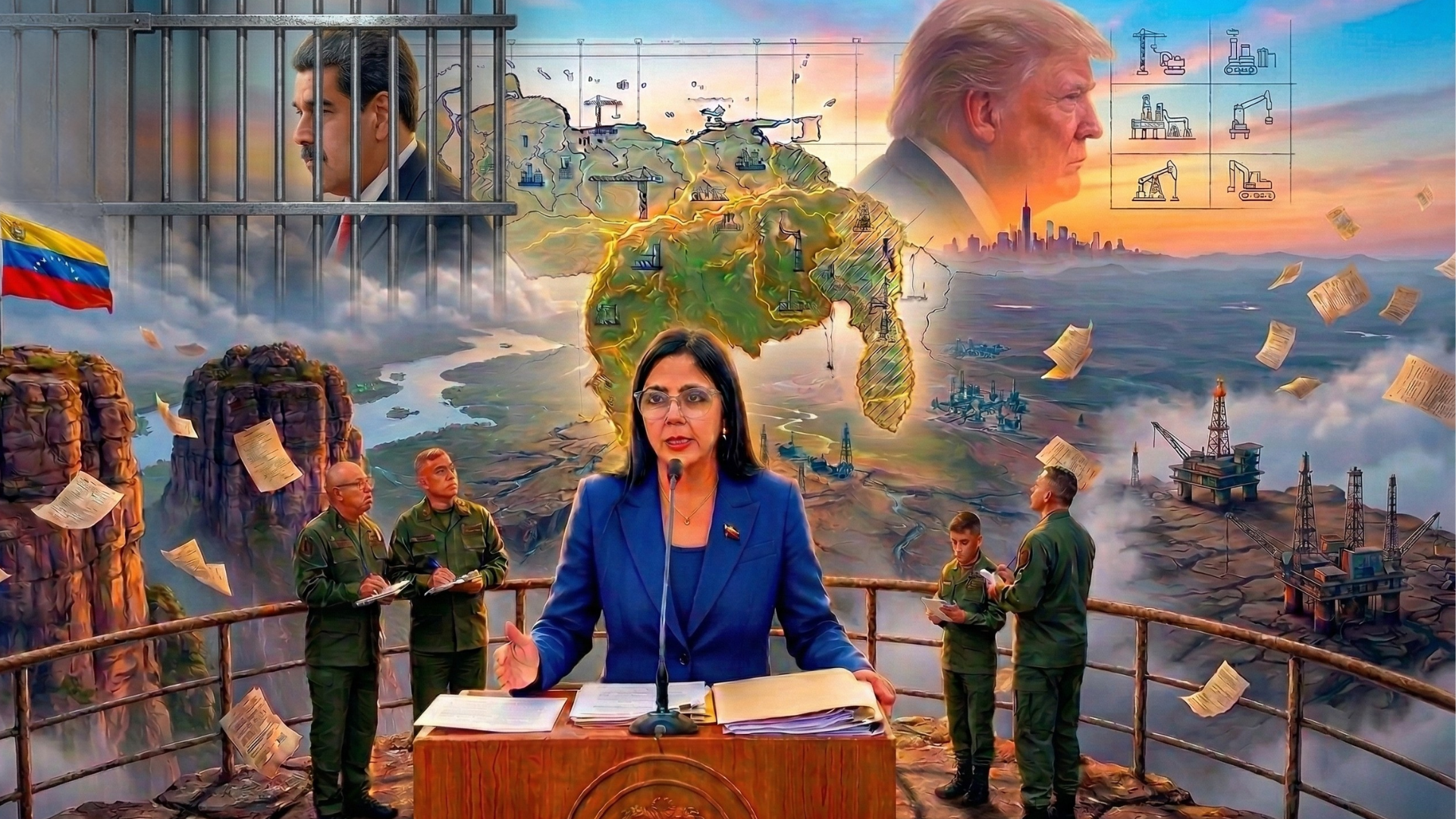
The U.S. war against Venezuela does not fit a conventional conflict. The power difference is abysmal.
Washington’s motives are not defensive nor are they related to democracy or Venezuela’s internal political affairs.
What is at stake is the control of strategic resources and geopolitical imposition to prevent its integration into a multipolar framework.
In this context, the change in the Pentagon’s National Defense Strategy, which now prioritizes the Western Hemisphere, places Venezuela as a decisive piece for U.S. domination.
Washington’s objective is political subordination through the installation of a government aligned with the White House, following the neocolonial post-war scheme.
Fishing Vessel
If the Trump administration continues advancing its confrontation line, it is worth questioning what the next military actions would be.
For now, we are facing a war of siege, but a menu of more aggressive options is already on the table. A first fishing vessel was already assaulted by a U.S. destroyer in Venezuelan waters, and it cannot be ruled out that they may also attempt to seize oil tankers.
Lethal Attacks
The next level would be on-land attacks with special commandos.
And, if we take into consideration the past behavior of the United States, it cannot be ruled out that the escalation could lead to lethal attacks against infrastructure or even attempts to eliminate high-ranking state officials.
Lastly, a fabricated “incident” could serve as a pretext for an invasion.
Independence
If a U.S. military action were to escalate, it would be an act of domination in line with the colonial tradition that runs through modern history.
In an invasion scenario, a reaction from the country in defense of its independence is anticipated, with participation from the militia and regular armed forces. Venezuela would enter a stage of confrontations, driven by the need to avoid the fate of other countries on the continent that, between treaties and protectorates, ended up under external guardianship, with models of subordination like those of Panama or Puerto Rico.