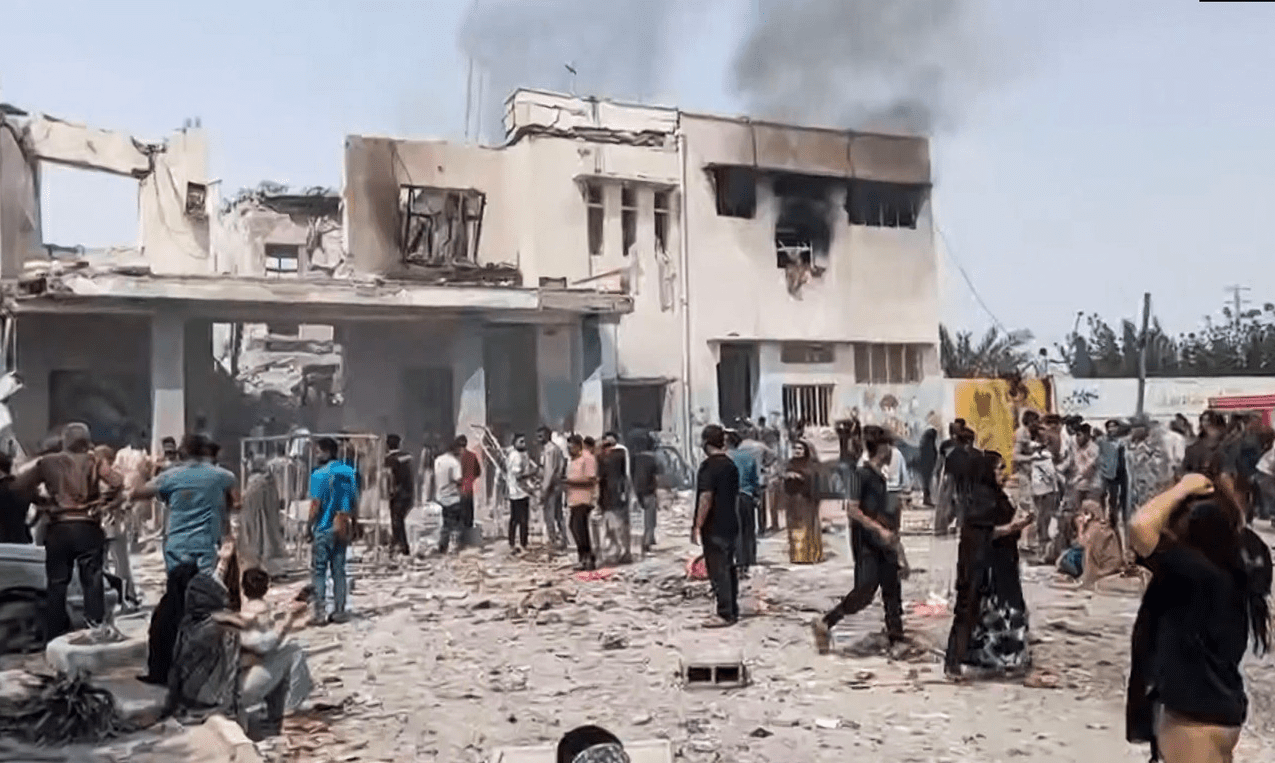
This image, taken from the Iranian state television broadcast, shows what it says is the site of the lethal US and Israeli attacks that affected an elementary school for girls in Minab, in Hormozgan province, southern Iran, near the strategic maritime route of the Strait of Hormuz. Source: IRIB TV.
Guacamaya, February 28, 2026. Since the early hours of Saturday, the armed forces of the United States and Israel bombed several targets inside Iran, which has already responded with bombings on military bases of the former in the region.
In his first public statements about Operation Epic Fury, Trump has stated that his “goal is to defend the American people by eliminating imminent threats from the Iranian regime.” Mainly, he has mentioned two key targets: the Iranian nuclear program, as well as creating an opportunity for regime change.
In response, Tehran has launched missiles at Israel and US bases in Bahrain, Qatar, Kuwait, Jordan, and the United Arab Emirates. Hours later, Israel announced a new wave of attacks on targets in Iran, mainly on missile systems.
The bombings differ fundamentally from those of June 22, 2025, where both US and Iranian forces minimized human casualties, preferring acts of high symbolic value. In this case, an escalation of several magnitudes is evident.
The attacks come just weeks after major protests and uprisings in the streets of Iran, although they lost strength in the face of repression by security forces: estimates range from hundreds to thousands of deaths, according to various sources.
Israeli officials state that several high-ranking Iranian state officials have been targeted, and even Supreme Leader Ali Khamenei. Press sources claim he is in a secure location, although there are no official statements.
Explosions have been reported in multiple government, civilian, and military locations throughout the Persian nation. The cities of Tehran, Qom, Isfahan, Tabriz, Kermanshah, Shiraz, and Ilam are among those affected, as well as Kharg Island, where a strategic oil complex is located. According to local authorities, the bombings hit an elementary school for girls where 85 people are reported to have died.
Reactions from Global Leaders
Reactions from several heads of state and leaders of multilateral organizations are already known. In the region, Saudi Arabia has shown its support and solidarity for its neighbors that have seen retaliatory Iranian attacks.
The Foreign Minister of Oman, Badr Albusaidi, who participated as a mediator in the negotiations between Washington, D.C., and Tehran, said he was “appalled” and stated that “active and serious negotiations have been undermined. This benefits neither the interests of the United States nor the cause of world peace. And I pray for the innocents who will suffer. I urge the United States not to let itself be dragged further. This is not its war.”
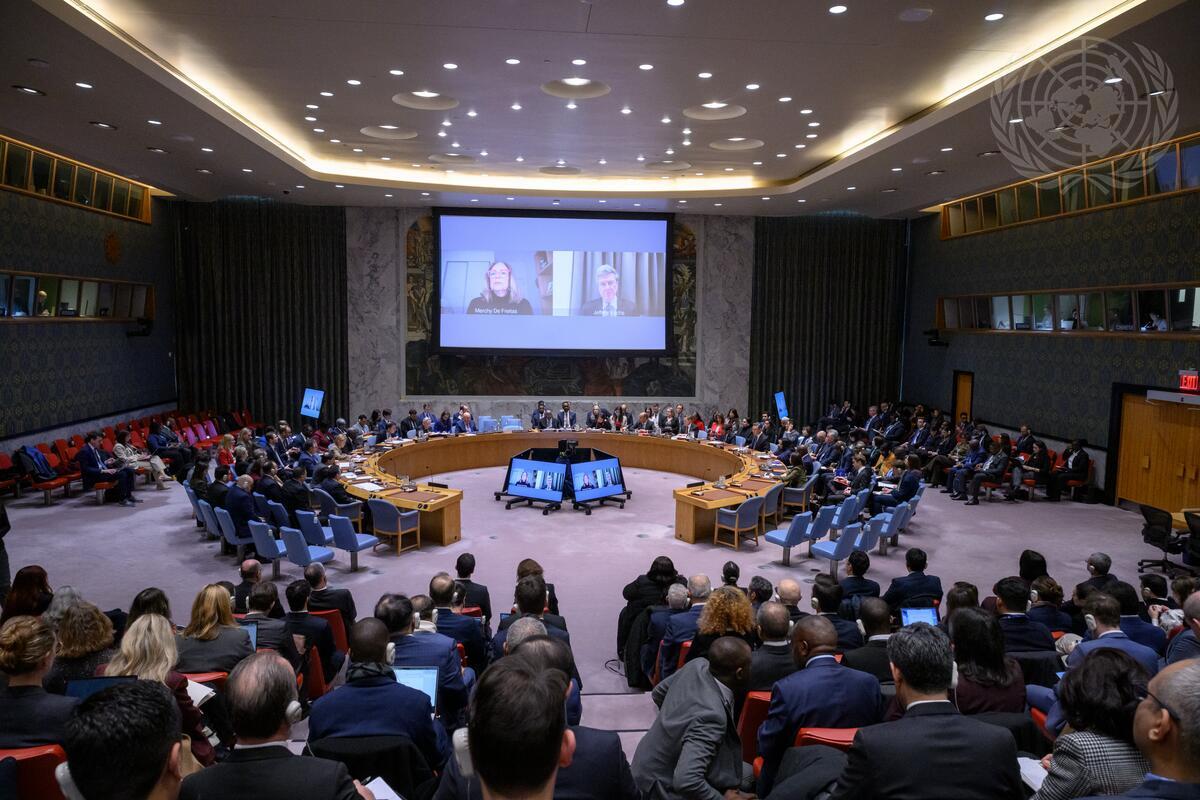
Emmanuel Macron, President of France, has called for an end to the hostilities and an urgent session of the UN Security Council.
Sergei Lavrov, Foreign Minister of Russia, has condemned “the unprovoked attacks by the United States and Israel on Iran.”
Keir Starmer, the British Prime Minister, has shown willingness to support his allies in the region, while stating that “Iran cannot be allowed to develop a nuclear weapon.”
Volker Turk, the UN High Commissioner for Human Rights, has urged an end to the bombings, “bombs and missiles are not the way to resolve differences; they only bring death, destruction, and human misery.”
Kaja Kallas, the European Union’s top diplomatic representative, focused her statements on criticizing the “Iranian regime” that “has killed thousands,” while “its ballistic missile and nuclear programs, along with its support for terrorist groups, pose a serious threat to global security.”
The Venezuelan government has not yet officially commented on the attacks in Western Asia. Although under presidents Hugo Chávez and Nicolás Maduro, Caracas has been a major ally of Tehran, it is unknown exactly what stance the authorities in charge will take due to their new, closer relationship with Washington, D.C.
Context: A More Aggressive United States
Trump had promised to stop wars and interventionism in his new term, although he seems to be seeking the opposite: deep contradictions between his campaign promises and his actions in power are coming to light.
Stephen Miller, one of the most influential figures in the administration, had gone so far as to state, during the electoral campaign, that voting for the Democratic candidate, Kamala Harris, would lead to war in the Middle East.
The President of the United States has also extensively boasted of having “ended 8 wars,” just weeks after creating the new “Peace Board.”
However, this is already the second time he has bombed Iran in his administration, this time on a much larger scale. He has also carried out Operation Absolute Resolve in Venezuela and has increased economic pressure on Cuba, in both cases seeking a change of government.
The United States today shows a preference for “hard power” over “soft power.” It favors the use of military force while eliminating agencies like USAID. One of the main causes is its competition with China, which is winning the race in areas such as trade and foreign investment. But the Pentagon still has the most advanced and powerful armed forces in the world.
Implications for Venezuela
This escalation around the Persian Gulf gives new meaning to Trump’s intervention in Venezuela. Countries like Iran, Saudi Arabia, Qatar, or the UAE are not only major hydrocarbon producers, but a large part of their exports pass through vulnerable points such as the Strait of Hormuz, through which 20% of the world’s oil transits, and the Red Sea.
Venezuela takes on new importance: it has one of the largest fossil fuel reserves in the world and is located as close to the United States as it is far from the conflict. Its shipments can even reach various Asian and European markets without crossing high-risk sea lanes.
The final outcome of the war against Iran will also have a great impact on Venezuela. Both OPEC members have seen their capacity to produce and export oil hampered by sanctions, but political changes could lead to openings. Conversely, a prolongation of the conflict in the Middle East could further weaken Iran’s capacity as an energy powerhouse.