

Iran: A Precedent for the United States’ Agreement with Nabep
Iran’s 20th-century history leaves two precedents for today’s Venezuela.


Iran’s 20th-century history leaves two precedents for today’s Venezuela.
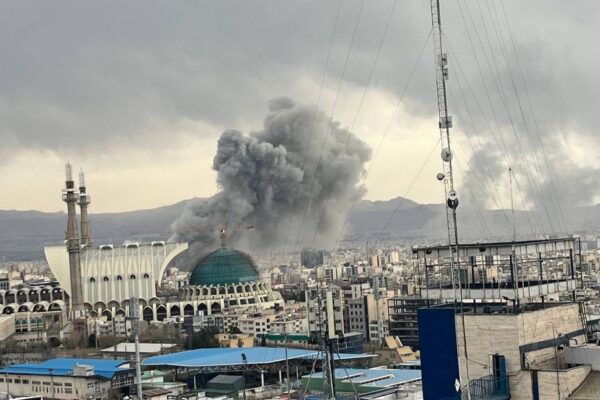
The recent escalation of tensions between the United States, Israel, and Iran threatens not only the geopolitical stability of the Middle East but also global energy markets. While oil prices have surged and maritime insurers have restricted war-risk coverage in the Persian Gulf, experts warn about the fragility of the Iranian regime and the possible scenarios following the departure of Supreme Leader Ali Khamenei. In this context, Venezuela emerges as a strategic actor capable of influencing global crude supply, in the event of prolonged disruptions in the Strait of Hormuz.
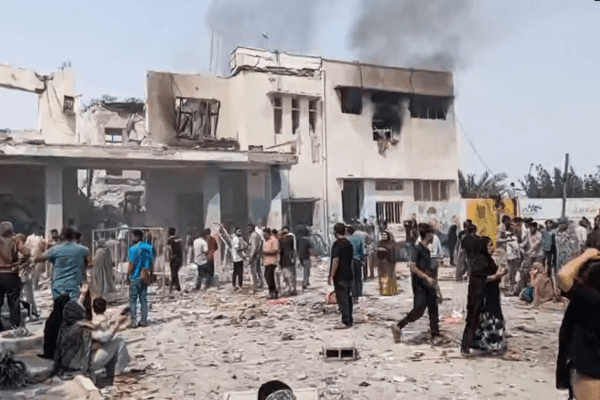
Since the early hours of Saturday, the armed forces of the United States and Israel bombed several targets inside Iran, which has already responded with bombings on military bases of the former in the region.

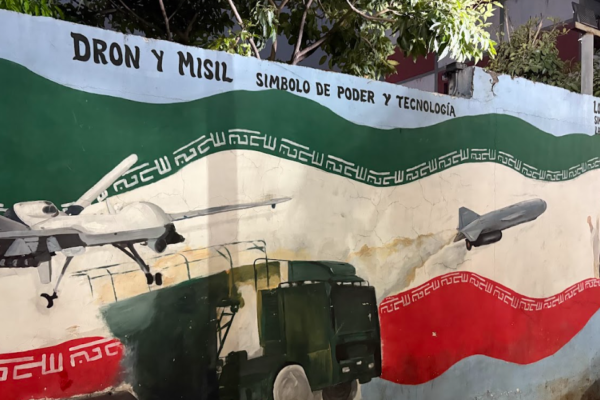
The Office of Foreign Assets Control (OFAC) of the U.S. Department of the Treasury announced the designation of ten individuals and entities based in Venezuela and Iran, whom it accuses of participating in the proliferation of unmanned aerial vehicles (UAVs), ballistic missile components, and other Iranian military capabilities. This action is part of the context of the reimposition of United Nations sanctions against Tehran in 2025.
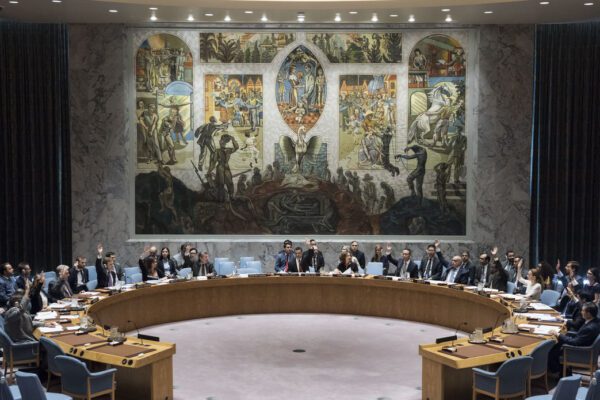
On September 19, the UN Security Council voted on a draft resolution presented by the Republic of Korea, in its capacity as Council president, which sought to continue sanctions relief imposed on Iran under the 2015 Joint Comprehensive Plan of Action (JCPOA). The text did not pass: it received four votes in favor (Algeria, China, Pakistan, and Russia), nine against (Denmark, France, Greece, Panama, Sierra Leone, Slovenia, Somalia, the United Kingdom, and the United States), and two abstentions (Guyana and South Korea itself).

Caracas and Tehran have once again closed ranks amid growing tensions with Washington. Venezuelan Foreign Minister Yván Gil and his Iranian counterpart, Abbas Araghchi, held a conversation in which they both denounced what they described as “intimidatory actions” by the United States following the deployment of military vessels in waters near Venezuela.

The new plant, named Venefibra, represents an effort in the pursuit of technological sovereignty and economic diversification. Photograph: Radio Miraflores….
In 2025, the Middle East is once again at the center of a geopolitical storm that promises to have global repercussions.
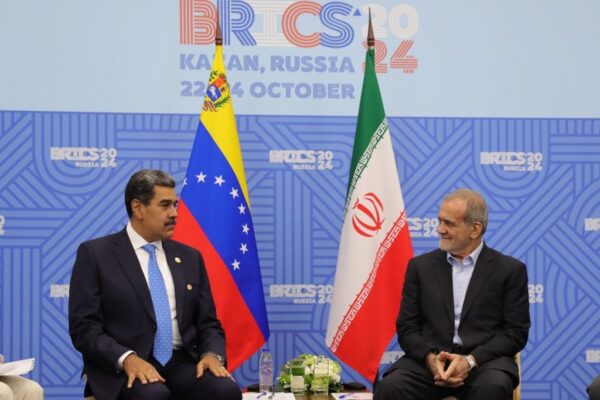
Iran and Venezuela are approaching the finalization of a trade agreement that will eliminate tariffs on raw materials and other goods between the two nations.