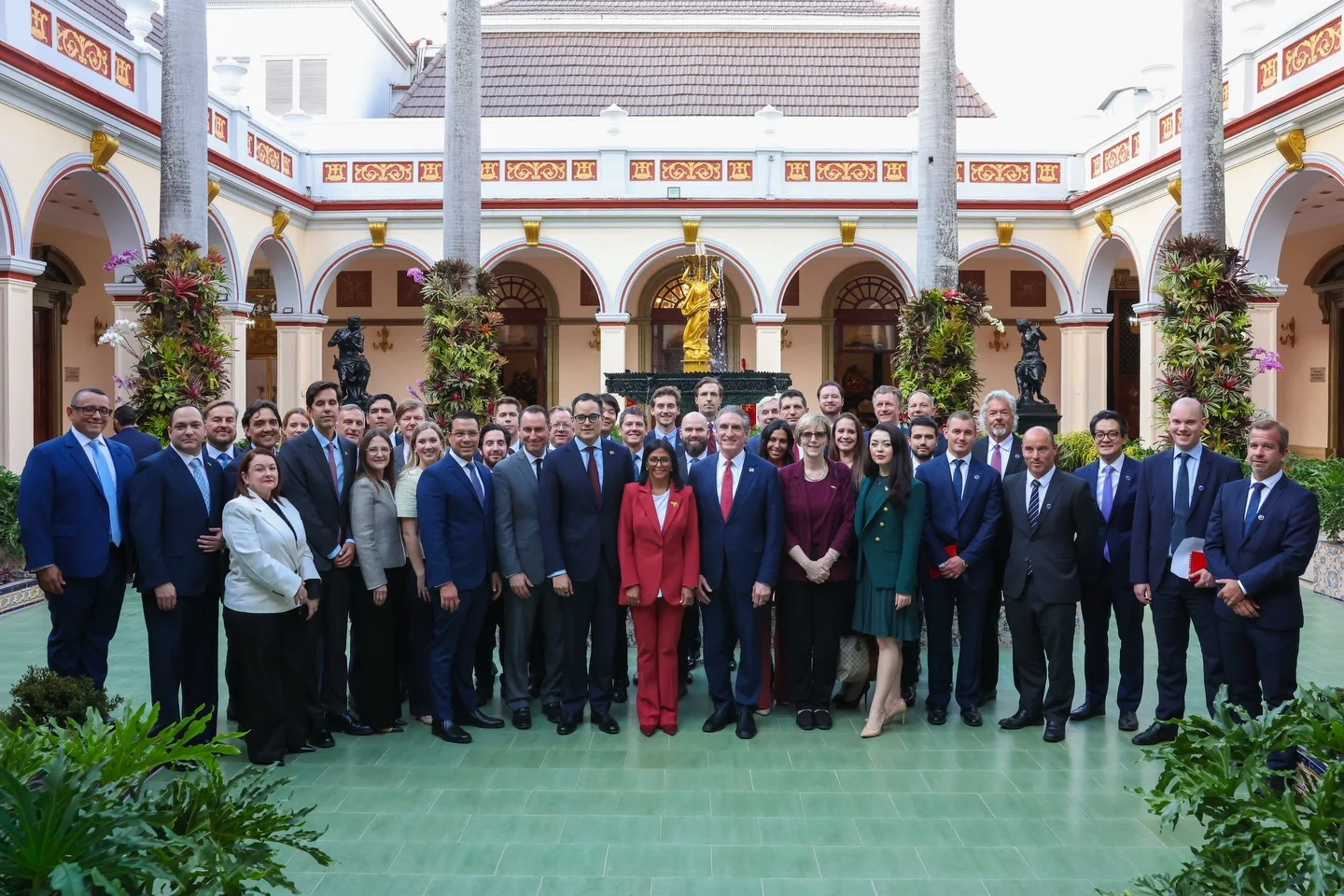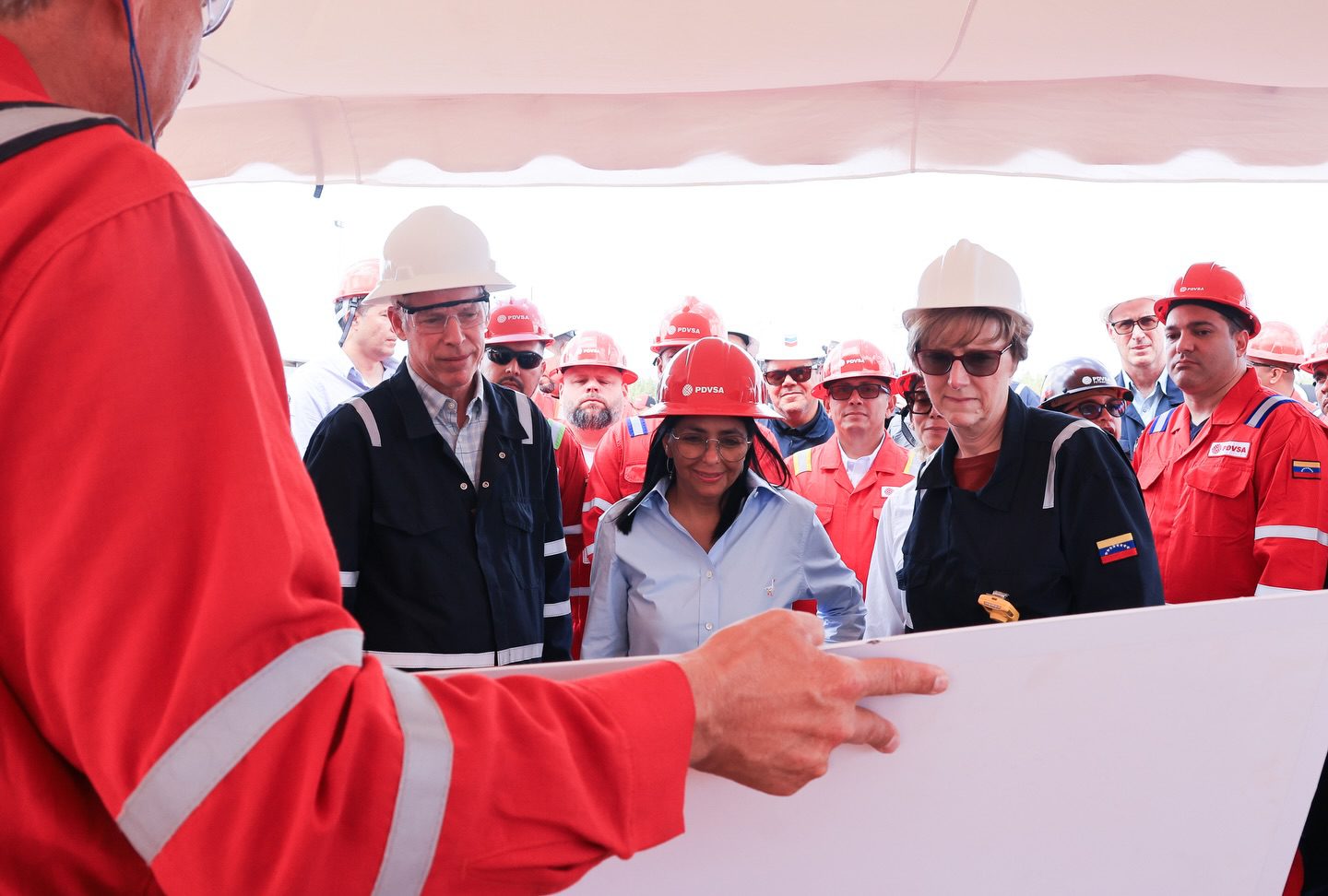
The new General License 49 arrives one day after the visit of U.S. Secretary of Energy Chris Wright (left) to Venezuela. In the image, he appears alongside Venezuela’s designated president Delcy Rodríguez (centre-left), the U.S. Chargé d’Affaires in the country, Laura Dogu (centre-right), and the president of PDVSA, Héctor Obregón (right), during a visit to the mixed company Petroindependencia. Photo: PDVSA.
Guacamaya, February 13, 2026. The United States Government, through the Office of Foreign Assets Control (OFAC), published a new exception to its sanctions on Venezuelan oil and gas on Friday, allowing new investments.
The Trump administration had already issued several general licenses to permit exploration, production, marketing, and transportation activities for Venezuelan hydrocarbons. In each of these measures, strict controls were also introduced for transactions with the Venezuelan State and PDVSA.
The latest one, General License 49, authorises new investments in the oil and gas sector of the South American nation, although it adds “provided that the execution of said contract is expressly conditioned upon separate authorisation from the Office of Foreign Assets Control.”
General License 50, published simultaneously, already authorises operations for the following companies: Chevron, Eni, Repsol, BP, and Shell. The first three already have a strong presence in Venezuela, while the latter two are interested in beginning free gas production in offshore fields around Trinidad and Tobago. In fact, all five corporations hold gas concessions in the country.
OFAC’s decision comes one day after the historic visit of U.S. Secretary of Energy Chris Wright to Venezuela. During his trip, he met with the designated president, Delcy Rodríguez, and several senior officials from her administration and the state-run PDVSA. He also visited facilities operated by mixed companies in the eastern part of the country, where he announced that Chevron will make new investments in extraction and crude upgraders.
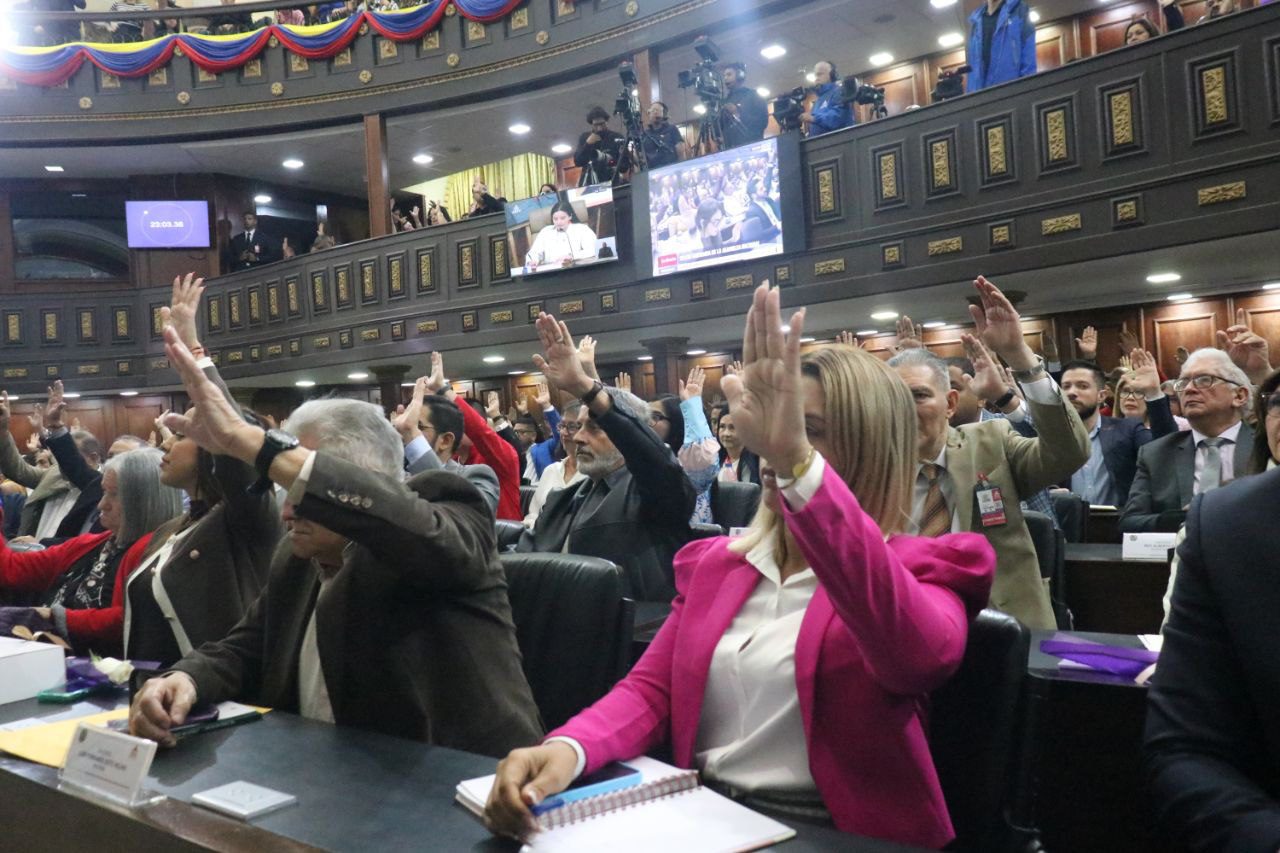
There is another key event: on January 29, prior to the first license, the National Assembly unanimously approved a reform to the Hydrocarbons Law, which offers greater operational and managerial control to private investment, while drastically reducing the tax burden on the industry, generating a liberalisation with few precedents.
This measure had been expected for over a month, as President Donald Trump expressed his intention for energy companies, mainly from the US, to invest in oil production in Venezuela, following the military operation on January 3.
In recent weeks, the U.S. Government has also issued general licenses 46, 46A, 47, 30B, and 48. These primarily allowed companies already present, such as Chevron itself and the Spanish company Repsol, to maintain their operations in the country and even increase their production: transactions related to export, transportation, procurement of goods and services, and the import of diluents, among others, were authorised.
Undoubtedly, favouritism toward energy companies already operating in Venezuela is evident, giving them a double advantage in the face of the most significant oil opening since the first wave of nationalisations in the 1970s.
The licenses also establish explicit prohibitions on transactions with entities governed by the laws of Russia, Iran, Cuba, North Korea, and China. The objective is clear: to boost the Venezuelan hydrocarbons industry, but to exclude U.S. rivals from the game.