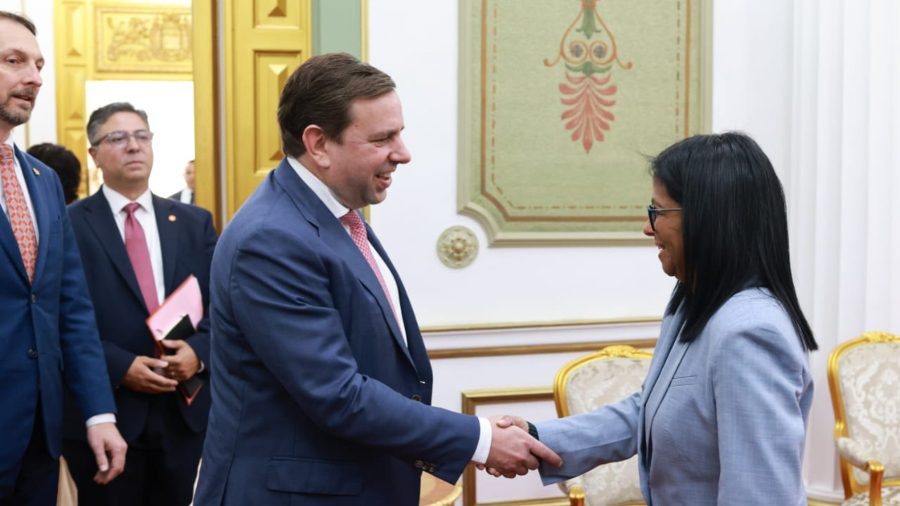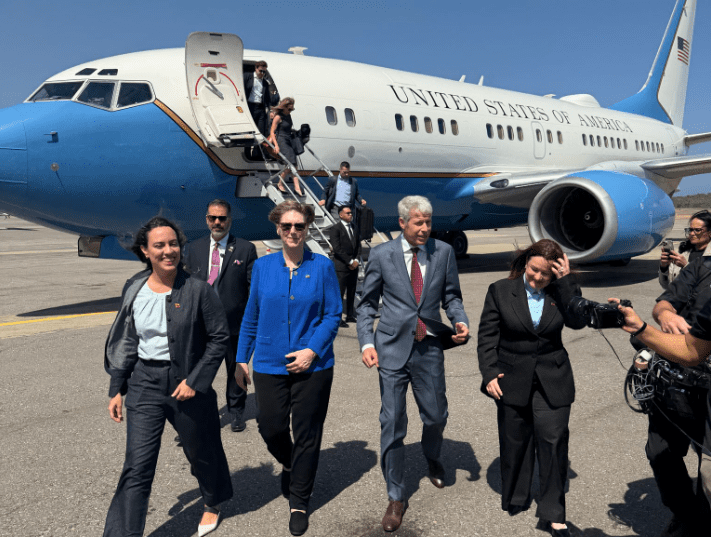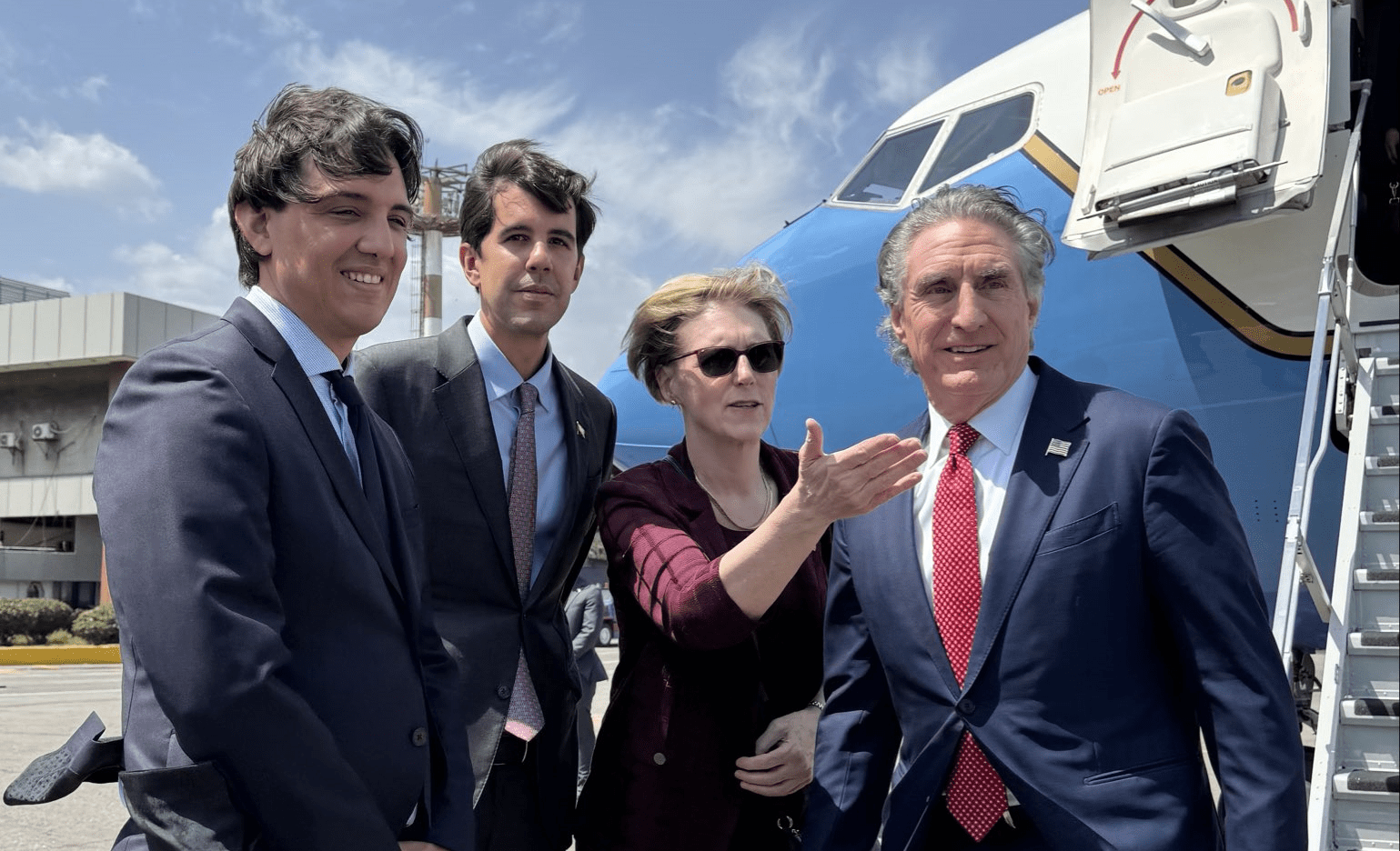
U.S. Interior Secretary Doug Burgum (right) arrives at Maiquetía International Airport, where he is greeted by the U.S. Chargé d’Affaires in Venezuela, Laura Dogu (centre-right), and the Deputy Minister for Europe and North America, Oliver Blanco (centre-left). Photo: X / @usembassyve.
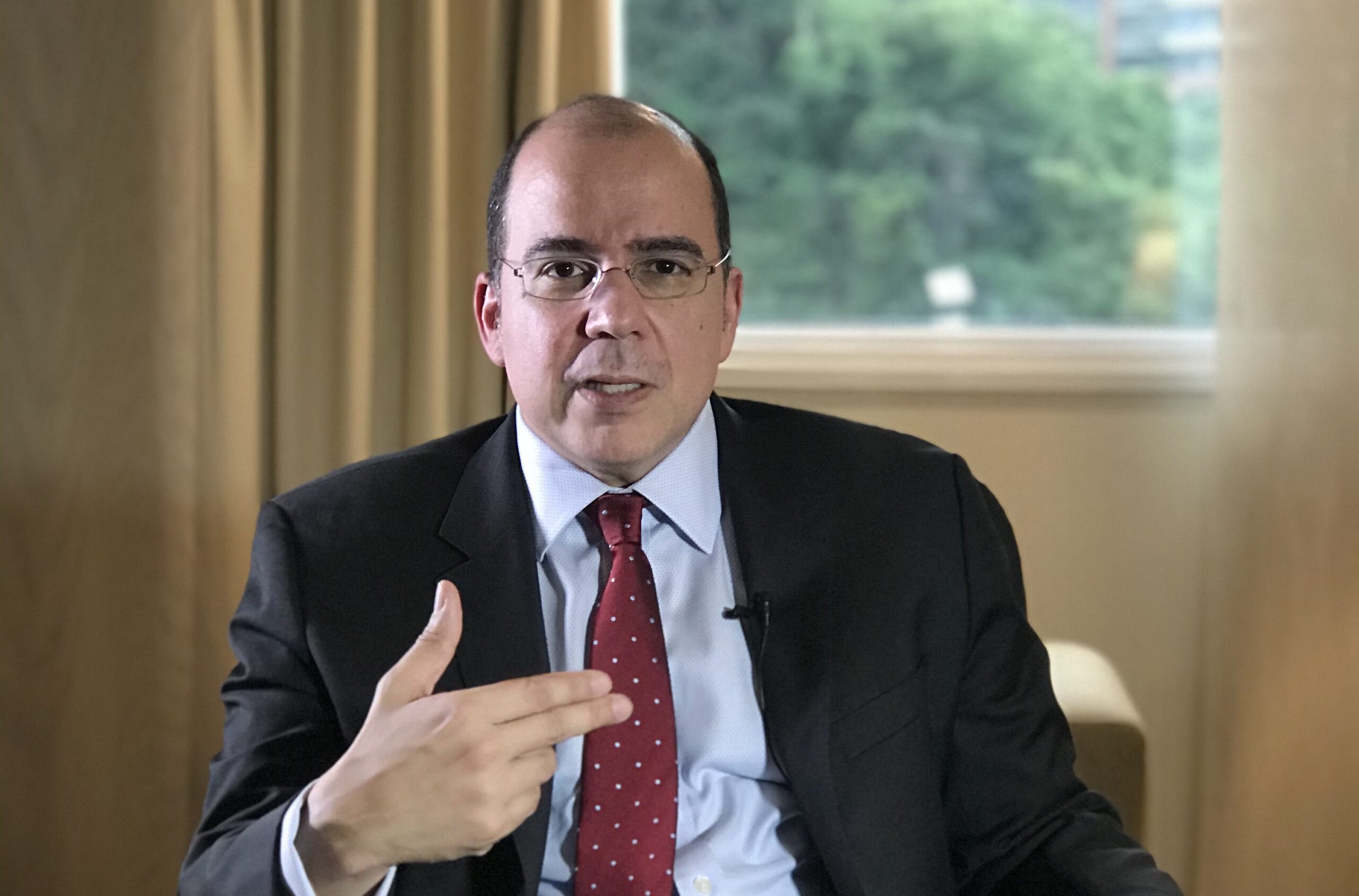
Jorge Barragán is an international analyst, a graduate of the Central University of Venezuela.
Guacamaya, March 4, 2026. Doug Burgum’s visit to Caracas might seem, at first glance, a strange move within U.S. diplomacy.
The U.S. Secretary of the Interior is, in theory, the official in charge of administering federal lands, national parks, and natural resources within U.S. territory. He is not a traditional foreign policy official.
So the question arises: What is the person responsible for U.S. federal lands doing visiting Venezuela? The answer probably lies underground.
The Strategic Minerals Factor
Venezuela not only possesses the largest oil reserves in the world. It also has significant potential in strategic minerals, many of them still largely unexplored.
In a previous article, I mentioned the case of gallium, a critical metal used in semiconductors, radars, artificial intelligence, and military technologies. This mineral is often found associated with bauxite, a resource of which Venezuela has significant deposits.
In a global context where critical minerals have become the new field of geopolitical competition between the United States and China, these resources are gaining increasing importance.
The U.S. energy policy towards Venezuela is linked to a larger strategy of “energy dominance“: which consists of ensuring access to energy reserves, reducing the influence of strategic rivals, and increasing geopolitical leverage.
The Global Minerals Architecture that Washington, DC is Promoting
The visit also coincides with a new Washington, DC strategy to secure access to strategic minerals.
The U.S. government is promoting the creation of an international alliance for critical minerals, informally known as the “Critical Minerals Club,” a network of producer and consumer countries seeking to coordinate supply, trade, and prices, led by Secretary Burgum.
According to Burgum himself, around 30 countries have shown interest in joining this mechanism, including Japan, Australia, and South Korea. The goal is to reduce global dependence on China in the production and processing of strategic minerals. Currently, China controls 85 to 90% of rare earth refining, according to the IEA.
This initiative is part of a larger effort to reorganise the supply chains of essential resources for industries such as semiconductors, artificial intelligence, and defence.
Project Vault: The Strategic Mineral Reserve
Another key element is Project Vault, an initiative launched by the U.S. administration to create a strategic reserve of critical minerals.
The program combines approximately:
- $10 billion in financing from the Export-Import Bank
- nearly $2 billion in private capital
Its objective is to guarantee the supply of minerals such as lithium, cobalt, gallium, and rare earths, which are fundamental for the technology and defence industry. In other words, the United States is trying to build for minerals what already exists for oil: a strategic reserve capable of cushioning supply crises.
Political Coincidence in Caracas
The visit of the Secretary of the Interior also coincides with a relevant announcement in Venezuela: the president of the National Assembly of Venezuela, Jorge Rodríguez, recently reported that the parliament is working on a Strategic Minerals Law, which would seek to regulate and promote the development of this sector.
There is a coincidence between this announcement and the arrival of the U.S. official who coordinates a large part of Washington, DC’s critical minerals strategy. This demonstrates part of the ongoing negotiation and coordination that currently exists between Miraflores and the White House.
Despite its potential, Venezuela remains a largely unexplored territory from a modern geological point of view. Actual reserves are not quantified; updated technical assessments are lacking. This means the country could possess significantly greater resources than are known today.
Burgum himself explained that, following the return of energy companies, the next wave of investment will be in mining, because “there is a huge mining opportunity in Venezuela” and several U.S. companies are ready to return after being nationalised decades ago.
Venezuela is entering the radar of the new geopolitics of critical minerals. In a world where power no longer depends solely on oil, but also on the metals that fuel the technological revolution.