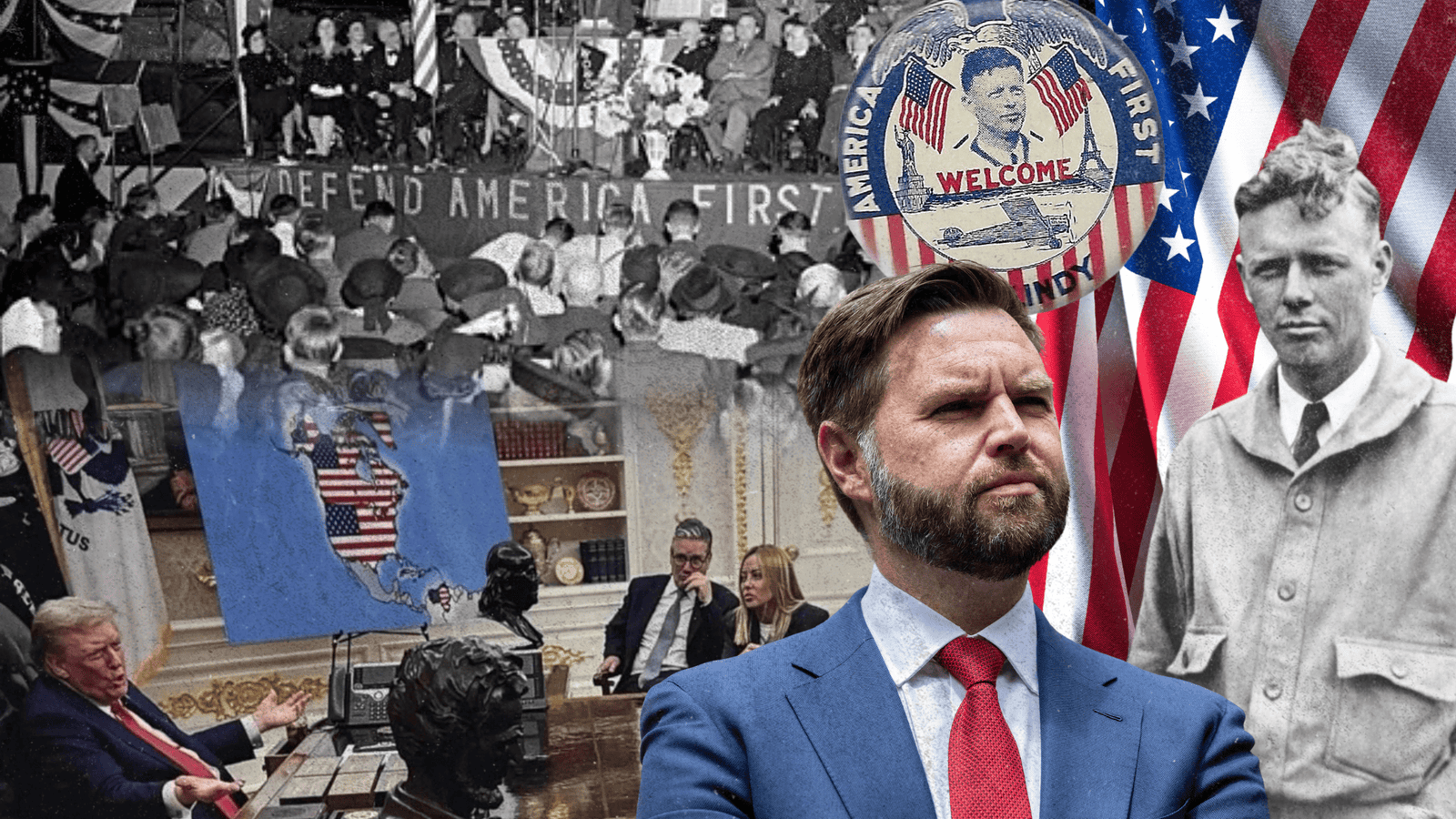
This piece is the third in a series of investigations on the ‘Cartel de los Soles’ political narrative. We recommend that you also read the first and the second articles.
Guacamaya, September 15, 2025. Creating and spreading a false narrative is not harmless. In this third article, we are laying out the damning consequences of branding Venezuela a ‘narco-state,’ by promoting the idea that it is ruled by the so-called ‘Cartel de los Soles.’
In our first investigative piece, we demonstrated how the evidence to back this claim does not exist: The magnitude of cocaine trafficking via Venezuela is marginal compared to nearby routes, while there is no proof to support the idea that it is directed by Nicolás Maduro. The term ‘Cartel de los Soles,’ rather than describing a consolidated criminal structure, has served as a political tool by certain economic and political actors in the United States to justify intervening to force regime change, as we set out in our second article. Therefore, the U.S. Navy deployment in the Caribbean is not intended to fight crime, an idea the U.S. public is more comfortable with, but to use American troops to intervene in a foreign country, which is much less popular.
The claim of a Venezuelan narco-state is already creating its first consequences. Last week, the U.S. military shot at an alleged drug boat, killing 11 people. Already, it raised many questions on its legality, both under international law and whether the U.S. military had the mandate to carry it out; and also about its usefulness to stop trafficking. A New York Times article said that the boat had turned around before being hit repeatedly from the air, further undercutting what experts saw ‘as an already weak claim of self-defense.’ In the coming months, the members of the administration who called for the strike and then authorised it could come under fire.
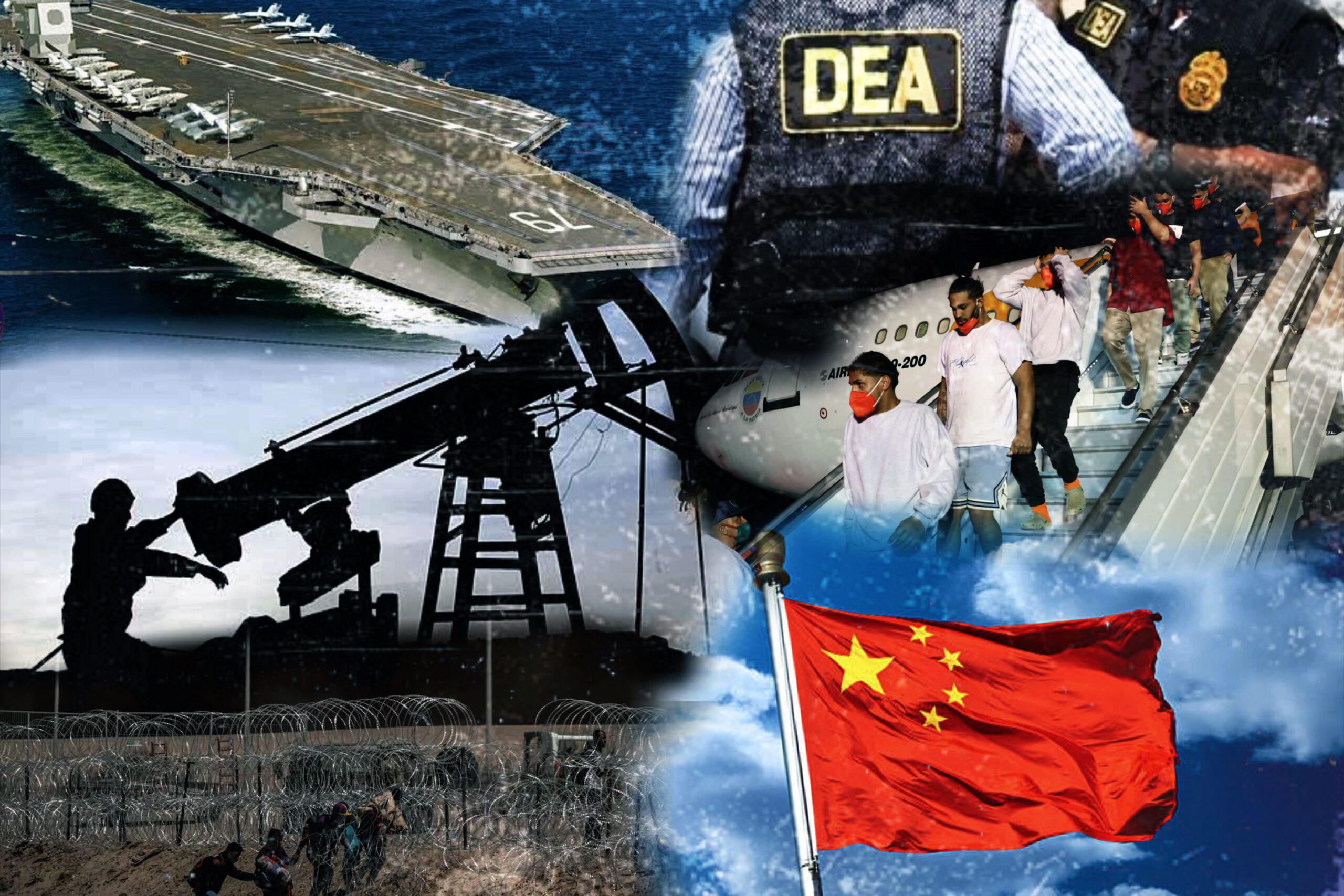
In this piece, we show that the rhetoric about a Cartel de los Soles is already undermining the strategic interests of the United States in Latin America. It is further isolating Venezuela from the West, pushing it deeper into Beijing’s arms. Military interventions would also bring instability in the region, with repercussions blowing back to the United States. A direct consequence would be the end of repatriation agreements with Caracas and a larger exodus of Venezuelans, as well as a disruption of oil flows to the U.S. Gulf Coast. Finally, it negatively impacts the trust and cooperation of partners in the region. Various important governments have openly rejected the ‘Cartel de los Soles’ narrative, weakening efforts to coordinate real counter-narcotics action, and heightening geopolitical tensions.
Handing over Venezuela’s oil reserves to China
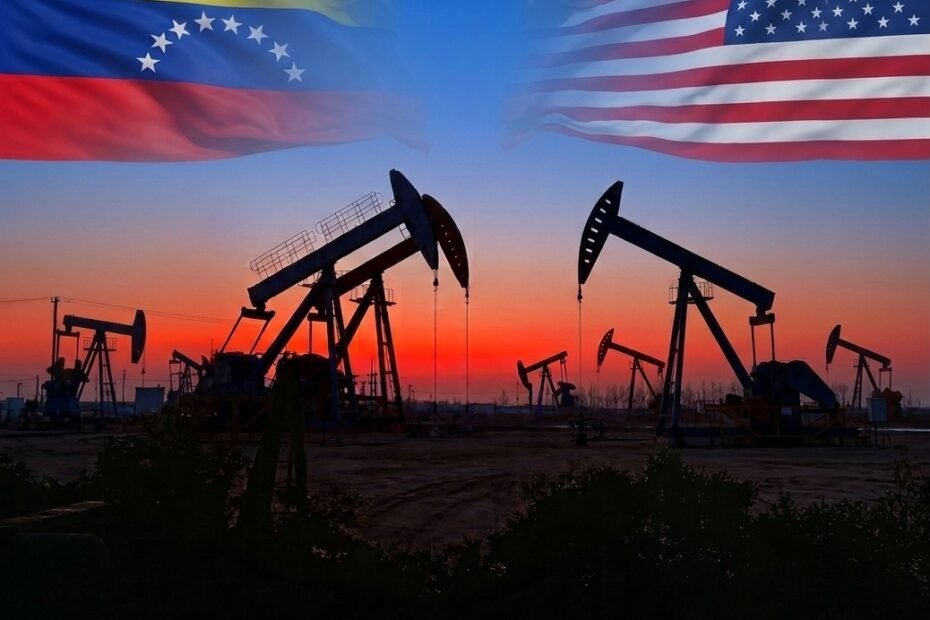
The rhetoric of isolation through sanctions and pressure for regime change has already pushed Caracas towards greater dependence on China, Russia, and Iran, consolidating energy and military alliances that truly undermine the strategic influence of the United States in its own hemisphere. This is no minor detail: Venezuela possesses the world’s largest proven oil reserves and ranks seventh in natural gas—if we just consider Latin America and the Caribbean, the country also sits on 80% of the latter resource.
The experience with sectoral sanctions is clear. For many decades, the South American nation’s main trading partner had been the United States, given their geographical proximity and synergies between Venezuelan heavy crude and Gulf Coast refineries. But sanctions forced a marked turn to Eastern partners. In 2016, before the Treasury Department started targeting the country’s economy, Americans imported 800,000 barrels per day (bpd). During 2019, this figure was brought down to zero with sanctions, only recovering a limited amount—230,000 bpd in 2024—with special licenses granted to Chevron and other firms. Energy experts estimate that the same refineries could quickly absorb 750,000 bpd of Venezuelan heavy crude, which would be cheaper than similar alternatives given the shorter distance and larger discount.
China was able to take full advantage of this situation, profiting from discounts of up to $35 per barrel. This August, the Asian giant alone took 85% of Venezuela’s oil exports, or 820,000 bpd. China is also the main source of imported goods for Venezuelans, having replaced the United States in 2019. In the meantime, Russia and Iran became vital intermediaries in the oil trade; all three countries created relationships of dependency for Caracas. Additionally, Maduro is increasingly becoming more dependent on their sales of arms and military advisors, as the last connections between the Bolivarian National Armed Forces (FANB), and Western counterparts wither away.
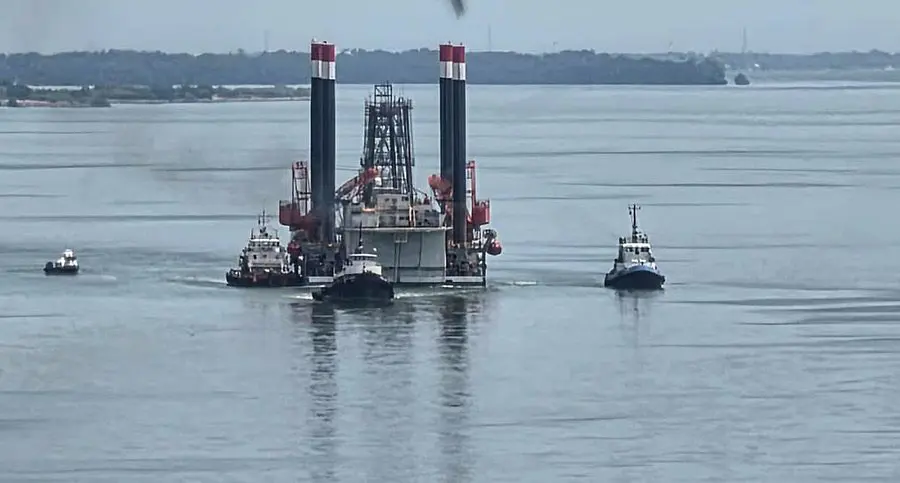
Chinese firms have also started to work in upstream production and refineries with opaque contracts signed under the ‘Anti-Blockade Law’—a bill adopted to mitigate the effects of sanctions. These include China Concord Petroleum, Anhui Guangda Mining Investment, and Kerui Petroleum. Meanwhile, American businesses are barred by the Treasury Department from working in Venezuela, despite their willingness to invest.
In practice, sanctions and political pressure resulted in Venezuela switching from relying on the West to depending on Asia. This dynamic parallels that of Russia following the invasion of Ukraine: redirecting energy exports to India and China at discounted prices. The result is paradoxical: the United States ends up indirectly subsidising cheap oil that fuels its strategic rivals.
Military actions which do not lead to a political transition—remember that the main option on the table is ‘kinetic strikes’—could provoke an even greater radicalisation of Nicolás Maduro, who has already warned that ‘if Venezuela were attacked, we would immediately enter a period of armed struggle.’ A scenario of this type would push the Venezuelan crisis into a new phase of confrontation, with extensive internal and regional effects.
If these pressure policies end up failing, as has happened in the past, Maduro would have the opportunity to capitalise on a political-military victory. Externally, he would continue drifting towards China, Russia, and Iran. Domestically, he would be encouraged to further close the democratic system and reduce the margin of action for moderate opposition actors within the National Assembly, including former presidential candidates Antonio Ecarri and Henrique Capriles, who are betting on a strategy of internal negotiation and gradual reforms.
How the reckless push for regime change in Venezuela undermines U.S. security
The first problem with trying to intervene in Venezuela is that it has not been thought through. Washington, DC officials are discussing an impressively wide range of ideas, including drone attacks on Maduro; air strikes on suspected cocaine production sites or even a Russian-built ammunition plant; or even boots on the ground like in the 1989 invasion of Panama, as one said, ‘This could be Noriega part 2.’
In the present day, overseas interventions seldom work. Since 1990, virtually all U.S.-led interventions have left war-torn or otherwise devastated countries in their wake, as we can see in Iraq, Afghanistan, Libya, Syria, Somalia, and Haiti. In Venezuela, experts have warned that such a reckless operation could drive instability across the region, giving more space to non-state armed actors and further pressuring emigration from Venezuela, first to neighbouring Colombia and Brazil, then to other countries, including the United States.
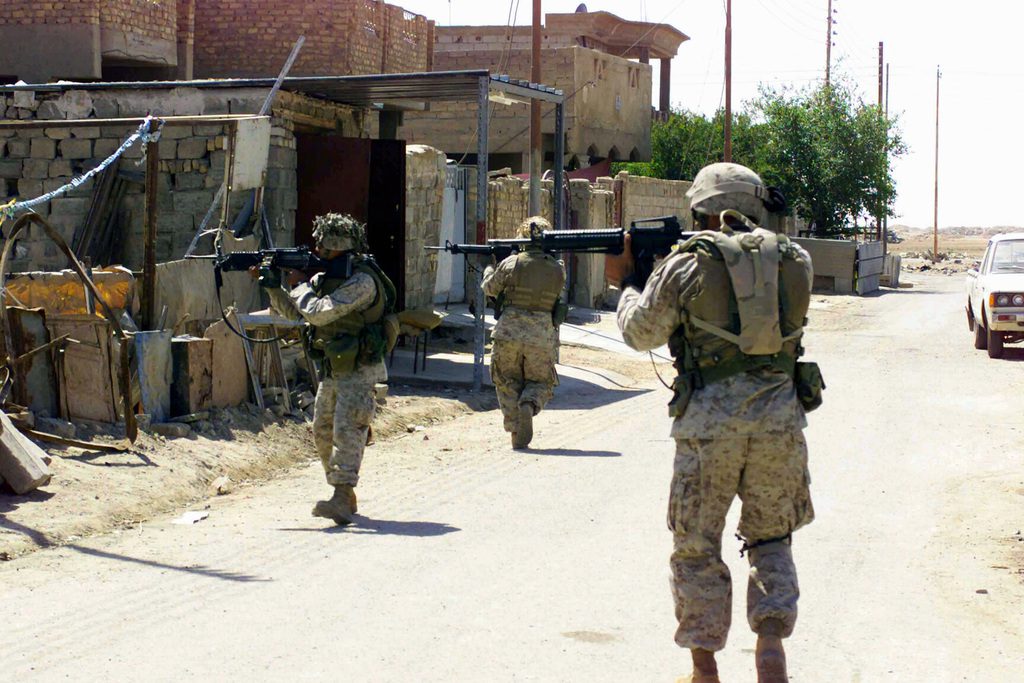
To force a change in government, Washington, DC would have to field a significant land force, something that is not contemplated under the current deployment, which only includes 2,200 Marines. The different opposition sectors lack an armed wing, including María Corina Machado and her party. So far, there is no evidence that the FANB, which she accuses of participating in drug trafficking and committing crimes against humanity, is willing to turn against Nicolás Maduro to support her.
Shannon K. O’Neil from the Council on Foreign Relations said in a 2018 column that ‘Venezuela is not Grenada or Panama, the two Latin American countries invaded by the United States during the final days of the Cold War. Instead, it is twice the size of Iraq, with a slightly smaller population, and teetering on the brink of chaos. Any invasion requires preparations on a similar scale, meaning a force of over 100,000 men.’ Herein lies another problem. Out of the interventions she mentioned, there were successes—from the point of view of U.S. foreign policy, not necessarily the locals—only in the very small countries. They were disastrous for everyone in the larger ones.
Some neoconservative sectors in Washington argue that selective airstrikes within Venezuela could pressure the FANB to cause an internal fracture. However, in the hypothetical scenario that a military group decided to support Machado, a likely outcome is a civil war, or at least intensified political violence, without there necessarily being a political transition down the line.
‘If the U.S. stays on this path, there are a number of outcomes that are possible but very few are positive,’ argued Phil Gunson, a senior analyst for the Andes region at the International Crisis Group. ‘Nobody has calculated what happens next. It is very naïve to think you can decapitate the regime, bring in Edmundo González and María Corina Machado, and we will all have a democracy.’
‘What is more likely is some form of internal conflict,’ said Gunson, speaking from Caracas. ‘It is going to be very difficult to maintain internal order. We could have a split in the armed forces, and then you have a number of non-state groups across the country who have no incentive to lay down their arms because someone told them the government has changed.’
In the event of an open military confrontation, the U.S. would have to prepare to stay long term, facing a scenario of regional instability. Policy makers must consider the real presence of Colombian guerrillas, and other local and transnational organised crime groups in Venezuelan territory. Chavismo has also worked to arm loyal civilians in different ways, including the Bolivarian Militia and the ‘Colectivos,’ which is essentially a paramilitary group. The task of nation-building would fall upon the American taxpayer and soldier, with incalculable costs and scant prospects for success—a scenario reminiscent of the painful experiences in Iraq or Afghanistan.
Clear repercussions on U.S. borders
To this must be added the migratory impact of a failed intervention in Venezuela. The collapse of the country’s economy also caused one of the largest exoduses in the world, only second after Syria, according to the UNHCR. A war would only exacerbate it, with the ensuing social consequences in host countries. It is important to recall that the first wave of mass emigration from Venezuela fell upon South America, but over the years many left their homes for third countries, like the U.S. and Spain. In fiscal year 2023, over 266,000 Venezuelans crossed irregularly into U.S. territory according to Customs and Border Protection (CBP), a historical record that challenged the response capacity of immigration authorities.
Again, a scenario of ungovernability in Venezuela would jeopardise President Trump’s immigration agenda. He would be faced with both a renewed wave of migrants desperate to cross the southern border, overwhelming the authorities; and with the impossibility of carrying out deportation flights to Venezuela.
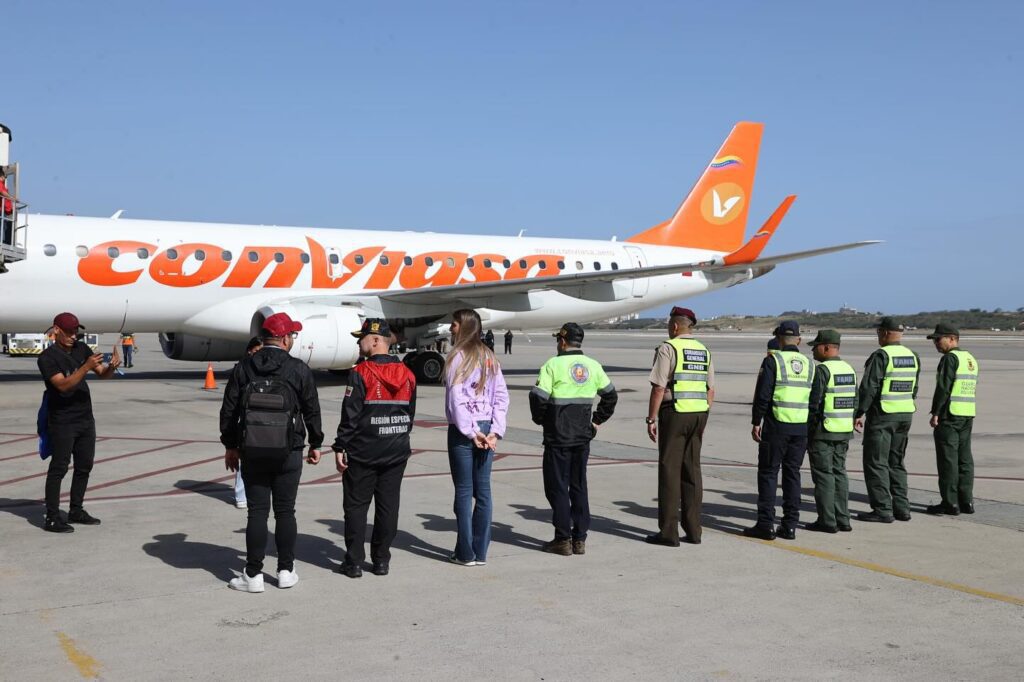
In January this year, one of the very first measures by the new Trump administration was to strike a deal with Caracas for repatriation flights, even when there is no official recognition of Maduro. Aeroplanes loaded with deportees are landing in Venezuela at a rate of twice a week, which has been maintained despite tensions between the two governments. While some flights are chartered by ICE, many are paid for and operated by the Venezuelan state, the only case where the recipient country bears this responsibility. A military conflict will upend this agreement, which is a core part of President Trump’s immigration agenda.
False narratives jeopardise real efforts to fight drug trafficking
Drug trafficking is still a major issue in the Western Hemisphere. Given the official mission of the Navy deployment is to combat this type of crime, it must be evaluated on this front too. To what extent is the narrative that Maduro heads a narco-state, and sending warships to the Caribbean, helping counter-narcotics efforts? So far, it seems like an expensive show of force with many negative and few positive effects, if any.
Far from pulling together a consensus, the State Department’s offensive for the region to adopt the ‘Cartel de los Soles’ narrative is provoking tensions across Latin America. Notably, three of the most important governments in the fight against drug trafficking—Colombia, Mexico, and Brazil—have expressed their outright rejection of the accusation against Maduro.
Colombia, historically an ally of the U.S. especially regarding the fight against narcotics, openly contradicted the State Department’s version. President Gustavo Petro categorically said in a post on X that ‘the Cartel de los Soles does not exist, it is the far right’s fictitious excuse to topple the governments that do not obey.’
Petro, the leader of the nation that produces the majority of the world’s cocaine, denounced ‘the transit of Colombian cocaine through Venezuela is controlled by the “Drug-trafficking Junta,” and its capos live in Europe and the Middle East.’ With the ‘Junta,’ he refers to the collusion of Colombian criminal groups like the Clan del Golfo and the FARC dissidents to manage routes, suggesting that the responsibility of narcotics trafficking resides mostly in transnational mafias alien to the Venezuelan state.
He also emphasised that the Venezuelan political problem must be resolved internally ‘with more democracy,’ without foreign intervention. These declarations reflect a marked distancing between Bogotá and Washington, DC over the Cartel de los Soles narrative, and fit in with Petro’s continued position of opposing interventionism in the region.
For its part, Mexico has also disavowed the assertions coming from the U.S. State and Justice departments. President Claudia Sheinbaum responded with disbelief when the U.S. Attorney General, Pam Bondi, brazenly alleged that Maduro and the Sinaloa Cartel are working together. ‘This is the first time we have heard about this issue. There is no investigation by Mexico related to that. Nothing,’ stated the Mexican president, in a press conference.
These open contradictions represent an extraordinary challenge. The United States needs to cooperate with Colombia, and especially with Mexico in order to interdict drug shipments before they reach the border. The latter is not only a central point of entry for cocaine, but also for other drugs like fentanyl. Law enforcement efforts could be severely undermined if the two governments question the veracity of Washington, DC’s narrative about narcotics centered around Venezuela.
Brazil, the most powerful nation in South America, has not entered the debate about the existence of the ‘Cartel of the Suns’ itself, but it has nonetheless made clear its opposition to the U.S. Navy deployment in the Caribbean, or any possible military action against Venezuela. At the BRICS summit, President Luis Ignácio ‘Lula’ da Silva commented that ‘The presence of armed forces from the largest power in the Caribbean Sea is a factor of tension incompatible with the peaceful vocation of this region.’ In other words, the insistence on a supposed Venezuelan ‘narco-state’ is counterproductive.
The militarisation of counter-narcotics: Expensive and ineffective
The use of the Navy as part of this narrative also has many problems. It is diverting resources and attention from the true epicentres of global drug trafficking, while militarising efforts have proven to be ineffective, while representing high direct and opportunity costs.
International experience demonstrates that combating drug trafficking requires police intelligence, judicial cooperation, and joint security agreements, not naval deployments designed for conventional war scenarios. The Navy, designed for territorial defence and maritime control, lacks the criminal investigation capabilities, network infiltration, and transnational coordination that characterise anti-drug law enforcement work.
This view is supported by a RAND Corporation study, titled Sealing the Borders: The Effects of Increased Military Participation in Drug Interdiction, which concluded that the ‘use of armed forces to interdict drugs would have minimal or no impact on the flow of cocaine into the U.S., and could increase cartel profits.’ The report also argues that their use increases the cost of counter-narcotics efforts and erodes the necessary trust between countries in the region to confront a common problem in a coordinated manner. Particularly in Latin America, a U.S. military presence generates tensions, especially when it is perceived as a veiled form of interventionism, noting that these operations are more linked to U.S. foreign policy than to a cooperative fight against drug trafficking.
The U.S. military deployment in the Caribbean has a cost in the range of $10 million, according to specialised sources consulted for this investigation. It includes an Amphibious Ready Group, a Marine Expeditionary Unit, a nuclear-powered submarine and other warships. The anti-narcotics operation was authorized by President Donald Trump on August 8, and if we consider this very rough estimate, the American taxpayer could be facing a cost of over $300 million a month later.
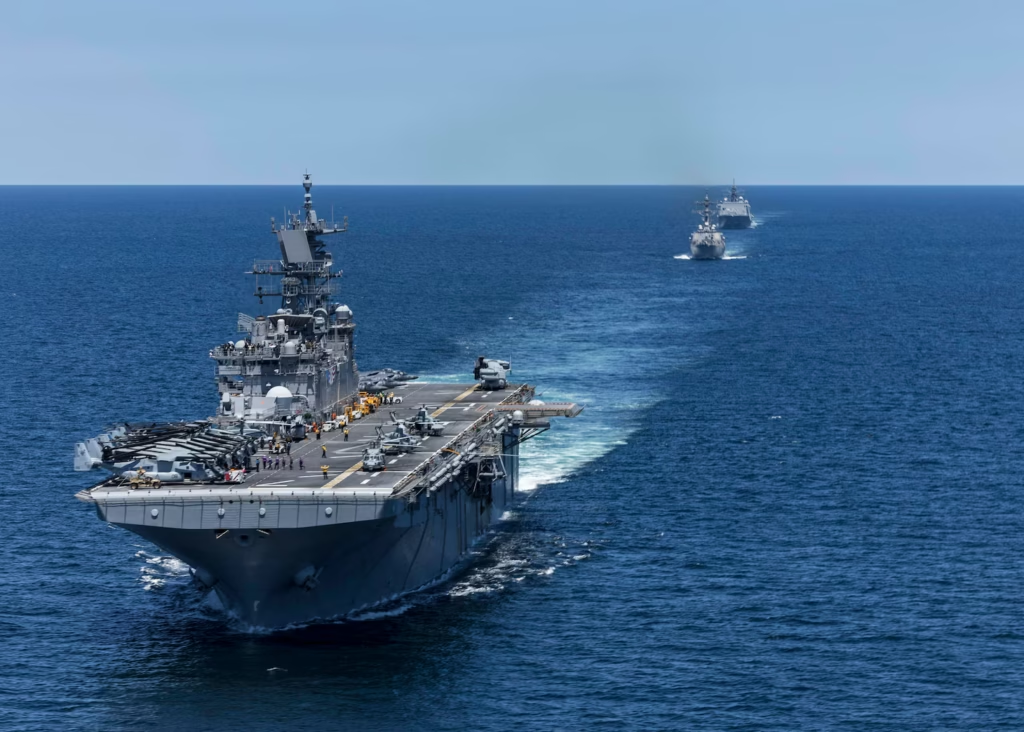
There is a further opportunity cost, as these resources could have been used against real military threats and piracy, or in training, according to Mark Cancian, retired Marine Colonel and senior advisor on defence and security at the Center for Strategic and International Studies (CSIS). In the meantime, no information has been released on how many tons of drugs have been seized, or how many shipments have been interdicted, raising questions about the return on such an investment.
In the Spring of 2020, the Pentagon carried out a similar operation of sending warships to thwart drug smugglers. Again, it achieved no significant law enforcement results, while it was associated with regime change efforts, as it was immediately followed by the landing of mercenaries on Venezuela’s coasts, in what was known as Operation Gideon. At the time, Bryan Clark, a naval operations expert and senior fellow at Hudson Institute, told InsightCrime that using warships in the Caribbean ‘is sort of an overkill. They are military-grade and that makes them more expensive. It also makes them more survivable but you are not expecting drug runners to have torpedoes.’
It should not be controversial to state that deploying naval units around Venezuela’s coasts is absurd. As the DEA itself acknowledged, the main maritime vectors where cocaine is transported are the Eastern Pacific (74%) and the Western Caribbean (16%). Then, the Caribbean corridor where we would find Venezuela—as well as other countries—represents just 8%. The idea of the latter route being the most prominent made sense decades ago, during the first cocaine boom of the 1970s and 1980s.
The militarised crackdown on narcotics is thus focusing on a comparatively minor route for cocaine, which is also irrelevant if we consider the transit of fentanyl and opioids, which are causing the overwhelming majority of overdose-related deaths.
The targeted strike of an alleged drug boat from Venezuela also makes little strategic sense, without going into the many questions regarding the veracity of the administration’s claims, or its legality—the bombing has been considered by some an ‘extra-judicial arbitrary killing.’ Although the location of the incident was not disclosed, different reports point to a route connecting the Venezuelan state of Sucre with the nearby island of Trinidad, which is related to European-bound traffic, as described in our first piece.
Open heart surgery with a hammer
It would be great if life was that simple. If you could just air strike problems out of existence, or parade warships to intimidate weaker countries into submission. But reality is messier than that. On efforts to bring about political change in Venezuela with the U.S. Navy deployment, Gunson said that ‘it’s like doing open heart surgery with a hammer.’
Two very important issues are at play: an illegal drugs crisis in the United States, and the political future of Venezuela. Both require solutions that are comprehensive, with clear, long-term strategies. They will not depend on one military campaign without clear objectives. They also need the cooperation of the region’s governments. Putting the Navy on display, or carrying out limited air strikes, can grab the headlines, no doubt. But this is not how history is made.
Currently, the campaign to brand Venezuela as a narco-state is hurting the United States’ credibility in Latin America, when it needs their help to fight illegal drug trafficking and, increasingly, China’s expanding influence. Meanwhile, a strategic, resource-rich country is being antagonised by the West, and pushed straight into the arms of Beijing, Moscow, and Tehran.
A fundamental reassessment is needed. The Trump administration must turn away from this policy of neoconservative confrontation, based on a myth, and return to its realist policy of constructive engagement. In truth, the U.S. benefits hugely from Venezuela’s prodigious energy reserves – it is China that now reaps the reward from confrontation – and cooperation with Maduro is essential to Trump’s deportation agenda. That these vital national interests are being sacrificed to Marco Rubio’s longstanding obsession with regime change is absurd. It’s time for POTUS to step back from the brink, to remember his commitment to repudiate neoconservatism and construct policy in a way that puts America First.