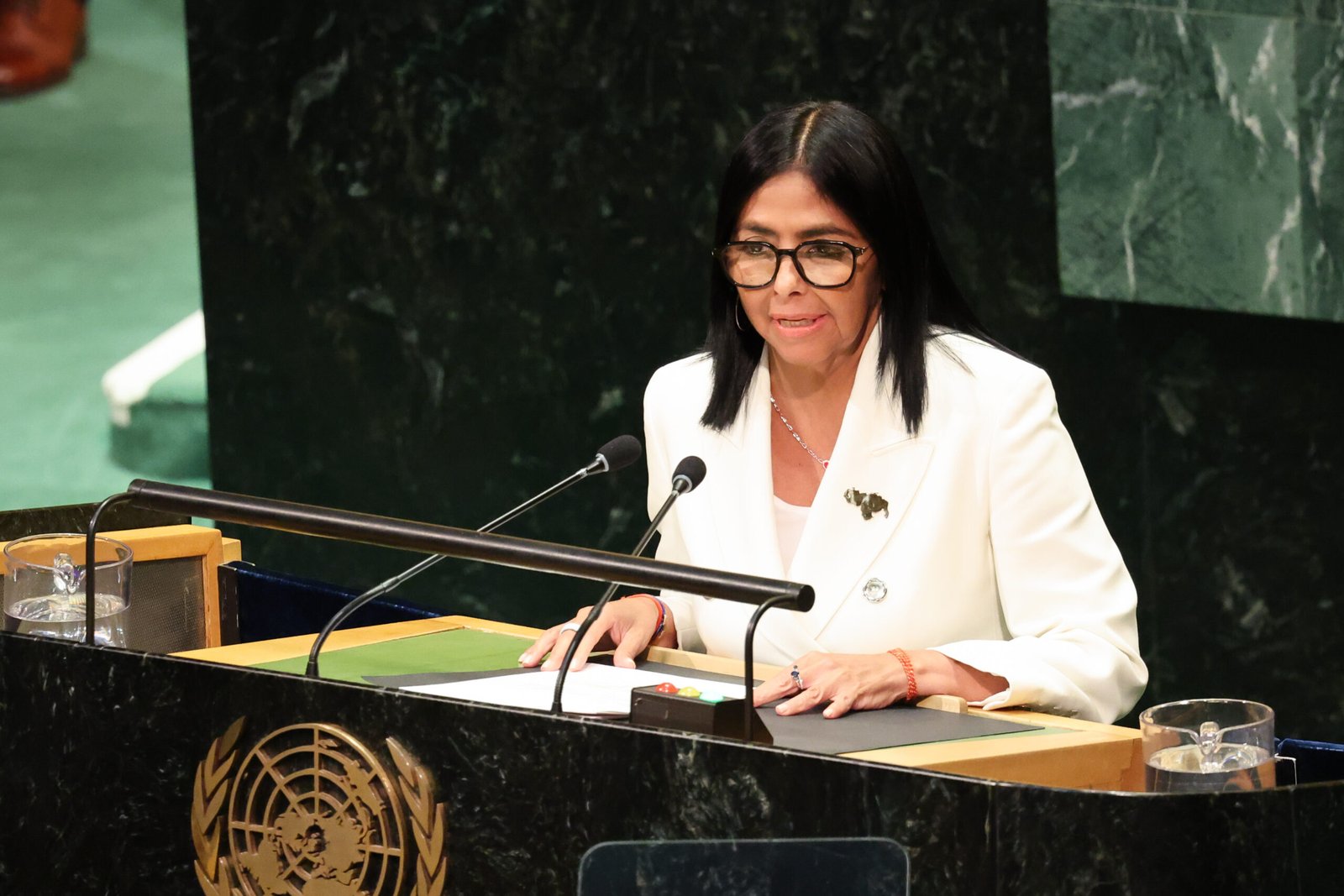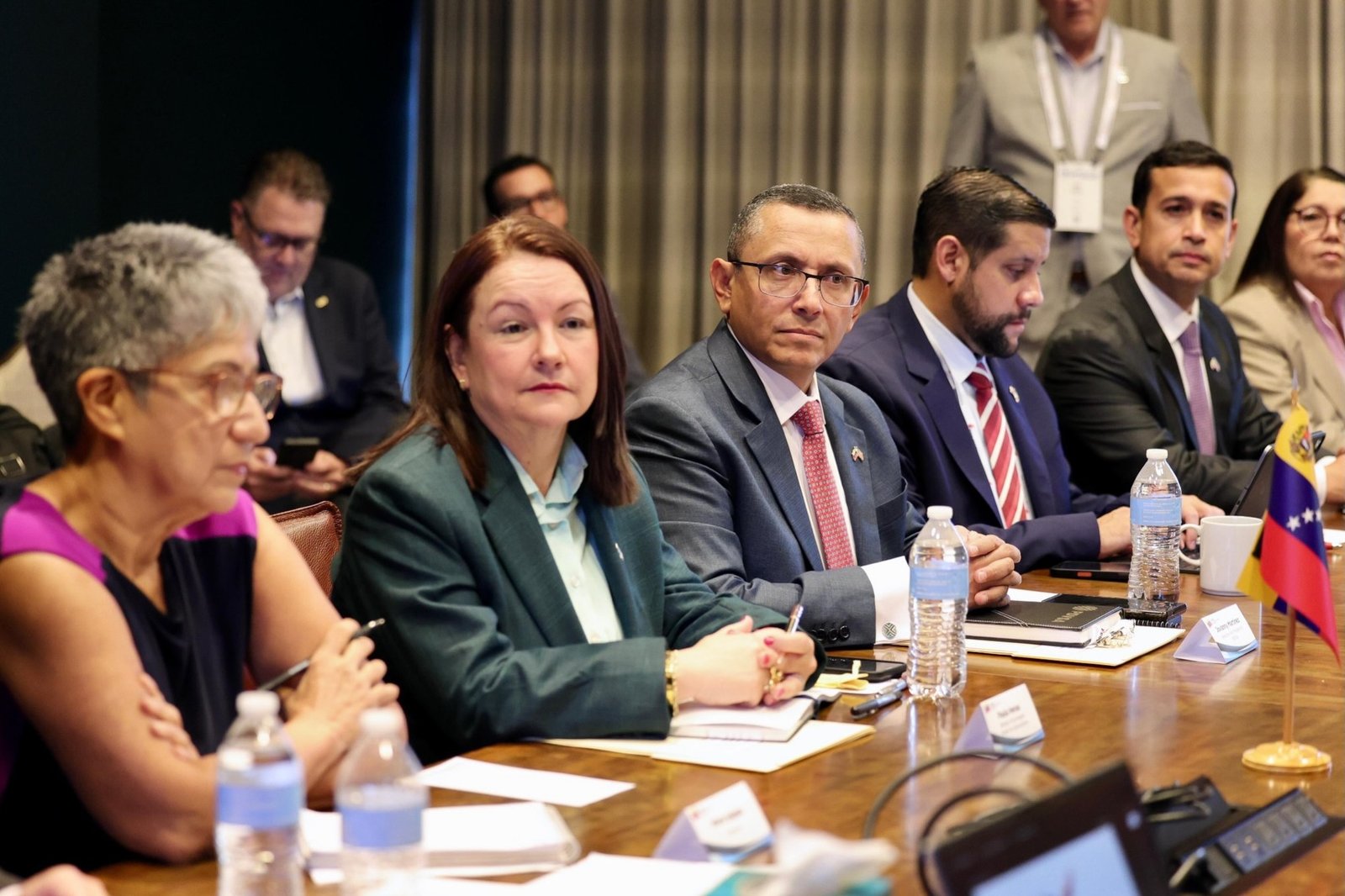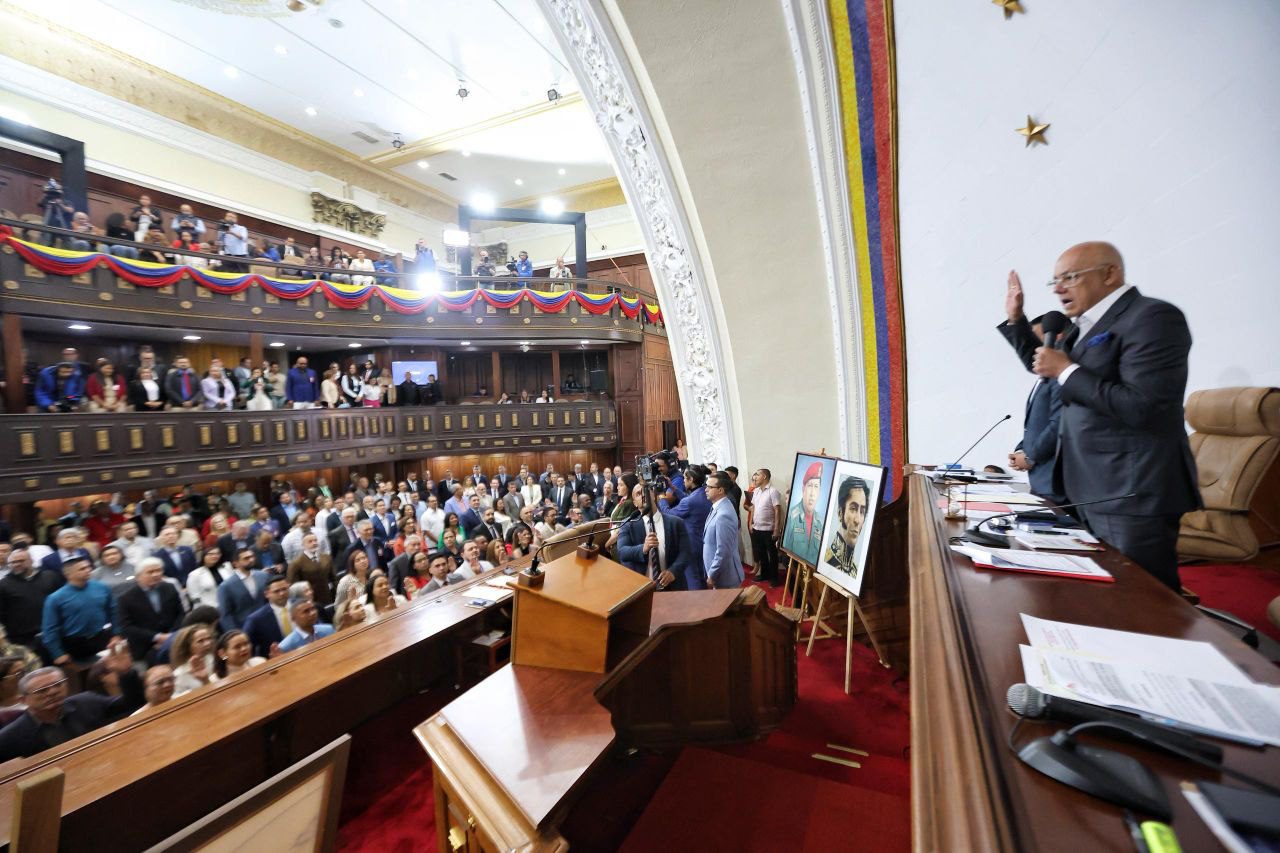
After its unanimous support, the Bill will go to a special commission for public consultation, which brings together voices from different blocs: pro-government, moderate opponents and figures with regional weight. Photo: National Assembly website.
Guacamaya, February 5, 2026. The National Assembly of Venezuela approved in first discussion, and unanimously, the draft Law of Amnesty, Reconciliation, and National Reunion — a political milestone that could redefine the national landscape.
The debate was enriched by interventions from legislators across parliamentary blocs, all favoring a broad consensus to heal wounds left by years of political conflict. Present at the ordinary session were members of the recently established Program for Democratic Coexistence and Peace, promoted by acting president Delcy Rodríguez. Among them: Minister Ernesto Villegas (coordinator), deputy Genesis Garvett, academic Francisco Garcés, professor Michael Penfold, businessman Ricardo Cusanno, community judge Gustavo Cánchica, entrepreneur Gerson Gómez, analyst Indira Urbaneja, cultural representative Miqueas “Piki” Figueroa, and governor Joanna Carrillo.
Government: Peace, Tolerance, and Reconciliation
Deputy Jorge Arreaza (PSUV/National), who presented the project, framed the initiative within President Nicolás Maduro’s vision. “Our victory, as President Maduro has said since 2014, is peace,” he stated. He emphasized the ethical responsibility of the moment: “The homeland obliges us to be responsible, to heal wounds, to recognize each other, to understand each other.”
Deputy Carolina García Carreño (PSUV/Lara) supported the law with a call for tolerance: “Wanting to unite the country can never be seen as weakness. If the Amnesty Law contributes to peace, tolerance, respect, and coexistence, we must give it a vote of confidence.”
Similarly, Nicolás Maduro Guerra (PSUV/District Capital) urged to “row together to unify the country in the name of peace and development,” rejecting hatred and advocating for “peace, love, coexistence, and reconciliation.”
Opposition: A New Historical Stage and Judicial Review
From the opposition, deputy Tomás Guanipa (Única/National) celebrated the initiative’s transformative potential: “It can mark the beginning of a new historical stage for our country. A stage of reunion.” He called for contributions to make it “a source of pride for all” and urged the closure of the Helicoide prison, along with a review of the judicial and penitentiary system.
Deputy Luis Augusto Romero (AP/National) asked for “urgent measures” for political prisoners such as Ernesto Paraqueima and Yandir Luggiodice, and invited universities, NGOs, unions, and the Church to join the debate. “It is a formidable opportunity to begin a long, painful, and complex path toward reconciliation,” he said.
David Uzcátegui (FV/National) stressed: “We don’t need to love each other; we need to recognize each other as equals before the law and as citizens with the same right to exist.” He added: “History will not judge us by the force of our shouts, but by the wisdom of our decisions.”
Yusmaro Jiménez (Vamos Vamos Cojedes/Cojedes) highlighted the pertinence of the instrument in favor of reunion, justice, and forgiveness.
Key Points of the Law: Amnesty Since 1999, With Serious Exclusions
The law seeks to promote national reconciliation and social peace through amnesty for crimes linked to political conflict since 1999. It excludes war crimes, crimes against humanity, serious human rights violations, intentional homicides, torture, forced disappearance, kidnapping, large-scale drug trafficking, and corruption involving illicit enrichment.
The law prioritizes the immediate release of those imprisoned for political reasons, opinions, peaceful demonstrations, or expressions on social media, with substitute measures. It also covers crimes such as instigation, resistance, property damage, rebellion, treason, conspiracy, illegal possession of weapons, military crimes applied to civilians, defamation, and insults against officials, provided they are politically motivated.
It explicitly includes historical events such as the April 2002 coup, the 2002–2003 oil strike, peaceful protests between 2004 and 2024, as well as initiatives like “La Salida” (2014) and the Transition Agreement (2015).
The law also grants amnesty for violations of due process, political persecution, or military trials against civilians; extends benefits to accomplices; extinguishes penalties and criminal actions (non bis in idem); and orders the restitution of seized property. Additionally, it establishes administrative and disciplinary sanctions for officials who obstruct its application.
Consultation Commission with All Political Forces
For its final approval, the project will move to a second discussion, preceded by a national consultation coordinated by a special commission chaired by Jorge Arreaza (PSUV/National) and vice-chaired by Nora Bracho (UNT/Zulia).
Members of the special consultation commission include:
- Jorge Arreaza (PSUV/National) as President
- Nora Bracho (UNT/Zulia) as Vice President
- Pedro Infante (PSUV/National)
- Luis Augusto Romero (AP/National)
- Grecia Colmenares (PSUV/Táchira)
- Timoteo Zambrano (Cambiemos/National)
- Carolina García Carreño (PSUV/Lara)
- Pablo Pérez (Única/National)
- Jacqueline Farías (PSUV/District Capital)
- Antonio Ecarri (Lápiz/National)
- Tania Díaz (PSUV/National)
- Luis Florido (UNT/National)
- Winston Vallenilla (PSUV/Miranda)
- Yusmaro Jiménez (Vamos Vamos Cojedes/Cojedes)
- Iris Varela (PSUV/Táchira)
- Nicolás Maduro Guerra (PSUV/District Capital)
- Roy Daza (PSUV/National)
- América Pérez (PSUV/Nueva Esparta)