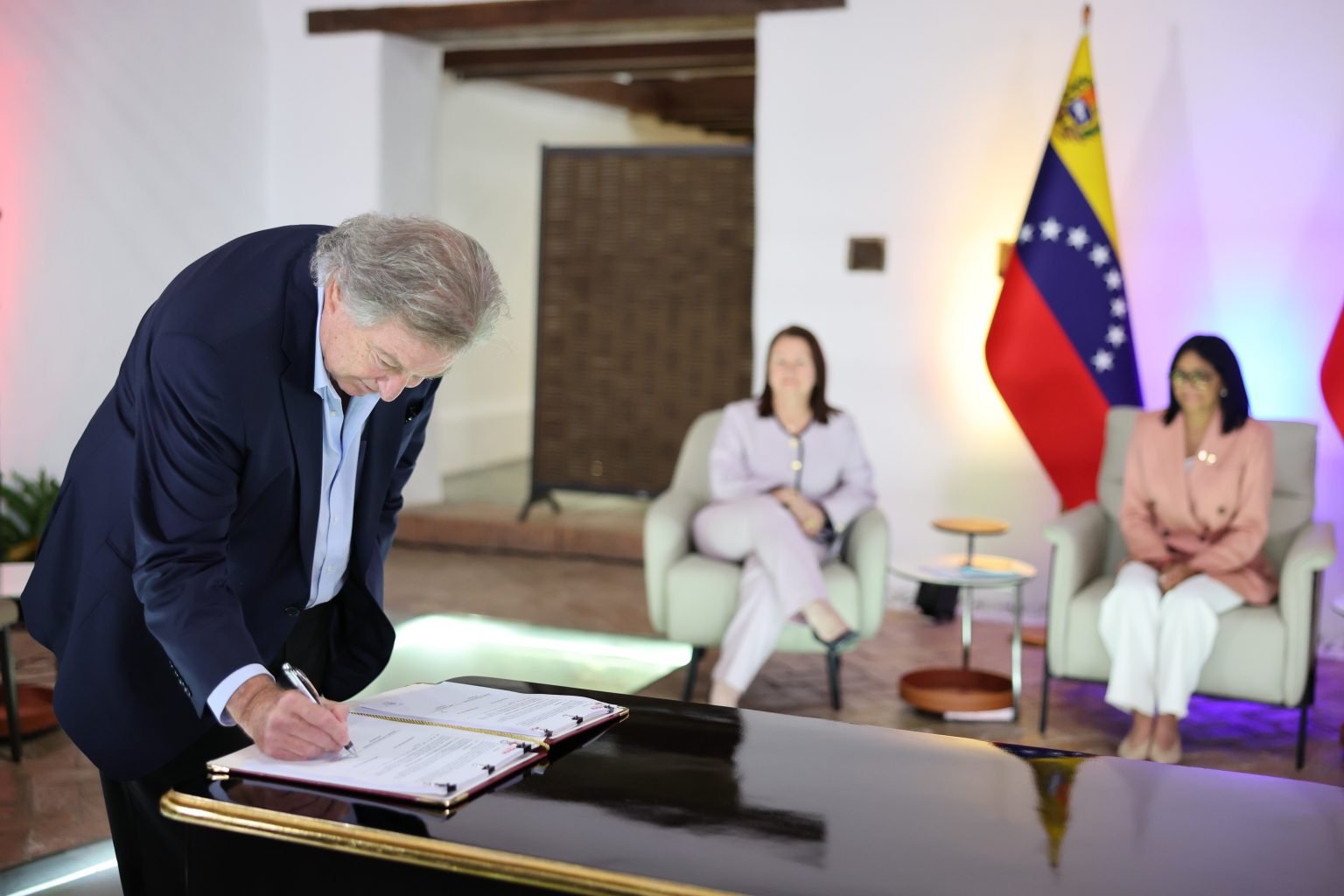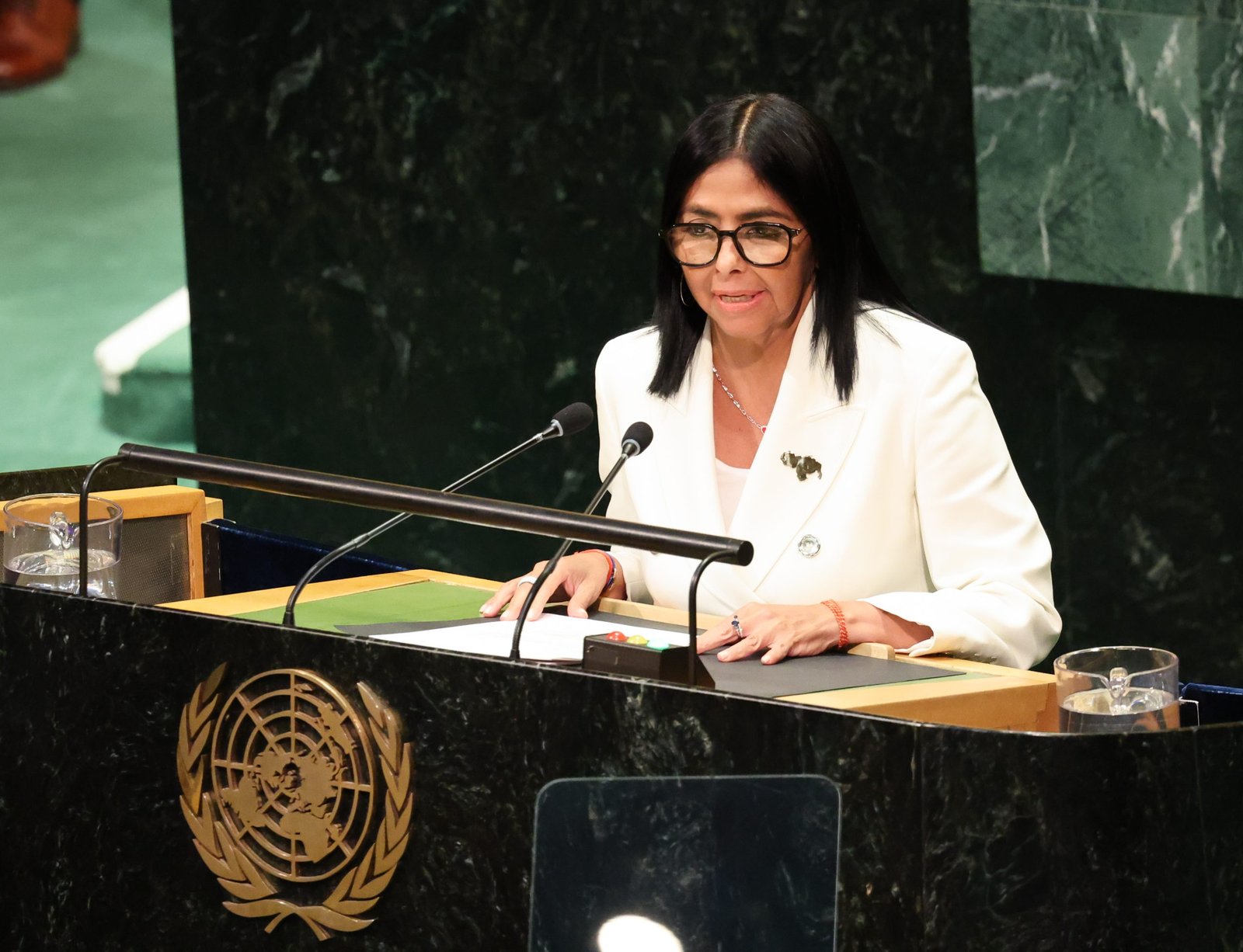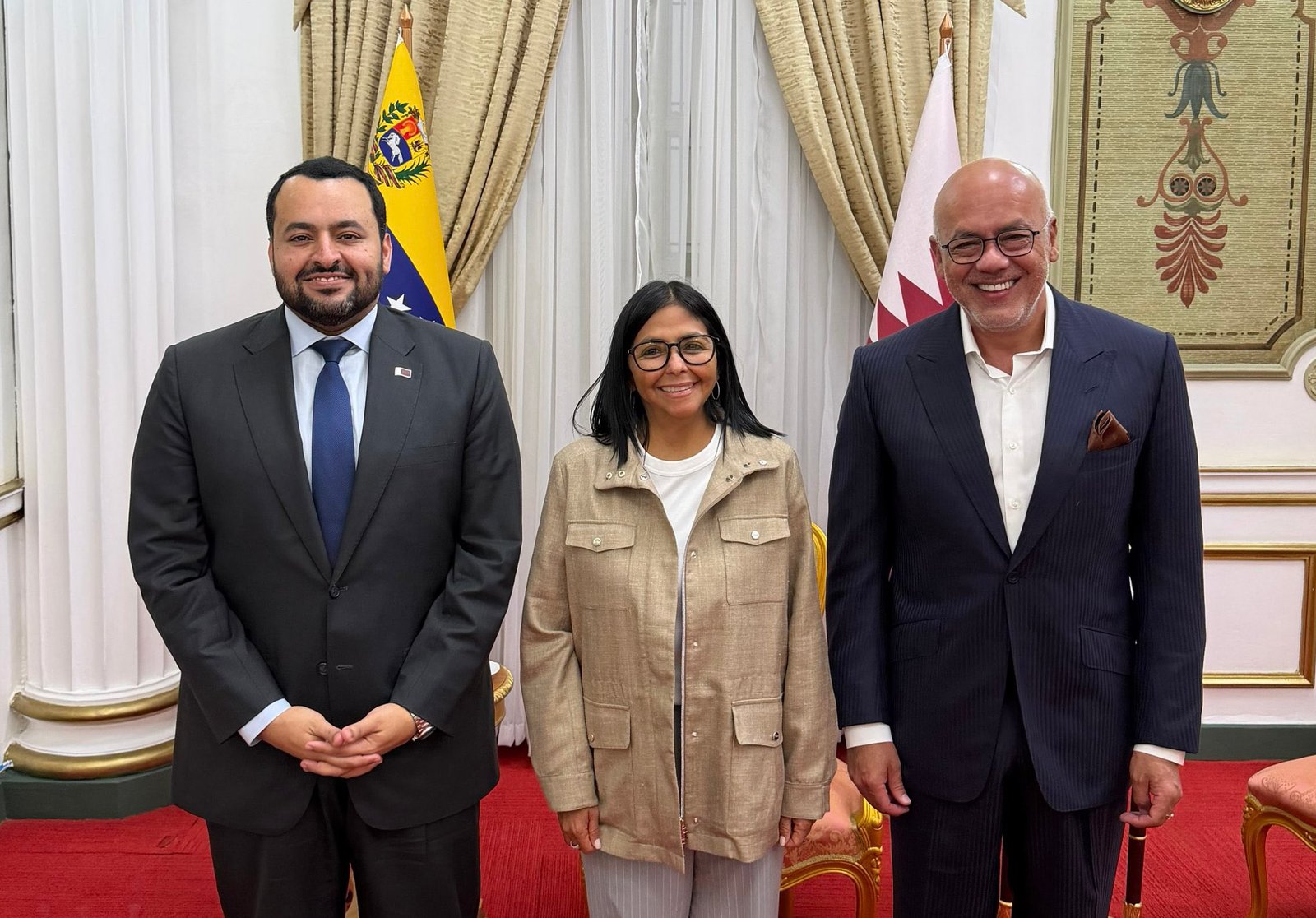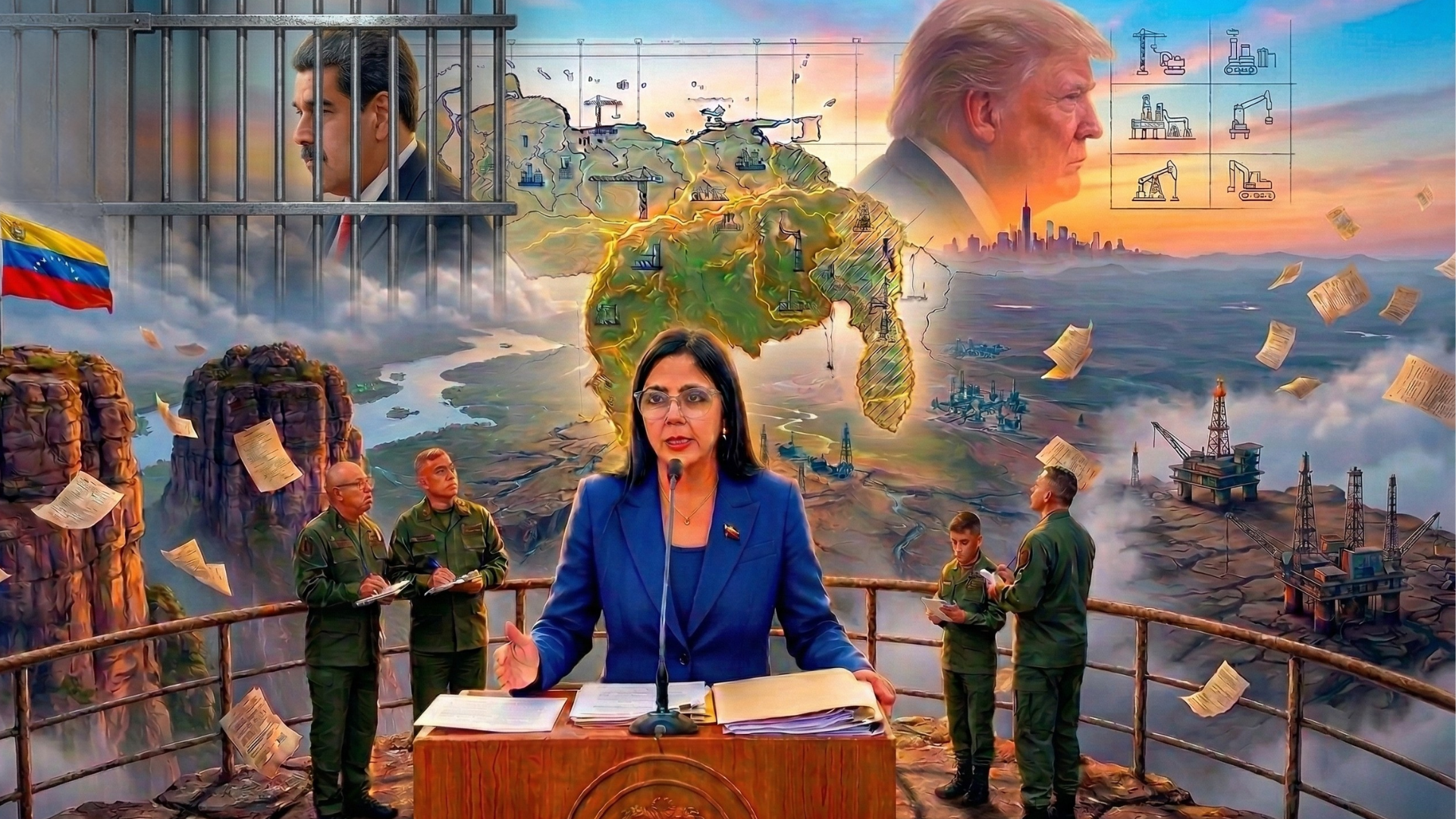
Delcy Rodríguez was sworn in as acting president on January 5, 2026, two days after the US attack on Nicolás Maduro that led to his capture. The acting head of state has spent the last two months rebuilding political power in Venezuela. Image: Guacamaya.
Guacamaya, March 8, 2026. Changes ranging from the diplomatic to the economic, including the displacement of some figures and entities, but without neglecting governance. Thus, acting President Delcy Rodríguez has, two months after assuming power, woven her own command structure, supported by trusted cadres and careful moves to legitimize her authority in a country with a new political reality.
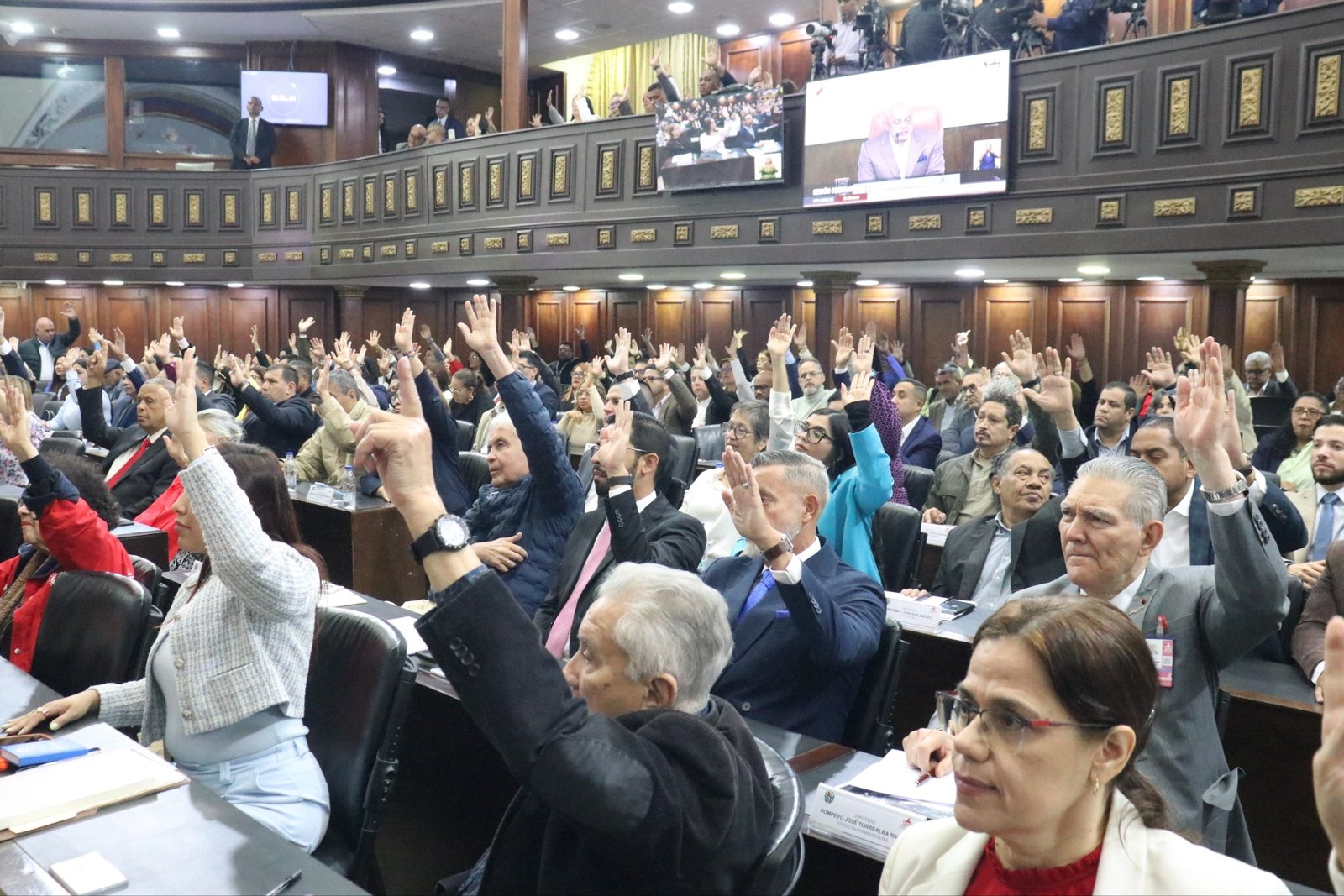
And this capacity has not been forged solely from the Executive branch, as Delcy has extended her influence to other areas of the Public Power. With important laws promoted for discussion and approval in the National Assembly, and recent interim appointments for the Attorney General and the Ombudsman, Rodríguez adds key supports in favor of governmental stability.
Beyond the Executive: New Laws and Larry Devoe as the New Attorney General
Although the new legal frameworks and the interim appointments of the Citizen Power are executed by the Legislative Power, which is presided over by her brother, Jorge Rodríguez, Delcy’s political oversight is attributable. This direction responds, of course, to the central axis of power she has built in economy, oil, and diplomacy, after being sworn in as acting president in substitution of Nicolás Maduro, following the events of January 3.
On one hand, Larry Devoe, who was for 12 years at the head of the National Council for Human Rights, an entity attached to the Vice Presidency of the Republic, represents the technical-loyal profile that Delcy has consistently promoted. His inclusion in the intervention boards of Sunacrip and CVG in 2023 occurred precisely during Rodríguez’s executive vice presidency.
In January 2026, now as acting president, Delcy integrates Devoe into the Program for Democratic Coexistence and Peace, which has been key to managing the Amnesty Law and the releases of political prisoners. With him at the head of the Public Ministry, albeit provisionally, she seeks to legitimize a narrative of openness, while maintaining control over sensitive investigations.
Meanwhile, the relocation of Tarek William Saab to the Ombudsman’s Office responds to a different but complementary logic. Saab, internationally accused of turning the Public Ministry into a tool of political persecution for nearly a decade, was no longer compatible in the position of Attorney General in the midst of a government that aims to bet on reconciliation.
However, removing him entirely from the system would have generated resistance in hardline sectors of Chavismo. Keeping Saab in the Ombudsman’s Office, a defensive role against narratives from organizations like the IACHR and the UN, undoubtedly neutralizes his figure but allows him operational capacity as a legal operator, with the additional benefit of immunity, based on constitutional principles.
Precisely, after the Hydrocarbons Law and the Amnesty Law were approved, the latest provisional moves promoted in the Citizen Power may explain an Executive strategy to ensure governance without clashes. By addressing internal tensions within Chavismo and also with the opposition, a change in the figures in charge of criminal prosecution and rights monitoring was foreseeable.
The Presidential Office as a Platform for a New Power Balance
Another facet of this process is what Delcy has done with the administrative core of the Executive. With an almost complete reconfiguration of the Office of the Presidency, not only in appointments but also in its internal reorganization, complementing key changes and retentions in several ministries, she distances herself from the Maduro era without completely breaking with the Chavista legacy.
One of the essential changes in this body of the Executive relates to its new head. Days after the events of January 3, and following rumors of his death during the US operation, Captain Juan Escalona, aide-de-camp to Chávez and Maduro, was officially appointed as the new head of the so-called Ministry of the Presidential Office and Government Management Follow-up.
“I know that his loyalty, capacity, and commitment will carry forward the follow-up of the development of the plans of our Bolivarian Government, together with the people. Let’s always move forward!” Delcy expressed at the time. Escalona’s appointment would be effective, replacing Aníbal Coronado, who would move — provisionally — to head the Ministry of Ecosocialism, to in turn relieve Ricardo Molina.
Subsequently, concerning the Office’s structure, the Vice Ministry for the Supreme Social Happiness of the People was replaced by the Vice Ministry for Social Protection. Additionally, the Vice Ministries for Presidential Support and for Presidential Communication were created to coordinate executive policies and the dissemination of information emanating from the administration.
Finally, the suppression and liquidation of seven missions and foundations associated with the Office of the Presidency were ordered, including the “Robert Serra” Mission for the Youth of the Homeland, Propatria 2000, the José Félix Ribas Foundation, and the Strategic Center for the Security and Protection of the Homeland. Some of them had their responsibilities redistributed to other ministries for an “Executive reorganization.”
Strategic Replacements and Political Gestures in Public Image
Outside the Presidential Office, Delcy’s restructuring has also extended to key areas of public image, communication, and other operational cabinet portfolios. Various appointments, combined with the immobility of certain actors, demonstrate the displacement of figures from the Maduro era, alongside tactical alliances to consolidate loyalties within the ruling party that favor governance.
A month ago, she dismissed Leticia Gómez —Minister of Tourism of Cuban origin— and appointed Daniella Cabello in her place, daughter of the Minister of Interior, Justice, and Peace, Diosdado Cabello. Daniella, a specialist in customs management and foreign trade, with family background in the Ministry (her mother Marleny Contreras held it between 2015 and 2019), represents a generational and political gesture to the Cabello clan.
Daniella Cabello also assumed, in an interim capacity, the presidency of the National Tourism Institute (Inatur), granting her direct control over tourism policy and the national operational network of that sector. Venetur also came under her umbrella, now directed by the former superintendent of Sudeban, Dheliz Álvarez, who was transferred functions as part of the same government restructuring.
In the Ministry of Communication and Information, she appointed Miguel Pérez Pirela, a philosopher and communicator with a long history in the Chavista orbit. Along the same lines, Pirela went on to occupy the Sectoral Vice Presidency of Communication, Culture, and Tourism, replacing Freddy Ñáñez in both positions, who in turn had replaced Aníbal Coronado at the Ministry of Ecosocialism just days after his own appointment.
Precisely, Ñáñez was also replaced by Hernán Canorea as president of the state television channel Venezolana de Televisión. Canorea has been part of Diosdado Cabello’s inner circle, having been a producer and columnist for his program “Con el mazo dando,” as well as press chief for the National Assembly presided over by Cabello himself between 2012 and 2016.
Furthermore, Delcy has made concentrated changes in several key ministries. Aníbal Gutiérrez, who came from the Presidential Office and was appointed to Ecosocialism for only a few days, then assumed the role of Minister of Transport, replacing Ramón Velásquez Araguayán. Meanwhile, Nuramy Gutiérrez was appointed Minister of Health, replacing Magaly Gutiérrez Viña.
Security and Defense: The Leadership Remains Intact
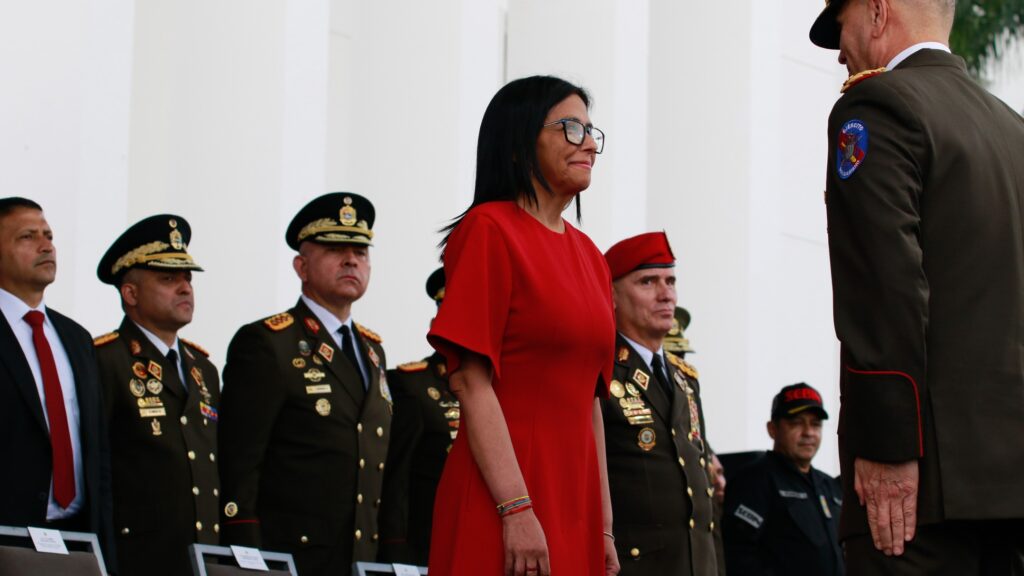
In contrast to these renewals, Delcy has kept the security and state control portfolios intact. Diosdado Cabello remains firm as Minister of Interior, Justice, and Peace, while the Ministry of Defense, led by Vladimir Padrino López, retains its high command despite minor adjustments in regional commands (REDI and ZODI) announced by the CEO of the FANB, Domingo Antonio Hernández Lárez.
Likewise, above these structures, Diosdado Cabello remains as the sectoral vice president of Politics, Citizen Security, and Peace, which guarantees him direct control over police forces, intelligence services, and public order apparatuses. Meanwhile, in parallel, Vladimir Padrino López continues at the head of the Vice Presidency of Political Sovereignty, Security, and Peace, retaining political leadership over the FANB and ensuring that the transition does not alter the military high command.
These vice presidencies and ministries — key for control over the FANB, PNB, DGCIM, and SEBIN — have not undergone significant movements, evidencing Delcy’s priority to avoid fractures in the coercive institutions that guarantee her physical stability. Although there was a key adjustment like Gustavo González López taking over the DGCIM and the Presidential Honor Guard, the continuity in Interior and Defense seeks to avoid paranoia or uncertainty in the forces of order and political sovereignty.
Overall, the shielding of Defense and Interior functions as a counterweight of stability against the previously mentioned adjustments in other cabinet portfolios. While Delcy displaces symbols of the Maduro era in operational and public image areas, she sustains historical loyalties in the coercive forces to thus achieve a balance that sustains her power without major ruptures.
The New Projection Towards the US: Plasencia as a Central Piece
Certainly, from the closed diplomatic circle Delcy has built, one cannot fail to mention Félix Plasencia, appointed as Venezuela’s diplomatic representative to the United States, and the first envoy from Caracas to Washington since the rupture of relations in 2019. His technical and loyal profile makes Plasencia the “presentable” face of Chavismo before the United States.
Plasencia, a career diplomat, former chancellor, former ambassador to China and the United Kingdom, already had a long trajectory in Chavista foreign policy. It is worth noting that he was Minister of Tourism when he accompanied Delcy on the “Delcygate” flight to Barajas in 2020, while Delcy remained sanctioned by the European Union, evidencing a relationship of personal trust since the Maduro era.
Other striking moves occurred in the Ministry of Foreign Relations, where Delcy decided to change almost the entire intermediate line of command. Mauricio Rodríguez was named vice minister for Latin America; Rander Peña moved to International Communication; Andrea Corao Faría to Asia, the Middle East, and Oceania; and Oliver Blanco assumed Europe and North America.
In particular, the appointment of Oliver Blanco was striking, as he was explicitly presented as “a young man with prior opposition militancy,” which can be sold as a gesture of openness to other visions within foreign policy. In this way, it’s another signal evidencing a contrast with the Maduro era by showing, at least on the international level, inclusion and pragmatism without losing control.
Likewise, by moving Rander Peña from Latin America to International Communication and removing Camilla Fabri, Alex Saab’s wife, Delcy reinforces a more professionalized team, less associated with the hardline Maduro circle, to manage the narrative outward. This fits with the attempt to show a more “presentable” government after Maduro’s capture/exit.
Similarly, placing Mauricio Rodríguez in Latin America and Corao (daughter of ruling party deputy Jacqueline Faría) in Asia-Middle East-Oceania aims to reinforce two axes: the immediate neighborhood, seeking to restore or rebuild ties after years of isolation; and strengthening the non-Western strategic allies that have been key in financing and political support.
Delcy not only changed names in diplomacy, but also finished aligning foreign policy with the process of dismantling and recomposing the governmental apparatus that she has been marking since she formally took power. Likewise, she thus reinforces the international maneuvering room of her acting government at a time of high internal fragility.
Where Real Governing Happens: Economic Power in Delcy’s Hands
If diplomatic moves build the narrative outward, Delcy’s true power nucleus lies in the economy–finance–oil triangle within the country. There, she has not improvised, and even seems to have foreseen the current scenario, by placing and repositioning pieces she has been working with for years, and in whom she today concentrates the management of the State’s resources, investments, and cash flow.
Calixto Ortega Sánchez is perhaps the clearest example. An economist with experience at Citgo and the Central Bank of Venezuela, he was a key piece in asset and sanctions management under Maduro. Once Delcy assumes the acting presidency, she reinstates him to the government and appoints him as sectoral vice president of Economy and, shortly after, president of the International Center for Productive Investment (CIIP) in substitution of Alex Saab, linked to corruption accusations.
Saab also completely leaves the cabinet after the merger of the ministries of Industries and National Production and of National Trade into a single portfolio, which would ultimately remain under the command of Luis Antonio Villegas. Subsequently, Saab’s detention was announced, although without an official response or version from the Venezuelan State, a fact that, if confirmed, would express a clear and forceful distancing from Maduro loyalties.
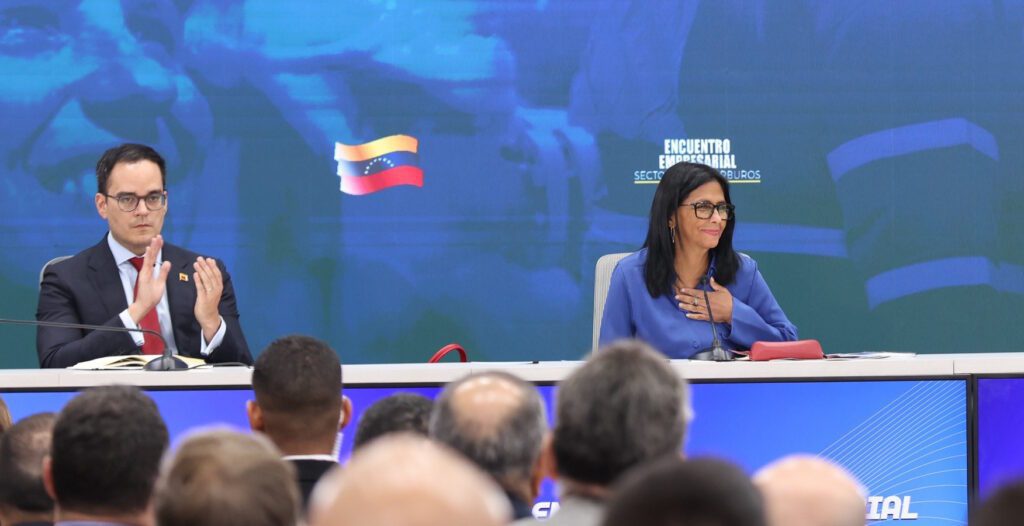
In foreign trade, meanwhile, Coromoto Godoy embodies another piece of the economic support. Under Maduro, the diplomat first assumed the Ministry of Foreign Trade and then, under Delcy, was placed at the head of the Export Promotion Agency. It is the natural complement to the CIIP, because while Ortega attracts investments, Godoy works on placing Venezuelan goods and services in strategic markets.
In that same Foreign Trade portfolio, Andreína Tarazón assumed the Vice Ministry of International Trade Policy, in addition to the interim presidency of the Marca País Institute Foundation, which was directed by Daniella Cabello. In the move, the Executive also appointed Johann Carlos Álvarez Márquez as vice minister for Export Promotion.
At the apex of it all is Pdvsa. Héctor Obregón was appointed president of the state oil company during Maduro’s government, within the framework of the reconfiguration of the 13 productive engines, in which Delcy was the political head of the Hydrocarbons engine and is still minister today. Since then, Obregón and Rodríguez have formed a duo in which oil decision-making passes through a tight circuit.
Alongside these changes, Anabel Pereira remains in the Ministry of Economy and Finance, after having been part, under Delcy as executive vice president, of the scheme that coordinated the so-called 13 productive engines. This may explain that Rodríguez already had her as a trusted piece to coordinate economic and financial policies before assuming the presidency.
In this same line, another recent appointment concerns the Superintendency of Banking Sector Institutions of Venezuela (Sudeban), where Delcy appointed Amny Ivonett Pérez as the new head. The move is closely linked to Pereira, of whom Pérez was a collaborator and legal advisor when the current Minister of Economy and Finance was the one in charge of Sudeban in 2023.
Finally, the Central Bank of Venezuela still has Laura Carolina Guerra Angulo, with training in Petroleum and experience in fund management, appointed by Nicolás Maduro in April 2025. Her appointment renewed the entire BCV board in a context of economic emergency, positioning her as a technical figure in monetary management under Delcy Rodríguez’s leadership at the Ministry of Economy and Finance and the Executive Vice Presidency.
A Power Redefining Itself After Maduro’s Exit
The country’s new political reality — marked by Maduro’s exit, the release of political prisoners, and the beginning of a partial dismantling of the old apparatus — has demanded from Delcy a mix of internal control and external negotiation capacity. In this sense, Rodríguez seems to have understood that it is not enough to administer the institutional inheritance; it must also be redesigned so that it responds to a different leadership.
The result, today, is a government that, although sustained by the architecture of Chavismo, no longer depends on the same loyalties that sustained Maduro. The construction of her own power is apparently more technocratic in form, selectively open in discourse, but still deeply centralized in practice.
It is too early to tell whether the consolidation of this new structure will be enough for Delcy to navigate the social, economic, and international tensions she may face. What does seem clear is that, in the dispute over the legacy and control of the State, she has already made a significant power grab. Her cadres are of her absolute trust, forged in years of collaboration, allowing her to navigate the new reality.