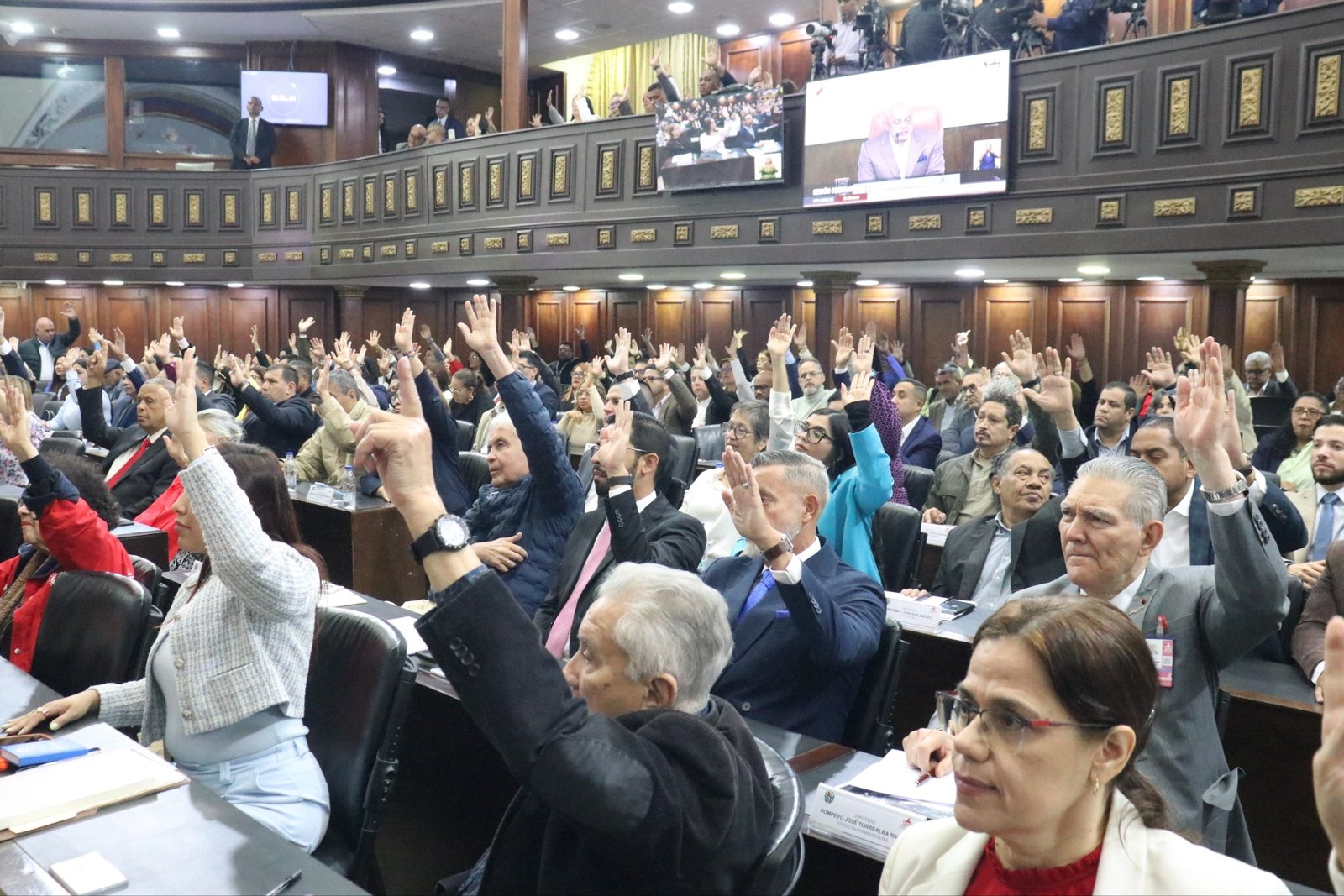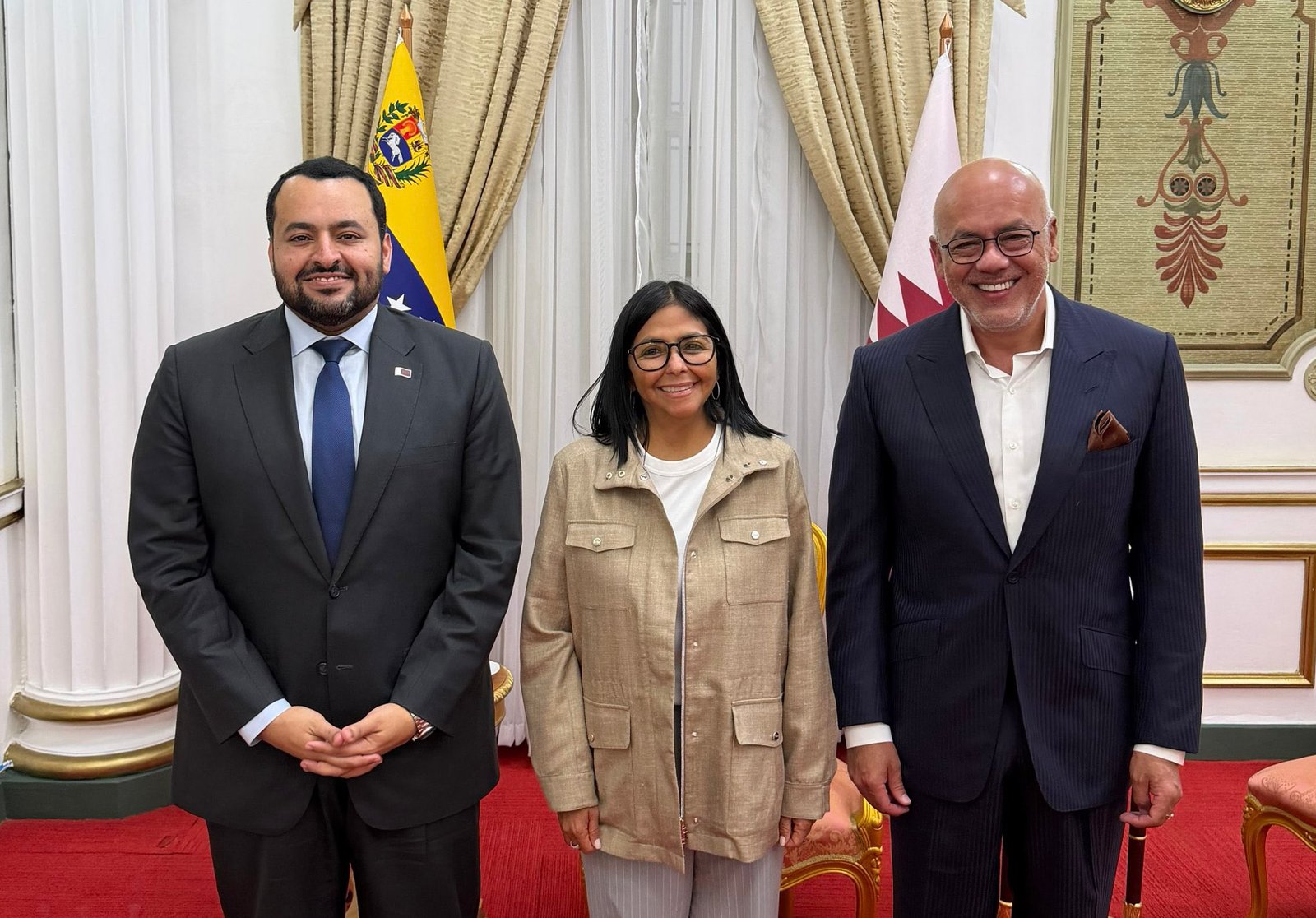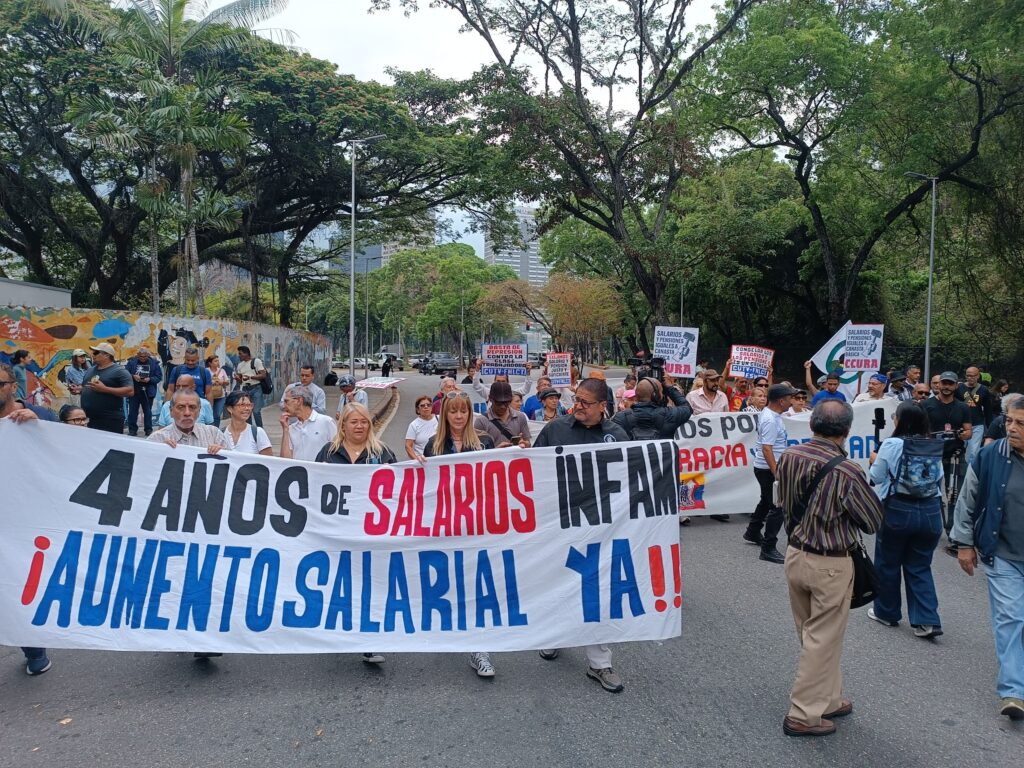
The day this Wednesday left the UCV nearly empty and brought to the forefront the union demand for fair wages, funding, and minimum conditions to sustain university life. / Photography: UCV Noticias.
Guacamaya, April 22, 2026. The 24-hour university strike this Wednesday, April 22, had the UCV as its epicenter and symbol of union discontent. The university awoke practically paralyzed, with closed faculties, and empty hallways and classrooms, while its unions reported “total” compliance in Caracas and a widespread effect in other higher education institutions across the country.
At the same time, the day opened a traditional debate within the university community itself, though one that escalated little on this occasion. The issue is that for faculty and staff, it was a necessary protest for wages and funding; whereas for some students, the strike remains a measure that ends up punishing them, those who can least afford another academic interruption.
The UCV as the center of the strike
Coverage of the day showed that the UCV concentrated the greatest symbolic and political weight of the call, something also reflected in the monitoring of posts on X, where the “House that Defeats the Shadow” appeared as the main institution linked to the protest. UCV Noticias described the day as an “institutional and union cohesion” with participation from faculty, administrative staff, and workers.
José Gregorio Afonso, president of APUCV, assured that “the shutdown was total” and stated that the strike was 100% observed at the UCV, while estimating that in other national universities, compliance exceeded 90%. Along the same lines, Eduardo Sánchez, president of SINATRA-UCV, maintained that the strike was “absolute in all faculties” and warned that they would evaluate prolonging these pressure measures.
Divided student voices
Among students, there were divided positions. José Hurtado, president of the Student Center of Administration and Accounting and council member of the Faculty of Economic and Administrative Sciences (FaCES), rejected the strike and maintained that “students will never be in favor of the strike,” considering that demobilization and empty classrooms are not ideal mechanisms for achieving goals.
Also reported was the testimony of Agni Calderón, an International Studies student who attended classes and said she rejected the shutdown because it directly affects students. Elio Padilla, a Statistics and Actuarial Sciences student, instead supported the wage demand, stating: “I want to graduate, but our professors do not deserve to live on these starvation wages.”
Meetings and tensions with the new minister
The strike was preceded by meetings this week with the Minister of University Education, Ana María Sanjuán, in which university leadership requested concrete responses regarding wages, funding, infrastructure, and student services. Today, meanwhile, Argelia Castillo, general secretary of APUFAT-UCV, pointed out that the minister told the union that “there is no money” for a salary increase.
However, the meeting held on Monday with students produced announcements on specific UCV issues, such as transportation, dining halls, scholarships, infrastructure, and spaces like the Zona Rental, as well as technical committees for schools with facility problems. Among the agreements disclosed by the FCU-UCV is the promise to transfer funds for electoral processes, allocate new transportation units, expand cafeteria meal trays, and review scholarships and evaluation criteria.
Even so, Sanjuán’s figure is a center of controversy, not only due to the wage demand but also due to political criticisms regarding her profile. On social media and among university spokespersons, her closeness to official political acts was questioned, including her participation in the so-called “Pilgrimage for Peace and Against Sanctions” alongside acting President Delcy Rodríguez, despite the minister having been presented as a technical-profile official.
This point has fueled distrust among various university unions, which see it as difficult to separate the promise of dialogue from a ministerial leadership more aligned with the government’s political agenda. From the government’s side, however, the minister also put on the table the debate over the use of university resources and questioned the transparency of fee collection at autonomous universities.
This clash shows that the conflict is not only about wages, as usual, but also about who manages, with what autonomy, and under what conditions public universities are funded. Faced with this, the University’s rector, Víctor Rago, who supported and acknowledged compliance with the strike, also defended the need to open a dialogue process with the Ministry to “build the foundations” for real agreements.
Balance in other universities and regions
The day also left a visible reaction from the Simón Bolívar University. Student spokespersons from the USB demanded, via X, that the minister look beyond the UCV and warned that “the UCV is not the only university in Venezuela.” In the message, they also denounced the budget crisis, the precariousness of transportation, and the urgency of rector elections to recover autonomy.
Some reports indicate that 23 universities joined the national call, pointing to widespread adherence across the public university system, although the available coverage could not confirm this. However, adherence to the strike was verified in other higher education institutions such as the USB, LUZ, ULA, and UNELLEZ, among others, according to Guacamaya’s own monitoring.
The relevant aspect of the regional behavior, despite a partial and confirmed sum, is that the strike was not limited to a gesture of solidarity with the UCV, but also functioned as a barometer of the wage crisis in the university sector throughout the country. Thus, it is evident that the university problem is not concentrated in Caracas or in a single institution, but rather extended across several public universities.
What can be expected from now on
The conflict leaves three open fronts: first, the wage urgency, which unions and faculty place as a minimum condition to avoid attrition. Second, the institutional negotiation, in which the minister offered some concrete agreements but no fundamental salary solution. Third, the political dispute over the ministry’s leadership, funding transparency, and equal treatment for all university institutions.
In summary, the shutdown measure of this April 22 showed a public university that continues to mobilize and activate protest mechanisms, but also a community in tension, between the need to protest and the exhaustion of doing so repeatedly without structural results.