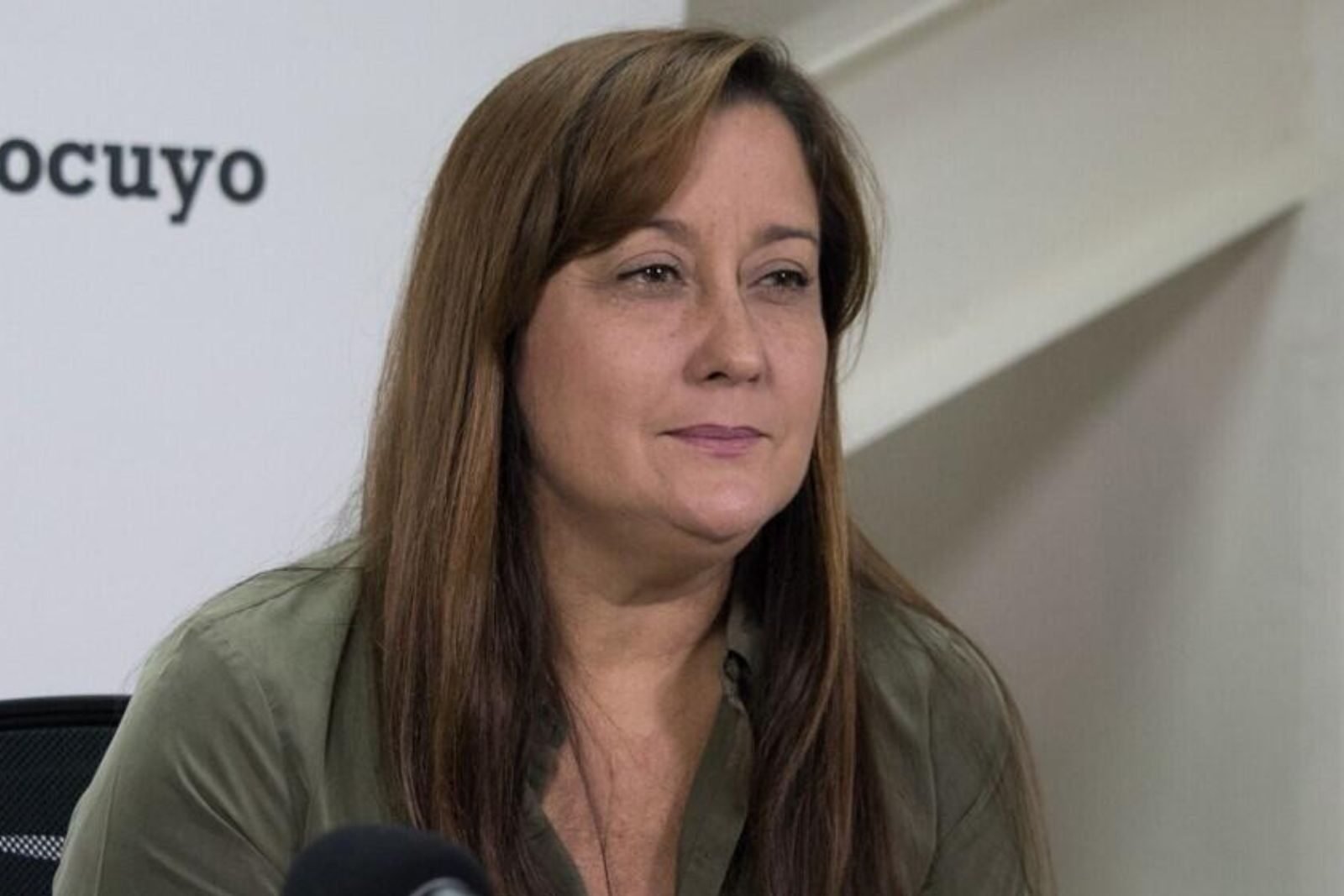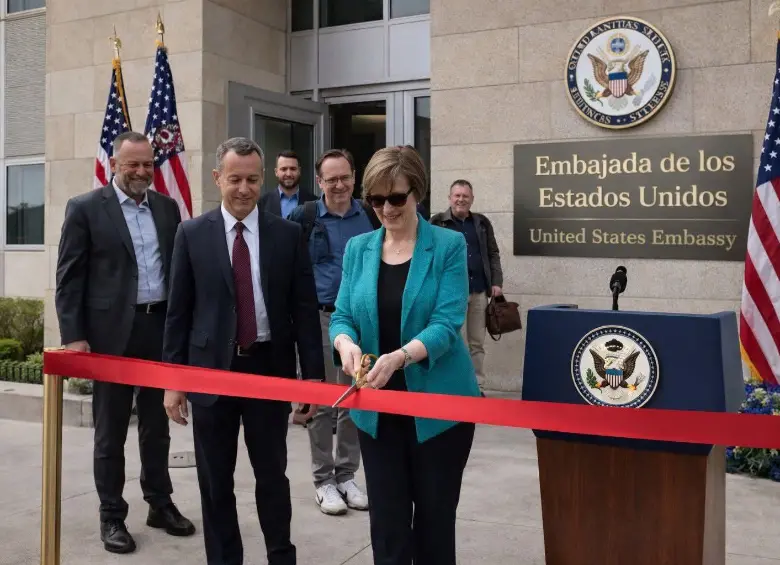
Laura Dogu reopens the United States Embassy in Venezuela in a milestone that marked her short stay in Caracas. Photo: Instagram / @usembassyve.
Guacamaya, April 15, 2026. Laura Dogu, Chargé d’Affaires ad interim of the United States in Venezuela, is leaving her post after less than three months in Caracas. She will be replaced by career diplomat John Barrett, who arrives from Guatemala.
Dogu’s tenure in Venezuela has been defined by the urgency of rebuilding a bilateral relationship that had been broken since 2019, in the wake of an exceptional context following the military operation that led to the fall of Nicolás Maduro. In just a few months, her work combined the reopening of the U.S. embassy in Caracas, the reactivation of high-level political contacts, and a pragmatic approach focused on energy, sanctions, and stability, while new forms of cooperation are being tested in what remains a fragile process.
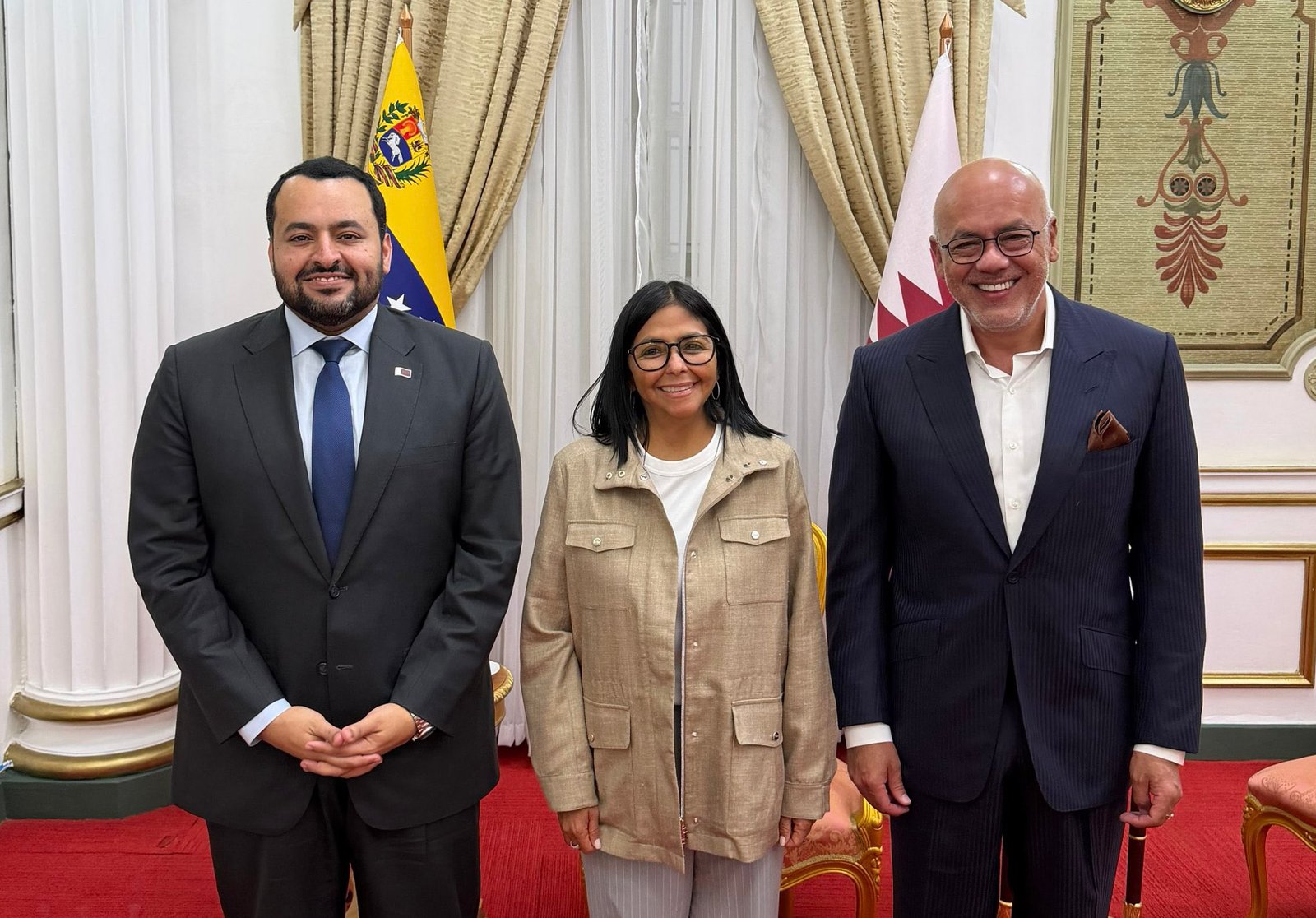
One of the most visible milestones was the operational reopening of the U.S. embassy in Caracas, which resumed permanent diplomatic presence after its closure in 2019. This step made it possible to establish direct channels with Venezuelan authorities, led by Delcy Rodríguez as acting president, and laid the groundwork for a more functional relationship.
Dogu’s tenure was accompanied by an unusual intensity of high-level visits from Washington. In February, Secretary of Energy Chris Wright traveled to Caracas and held meetings with Venezuelan authorities and energy sector stakeholders, marking a clear shift toward strategic interest in Venezuela’s oil and gas.
This agenda also included the visit of Doug Burgum, a key figure in U.S. energy and economic policy, whose presence reinforced the signal that Venezuela has once again become relevant in Washington’s strategic calculations. His participation in meetings related to investment, natural resources, and infrastructure reflected an expansion of the agenda beyond oil.
These visits coincided with the arrival of U.S. business delegations. Executives from companies such as Peabody Energy, Hartree Partners, Gold Reserve, Glencore, Lundin, and Trafigura participated in meetings in Caracas. Additionally, private investors and hedge funds also visited, some of them through initiatives such as the mission organized by Signum Global Advisors. The goal was to explore opportunities in a country that is beginning to reform its legal framework in hydrocarbons and mining.
At the same time, formal political contacts were reactivated. A Venezuelan delegation led by Félix Plasencia and Oliver Blanco traveled to Washington, where they held meetings with officials from the State Department, including Under Secretary Christopher Landau. These meetings marked the reopening of structured diplomatic channels after years of confrontation.
The legal framework of this new phase has been shaped by decisions from the Office of Foreign Assets Control (OFAC), such as General License 53, which allows Venezuelan diplomatic missions to operate in the United States, along with other targeted relaxations in key sectors such as mining, services, hydrocarbons, and finance.
In this context, Dogu’s tenure has been closely tied to the redesign of the sanctions policy, shifting from maximum pressure to a more calibrated approach aimed at enabling stability and economic opening. This shift is reflected in support for operations by companies such as Chevron and in the interest in offshore gas projects with actors like Shell.
A notable aspect of Dogu’s tenure is that her engagement focused almost exclusively on Venezuelan authorities led by Delcy Rodríguez as acting president. This contrasts with earlier phases of U.S. diplomacy, which maintained close ties with members of the Venezuelan opposition during both the Hugo Chávez and Nicolás Maduro eras.
Nevertheless, tensions persist. Differences over political reforms, institutional guarantees, and the scope of sanctions continue to shape the relationship. Venezuela’s situation remains uncertain and complex.
The end of Dogu’s mission confirms the transitional nature of her role. The diplomat herself announced that she will return to Washington after fulfilling a liaison function during a critical stage of bilateral reopening.
John Barrett enters the scene: a diplomat for strategic environments
Dogu’s replacement will be John Barrett, a career member of the Senior Foreign Service, whose arrival in Caracas reflects a clear logic within U.S. foreign policy: assigning operational profiles to sensitive contexts.
Barrett has more than two decades of experience in complex and strategic postings. Before his transfer to Venezuela, he served as Minister Counselor at the U.S. Embassy in Panama since 2023, a particularly relevant post due to its connection to one of the most important logistical nodes in the international system: the Panama Canal, which has been under renewed scrutiny during Donald Trump’s second term.
In that context, his work unfolded amid growing concern in Washington over the presence of Chinese companies and capital in critical infrastructure linked to the canal, particularly in port terminals and logistics services. The United States has warned that this presence could translate into strategic vulnerabilities, both in terms of maritime security and indirect control over global supply chains.
U.S. diplomatic efforts in Panama —in which Barrett played a role— were aimed at countering that influence through several mechanisms: strengthening security cooperation, pressuring for the review of concessions granted to Chinese-linked companies, promoting transparency standards, and encouraging alternative investments. Washington has even framed Chinese influence around the canal as a global security risk, raising the issue in multilateral forums such as the UN Security Council.
This approach does not necessarily imply direct confrontation, but rather a strategy of “structural competition”: limiting Chinese influence in critical sectors without disrupting the formal sovereignty of the host country.
That experience in Panama is particularly relevant for understanding his arrival in Venezuela. While the contexts differ, the underlying strategic objective shows clear similarities.
In Venezuela’s case, Chinese influence is not concentrated in a single piece of infrastructure like the canal, but rather extends across structural sectors of the state, including sovereign financing, the oil industry, technology, mining, and even space cooperation.
For years, China has been a key partner for Caracas, not only as a creditor but also as an actor with direct presence in strategic areas.
For the United States, the restoration of relations with Venezuela opens a window to reshape that balance.
Unlike Panama —where the priority is to protect a global logistics corridor— in Venezuela the objective is broader: to regain influence in a country with the world’s largest oil reserves, reduce Caracas’ dependence on Beijing, and reintegrate Venezuela into Western economic circuits.
In this sense, Barrett’s arrival suggests continuity in a strategy applied across different scenarios: identifying strategic leverage points, reinforcing U.S. presence, and limiting the expansion of rival actors in key sectors.
The difference is that, while in Panama the competition revolves around infrastructure and global trade, in Venezuela it is projected onto energy resources, financial architecture, and long-term geopolitical alignments.
Barrett does not initiate this dynamic, but his trajectory indicates that his role will be to execute it more systematically. His experience positions him as a diplomat accustomed to operating in environments where great power competition is not abstract, but materializes in contracts, routes, investments, and effective control over strategic sectors.
Beyond diplomacy, Barrett also brings private sector experience in strategic planning and commercial roles at companies such as PepsiCo, The Walt Disney Company, and L.E.K. Consulting, reinforcing his technical and results-oriented profile.
His arrival in Venezuela comes at a time when the United States is seeking to consolidate its presence and operational capacity in the country following the resumption of diplomatic relations. He does not inaugurate a new phase, but rather steps into one already underway, shaped by energy interests, geopolitical competition, and an ongoing political transition.
His profile, therefore, suggests continuity in Washington’s pragmatic approach, but with a more structured execution in a scenario where stability, strategic resources, and influence competition converge.