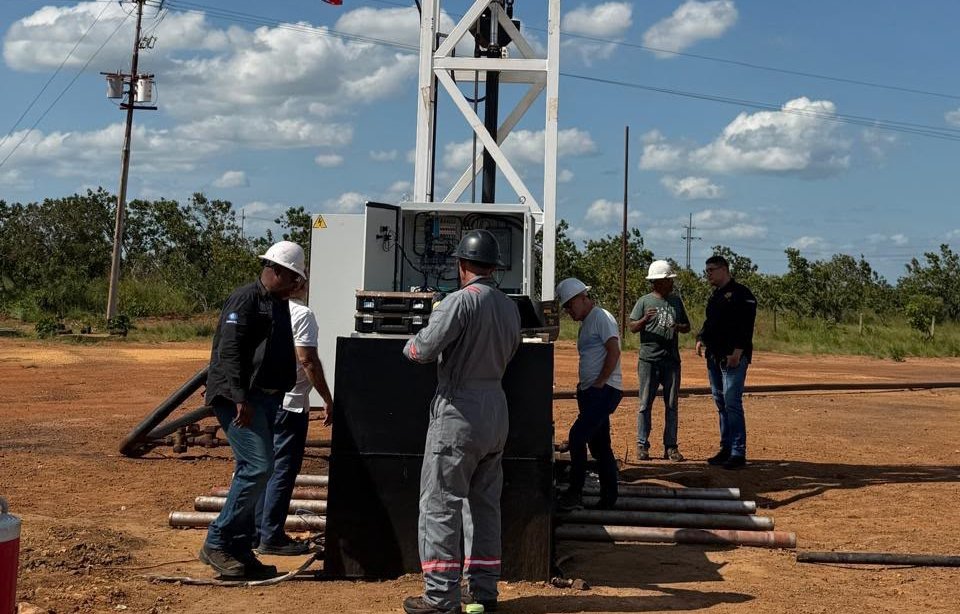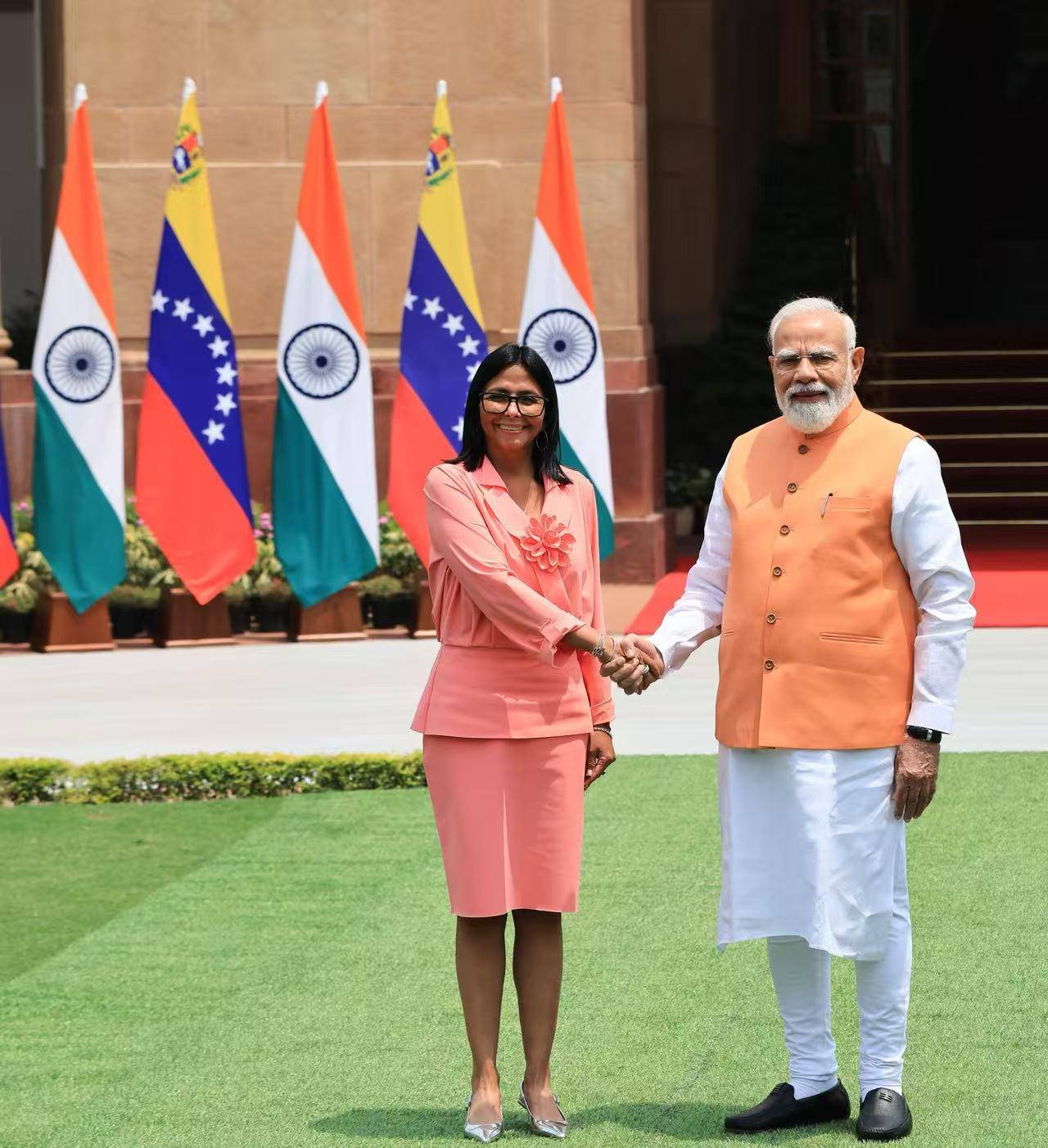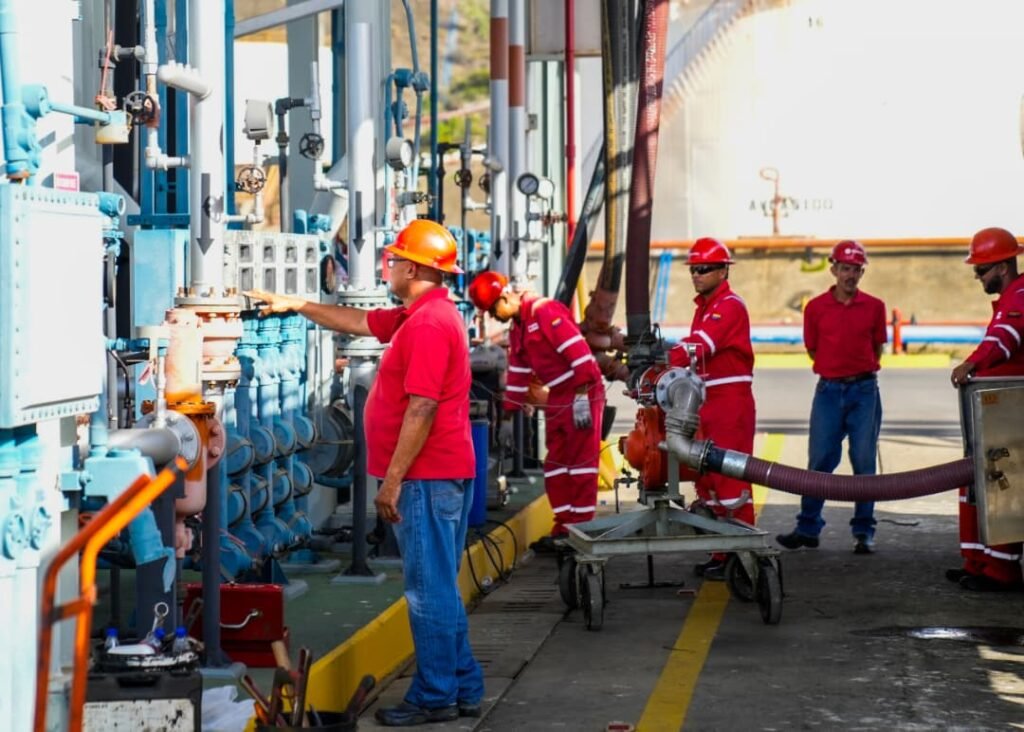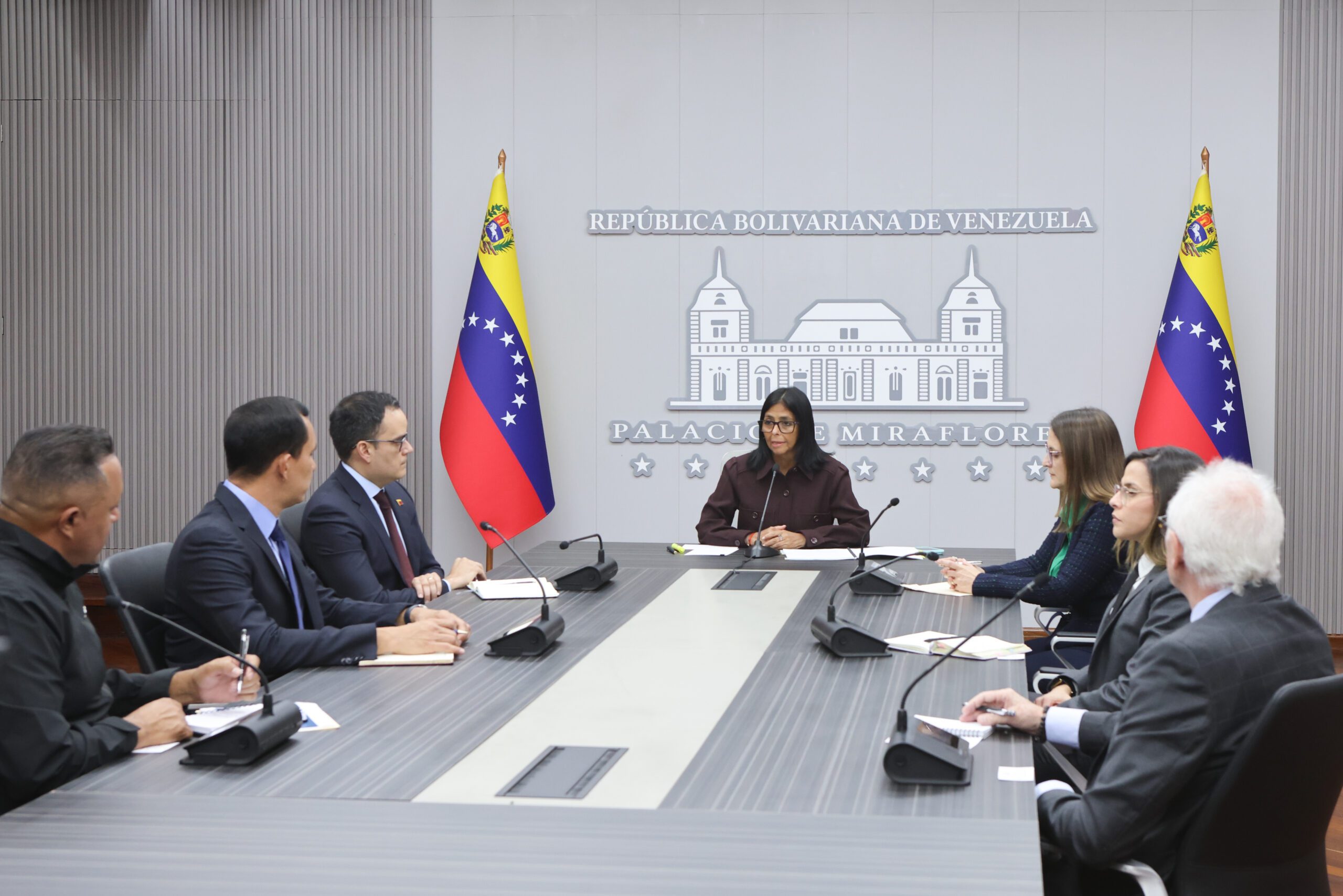
Delcy Rodríguez has activated a commission to reorganize state assets under criteria of efficiency and productivity. In the past, around 350 companies had already been identified as suitable for sale or partnerships with investors. Photo: Prensa Presidencial.
Guacamaya, April 24, 2026. The administration of Delcy Rodríguez launched this Wednesday the Special Commission for the Evaluation and Classification of Public Assets, a body tasked with reviewing the full range of state-owned assets with the aim of reorganizing them under criteria of efficiency, productivity, and economic utilization.
The commission was formally installed by the interim president during an event broadcast on Venezolana de Televisión (VTV), where she explained that this initiative is part of a broader strategy to bring greater “agility and flexibility” to state processes, incorporating evaluation mechanisms for productive companies, idle assets, and non-strategic properties.
Four key pillars guiding the work
Rodríguez stated that the commission’s work will be structured around four main pillars:
The first focuses on strategic assets, which will remain under state control due to their essential nature.
The second pillar involves public-private partnerships, where the state retains ownership but seeks to partner with private capital and technology to improve productive efficiency.
A third axis will center on offering non-strategic assets, including those deemed non-essential for state functions.
The fourth pillar concerns liquidation and repurposing, targeting assets that are unproductive or can be converted to alternative uses.
Who makes up the commission?
The Special Commission will be composed of Attorney General Arianny Seijo; Vice President for the Economic Area Calixto Ortega; Minister of Economy and Finance Anabel Pereira; Minister of National Commerce and Industry Luis Villegas; Minister of Communes Michael Prado; and Luigi Pisella, former president of Conindustria, who will participate as a representative of the private sector.
According to the executive branch, this mechanism aims to strengthen the country’s productive capacity and consolidate a more efficient state in managing strategic areas of the national economy.
The announcement is part of a broader review of the public enterprise system. As early as 2024, Luigi Pisella—now a member of the commission and then president of Conindustria—had indicated that the Venezuelan government was considering an economic opening plan that included the potential transfer of between 500 and 600 state-owned companies into private hands or mixed public-private schemes.
Of this group, approximately 350 companies had already been identified as suitable for direct sale or partnership with investors, within a strategy aimed at boosting production and attracting capital to the country.
The creation of this commission reinforces the signal of a reconfiguration of Venezuela’s economic model toward greater private sector participation and optimization of state assets. In this context, the measure can be interpreted as an attempt to improve fiscal and productive efficiency, but also as a window of opportunity for foreign investors, particularly in sectors where the state may reduce its direct role.
However, the attractiveness of these opportunities will depend on key factors such as legal certainty, institutional stability, and clarity in property rights and capital repatriation mechanisms—elements that have historically shaped sustained international investment in the country.
Private sector proposals
Prior to the establishment of the Special Commission, various actors within Venezuela’s business sector had already begun outlining the potential scope of an eventual opening toward joint investment and international financing schemes.
In this regard, several initiatives have been emerging. Months ago, Fedecámaras’ first vice president, Tiziana Polesel, suggested that mechanisms of cooperation between the public and private sectors were being explored, particularly through public-private partnerships and association models similar to those used in other strategic sectors. These frameworks aim to facilitate private capital participation in managing state assets without necessarily implying full ownership transfer.
At the same time, the industrial sector has begun mobilizing concrete initiatives aimed at restoring critical infrastructure. In February, Conindustria announced a plan to rehabilitate power generation plants in Carabobo state, with financial backing from the Development Bank of Latin America (CAF), in a project designed to strengthen the energy capacity of the productive sector. In this context, its president, Tito López, estimated that the investment required to restore the electricity system could reach around $24 billion.
These initiatives gain further relevance amid Venezuela’s renewed engagement with multilateral institutions such as the International Monetary Fund (IMF), the World Bank, and CAF, opening the door to different financing options.
These include infrastructure credit lines, macroeconomic stabilization programs, concessional financing for development projects, and mixed investment schemes aimed at modernizing the productive sector. In the case of the World Bank and the IMF, some business leaders have even raised the possibility of activating financial assistance programs tied to macroeconomic conditions and institutional transparency.
The combination of available public assets, large-scale infrastructure needs, and potential access to international financing creates an environment where investors may find high-impact opportunities, especially in sectors such as energy, industry, public services, and strategic production. However, materializing these opportunities will depend on clear regulatory frameworks, legal guarantees, and stable conditions that reduce risks associated with Venezuela’s economic environment.
The underlying logic of the commission—classifying assets into strategic holdings, public-private partnerships, non-essential asset offerings, and potential liquidation—directly connects with financing models known as project finance and PPP structures. These models require identifiable assets, predictable revenue streams, and clear governance frameworks—conditions the announced institutional reorganization aims to establish.
What role do multilateral institutions play?
In this context, institutions such as CAF, the World Bank, and potentially the IMF play roles that go beyond simply providing funding to the state. They are also key in structuring projects. For example, infrastructure or energy credit lines could be channeled toward rehabilitating state assets transferred into mixed schemes. This includes concessional financing, project-based loans, and co-financing structures where risk is shared among the state, private sector, and multilateral institutions.
More sophisticated instruments also come into play, such as political or sovereign risk guarantees—particularly relevant in Venezuela’s case. Mechanisms offered by agencies linked to the World Bank could help reduce the perceived risk for foreign investors interested in participating in the restructuring of public enterprises or new investments in strategic infrastructure. In practice, this could make currently unproductive assets “bankable” under international financial standards.
From the private sector’s perspective, actors such as Fedecámaras and Conindustria view this process as an opportunity to attract external capital and multilateral financing into concrete projects, particularly in critical areas like energy, industry, and public services. Initiatives such as the rehabilitation of power plants in Carabobo illustrate this approach, involving large-scale projects that require long-term financing—precisely the type of resources typically provided by CAF or the World Bank under infrastructure frameworks.
For instance, instruments from the Multilateral Investment Guarantee Agency (MIGA), part of the World Bank Group, could play a decisive role in the financial viability of projects emerging from this reorganization. In a scenario where a foreign company participates in rehabilitating a power plant under a public-private partnership, the main obstacle would not necessarily be profitability, but rather Venezuela’s country risk.
Without coverage mechanisms, commercial banks would likely demand high interest rates to compensate for risks such as regulatory changes, restrictions on capital repatriation, or potential contract breaches. However, if the same project is backed by a MIGA guarantee covering political risks—such as expropriation, currency inconvertibility, or contract violations—the risk profile changes significantly. As a result, financing can be structured at lower interest rates and over longer terms, making investments viable that would otherwise be financially unfeasible.
In this way, MIGA acts not only as a protective instrument for investors, but also as a catalyst that can transform underutilized state assets into “bankable” projects aligned with international standards. In Venezuela’s case, its involvement could be key to bridging the gap between potential investor interest and the actual risk conditions perceived in the market.
Ultimately, the coordination between the state commission, the private sector, and multilateral institutions suggests the possible emergence of a hybrid economic recovery model. In this model, reorganized public assets serve as the foundation for internationally financeable projects, while access to multilateral credit and risk guarantees lowers entry barriers for foreign investment.