The renewed political and social leadership of the party arises as part of a profound reorganization that seeks to strengthen popular power and the defense of the nation. Photo: Presidential Press.
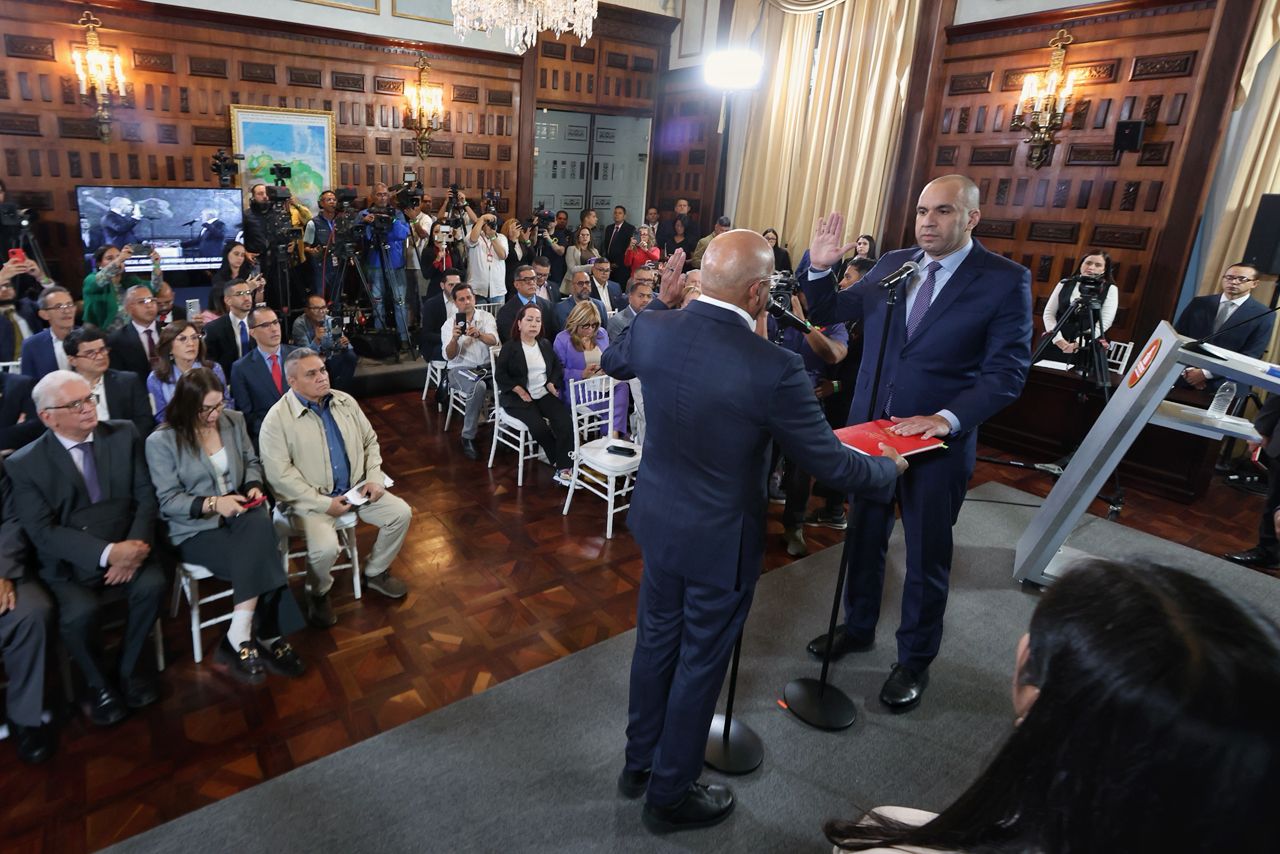
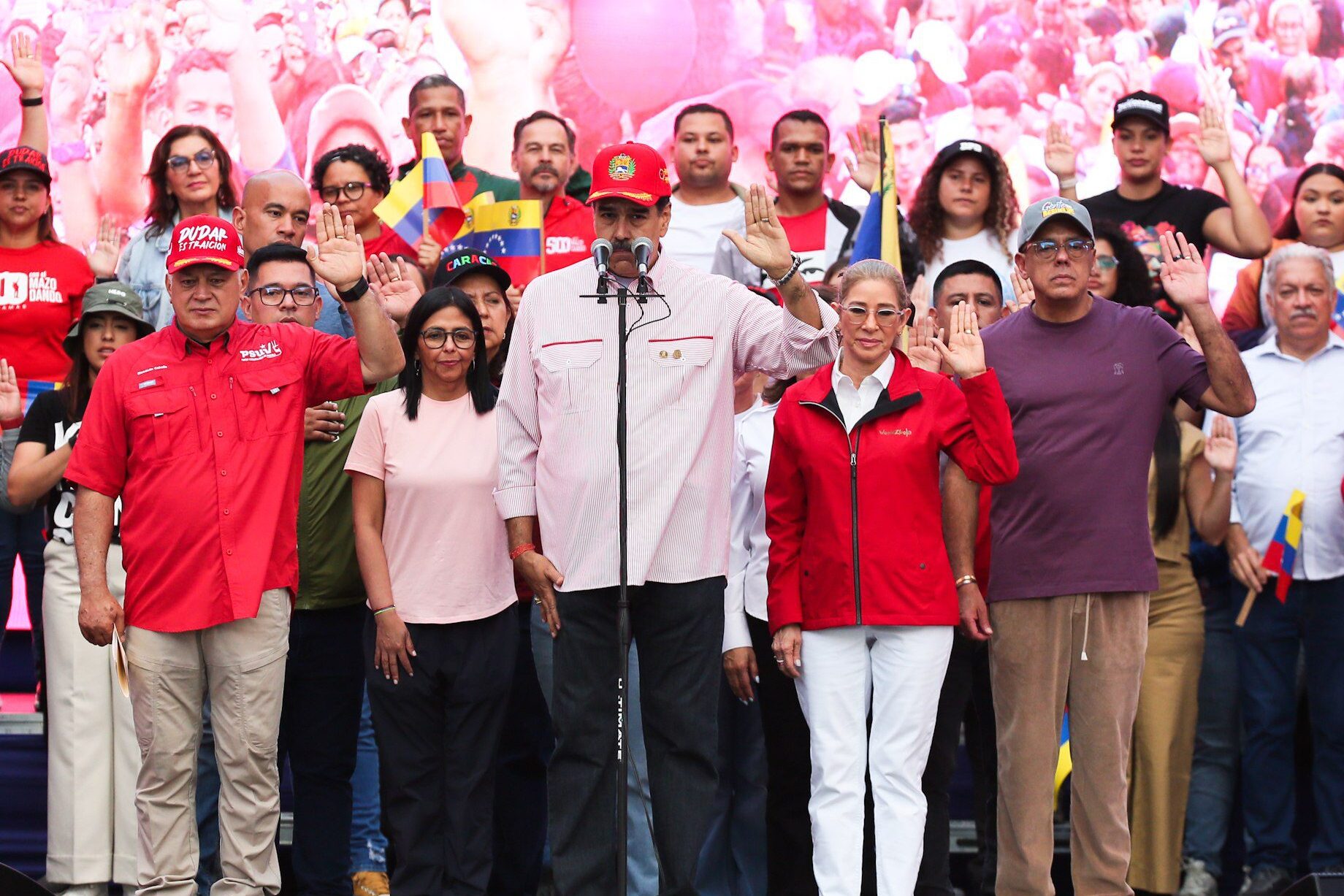
Guacamaya, December 1, 2025. Outside the Miraflores Palace, the President of the Republic, Nicolás Maduro, made official the renewal of the Political Bureau of the United Socialist Party of Venezuela (PSUV). The appointment presents a parity structure made up of six men and six women who assume the political and social leadership of the party to “give shape and speed” to new forms of mobilization in defense of the country.
“I want this new Political Bureau to be due to the new Popular Constituent process of the Base Committees and the Integral Bolivarian Commands of the communities, in order to continue building the national power of Venezuela,” said the Venezuelan President during the event in which he held a meeting with community leaders from all over the country.
The Political Bureau was formed as follows:
- Secretary General of the PSUV: Diosdado Cabello (ratified)
- Deputy Secretary General and Head of Propaganda: Jorge Rodríguez (created the Undersecretary).
- Secretary of Social Movements, People’s Power and Great Patriotic Pole: Héctor Rodríguez.
- Secretary of Street Mobilization: Nahum Fernández.
- Secretary of Parliamentary Affairs, National Assembly, Legislative Councils and Municipal Councils: Pedro Infante.
- Secretary of Security and Defense: Francisco Ameliach.
- Secretary of Strategy: Cilia Flores.
- Secretary of Integral Political Training: Gabriela Jiménez.
- Secretary of International Affairs and World Victory: Tania Díaz.
- Secretary of Production and Finance: Delcy Rodríguez.
- Secretary of Organization: Carmen Meléndez.
- Secretary for Youth: Grecia Colmenares.
Key changes and renovations
Although Maduro initially announced in November that he would reduce the party’s vice-presidencies from 13 to 7 to simplify the leadership, the official PSUV website showed 18 vice-presidencies before the change. With the new designation, the vice-presidencies were appointed secretariats and a total of 10 were formed, which exceeded the initial proposal of 7.
These 10 secretariats, together with the General Secretariat (occupied by Diosdado Cabello) and the new Deputy General Secretariat (in charge of Jorge Rodríguez), make up the new Political Bureau of the party. The intention of this integrated and simplified restructuring, in accordance with Maduro’s initial approach, is to monitor and lead new scenarios that arise in the country.
In the new Political Bureau, the departures of Adán Chávez, Diva Guzmán and Francisco Torrealba stand out. In relation to his previous responsibilities, Adán Chávez did not lead any vice-presidency in the structure and was only a member of the Political Council, while Guzmán assumed the vice-presidency of Women and Francisco Torrealba served as vice-president of the Working Class.
On the other hand, in the new Political Bureau, the entry of Francisco Ameliach, Grecia Colmenares and Gabriela Jiménez stands out. Of these, ratified in their respective Secretariat positions, Ameliach was the vice president of Integral Defense, and Colmenares de la Juventud. Meanwhile, Jiménez did not hold previous responsibility in the leadership, although he has experience in negotiating with the opposition.
This new designation seeks to legitimize a more collective command, and thus counteract the perception that power is concentrated in a few hands. In addition, the central role of Cabello and Rodríguez as the right hand and head of propaganda, respectively, of the ruling party is perceived, especially in the face of the increased political tensions over Venezuela in recent weeks.
Deepening People’s Power and Defense
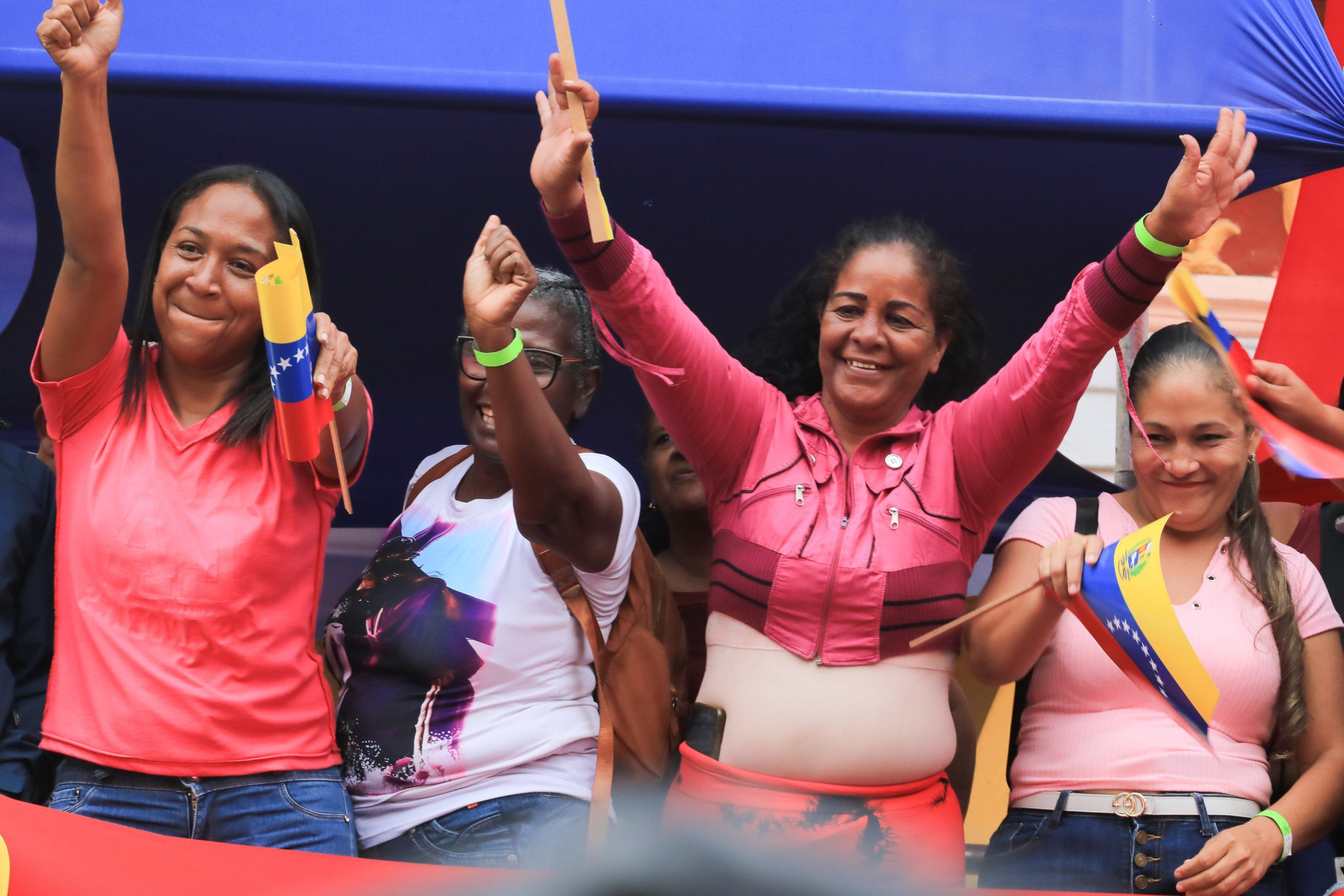
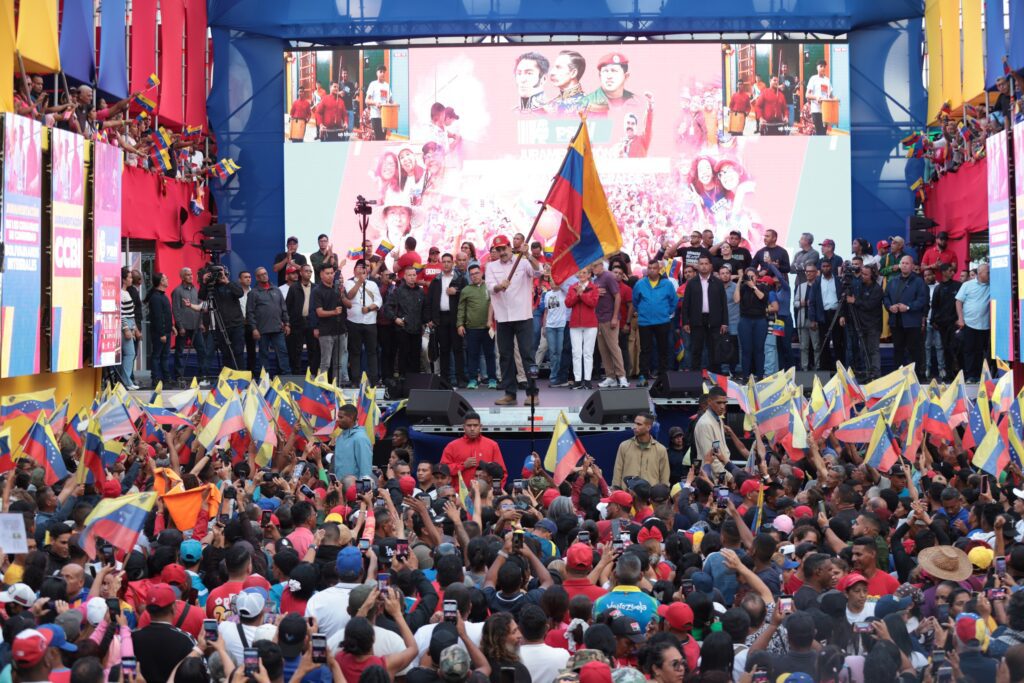
This Political Bureau is directly linked to the new popular constituent process promoted by Maduro, focused on the Bolivarian Committees of Integral Base (CBBI) and the Commands of Integral Bolivarian Communities (CCBI), which in the act added hundreds of thousands of militants sworn in with the task of organizing, mobilizing and defending the Nation from the grassroots.
In total, 237,913 Bolivarian Committees of Integral Base (CBBI) were sworn in, of the 264,000 proposed by Maduro the previous month in a plenary session of the party. From the formation of these committees, the Head of State pointed out that this implied the mobilization of some 2,500,000 militants, which reflects an organizational change aimed at greater participation and popular defense.
Although on this occasion the formation of the Militia Communal Units, proposed a month ago by Maduro for the 5,336 communal circuits of the country, communication with the grassroots instances (street and community chiefs) in addition to the Bolivarian Armed Forces (FANB) and the police forces has been strengthened.
Thus, the new Political Bureau is assigned specific tasks for each member, which demonstrates a comprehensive and multifaceted approach to managing the political situation. This renewed structure therefore seeks to reinforce territorial and combative work at a crucial moment for the political and social stability of Venezuela, through a team that balances experience, loyalties and strategic profiles.