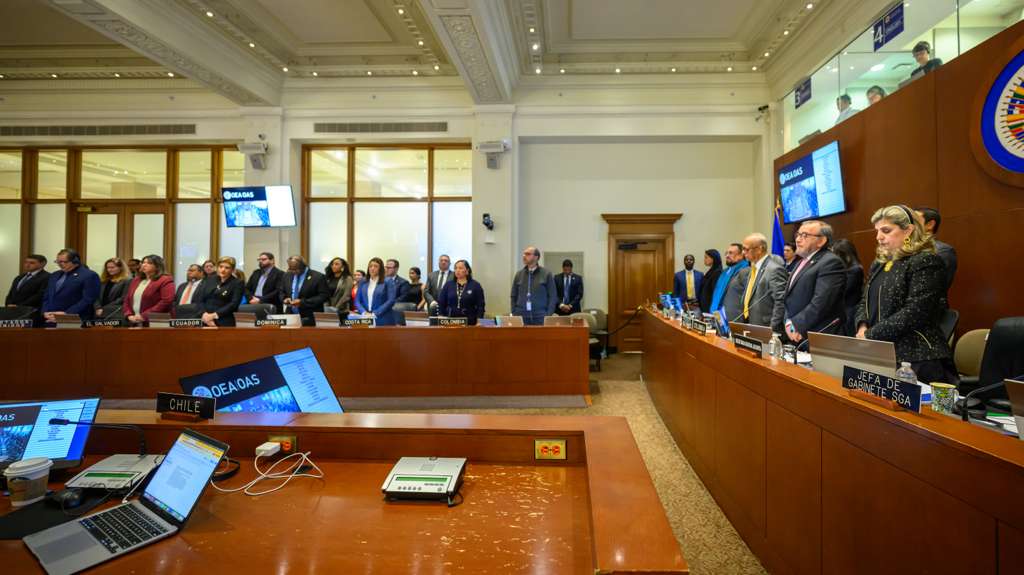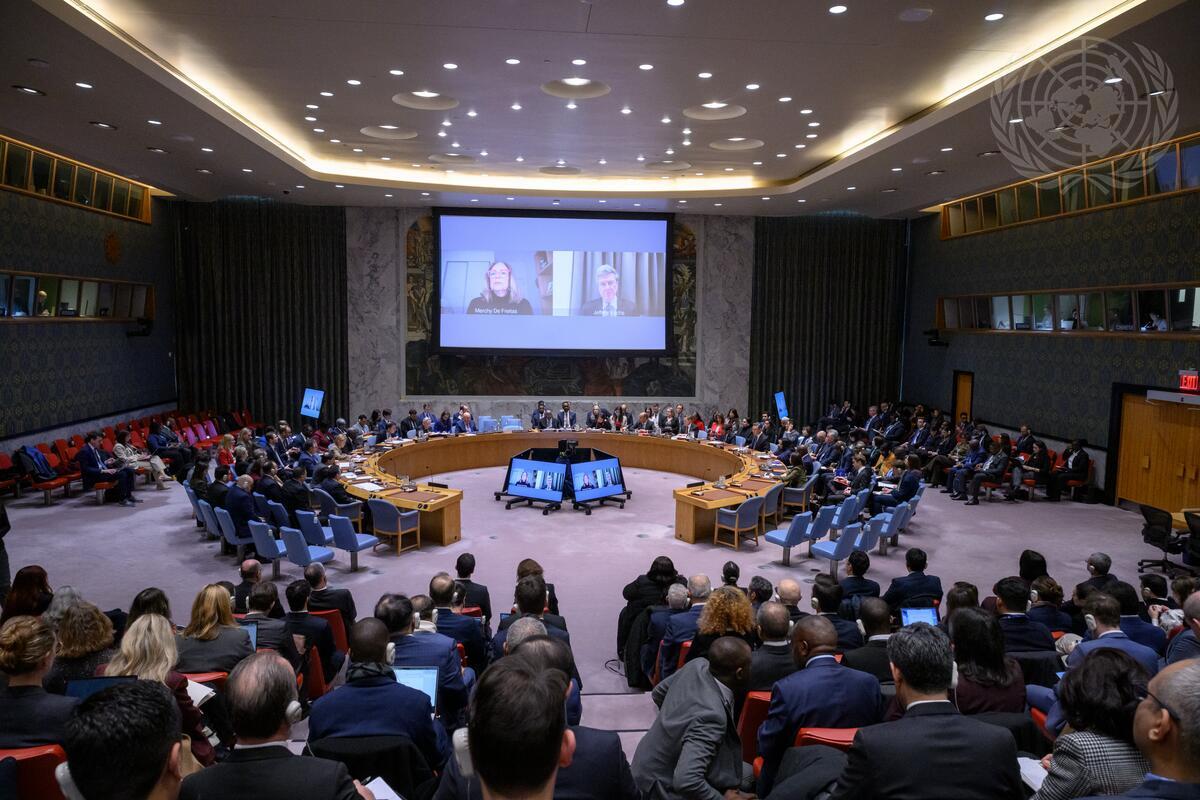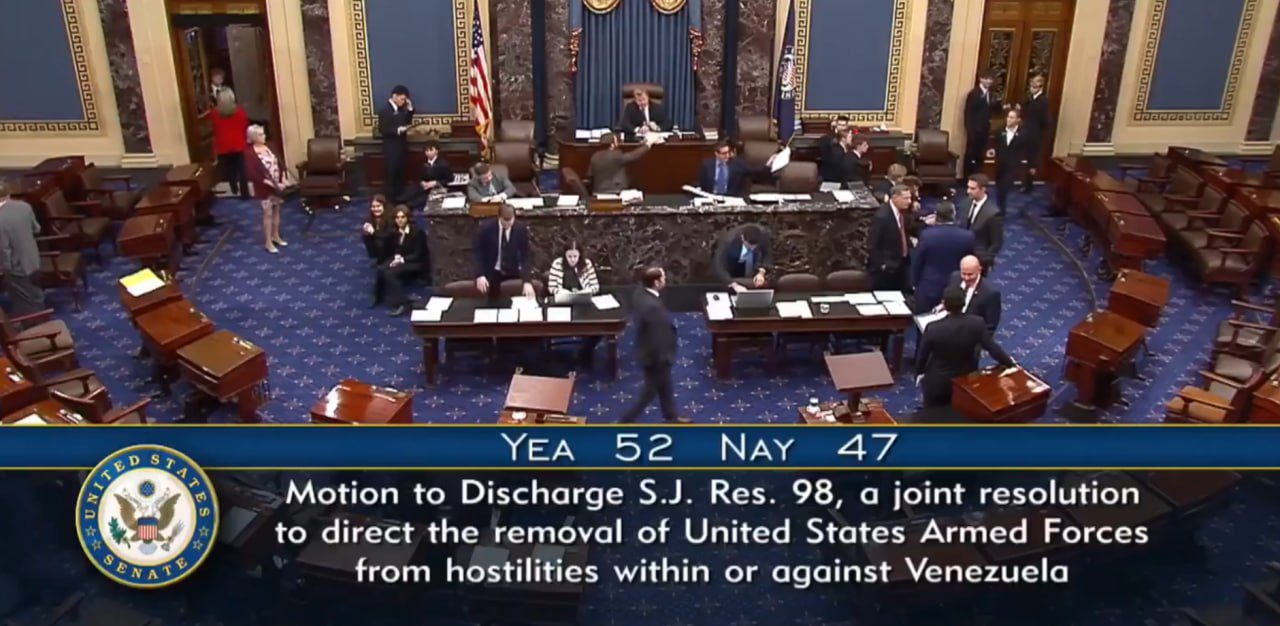
Image of the U.S. Senate vote on January 8, 2025, regarding the War Powers Resolution concerning Venezuela. Photo: U.S. Senate.
Guacamaya, January 8, 2026. A narrow bipartisan vote in the upper chamber has reopened the debate over who decides matters of war in the United States, following the surprise military operation in Venezuela and amid growing concerns about the president’s foreign ambitions.
Washington once again became the stage for a high-stakes constitutional clash. The U.S. Senate voted Thursday, 52–47, to advance a resolution that would limit President Donald Trump’s ability to order further military action against Venezuela without explicit congressional authorization. Although the initiative has little chance of becoming law, the political gesture marks a turning point after the capture of Venezuelan President Nicolás Maduro by U.S. forces.
The resolution, grounded in the War Powers Act, was backed by all Democrats and five Republican senators: Rand Paul, Lisa Murkowski, Josh Hawley, Susan Collins, and Todd Young. The outcome guarantees a final vote in the Senate, even as the White House has made clear that Trump would not sign any measure restricting his room for maneuver.
Beyond its legislative viability, the vote exposed unease within a segment of the Republican Party over a major military operation carried out without prior notification to Capitol Hill. Many lawmakers learned of the overnight raid that led to the detention of Maduro and his wife, Cilia Flores, only after the president himself made it public.
The White House has defended the operation as a necessary action within a flexible legal framework that has shifted over time—from counter-narcotics and counterterrorism justifications to what was presented as a law-enforcement operation aimed at bringing Maduro before U.S. courts. Critics, however, warn that the next step—direct control over Venezuela’s oil resources—could open the door to an unchecked military escalation.
“The issue is not whether Maduro is an autocrat,” said Senator Rand Paul, one of the Republicans who supported the resolution. “The central question is who has the authority to take this country to war.”
Democratic Senator Tim Kaine, who forced the vote, said Congress can no longer operate in the dark when it comes to military decisions of this magnitude. “It’s time to bring these actions out of the shadows and subject them to public scrutiny,” he said on the Senate floor.
From Republican leadership, the tone was markedly different. Senate Majority Leader John Thune defended the president’s strategy under the banner of “peace through strength” and argued that the operation in Venezuela sent an unmistakable message to the Western Hemisphere. Other senators, such as Thom Tillis, voiced conditional support: backing the initial intervention but expressing clear reluctance toward a prolonged deployment without congressional approval.
The broader context extends beyond Venezuela. Recent statements by Trump and senior officials about the possibility of using force to take control of Greenland have raised alarms even within Republican ranks. While most lawmakers reject military action against territory belonging to Denmark, a NATO ally, the mere mention of such a scenario has reinforced fears of an expansive use of presidential power.
For Democrats, the Venezuela case represents an extreme example of a pattern that has deepened during Trump’s second term: military operations decided by the White House with minimal or no consultation with Congress. “The president spoke with oil executives, but not with elected leaders,” charged Senate Minority Leader Chuck Schumer.
The Constitution grants Congress the power to declare war, but that authority has not been formally exercised since World War II. The War Powers Act, passed in the aftermath of Vietnam, sought to impose time limits on the use of force without legislative authorization, though presidents of both parties have stretched those boundaries for decades.
Thursday’s vote does not immediately alter U.S. foreign policy, but it sends a clear political signal: even in a Congress controlled by Republicans, the automatic consensus around the president’s military power is beginning to crack. And Venezuela has once again become the epicenter of that debate.
President Donald Trump’s response was blunt: he accused the Senate of usurping his authority as commander in chief and argued that the War Powers Act violates the Constitution, amid an increasingly heated debate over the scope of U.S. intervention in Venezuela.
The U.S. president on Friday labeled the Senate resolution seeking to limit his ability to order further military action against Venezuela without congressional approval as “unconstitutional,” triggering an open clash between the executive branch and part of the legislature.
In a series of posts on his social media platform Truth Social, Trump said the resolution “greatly obstructs” the United States’ ability to defend itself and protect national security. “Republicans should be ashamed of the senators who just voted with the Democrats to try to take away our powers to fight and defend the USA,” he wrote, accusing lawmakers of weakening the president’s role as commander in chief of the armed forces.
Trump went even further by challenging the legality of the War Powers Act of 1973 itself—a law specifically designed to limit the use of military force without legislative backing—arguing that it is “unconstitutional” because it infringes on the powers the Constitution reserves for the executive under Article II. “Every president and their Justice Departments before me have determined the same,” Trump said.
While the Senate resolution is moving toward a final vote and reflects growing bipartisan concern about the scope of presidential power, legal experts and lawmakers expect that, if it reaches the House of Representatives, it will have little chance of becoming law—particularly in the face of a potential presidential veto, given Republican control of that chamber and the firm opposition of the White House.