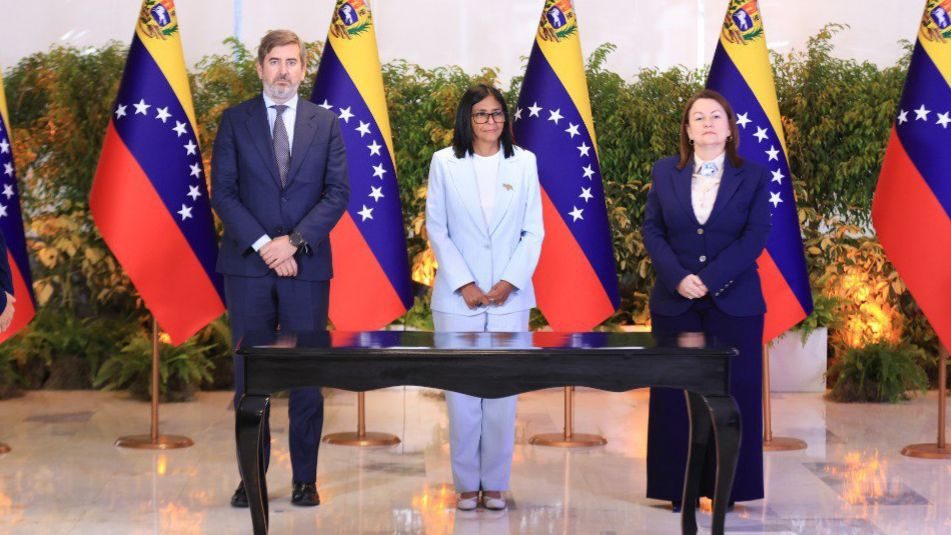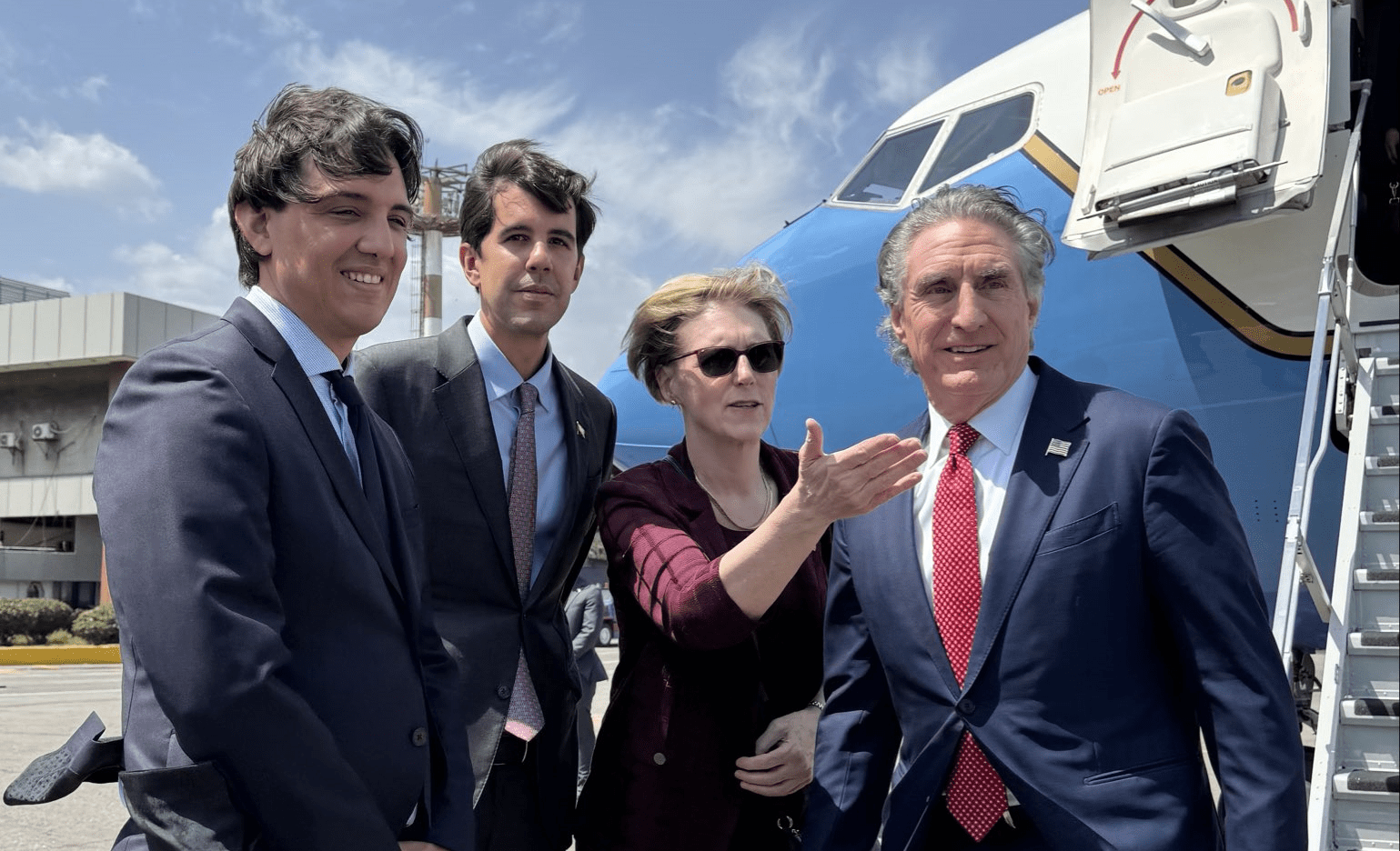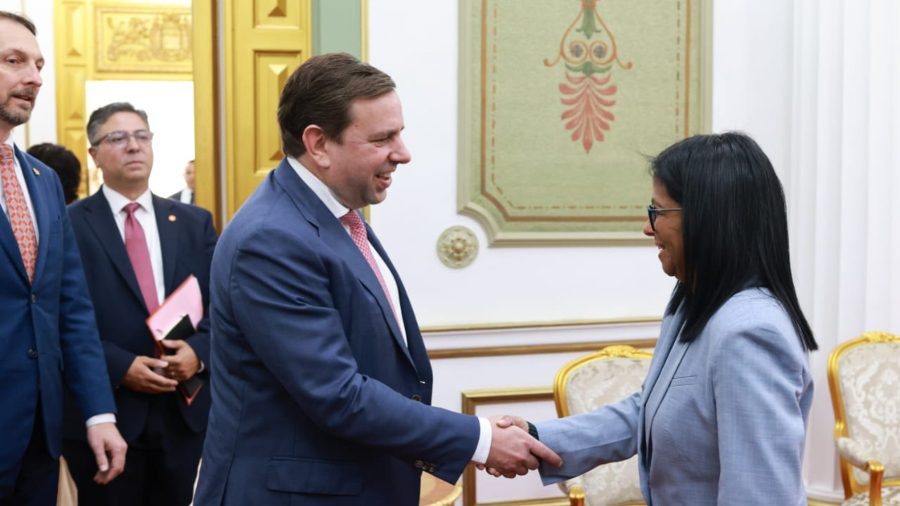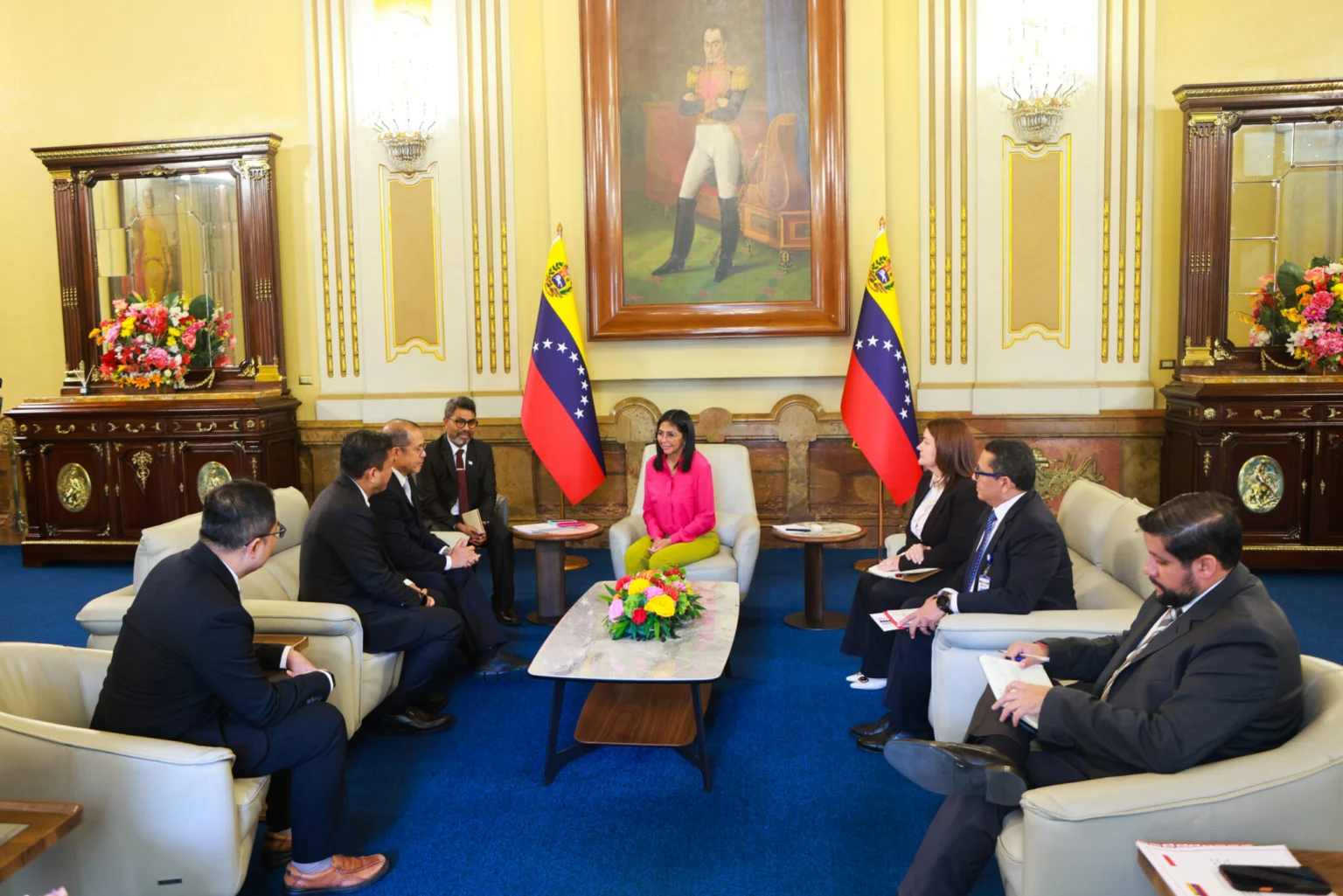
Delcy Rodríguez, acting president of Venezuela, alongside the Indonesian delegation at the Miraflores Palace. Photograph: Presidential Press Office.
Guacamaya, January 30, 2026. Venezuela’s acting president, Delcy Rodríguez, chaired a high-level meeting on Thursday at the Miraflores Palace with Venezuelan authorities and representatives from Indonesia to consolidate strategic alliances in oil and gas, with the aim of strengthening South-South cooperation and creating a legal environment that attracts international investment.
Acting President Delcy Rodríguez led the working meeting in Caracas alongside a delegation from the Republic of Indonesia, with the objective of advancing joint oil and natural gas projects.
The meeting, held within the framework of the Bolivarian Economic Agenda, brought together senior officials from both countries to strengthen strategic partnerships with Pertamina International Exploration and Production (PIEP), one of the largest energy corporations in the Asia-Pacific region, represented by its president, Syamsu Yudha.
The session was attended by Indonesia’s ambassador, Firky Cassidy, as well as key figures from Venezuela’s energy sector and the national executive branch, including National Assembly President Jorge Rodríguez; Vice President for the Economy Calixto Ortega; Minister of Economy and Finance Anabel Pereira Fernández; and PDVSA President Héctor Obregón.
Vice ministers responsible for oil, gas, and petrochemicals also participated, along with representatives from the National Assembly’s Standing Committee on Hydrocarbons and spokespersons from the National War Room of the Hydrocarbons Industry, reinforcing institutional coordination around this process.
From the Venezuelan authorities’ perspective, the central purpose of the meeting was to ensure legal certainty and productivity in order to expand Venezuela’s market, presenting the country as a “reliable destination” for investment by transnational companies interested in the hydrocarbons sector.
During the meeting, Pertamina’s track record as Indonesia’s leading energy corporation and a strategic player in Southeast Asia was highlighted. The interest of this regional power in Venezuela’s energy sector follows the roadmap defined after the signing, in 2024, of a Memorandum of Understanding on oil and gas cooperation between the two countries.
The joint agenda underscores the intention to move forward with exploration, development, and production projects under a South-South cooperation framework, guided by principles of mutual benefit, transparency, and sustainability.
Beyond commercial agreements, the meeting also aims to strengthen technical capacities, facilitate technology transfer, and support infrastructure development to increase production and enhance energy security in both countries.
Following the meeting, Venezuelan authorities reiterated their commitment to a stable and predictable regulatory framework, seen as key to attracting foreign capital and accelerating the implementation of planned energy projects.
Official communications are expected in the coming weeks to follow up on the agreements reached, outlining detailed roadmaps for cooperation in exploration, development, and production of oil and gas.
Why is Indonesia interested in Venezuela?
Indonesia’s interest in strengthening energy ties with Venezuela can be understood in light of several structural and geopolitical factors:
1. Diversification of energy supplies and regional energy security
Although Indonesia is a producing country, it also seeks stability in its energy sources amid global market fluctuations. Cooperation with Venezuela—one of the countries with the world’s largest proven oil reserves—offers access to additional resources, supporting energy security in Southeast Asia in a context of volatile prices and supply disruptions.
2. South-South cooperation as a diplomatic strategy
The South-South cooperation framework between Caracas and Jakarta reflects a broader trend among Global South countries to pursue mutually beneficial partnerships outside traditional centers of global economic power. This logic is reinforced by rising tensions between major blocs (such as the U.S. and China), which generate uncertainty in energy and trade markets.
3. Opportunities arising from adjustments to sanctions and Venezuelan reforms
Legal reforms in Venezuela aimed at attracting foreign investment to the oil sector, along with the prospect of gas exports, could provide additional incentives for global players such as Pertamina, which are seeking to expand geographically and diversify investments.
4. Strategic positioning vis-à-vis other global actors
For Indonesia, strengthening ties with Venezuela may also serve as a way to balance its engagement with other global energy players, including Middle Eastern countries, Russia, and the United States, in an environment of intense competition for energy resources and supply routes.
According to estimates by Mordor Intelligence, the sustained expansion of Indonesia’s middle class is significantly increasing domestic consumption of gasoline, diesel, and petrochemicals. In this context, daily crude oil demand is projected to reach 1.8 million barrels by 2030, up from around 1.6 million barrels in 2025, according to data from the Ministry of Energy and Mineral Resources.
Accelerated urbanization on the island of Java, where more than 60% of the population lives in urban areas, continues to intensify fuel use in transportation, even amid energy efficiency policies. At the same time, rising disposable incomes are driving greater demand for plastics, packaging, and petrochemical derivatives closely linked to hydrocarbon consumption.
In parallel, natural gas demand is expected to reach around 12 billion cubic feet per day by 2030, as combined-cycle power plants play a growing role in the energy mix to offset the intermittency of renewables and supply energy-intensive industrial sectors.
Reforms to fuel subsidies, aimed at a more efficient allocation of public resources, have redirected savings toward infrastructure projects—roads, ports, and public transportation systems—further increasing energy requirements. Together, these factors reinforce the structural and long-term appeal of hydrocarbons within Indonesia’s energy strategy.
Indonesia’s interest in Venezuela’s energy market can therefore be understood as a medium- and long-term strategic decision, shaped by internal demand pressures and the broader reordering of the global energy and geopolitical landscape.
Indonesia faces structural growth in energy consumption. The expansion of its middle class, accelerated urbanization—particularly in Java—and rising fuel use for transport, electricity, and industry are pushing oil and gas demand beyond domestic production capacity. Projections placing oil consumption at around 1.8 million barrels per day by 2030, along with sustained growth in gas demand, compel Jakarta to secure stable, diversified, and reliable external sources.
In this context, Venezuela emerges as a potentially complementary partner. The South American country holds the world’s largest proven oil reserves and significant underdeveloped gas resources. For Indonesia, access to these resources goes beyond spot imports, extending to participation in exploration, development, and production projects, which would help secure long-term supply volumes and reduce exposure to spot-market volatility.
The potential easing of sanctions and renewed engagement with Western actors by Venezuelan authorities also open a window of opportunity. Improved investment conditions could reduce risks and create incentives for a broader range of international players.
Indonesia’s interest is further explained by the need to diversify geopolitical risks. In a world shaped by sanctions, armed conflicts, and great-power rivalry, reliance on a limited number of suppliers has become a vulnerability. Building energy ties with Venezuela allows Indonesia to broaden its network of partners and preserve strategic flexibility.
Natural gas plays a central role in this equation as well. Indonesia anticipates a significant increase in gas use for power generation and industrial processes, particularly as a backup to expanding renewable capacity. In this framework, Venezuela’s gas potential becomes relevant as part of a pragmatic energy transition, in which hydrocarbons remain essential to system stability.
From Venezuela’s perspective, the timing is also favorable. The reconfiguration of its regulatory framework and efforts to attract foreign investment create opportunities for non-traditional actors, such as Asian state-owned companies. For Indonesia, engaging at this early stage offers strategic advantages before competition from Western firms and other regional players intensifies.
In this same vein, the rapprochement fits into a broader logic of South-South cooperation, with energy serving as a core axis of economic and political engagement. For Indonesia, strengthening ties with Venezuela reinforces its profile as a Global South actor pursuing a more autonomous energy foreign policy, while for Caracas it expands its network of partnerships beyond traditional allies.
Ultimately, Indonesia’s interest in Venezuela’s energy market is not driven by a short-term calculation, but by a convergence of domestic needs, investment opportunities, strategic diversification, and geopolitical positioning, placing Venezuela as a relevant partner in Indonesia’s energy planning for the coming decade.
In this sense, the engagement with Venezuela reflects both commercial and geopolitical considerations, at a time when energy security, diversified international partnerships, and robust legal frameworks for investment have become strategic priorities for state-owned corporations like Pertamina and the governments that support them.