How is Colombia positioning itself to take advantage of Venezuela’s potential economic reactivation?

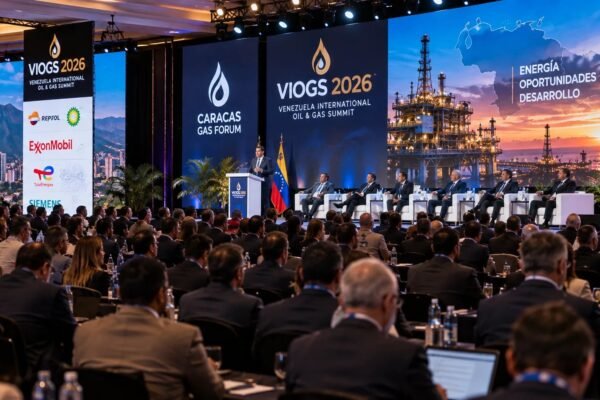
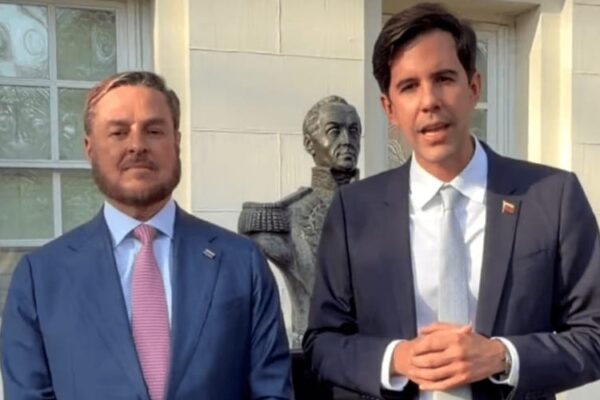
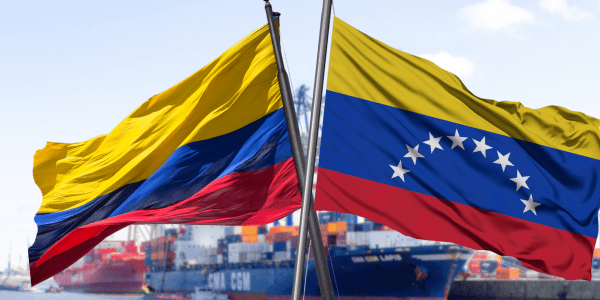
Economic relations between Venezuela and Colombia are beginning to show signs of renewed momentum amid expectations of growth and economic recovery in Venezuela. Authorities and business leaders from both countries have advanced discussions on energy cooperation, oil investment, binational transport and trade, while preparing for high-level political meetings and maintaining key regulatory decisions such as the renewal of the Monómeros license by the United States.

Read More

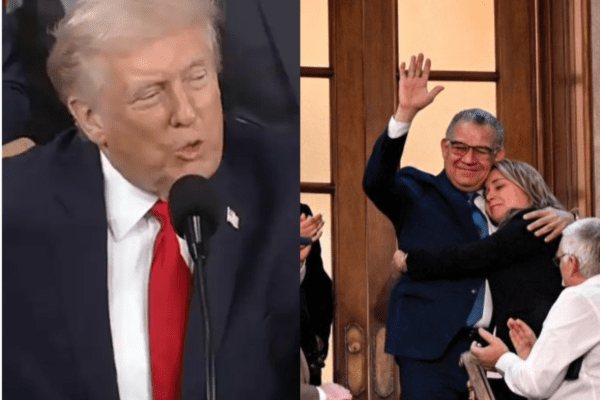
Trump proclaims Venezuela a“new friend and partner” under Delcy Rodríguez as Enrique Márquez visits the White House

He stressed that Washington is working “very closely” with interim president Delcy Rodríguez to unlock “extraordinary economic benefits for both countries” and to bring “new hope to those who have suffered so terribly.” Central to that renewed relationship, Trump underscored, is energy cooperation. He announced that more than 80 million barrels of Venezuelan crude had recently entered the U.S. market. One of the most unexpected moments of the address came when Enrique Márquez—former presidential candidate and leader of the Centrados party—was introduced in the chamber. Márquez had spent a year imprisoned at El Helicoide, headquarters of Venezuela’s intelligence service. Trump invited him to stand and celebrate his freedom, as cameras captured an emotional embrace with his niece.

Read More

UNDP survey: Venezuelans favor agreements and reject violence despite deep tensions

The United Nations Development Programme (UNDP) in Venezuela has released the results of the survey “What Unites Us: The Voice of Venezuelans on Dialogue and Coexistence,” conducted between November and December 2025. Based on face-to-face interviews with 1,295 adults from socio-economic strata C, D, and E, the report offers a detailed snapshot of social cohesion in the country. It concludes that Venezuela is neither a fully cohesive nor a completely fractured society: significant social assets coexist with deep tensions.

Read More

Lawmakers from the Freedom Parliamentary Group hold public consultation on Amnesty Law in Venezuela

During a public consultation organized by the Freedom Parliamentary Group at the Center for Political and Government Studies, lawmakers, experts, and civil society organizations discussed adjustments to the amnesty bill, with emphasis on the release of political prisoners, the need for judicial guarantees, and the protection of adolescents.

Read More

Zapatero returns to Venezuela amid an amnesty Law and a new reconfiguration between Washington and Caracas

Zapatero will meet with acting president Delcy Rodríguez and will also hold meetings with opposition lawmakers and leaders, including Henrique Capriles, Stalin González, former political prisoner Enrique Márquez, and Antonio Ecarri. He is coming from participating in a joint initiative with Zapatero, Brazilian President Luiz Inácio Lula da Silva, and Qatar, which led to a significant wave of prisoner releases.

Read More

Which refineries have shown interest in and purchased Venezuelan oil after the geopolitical shift?

U.S. refineries and major international buyers, including Indian companies and global trading houses, have resumed purchases of Venezuelan crude following the easing of sanctions and new energy agreements driven by Washington and Caracas. The reopening of oil flows is already beginning to be reflected in refining margins and in Venezuela’s repositioning in the global market.

Read More

Political dialogue with opposition sectors and meetings with oil companies Repsol and Maurel & Prom shape Venezuela’s agenda

The National Assembly, led by its president, Congressman Jorge Rodríguez, held a series of key meetings with social, economic, political, and cultural sectors of the country, as well as with various actors from the Venezuelan opposition, within the framework of the Program for Peace and Democratic Coexistence. At the same time, the national Executive advanced its economic agenda through high-level meetings with international oil companies, reinforcing calls for foreign investment and dialogue as central pillars of the current national context.

Read More