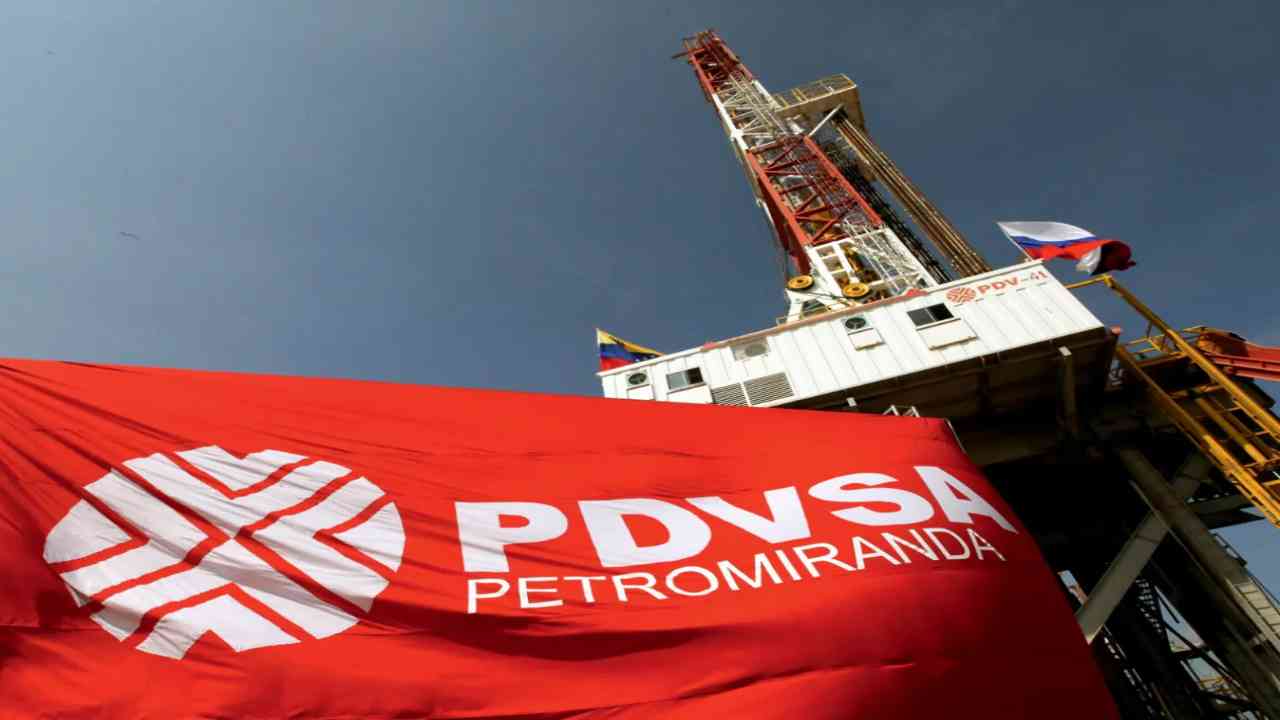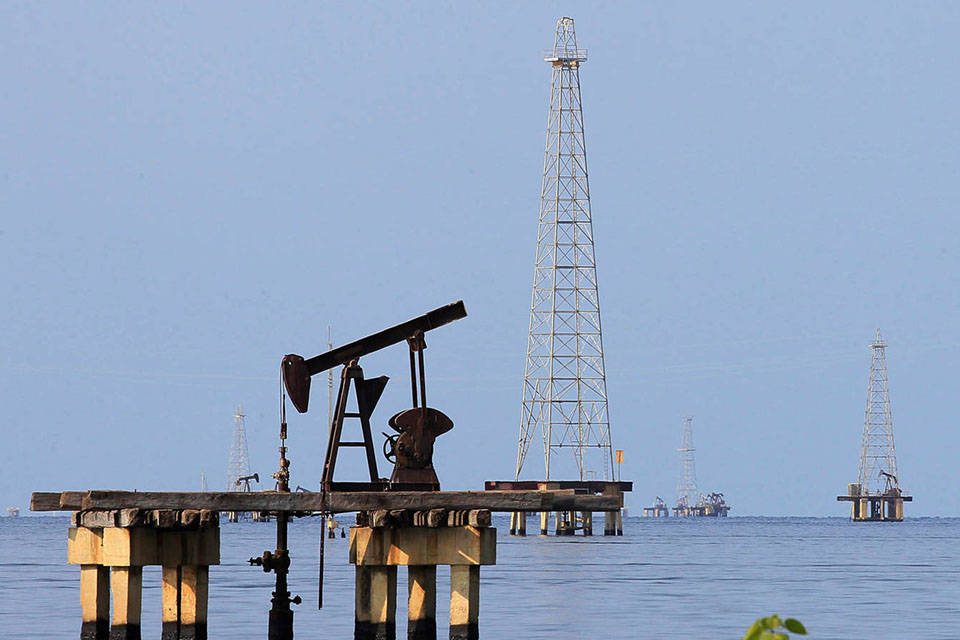
Oil operations in Lake Maracaibo. Photograph: via social media
Guacamaya, January 20, 2026. The attraction of investment coexists with urgent needs in infrastructure, public services, and operational capacity in the country’s main energy-producing states.
The mayor of the Urbaneja municipality, Manuel Ferreira, announced the enactment of a Municipal Decree declaring Lechería an Energy Hub, with the aim of diversifying the local economy and providing an institutional framework to support national and foreign investment linked to the energy sector. The initiative is framed within the new legal environment resulting from the reform of the Hydrocarbons Law, which enables association schemes with greater private and foreign participation.
According to municipal authorities, Lechería offers relatively stable urban conditions in terms of connectivity, public safety, accommodation, and services, which could allow it to host administrative, logistics, and financial headquarters for energy companies. The decree includes tax incentives, exemptions, and streamlined administrative procedures, as well as the creation of a Municipal Commission for the Attention of Foreign Investment, tasked with providing technical, legal, and administrative support.
However, progress on initiatives of this kind is taking place in a context marked by significant structural challenges in the states that concentrate oil activity, particularly Zulia and Anzoátegui.
Anzoátegui: key infrastructure and pressure on services
The state of Anzoátegui plays a relevant role in Venezuela’s oil value chain, as it hosts refining, storage, and export facilities, particularly along the Puerto La Cruz–Puerto José axis. Nevertheless, this infrastructure operates amid energy constraints, maintenance problems, shortages of inputs, and deficiencies in public services, including electricity, water supply, and transportation.
In coastal urban areas, including Lechería, service conditions are comparatively more stable, but not free of strain—especially given the potential increase in floating population and higher demand for electricity, water, sanitation, and urban mobility associated with new investments. The challenge for Anzoátegui is to balance its industrial and port role with the sustainability of urban and regional services, avoiding logistical and social bottlenecks.
In Anzoátegui, where refining, upgrading, and export facilities are concentrated, the electricity situation shows less severe collapse than in Zulia, but remains vulnerable. Intermittent outages, system overloads, and limited capacity to respond to demand peaks are reported, particularly in industrial and port areas.
These constraints affect the operation of refineries, maritime terminals, storage facilities, and auxiliary services, while also placing pressure on nearby urban centers. Expectations of oil sector reactivation and the arrival of new companies imply a significant increase in electricity demand, requiring investment in generation, transmission, and distribution to prevent structural failures.
Shared challenges in a reactivation scenario
Taken together, Zulia and Anzoátegui share structural challenges that condition any process of energy sector recovery:
1.Aging infrastructure and the need for significant investment in maintenance and modernization.
2. Fragile public services, with direct impacts on productivity and quality of life.
3. Security deficits and limited territorial control in specific industrial areas.
4. Institutional and administrative constraints at both regional and national levels.
Zulia: strategic production and service deterioration
The state of Zulia remains a central pillar of Venezuelan oil production, particularly in the Lake Maracaibo basin. However, the region faces severe limitations in public services, including recurrent power outages, problems with potable water supply, deteriorated road infrastructure, and deficiencies in telecommunications. These conditions affect both local communities and the operability of oil fields.
Added to this are the deterioration of historical PDVSA facilities, the presence of low-activity fields, abandoned housing, and security risks. In this context, Zulia Governor Luis Caldera announced a security reinforcement plan for oil installations in the Lagunillas municipality, aimed at protecting infrastructure that in some cases has been informally occupied or used for illicit activities. The challenge for Zulia is not only to recover production, but also to rehabilitate basic services and ensure minimum conditions of security and habitability for workers and surrounding communities.
Electricity as a critical input for the oil industry
Electricity is an essential component for the continuous operation of the oil industry, across production, transportation, refining, and storage stages. Contrary to the perception that oil activity relies mainly on mechanical equipment, modern operations depend on stable and highly reliable electrical systems.
In production fields, electricity is required to operate artificial lift pumps, water or gas injection systems, compressors, automated valves, metering stations, and remote control systems (SCADA). In mature lacustrine and onshore areas—such as those in Zulia—production depends heavily on continuous electrical equipment, as reservoirs experience natural pressure decline.
In refining and upgrading, dependence is even greater. Refineries rely on electricity for furnaces, cooling systems, instrumentation, process control, industrial safety, and emergency management. Power interruptions not only reduce output but can also trigger unplanned shutdowns, damage sensitive equipment, and create significant operational risks.
Zulia has faced a structural situation of electrical instability for years, characterized by recurrent blackouts, voltage fluctuations, and prolonged outages. These interruptions directly affect oil fields in western Venezuela, many of which require continuous power supply to prevent production losses and well deterioration.
The lack of reliable electricity forces reliance on backup power generators, which consume fuel, entail high maintenance costs, and do not always ensure continuity. Power outages also disrupt essential complementary services for the industry—such as telecommunications, water supply, transportation, and security—impacting the communities where operational personnel reside.
In this context, the fragility of the electrical system has become one of the main bottlenecks to a sustained recovery of oil production in Zulia, even under scenarios of increased investment.
Connectivity and logistics constraints
Alongside these challenges, only Zulia currently has a single international flight, operating to Panama. Expanding air connectivity and improving airport, port, and road infrastructure are considered essential to support oil operations, facilitate investment, and improve regional integration.
Within this framework, the strategy of positioning Lechería as an energy hub is presented as an urban and administrative complement to traditional production and industrialization zones. However, its medium- and long-term viability will depend on the capacity of the Venezuelan state and private actors to address the structural needs of Zulia and Anzoátegui, improve public services, and ensure stable operating conditions for the energy sector as a whole.
Without a gradual recovery of the national electrical system, the oil industry will continue to face structural constraints that limit its performance, regardless of legal or institutional changes.