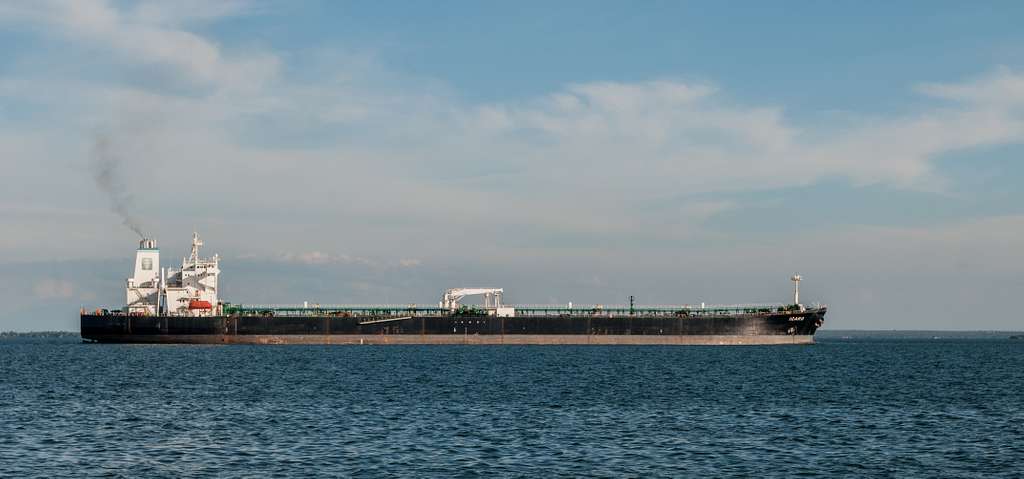
The U.S. military has seized a second tanker off Venezuela this month, but this one would not be sanctioned, according to some reports. In the image, an oil tanker in Lake Maracaibo, Venezuela. Photo: wilfredor.
Guacamaya, December 20, 2025. The U.S. boarded a second oil tanker off the coast of Venezuela on Saturday, which, according to sources quoted by Axios, was not sanctioned, unlike Skipper, which was seized on December 10.
Many oil tankers bound for Venezuela have changed course over the last 10 days, as reported by multiple media outlets, to not risk seizure by the U.S. military. Some, however, have still sailed to Venezuelan ports, such as the sanctioned vessel Hyperion, which is estimated to be near the Paraguaná terminal.
Two tankers have also departed the country since Skipper was taken over, and at least one of them was escorted by the Venezuelan Navy.
The U.S. military taking over an un-sanctioned oil tanker creates a dangerous precedent, as it opens the possibility of any kind of vessel being seized without any type of legal justification. The administration of Donald Trump could still claim that it was being used to support the so-called “Cartel de los Soles,” which has been designated as a Foreign Terrorist Organization. The seizure nonetheless could amount to an act of war, against both Venezuela and the country where the tanker is registered.
On December 17, Trump announced on social media that he was “ordering a total and complete blockade of all sanctioned oil tankers going into, and out of, Venezuela.”
The blockade is likely to have a severe impact on Venezuela’s economy, which is already struggling with inflation, while it is yet to fully recover from a decade of economic collapse.
Chevron is still producing oil in the South American country and shipping to the U.S. an average of 150,000 barrels per day. The company operates under a special license, which allows it to pay the Venezuelan state in kind.
Pressure as a prelude to negotiation?
The Trump administration has been ramping up military and economic pressure on Venezuela since August. The objectives could include forcing Maduro to step down and opening up the South American country’s oil sector to U.S. corporations, according to multiple sources in Washington, DC.
The U.S. has built up a large deployment of its Navy in the Caribbean, which it has used to blow up alleged drug boats and threaten Venezuela. Now, these forces are also being used against the oil-rich nation’s main source of export revenues.
Negotiations are also on the horizon, according to sources with information on the matter consulted by Guacamaya, which could be the reason why Washington, DC is ramping up its pressure against Caracas. Over the last month, Trump and Maduro spoke on a phone call at least once, and their envoys have been in close contact.
The White House did not immediately respond to a request for comment.