Guacamaya, January 7, 2026. The leadership of the National Assembly formally notified the Executive Branch of the start of the 2026–2031 constitutional term during a meeting at Miraflores Palace chaired by Acting President Delcy Rodríguez. The encounter served to outline a broad agenda of legal, economic, and political reforms, amid signs of a recomposition of relations with the United States and new regional diplomatic initiatives.
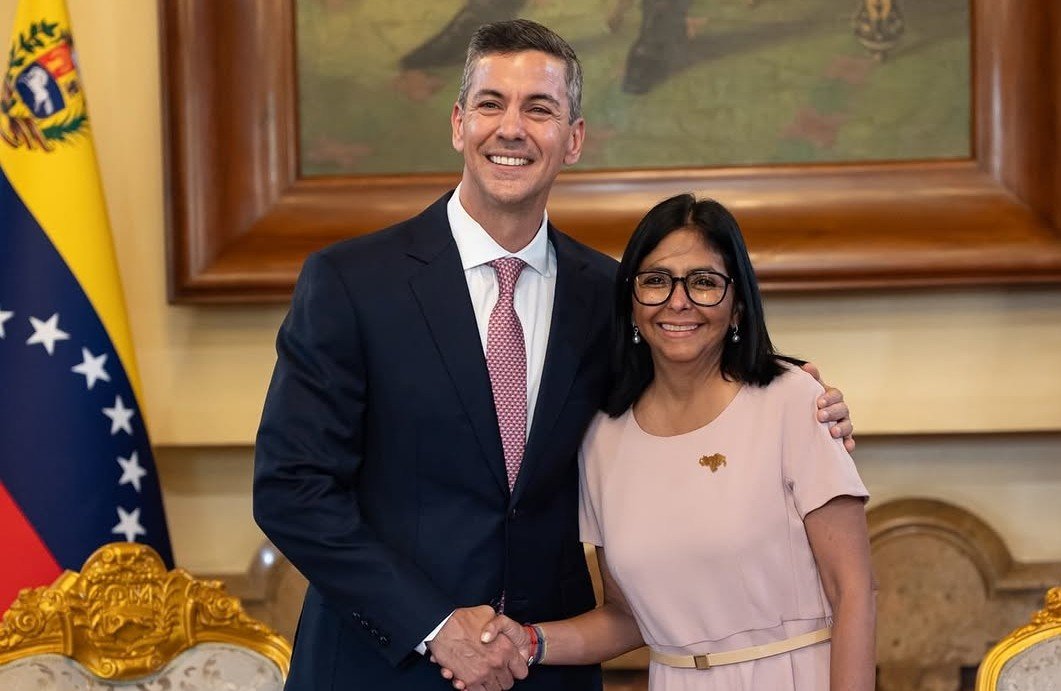
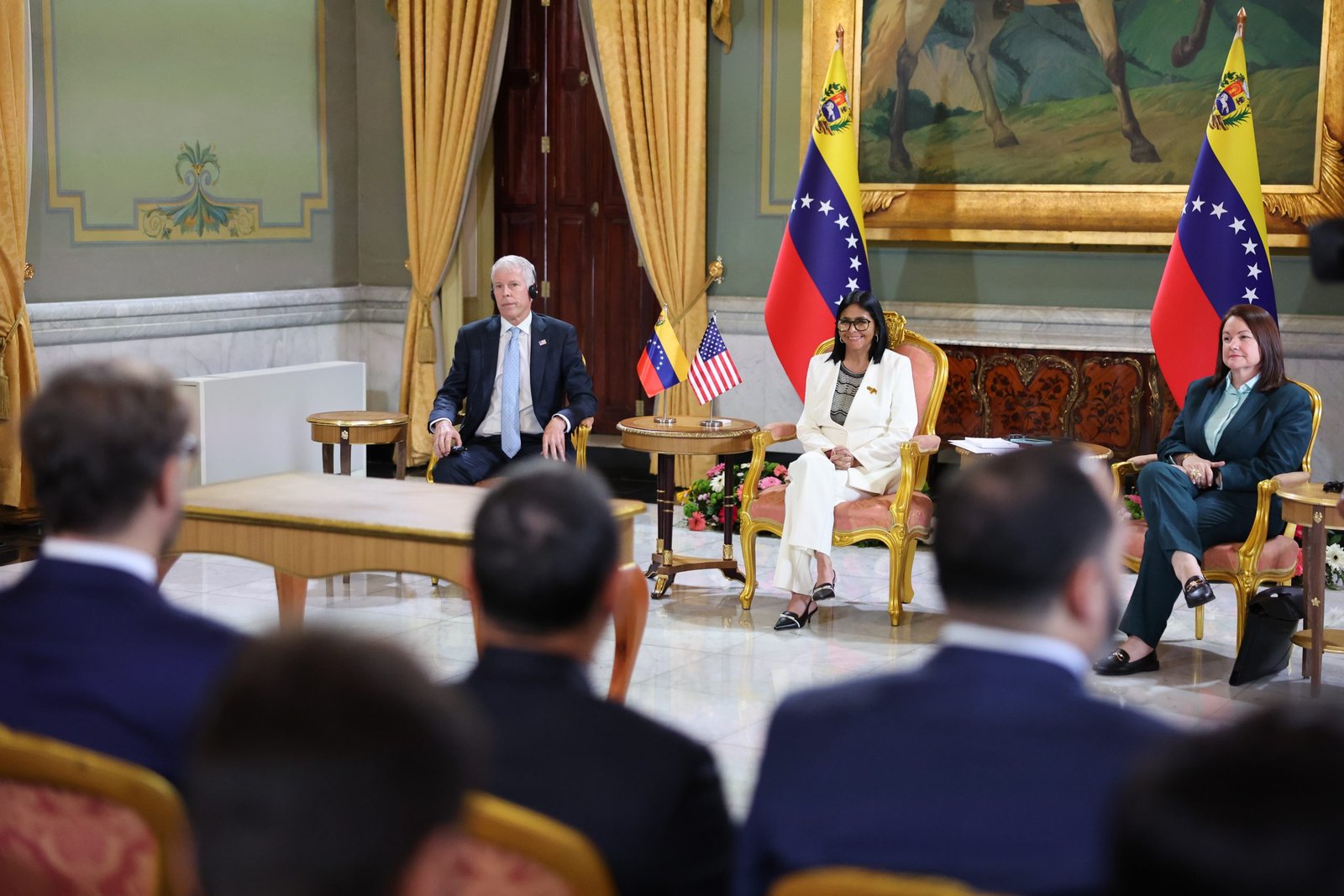
The leadership of the National Assembly met this Wednesday at Miraflores Palace in Caracas with the Acting President of the Republic, Delcy Rodríguez, to formally notify the Executive of the beginning of the new 2026–2031 constitutional legislative period.
During the meeting, Rodríguez announced a comprehensive process to upgrade the National Electric System, stressing that it is “one of the sectors where the blockade has done the most damage.” “We have made progress in recovery, but the Venezuela we are aiming for requires growth and demand,” she stated.
The acting president indicated that the National Electric System Law must be updated and that the sector will undergo a modernization process in generation, transmission, and distribution. “This is one of the sectors where the blockade has done the most damage, and we have advanced in the recovery of the Electric System, but the Venezuela we are aiming for requires growth and demand from its electric system,” she reiterated. In this context, she pointed to the need for a law on the rational use of energy and highlighted the importance of creating a Cybersecurity Law.
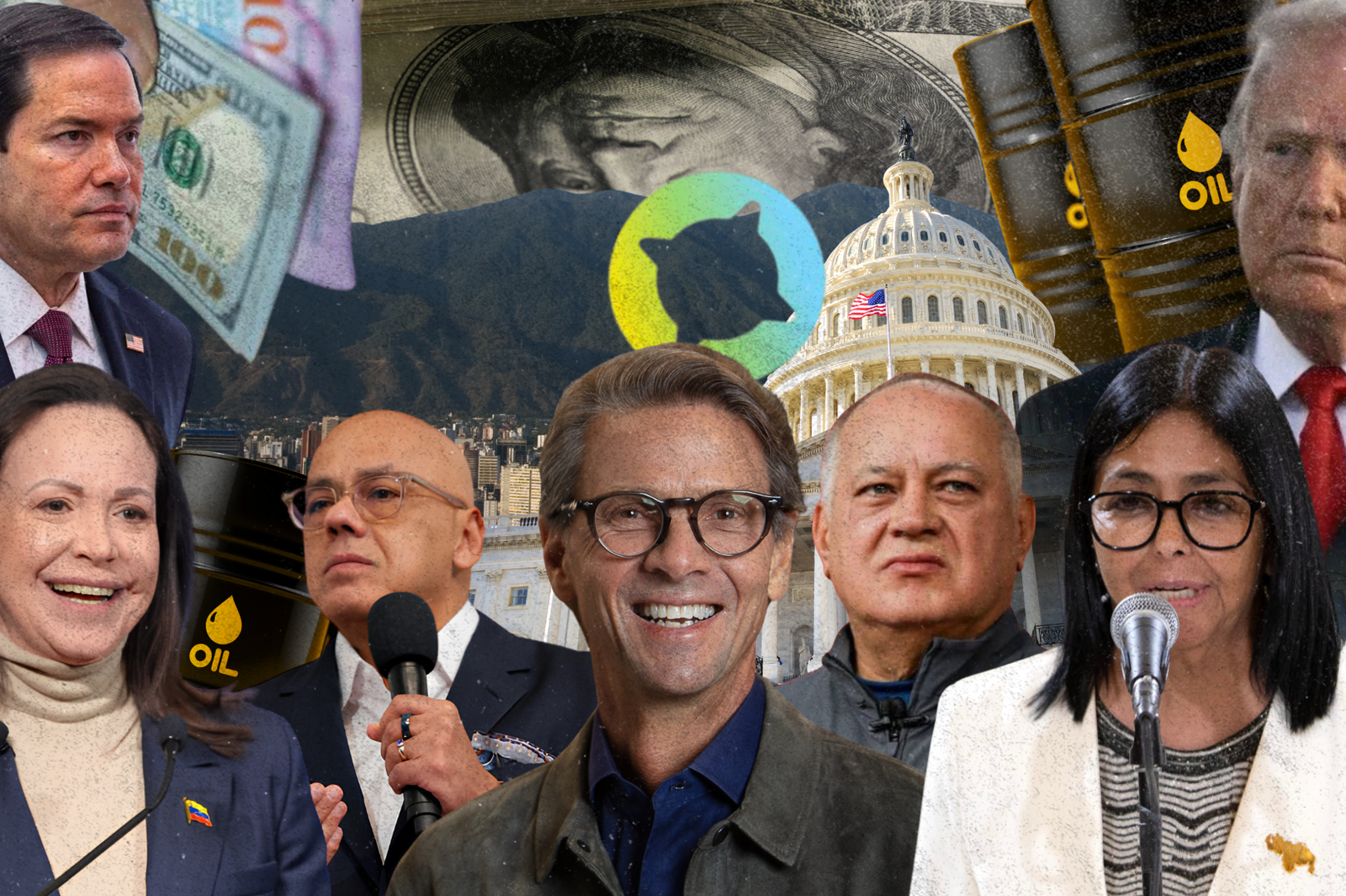
These initiatives are unfolding in parallel with what was announced by U.S. President Donald Trump, who stated that Venezuela will use the revenues from its new Oil Agreement to purchase exclusively products manufactured in the United States. The agreement includes the acquisition of food, medicines, medical equipment, and technology to improve the electricity grid, a key aspect for the oil industry.
“Venezuela commits to doing business with the United States as its main partner,” Trump said. He also added that “Venezuela must have relations with all countries in the hemisphere.”
On this point, Delcy Rodríguez stated that “those who have excluded themselves from relations with Venezuela are those who have lent themselves to attacking our country. It has not been Venezuela.” Referring to the state of bilateral relations, she declared that “there is a stain on our relations that had never existed in our history.”
In her remarks, the acting president provided data on the country’s foreign trade: “Seventy-one percent of exports are concentrated in eight countries, and of that 71 percent, 27 percent are destined for the United States.”
In a broadcast on Venezolana de Televisión (VTV), Rodríguez announced that the Executive will seek to introduce before the National Assembly a “Law on Socioeconomic Rights,” presented as a deepening of the “agreed prices” scheme. She explained that the initiative aims to formalize that system and, in parallel, modernize the industrial property framework to facilitate adaptations and innovations in national industry.
“We also want to present the Law on Socioeconomic Rights, which is an advance in the process of the agreed prices system, where both the private sector and the public sector address price formation so that the Venezuelan people can access fair prices, without speculation that harms the income of our workers… and of our population in general,” she said, addressing the president of the National Assembly, Jorge Rodríguez.
She also noted the government’s intention to “update the Industrial Property Law” in order to encourage “improvements and inventions in national industry” and to facilitate “adaptations and patents.” In her argument, she added that “the great powers of the world arise from the patents of their inventions, from their discoveries.”
Delcy Rodríguez also called for the creation of a law aimed at peace and coexistence. “Just as a parliament at the service of foreign powers cannot be allowed, expressions—social, political, or economic—that are extremist and fascist cannot be allowed either, because they have led to situations that are very dangerous for the life of this Republic,” she stated. She added that the drift toward extremism has led to factors that, “on their knees, offer our country, our wealth, and compromise our national sovereignty.”
In that context, she recalled that the January 3 attack was “driven, requested, supported, and backed by Venezuelan extremism and fascism.” “It cannot be allowed,” she concluded.
For his part, the president of the National Assembly, Jorge Rodríguez, proposed drafting a new Commercial Code that “protects the new reality of the Venezuelan Economy based on the new economic model.”
In an intervention broadcast by VTV, he stated that “it is time to bring order to the so-called Venezuelan legislative tree” and put forward as a “concrete proposal” that laws be organized through the approval of “eight major codes that contain all the elements of Venezuelan legislation.”
Among the examples, he mentioned “a new popular Penal Code”; “a new Venezuelan Social Code” to group constitutional “protections and guarantees”; an “Economic and Productive Trade Code,” noting that the current Commercial Code is “so obsolete that it even denies the use of portable or electric typewriters”; as well as a “Code of Direct Democracy and Consolidation of People’s Power,” a “new Civil Code,” an “Environmental Ecological Code,” a “Code for the Comprehensive Protection of Vulnerable Persons,” and the grouping of electoral laws into a single “Electoral Code.”
Rodríguez indicated that the National Assembly will focus its work on “six major axes,” beginning with “the achievement and consolidation of peace,” followed by “the pursuit and achievement of economic growth and prosperity for the republic,” the “strengthening of people’s power plans,” the “reinforcement of new forms of economic action,” with emphasis on “new entrepreneurship,” and the approval of “innovative legislative instruments.”
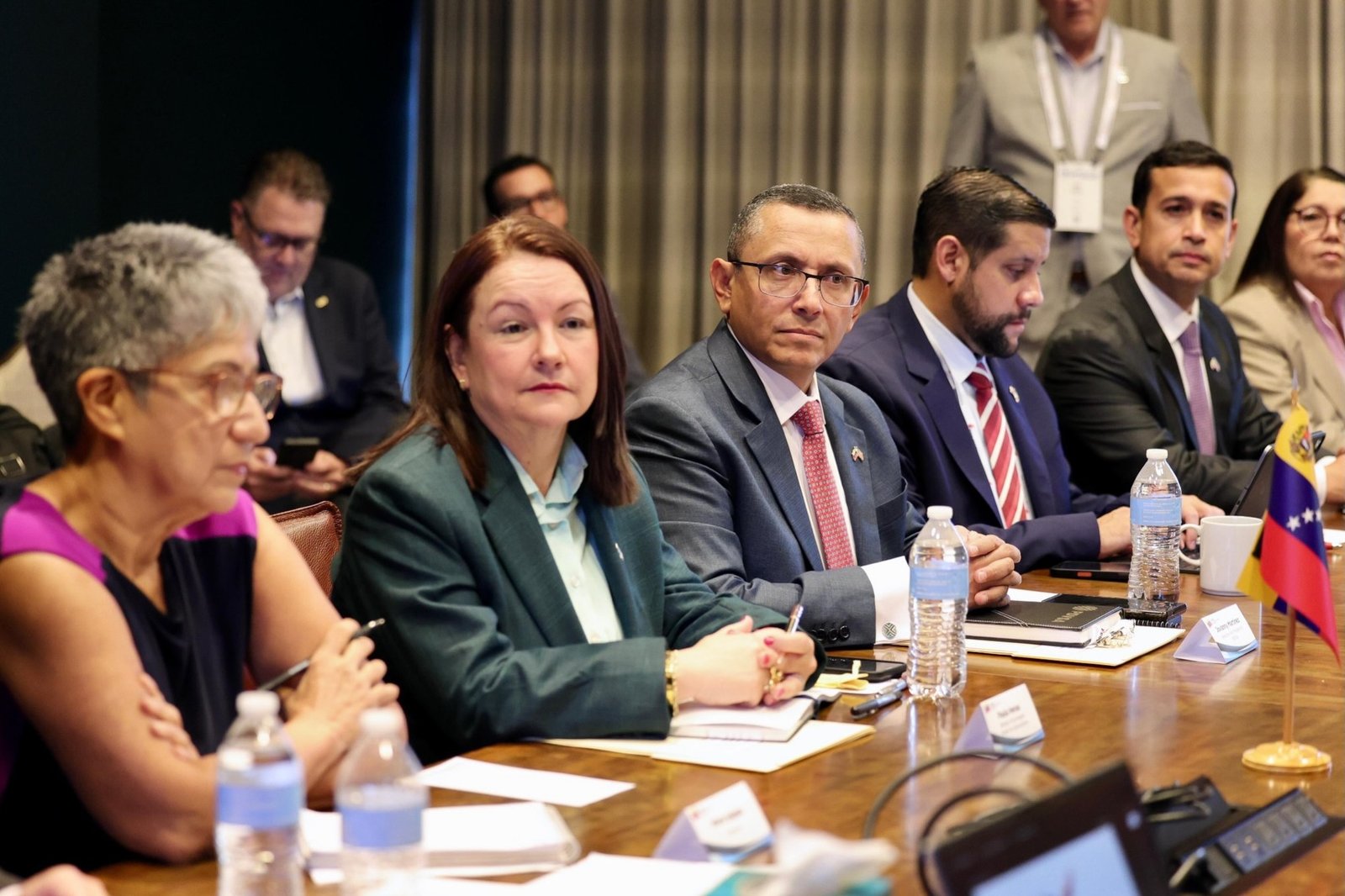
The meeting was attended by representatives from different political sectors. From the Democratic Alliance, Bernabé Gutiérrez, Timoteo Zambrano, and José Brito were present.
Also in the delegation that attended Miraflores were opposition lawmaker Antonio Ecarri, from the Alianza Lápiz, as well as Stalin González, an opposition leader from the Un Nuevo Tiempo party and former representative of the Venezuelan opposition in the Mexico and Barbados dialogues.
González wrote on his X account regarding the meeting: “Today I attended on behalf of the Parliamentary Group Liberty, as a member of the commission designated to notify the Executive of the installation of the National Assembly. At this meeting, we delivered a folder with information on political prisoners, for whose release the vast majority of Venezuelans advocate. The list we delivered was provided by Foro Penal.”
He added that “the freedom of political prisoners is not a concession but a fundamental duty,” and argued that the country needs “the persecution to stop, dissent to be respected, and no person to be imprisoned for thinking differently or demanding solutions that translate into the rescue of dignity and the well-being of the population.” He concluded by calling to “build a Venezuela of encounter, where the Constitution and the laws are respected, peaceful solutions are sought, democratic paths are recovered, and it is done among Venezuelans.”
From the ruling party, all sectoral vice presidents were present, with the exception of Interior Minister Diosdado Cabello. Among the attendees was also Nicolás Maduro Guerra, son of Nicolás Maduro and a member of the National Assembly.
On the regional front, Colombian President Gustavo Petro revealed that he held a conversation with Delcy Rodríguez and proposed a tripartite dialogue with the United States. “I invited her to Colombia. We want to establish a dialogue to stabilize Venezuelan society so that it does not explode into violence against itself,” he said.
Petro also stated: “We cannot lower our guard; we still need to talk at the White House. I also spoke two days ago with the current president of Venezuela, Delcy Rodríguez, and invited her to Colombia. We want to establish a tripartite dialogue with the United States and hopefully a global one to establish order in Venezuela.”
In parallel, the Bloomberg news agency reported that the United States is preparing to reopen its embassy in Caracas, possibly as early as this week. Meanwhile, The Wall Street Journal reported that President Donald Trump is expected to meet with executives from Chevron, ConocoPhillips, and ExxonMobil to discuss potential investments in Venezuela.
The start of the new legislative term thus takes place in a context of internal redefinition of Venezuela’s legal and economic framework, accompanied by signs of diplomatic and energy reconfiguration with Washington and new regional mediation initiatives.