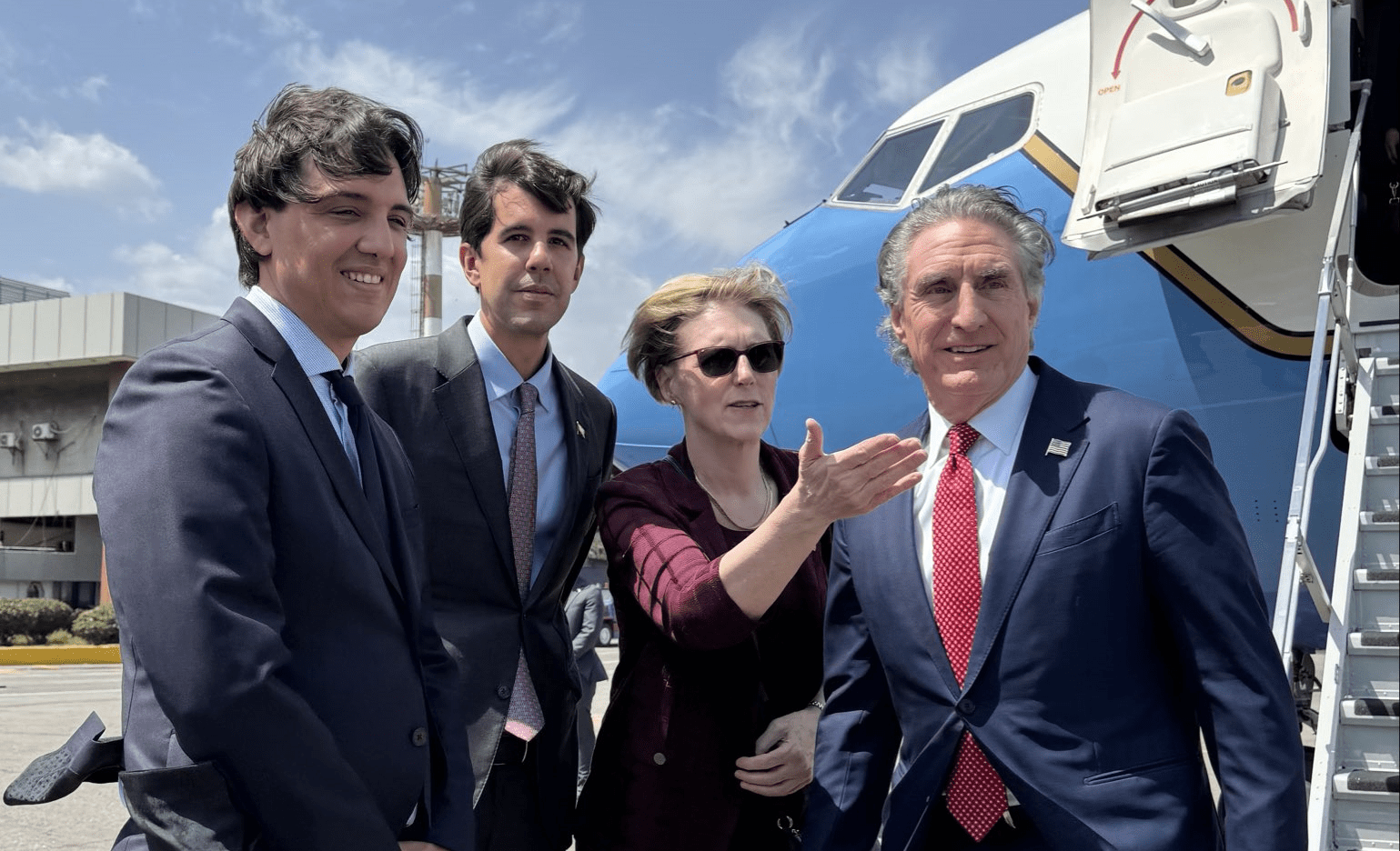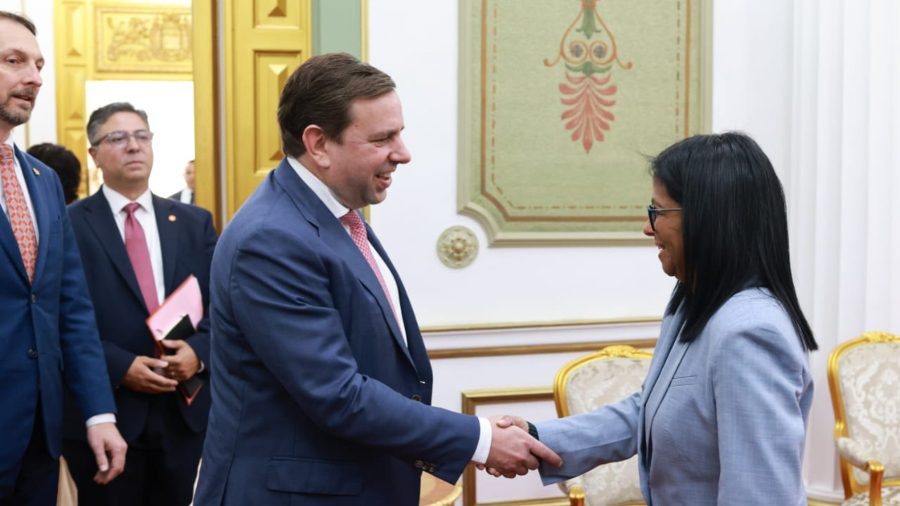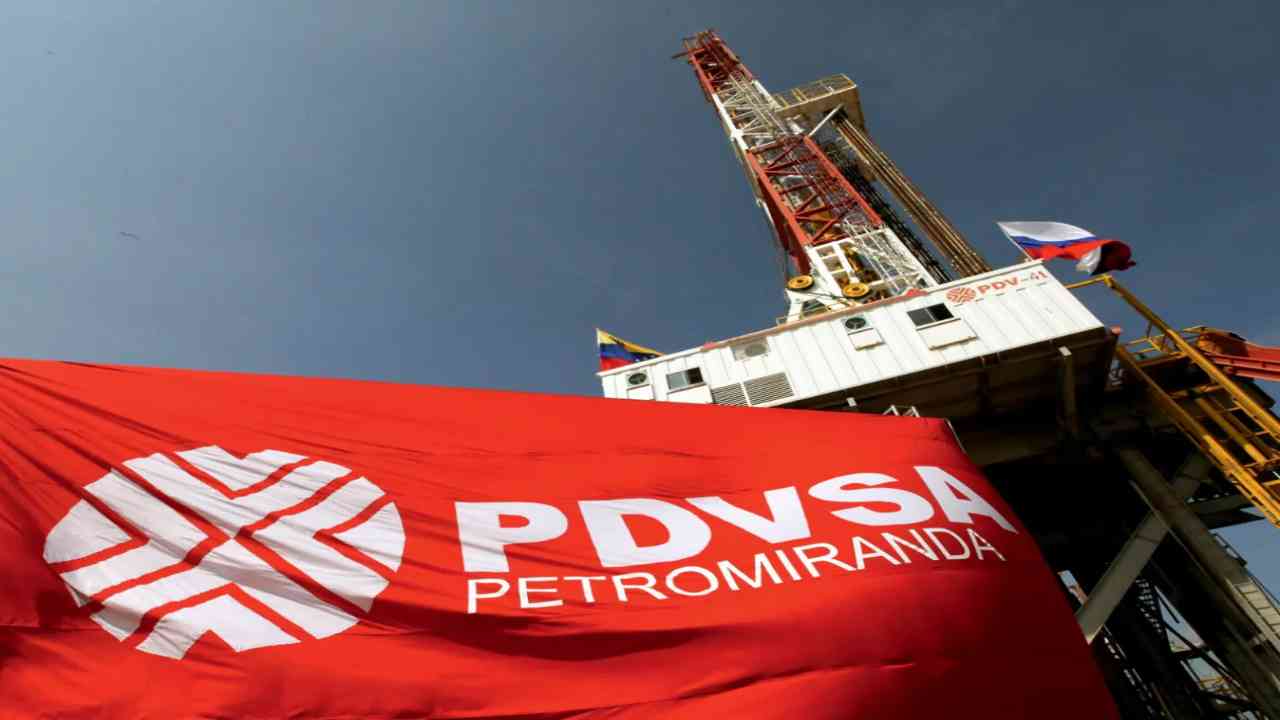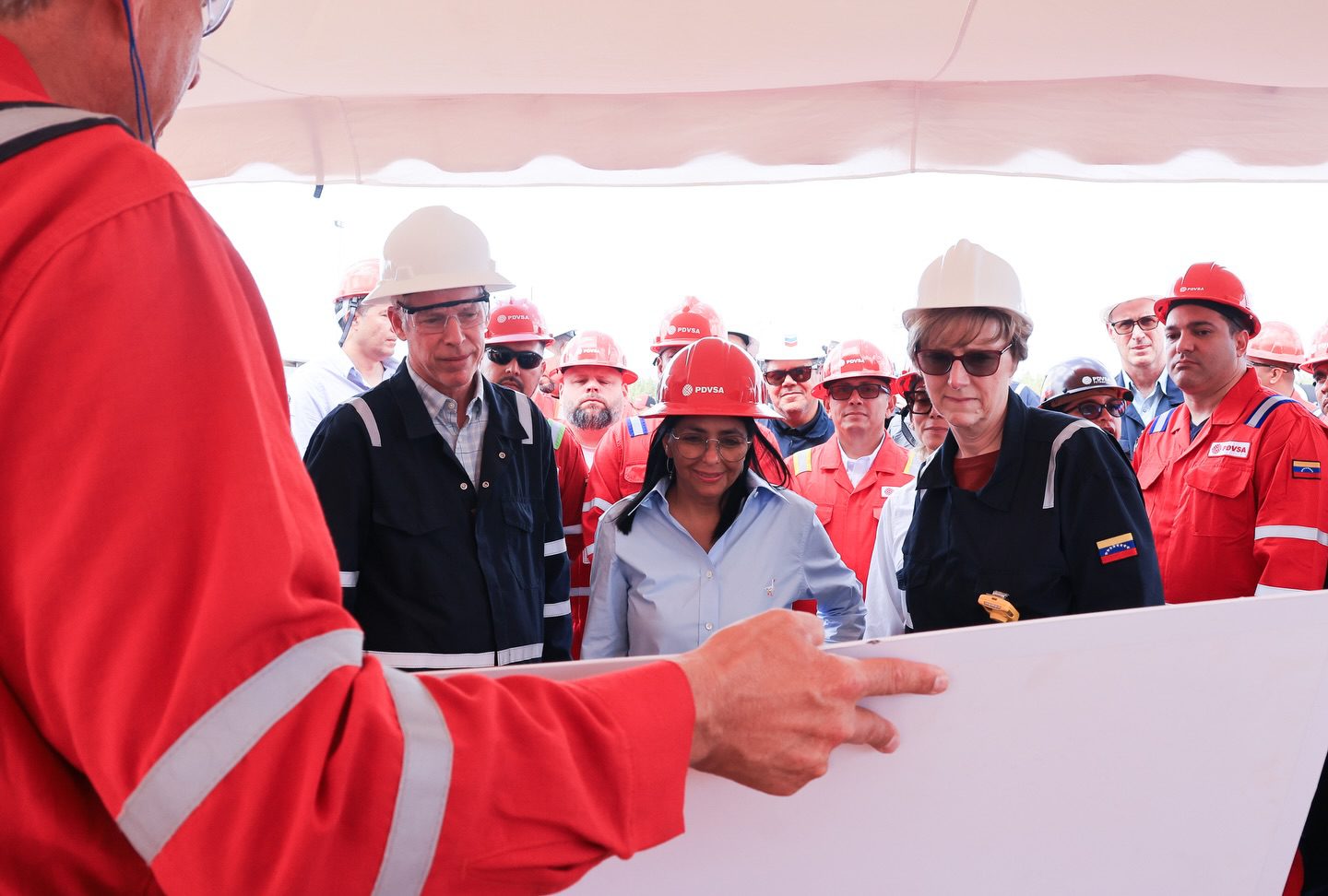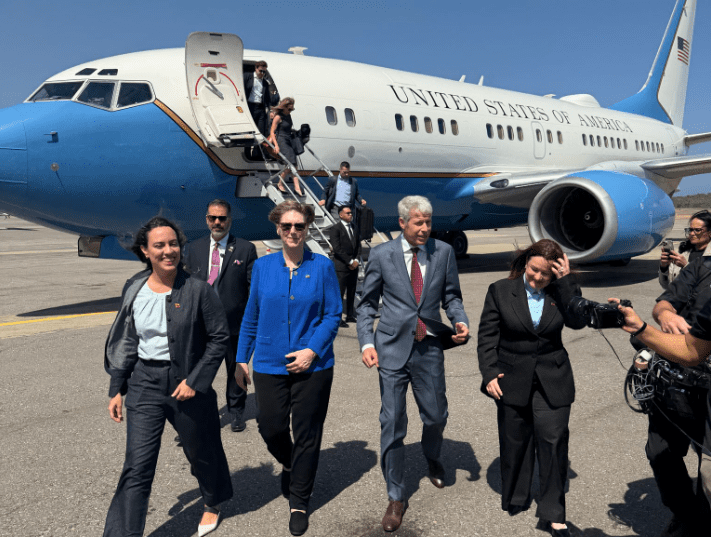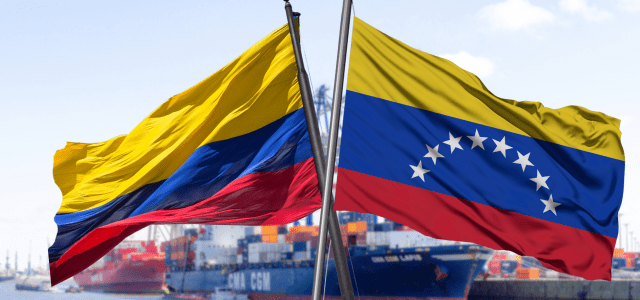
Talks between Venezuela and Colombia to expand energy cooperation, oil investment, cross-border transportation, and trade are taking place amid expectations of economic recovery in Venezuela. The process unfolds as a presidential meeting is being prepared and key regulatory decisions emerge, such as the renewal of the license for Monómeros by the United States. Photograph: Web / Legiscomex
Guacamaya, March 9, 2026. Economic relations between Venezuela and Colombia are beginning to show signs of renewed momentum amid expectations of growth and economic recovery in Venezuela. Authorities and business leaders from both countries have advanced discussions on energy cooperation, oil investment, binational transport and trade, while preparing for high-level political meetings and maintaining key regulatory decisions such as the renewal of the Monómeros license by the United States.
The Colombian ambassador to Venezuela, Milton Rengifo, reported that bilateral talks on electricity have made significant progress and could soon lead to favorable outcomes for both countries.
According to the diplomat, one of the initiatives under discussion involves the reactivation of electricity supply from Venezuelan territory to Colombia through the National Electric Corporation (Corpoelec).
Rengifo explained that meetings have been held with Venezuela’s Minister of Electric Energy, Jorge Márquez, as well as with a commission from Colombia’s energy ministry, with the aim of evaluating the technical and operational mechanisms that would allow the restoration of electricity flows.
“We have held meetings to address the reactivation of electricity supply via Corpoelec,” the ambassador stated, adding that although the rupture of diplomatic relations left unresolved debts between the two countries, the current state of dialogue suggests that “good news” could emerge in the near term.
The Colombian representative also indicated that there is interest in reviving the river transit agreement signed in 1941, which could facilitate transportation along the Arauca River, the Orinoco River, and other strategic border areas, including the Catatumbo region.
Ecopetrol evaluates energy opportunities with Venezuela
In parallel, the chief executive officer of the Colombian state oil company Ecopetrol, Ricardo Roa, confirmed that the company is assessing potential opportunities for energy cooperation with Venezuela.
Roa said the company will review its investment plan in April, particularly if international oil prices continue to rise following the armed conflict involving the United States and Israel with Iran.
According to statements cited by Reuters, the executive noted that Ecopetrol is analyzing mechanisms for energy cooperation with Venezuela, including possible agreements involving the exchange of resources for light crude oil or other derivatives.
He also explained that the company has once again requested that the U.S. Department of the Treasury’s Office of Foreign Assets Control (OFAC) lift the restrictions that currently limit negotiations with the Caribbean country.
The Colombian oil company plans to invest closer to the upper end of its annual investment range, estimated between 22 and 27 trillion Colombian pesos — approximately between $5.79 billion and $7.11 billion — driven by the rise in oil prices resulting from the conflict in the Middle East.
Gilinski Group investment aims to open doors to Venezuela’s energy sector
Business interest in the Venezuelan market is also reflected in the moves of the Gilinski Group. Colombian billionaire Jaime Gilinski, considered the richest man in Colombia, along with his son Gabriel Gilinski, invested $107 million in the energy company GeoPark Ltd., an independent oil and gas producer operating across Latin America.
The operation allowed the group to acquire 20% of the company’s shares, representing a strategy to enter Venezuela’s energy sector.
“Our entry into GeoPark, under the best terms, was agreed with the board of directors and management. It is a step to support and enable growth,” Gilinski explained during an interview with the Colombian radio station La FM.
The businessman said the group’s objective is to expand its operations across Latin America, particularly in markets with strong energy potential such as Venezuela and Argentina.
Gabriel Gilinski emphasized that Venezuela’s oil market presents significant opportunities, recalling that the country once produced more than three million barrels of oil per day.
“The biggest opportunity for GeoPark lies in being able to penetrate and grow in Venezuela,” he stated.
United States renews Monómeros license until 2028
On the regulatory front, the U.S. Department of the Treasury, through the Office of Foreign Assets Control (OFAC), renewed the license authorizing the operations of Monómeros Colombo Venezolanos S.A., the Venezuelan petrochemical company based in Barranquilla.
The new authorization will remain valid for two years, until March 31, 2028, and allows Venezuela’s Special Attorney General and U.S. persons, including financial institutions, to participate in transactions involving the company, including dividend payments.
The previous license had expired in June 2025 and was not renewed during a period of political pressure exerted by the administration of U.S. President Donald Trump against the government of Nicolás Maduro.
The new authorization also covers several subsidiaries of the company, including Compass Rose Shipping Ltd., Monómeros International Ltd., Sociedad Portuaria Monómeros Colombo Venezolanos S.A., Ecofertil S.A., and Fertilizer International Supply Corp. S.A. Panama.
The document establishes that any payment — except those intended for local taxes, permits, or fees — must be deposited into the Foreign Government Deposit Funds administered by the U.S. Department of the Treasury for Venezuela.
This mechanism forms part of the system created to manage revenues linked to the country following the agreements in the hydrocarbons sector reached after the events of January 3.
The license also specifies that it does not authorize the transfer of other sanctioned property nor the receipt or transfer of funds from individuals or entities that remain under sanctions.
Monómeros is one of Venezuela’s most significant assets abroad. As a subsidiary of Pequiven, it has a production capacity of 1.3 million tons per year of organic and inorganic substances used for large-scale agriculture.
The company produces fertilizers, granulated compounds, animal feed, sulfur, and industrial products. It also controls nearly 40% of Colombia’s fertilizer market and supplies approximately 80% of the country’s agricultural sector.
Since March 2025, Colombia’s Superintendence of Companies has been overseeing a corporate restructuring process, and in February 2026 granted the company four months to present a debt repayment plan to its creditors.
According to the most recent financial statements, by September 2025 the company reported $345.3 million in assets and $220.6 million in liabilities, while posting a net loss of $3.8 million.
The new license also contains two notable details. On the one hand, it continues to refer to the “special attorney general,” a figure linked to the opposition’s interim government created in 2019 and dissolved in 2022. On the other hand, it mentions the subsidiary Fertilizer International Supply, a company that was eliminated in 2024.
Business leaders see signs of economic reactivation
Various business representatives operating in both countries believe that the restoration of economic relations opens a favorable scenario for investment, production and the integration of value chains.
Although they acknowledge that risks and institutional adjustments remain, they agree that business activity is beginning to show signs of recovery.
Among the most frequently cited factors is the expectation of a possible economic rebound in Venezuela, a market that historically has been highly relevant for Colombian companies.
Adán Celis, president of Molpack, explained that his company maintains operations in several countries across the region and has decided to keep its headquarters in Venezuela despite recommendations from some international financial actors to relocate to another country.
In the industrial sector, Silvano Gelleni, president of Acumuladores Duncan, stated that competitive interaction between Venezuelan and Colombian companies has helped improve production and service standards in both markets.
Binational logistics and transportation seek reactivation
The restoration of economic exchange also raises logistical and transportation challenges.
Guillermo Pupo, president of Transportes Sánchez Polo, explained that his company has maintained a presence in Venezuela for more than four decades and that the recent implementation of a binational transportation agreement represents an important change for the sector.
“Our presence in Venezuela is not a temporary matter. We have pursued a sustainable strategy in the commercial exchange between both countries,” he said.
For more than ten years, he explained, the sector operated under temporary arrangements due to the absence of a definitive legal framework.
“For more than a decade we were waiting for the Binational Agreement that has finally entered into operation,” he noted.
Venezuelan industry highlights competitive advantages
From Venezuela’s industrial sector, the country’s productive potential has also been emphasized.
Gonzalo Mendoza, president of Siderúrgica Zuliana, stated that Venezuela has important competitive advantages associated with its natural resources, particularly access to natural gas and iron ore, which could facilitate the production of industrial inputs.
Petro and Rodríguez to meet at the border
On the political front, Venezuela’s interim president Delcy Rodríguez will hold a meeting on March 13 with Colombian President Gustavo Petro, according to sources from Colombia’s presidency cited by AFP.
The meeting will take place on the Colombian side of the border near the city of Cúcuta, and will mark Rodríguez’s first international trip since the U.S. military operation carried out in Caracas on January 3.
Backed by Washington, the Venezuelan leader has initiated a new phase in relations with the United States. President Donald Trump has expressed support for Rodríguez and praised what he described as her “great work” in reshaping bilateral ties.
According to various reports, Washington and Caracas have agreed on the entry of U.S. companies to participate in the exploitation and management of Venezuela’s oil sector.
For his part, Petro has repeatedly expressed his intention to facilitate a democratic transition process in Venezuela, although no date has yet been set for new elections.
Colombia and Venezuela share an extensive border of approximately 2,200 kilometers, a region historically affected by the presence of various armed groups competing for control of illegal economies linked to drug trafficking, smuggling and illegal mining.
Taken together, these initiatives reflect a gradual process of reconfiguration in the economic and energy relations between the two countries. The possible reactivation of electricity supply, the interest of companies such as Ecopetrol and GeoPark in Venezuela’s oil sector, the operational continuity of Monómeros, and the normalization of transportation and cross-border trade suggest the emergence of a pragmatic agenda centered on energy and productive integration.
At the same time, this rapprochement is taking place within a broader geopolitical context marked by the selective easing of U.S. sanctions and by the search for new regional balances following the events of January 3. This dynamic could turn the Colombian–Venezuelan relationship into one of the key axes for Venezuela’s potential reintegration into the international economy.