
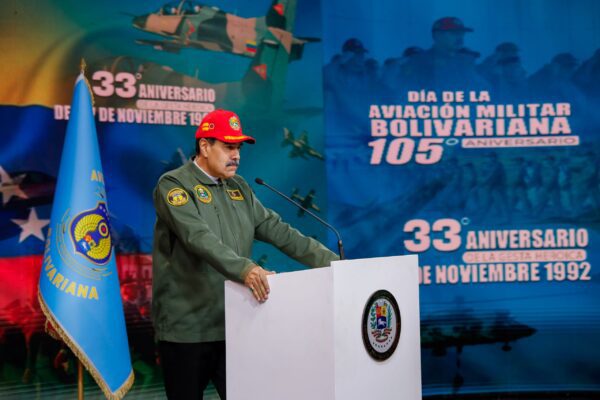
Armed Forces and Questioned Figures: Would 82% of Venezuelans Be Willing to Take Up Arms?
Nicolás Maduro led the celebration of the “courage, discipline and historical strength” of the Air Force that accumulates more than…


Nicolás Maduro led the celebration of the “courage, discipline and historical strength” of the Air Force that accumulates more than…

The National Assembly approved the Comprehensive National Defense Command Law on November 11, a central instrument of Venezuela’s new military doctrine that expands the shared responsibility between the State, the Armed Forces, and the citizenry in the country’s defense. The enactment occurs in a climate of regional tension marked by the deployment of the US aircraft carrier USS Gerald Ford in the Caribbean and the initiation of “Operation Southern Lance,” announced by Washington. The regulation has generated official support and strong criticism from opposition sectors who consider it an instrument of internal control.
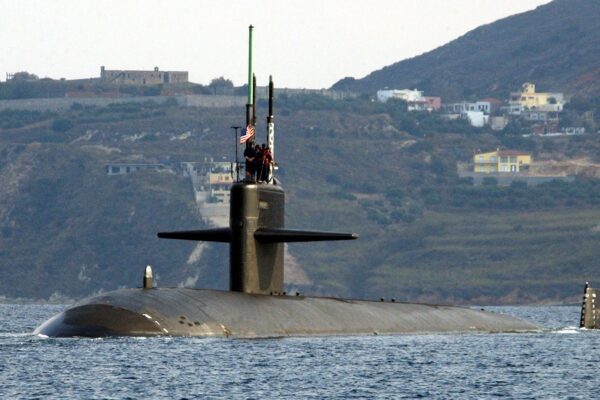
A new U.S. order has sent the guided-missile cruiser USS Lake Erie and the nuclear-powered fast-attack submarine USS Newport News to the southern Caribbean Sea.
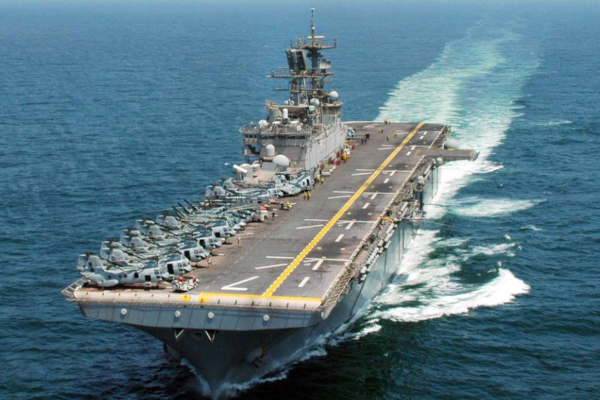
Under the justification of combating drug trafficking and confronting drug cartels, the United States has launched a military advance in the waters off Venezuela’s territorial sea.
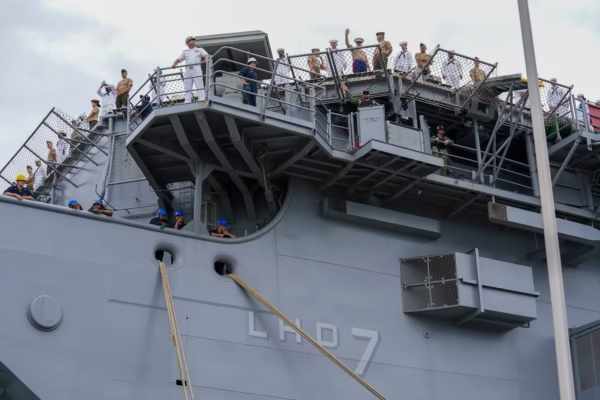
The U.S. military is deploying an additional 4,500 troops to the Southern Command region, which includes Latin America and the Caribbean.
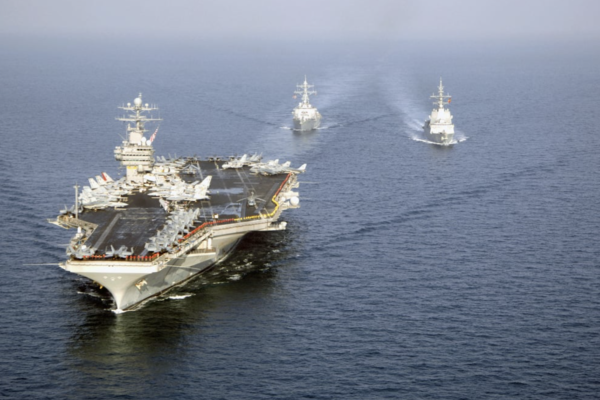
The U.S. government has ordered the deployment of naval and air forces to the southern Caribbean Sea to take action against Latin American drug cartels, according to a Reuters report citing two sources.
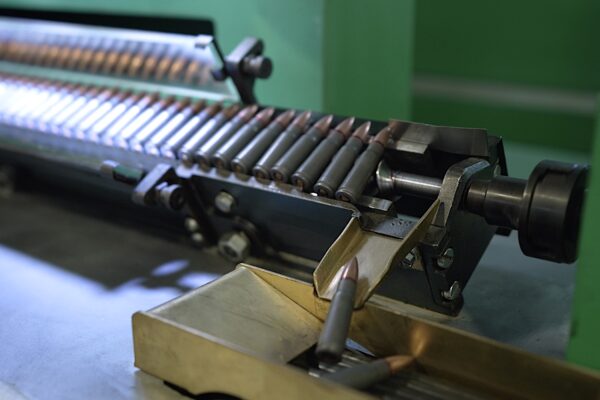
A Russian state-owned company has completed the first phase of an ammunition factory in Venezuela, which will supply the country’s armed forces and security agencies.

The Guyana Defence Force (GDF) reported on Thursday that a patrol was attacked by armed groups near the Cuyuní River, on the de facto border with Venezuela.
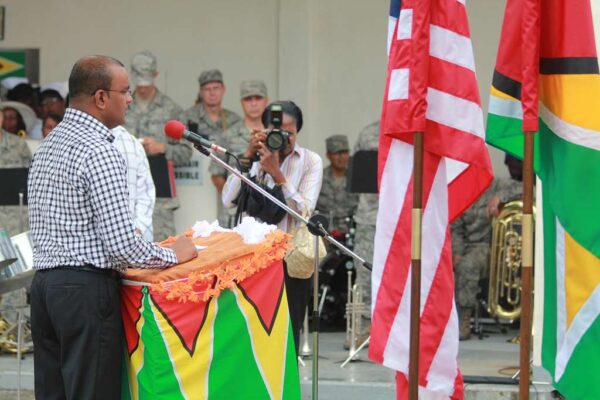
The Vice President of Guyana reaffirmed his government’s position regarding the territorial dispute with Venezuela over the Essequibo region, emphasizing that Venezuela’s appointment of a governor for this area constitutes a violation of the resolutions of the International Court of Justice (ICJ) and the Argyle Treaty.
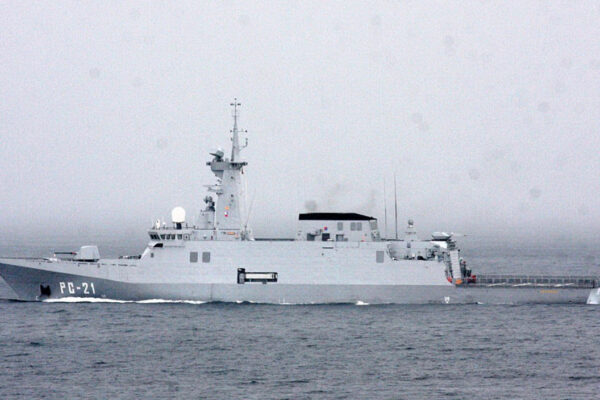
The territorial dispute between Venezuela and Guyana has reached a new critical point following a complaint by Guyanese President Irfaan Ali about the incursion of a Venezuelan military vessel into waters that Guyana considers its own. The incident has sparked a strong diplomatic reaction and reignited historical tensions between the two countries over the Esequibo territory, which is currently under dispute in a case before the International Court of Justice (ICJ).