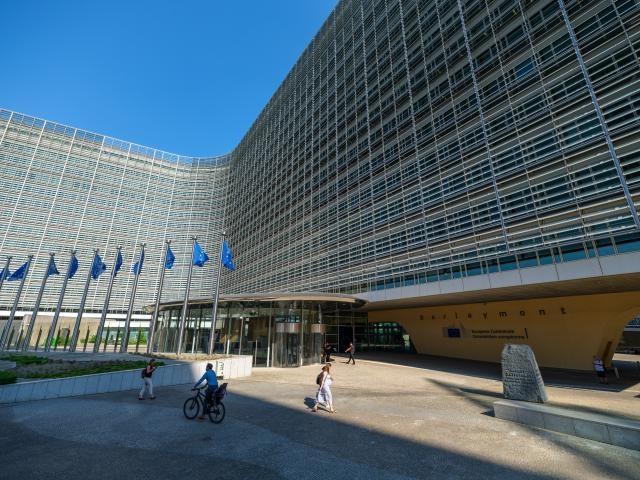
Headquarters of the European Commission. Photograph: European Commission website
Guacamaya, January 16, 2026. The European Union’s High Representative for Foreign Affairs, Kaja Kallas, highlighted this Friday the release of European citizens detained in Venezuela, describing it as a relief for their families and the result of persistent diplomacy. The release of citizens from several countries comes amid controversy over the actual number of people freed and coordinated repatriation efforts between European governments and Caracas.
The EU’s High Representative for Foreign Affairs, Kaja Kallas, described on Friday as “a positive step” the release of Europeans who had been detained in Venezuela, as part of a series of excarcerations carried out in recent weeks. The diplomat said she personally spoke with several of the released EU citizens, underscoring the “great relief for families” that their release represents.
Kallas attributed these developments to the “persistent diplomacy of the EU” and to close coordination with Member States, as well as to the work of the EU Delegation in Venezuela and the European External Action Service. “United, Europe remains firm in defending our citizens and human rights,” she added in a message posted on social media.
The releases have involved people of different nationalities. Czech authorities confirmed on Friday the release of Jan Darmovzal, who had been arrested in Venezuela in September 2024, along with other detainees from Ireland, Romania, Germany, Albania, Ukraine, and the Netherlands.
Although the Venezuelan government, now headed by interim president Delcy Rodríguez, has claimed that up to 116 people have been released, civil society organizations significantly lower that figure, placing it at around 84 releases since the process began last week. The government has publicly rejected those claims.
The release operation has involved several European states. For example, Czech authorities arranged a government aircraft to repatriate Darmovzal and other freed detainees after “weeks of intense negotiations,” according to officials in Prague.
In this context, Kallas thanked the joint efforts of European institutions and Member States, emphasizing that the European Union remains committed to protecting its citizens abroad and upholding fundamental human rights.
However, internal sources within the diplomatic community in Venezuela consulted by Guacamaya, who requested anonymity, said that two European citizens remain detained—a French national and a Polish-Ukrainian national—and that “good news is expected in the coming hours.” They also indicated that a number of prisoners with dual nationality (European-Venezuelan) remain under analysis and monitoring by diplomatic missions accredited in Caracas.