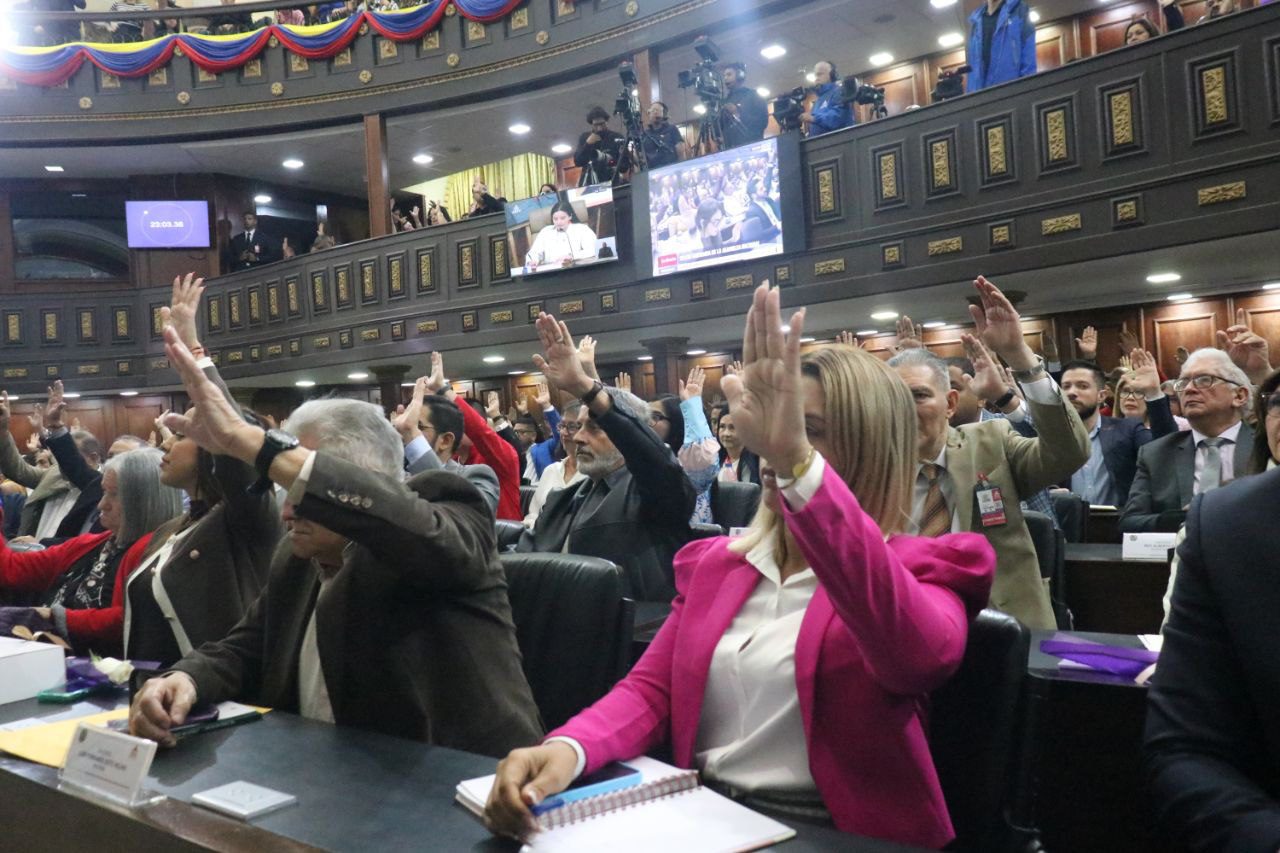
The Legislative Branch signals regulated openings for national and foreign investors. Photo: X / @Asamblea_Ven.
Guacamaya, March 17, 2026. The National Assembly (AN) approved this Thursday, March 19, by an “evident majority,” the first 12 articles of the Draft Organic Mining Law during a second discussion, the continuation of which has been postponed until a future session. This partial approval ratifies absolute state ownership of mineral deposits and introduces the private concession model for mining operations.
The session, convened for 2:00 PM, addressed two main points on the agenda. First, a draft agreement in celebration and jubilation over Venezuela’s historic triumph as champion of the World Baseball Classic. The other point, the second discussion of the mining regulations, was paused mid-debate to continue on a future date.
The first 12 articles, approved in today’s session, aim to favor the development of state companies, mixed companies with public majority ownership, authorized private companies, and artisanal miners, among other covered actors.
Additionally, principles of environmental sustainability are incorporated, along with a technical glossary including terms such as “strategic minerals” and “mining plots” of up to 6,156 hectares, as well as arbitration mechanisms for disputes and the creation of the National Geoscientific-Mining Data Bank.
Regarding the matter of disputes, agreements for dispute mediation are left to the discretion of the operating parties, which could be a gateway for foreign investors to opt for resolutions through international arbitration.
Government deputy Orlando Camacho, who presides over the Energy and Petroleum Commission, requested to postpone the discussion, stating that more time is needed to present the remaining articles of the proposed reform to the various sectors of civil society. The deputies of the National Assembly unanimously agreed to the postponement proposal.
The Executive’s Pulse Behind the Reform
Last March 9, the AN approved the legal project in its first discussion with a qualified majority, presented by deputy Orlando Camacho (PSUV), president of the Permanent Commission on Energy and Petroleum, who highlighted a structure of 19 chapters and 126 articles. On that occasion, the promotion of national and international investments through legal guarantees was emphasized.
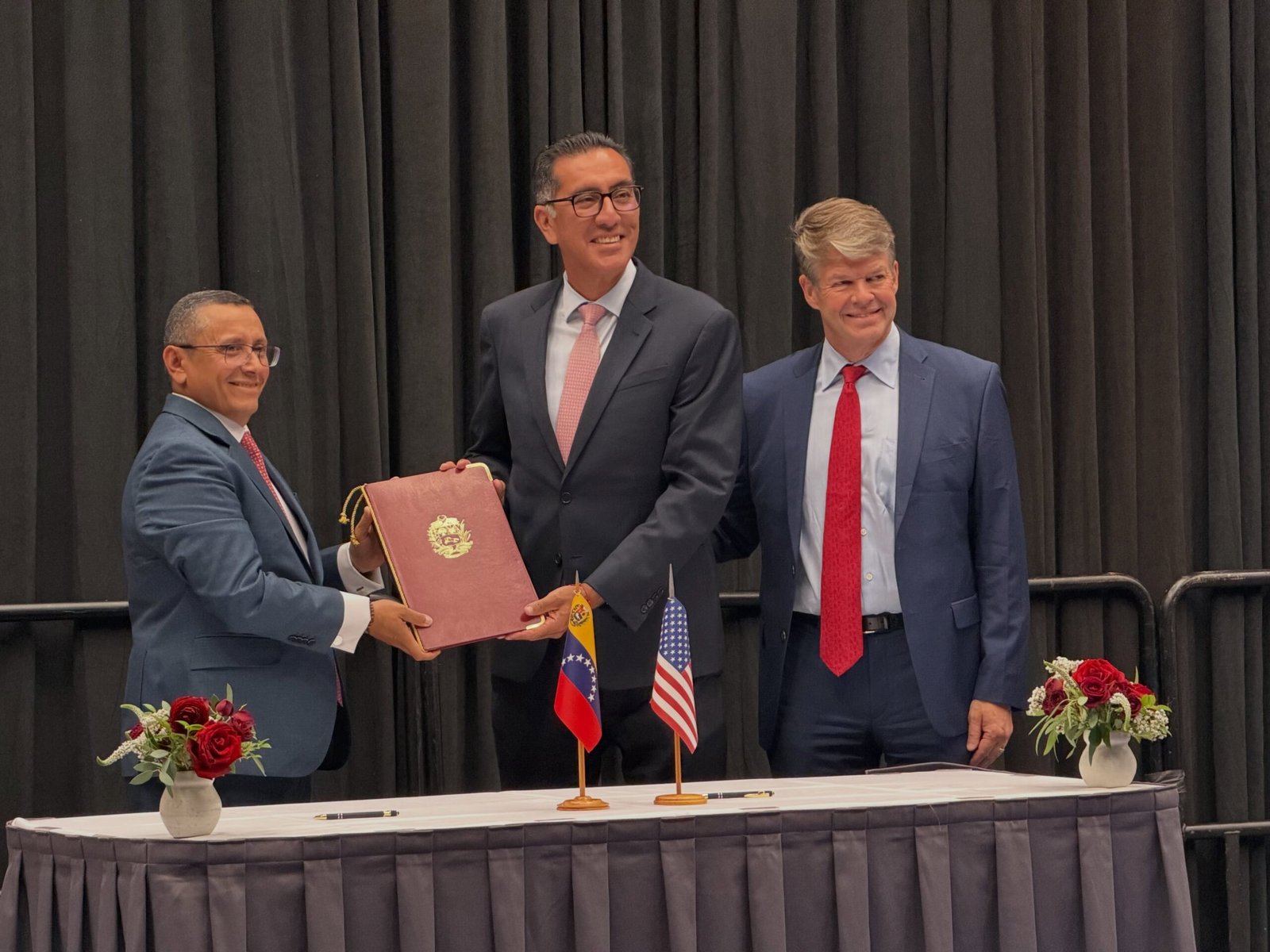
In context, Delcy Rodríguez, acting president, promoted the reform following her meeting in Caracas with the United States Secretary of the Interior, Doug Burgum, requesting parliamentary speed for an “attractive” legal framework to replace the 1999 regulations. This initiative responds to new U.S. licenses for the extraction and commercialization of gold and other mining resources.
What has been approved so far lays the groundwork for a centralized model, open to the private sector, which seeks to optimize the regulatory and operational framework for Venezuelan mining that has been the subject of public debate in recent years. This is not only a technical advance in the regulation of the sector, but a political move that reveals how the State seeks to reorganize power, revenue, and governance of the mining territory in the new institutional cycle of the Government.