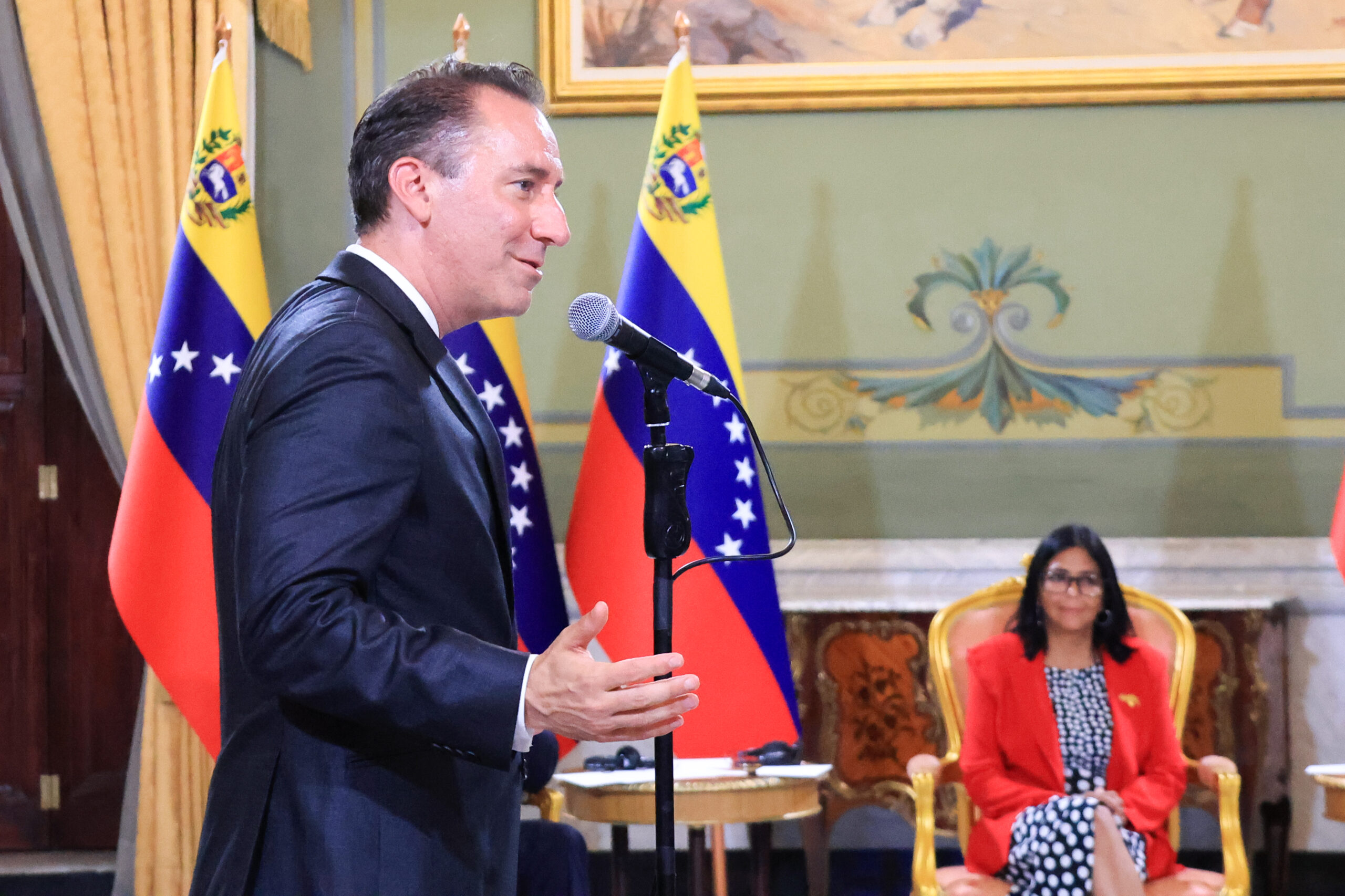
This is the fifth arrival of a senior U.S. official to the country in 2026, following envoys from Security, Energy, and Defense. / Photo: Presidential Press Office
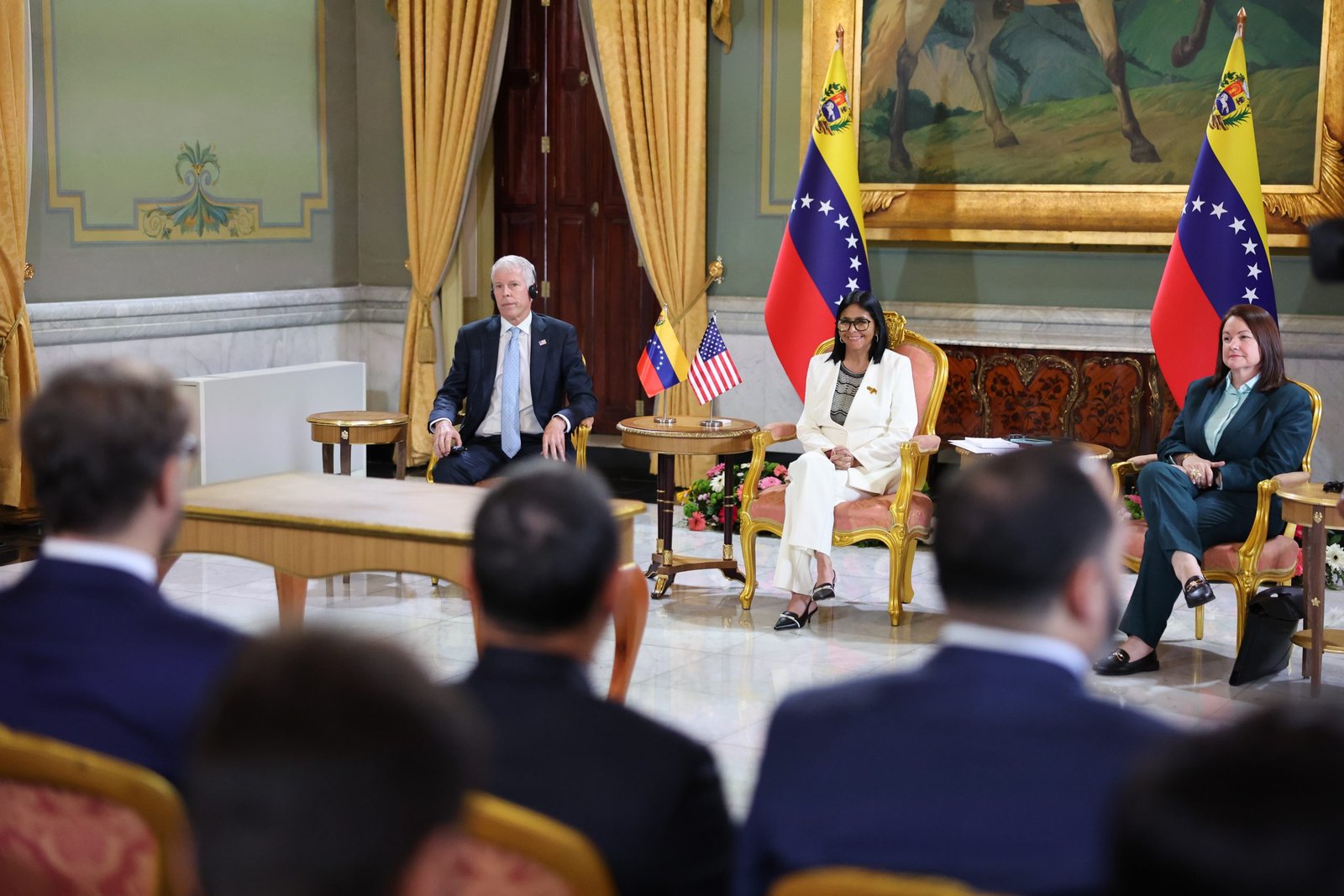
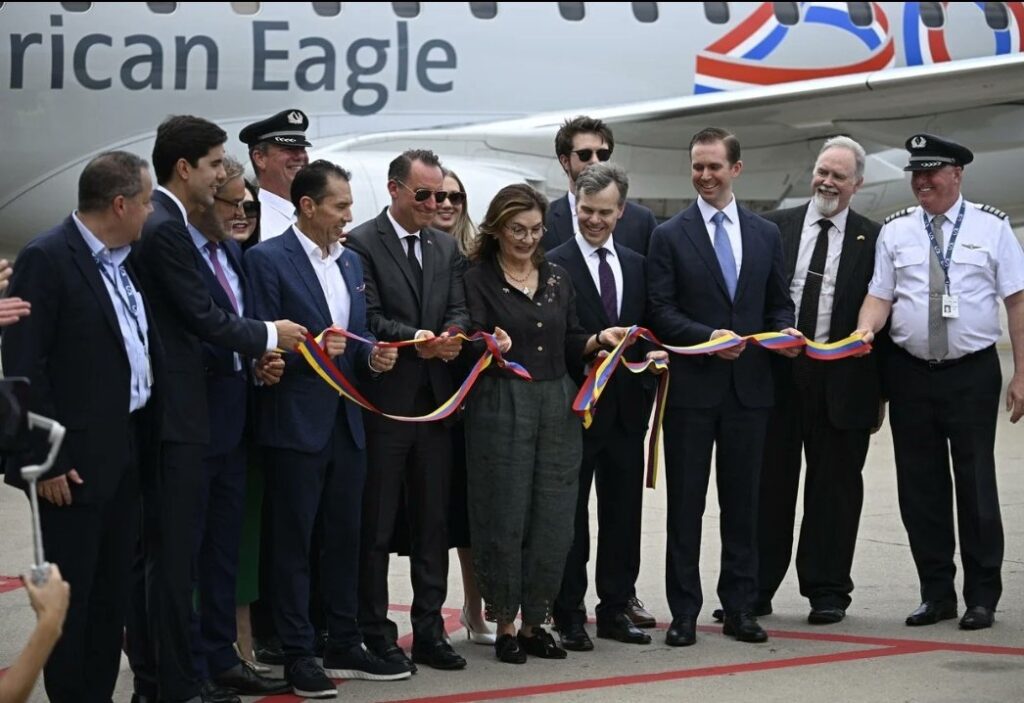
Guacamaya, May 1, 2026. The director of the White House National Energy Dominance Council, Jarrod Agen, arrived in Caracas this Thursday on the historic first direct commercial flight from the United States in seven years. Agen, received by acting President Delcy Rodríguez at the Miraflores Palace, marks the fifth visit by a senior U.S. official so far in 2026.
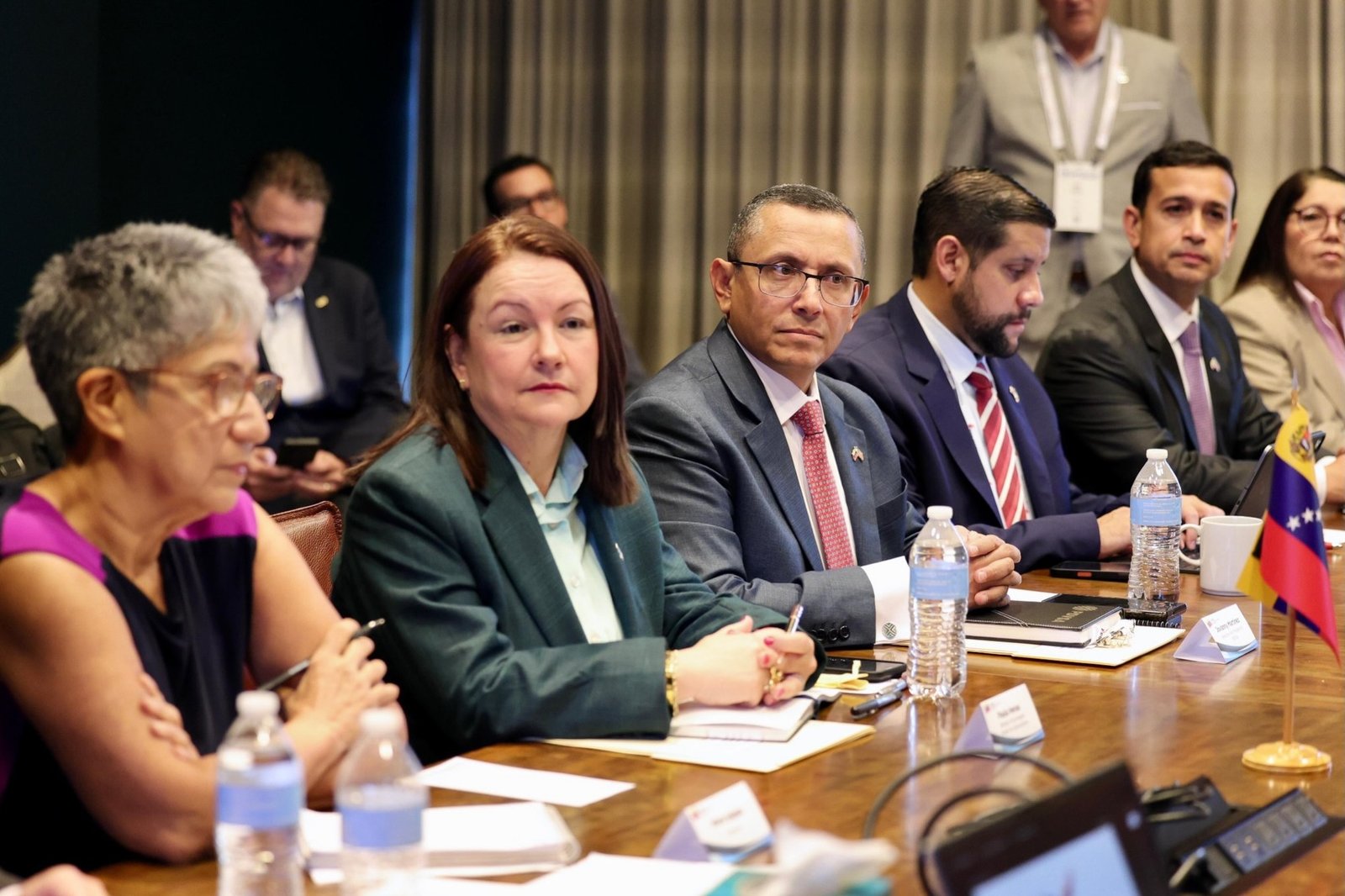
The White House adviser led a significant delegation for an agenda that will include meetings with representatives from Hunt Oil, Repsol, Eni, Halliburton, and officials from Venezuela’s Petroquímica. Also traveling on the same AA901 flight from Miami was Félix Plasencia, Venezuela’s diplomatic envoy to the United States, who has been a key figure in bilateral coordination.
Flight Resumption and Official Welcome
The landing of the Miami-Caracas flight at Maiquetía not only breaks an air isolation imposed by sanctions and previous tensions but also opens the door to more commercial routes, boosting tourism, trade, and family mobility. Transport Minister Jacqueline Farías celebrated the event at the airport: “Venezuela is ready to receive more airlines, new routes, and new paths.”
Agen celebrated: “What you are seeing today is action being taken. We are moving forward to improve.” White House spokesperson Taylor Rogers had previously set an optimistic tone: “The United States and Venezuela are restoring our partnership, rebuilding economic ties, and facilitating unprecedented investments that will benefit both the American and Venezuelan people.”
Energy Agenda: Memorandums and Key Meetings
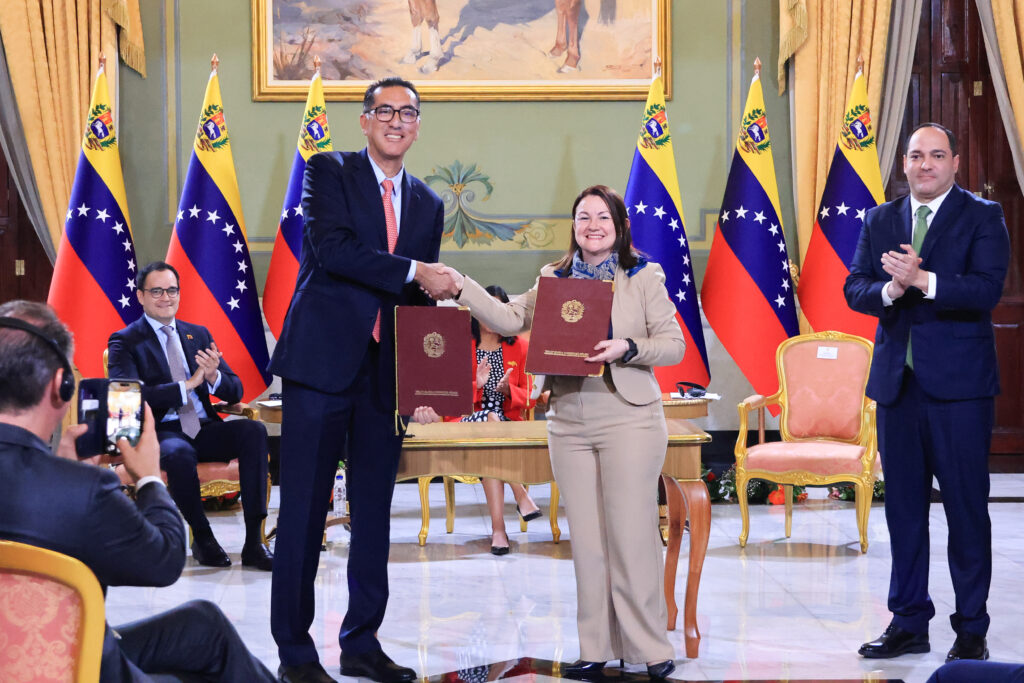
The delegation led by Agen is focused on signing memorandums of understanding to reactivate oil and mining fields closed under previous government controls. These agreements do not promise an immediate production boom, but they lay the groundwork to increase global crude supply in the coming years, alleviating bottlenecks in global energy markets.
Alex Fitzsimmons, acting deputy secretary of energy for the U.S., stressed in Washington that “oil production in Venezuela has already begun to increase.” However, he warned that rebuilding electrical and industrial infrastructure under Rodríguez’s transitional government is a “long-term project that requires clear rules and competitive processes.”
The emphasis on mining—gold, aluminum, and coal—responds to internal pressure in the U.S. to stabilize gasoline prices, currently at $4.23 per gallon, a fact that positions Venezuela as a strategic supplier.
Recent Agreements: Shell, Eni, BP, and Repsol
This week has been significant regarding energy alliances of the Venezuelan state, reinforcing the momentum of Agen’s visit, with firms like Repsol and Eni present in his delegation. These advances, facilitated by U.S. licenses, are directly linked to Agen’s agenda and the new post-Maduro political climate, accelerating the return of energy investments.
On Monday, it was announced that a team from British Shell is already occupying an entire floor at Vepica’s headquarters (Monagas) to promote the comprehensive development of production units in the Carito and Pirital fields; an agreement signed in March during the visit of Doug Burgum, U.S. Secretary of the Interior, aimed at promoting offshore gas production and onshore oil and gas.
Similarly, on Tuesday, Italy’s Eni reached an agreement with PDVSA to boost heavy crude production by reactivating the Junín-V oil field in the Orinoco Oil Belt. Claudio Descalzi, CEO of the Italian energy company, stated his intention is “to define an investment plan before the end of the year.” Last year, it produced 64,000 bpd and holds stakes in other projects like Cardón IV, together with Repsol.
Also on Wednesday, British BP signed a memorandum with Hydrocarbons Minister Paula Henao to explore gas in Deltana and Loran-Manatee. Delcy Rodríguez celebrated BP’s return as “a clear sign of the future we want.” William Lin, BP’s vice president of gas, celebrated “being able to help Venezuela develop the Loran field,” with a permanent office already opened.
Additionally, this Thursday, the projection of an increase of more than 50% in crude production in Venezuela during 2026, and tripling it in the medium term, was reiterated. In addition to the joint project at Cardón IV with Eni, Repsol may also regain operational control of the Petroquiriquire asset. Meanwhile, this week it receives Venezuelan crude as payment for hydrocarbon production.
The Context: Legal Reforms and Sanctions Relief
Under pressure from Washington, Rodríguez’s government has pushed through two important reforms: to the Organic Hydrocarbons Law, which eliminates special charges and authorizes direct marketing to attract domestic and foreign private entities; and to the Organic Mining Law to promote responsible extraction, reduce state participation, and prioritize environmental sustainability and competitiveness.
These transformations have been enabled by progressive and conditional relief from U.S. sanctions. In January, it lifted initial restrictions on the oil sector; within that framework, it issued general and individual licenses; and in April, it freed up the banking sector to facilitate transactions. The context aligns Venezuela with international standards, aiming to attract fresh capital and position itself as an energy hub in the hemisphere.