
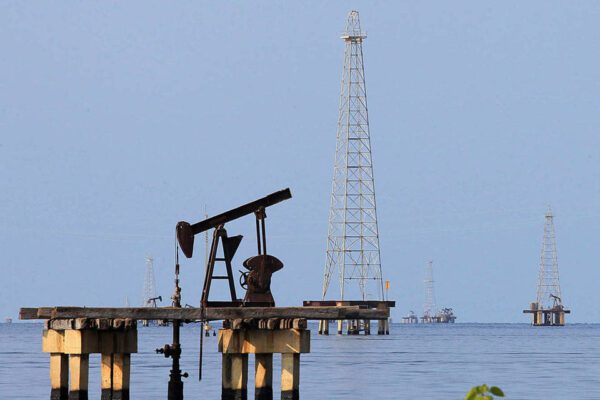
What measures have been announced in Venezuela’s oil-producing states?
The attraction of investment coexists with urgent needs in infrastructure, public services, and operational capacity in the country’s main energy-producing states.


The attraction of investment coexists with urgent needs in infrastructure, public services, and operational capacity in the country’s main energy-producing states.
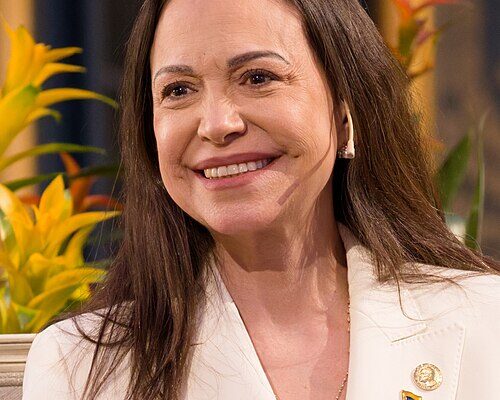
Opposition leader María Corina Machado spoke out about the situation of political prisoners in Venezuela, where dozens of family members have spent nights outside detention centers waiting for news or new releases. In statements to the press, Machado stressed that advancing toward an effective political transition requires dismantling the Chavista repressive structure and closing all torture centers in the country.
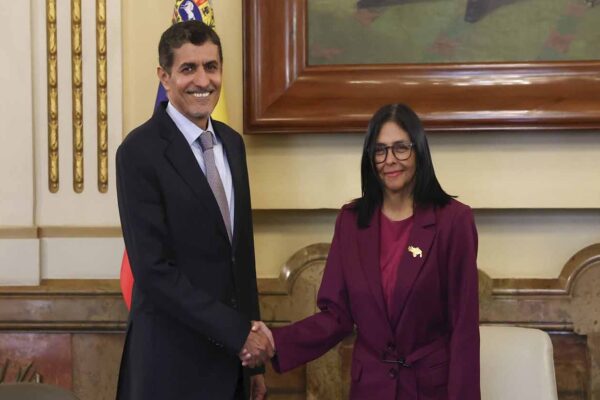
Abu Dhabi’s state oil company, ADNOC, is evaluating a potential entry into Venezuela’s energy industry at a moment of profound political and economic reconfiguration in the country. The interest, revealed by Bloomberg News, coincides with an intense series of high-level diplomatic contacts between the United Arab Emirates (UAE) and Venezuela, as well as with the first announcements by the interim government regarding exports of liquefied petroleum gas (LPG). The move is unfolding under the close scrutiny of the United States, a key actor in any future architecture for energy investment in Venezuela.
The U.S. military intervention in Venezuela and the capture of Nicolás Maduro have carried enormous political and symbolic weight. However, for major Wall Street players, the episode has not, for now, altered the core dynamics of global markets. BlackRock and JPMorgan agree that the Venezuelan case fits into a more fragmented world, but without the immediate capacity to generate systemic financial contagion.
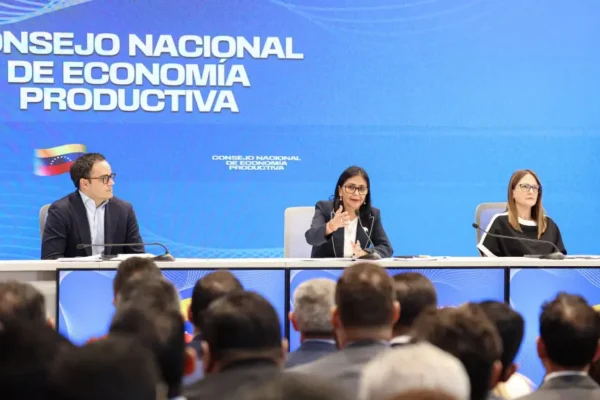
The acting president led the 2026 National Council of the Productive Economy, where she reaffirmed the economic program launched in 2018, announced the channeling of oil revenues into the foreign-exchange market through private banks, and formalized the creation of two sovereign funds aimed at social protection and infrastructure, amid sustained economic growth and an international financial realignment.
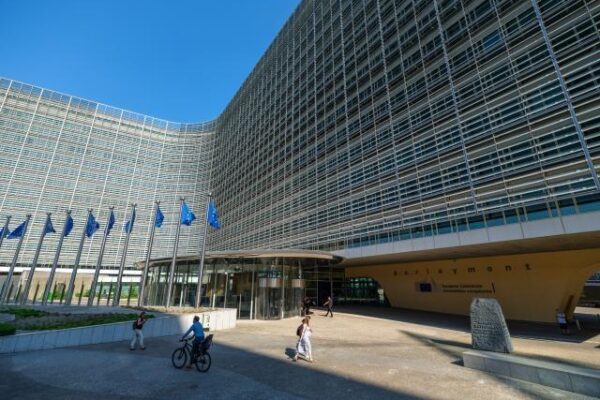
The European Union’s High Representative for Foreign Affairs, Kaja Kallas, highlighted this Friday the release of European citizens detained in Venezuela, describing it as a relief for their families and the result of persistent diplomacy. The release of citizens from several countries comes amid controversy over the actual number of people freed and coordinated repatriation efforts between European governments and Caracas.
The meeting between John Ratcliffe, director of the CIA, and Venezuela’s interim president Delcy Rodríguez has become the clearest signal so far of the Trump administration’s strategy: cooperation on security and intelligence and support for a managed transition that prioritizes stability following the capture of Nicolás Maduro.
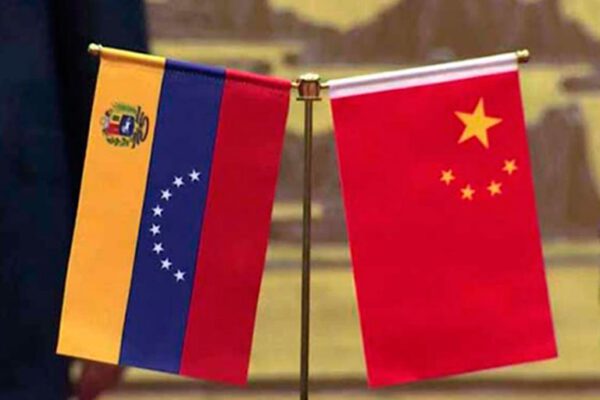
Chinese government officials and representatives of the country’s main state-owned banks have initiated contacts with both Venezuelan authorities and U.S. officials to secure repayment of billions of dollars in loans granted to Caracas, in a context marked by the capture of Nicolás Maduro by U.S. forces and the political reordering underway in Venezuela, according to Bloomberg.
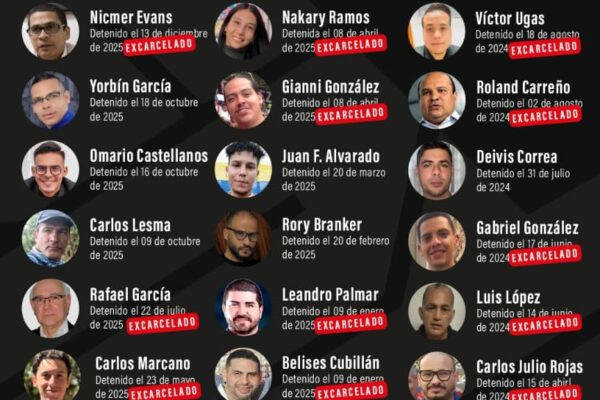
The National Union of Press Workers (SNTP) and the National College of Journalists (CNP) of Venezuela confirmed the release of fourteen journalists and media workers who had been detained under different conditions and for varying periods of time, some for nearly four years.
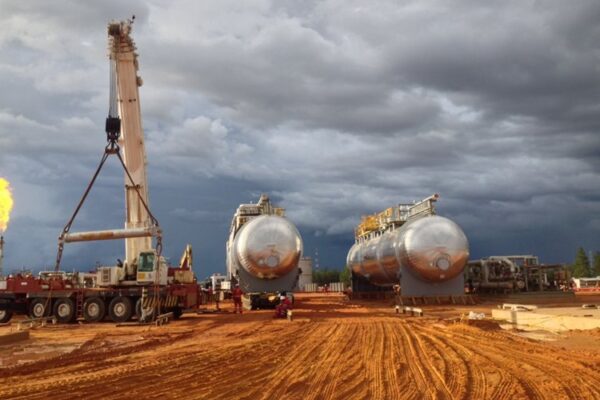
Venezuela in the new international context: control of oil, russian assets, U.S. pressure, initial IMF moves, and the struggle over Citgo
Guacamaya, January 13, 2026.
The country is going through one of the most complex and decisive moments in its recent history. In a context marked by the capture of Nicolás Maduro, the reconfiguration of control over its oil resources, the clash of interests between the United States and Russia, and the first moves by multilateral financial institutions, Venezuela has once again become a focal point of geopolitical, energy, and financial dispute. Reports by TASS, Reuters, and Bloomberg outline a broad panorama ranging from Russia’s defense of its oil assets to the sharp drop in country risk and the debate over Venezuela’s potential reintegration into the international financial system.
Russia reaffirms state ownership of its oil assets in Venezuela
The Russian company Roszarubezhneft, owned by a unit of Russia’s Ministry of Economic Development, stated on Tuesday that all of its assets in Venezuela belong to the Russian state and that it will continue to honor its commitments to international partners in the country, according to TASS.
The statement comes after U.S. President Donald Trump announced that Washington would export all crude oil extracted from Venezuela as part of a strategy to “restore political stability” in the country.
According to a statement cited by TASS, Roszarubezhneft stressed that its assets in Venezuela “are the property of the Russian state,” in accordance with Venezuelan law, international law, and existing bilateral agreements between Moscow and Caracas. The company said it would continue to strictly fulfill its obligations “in close coordination with its international partners,” focusing on the sustainable development of joint oil production projects, infrastructure, and an effective response to emerging challenges.
Roszarubezhneft also expressed its intention to continue developing its assets together with the Venezuelan side, carry out joint projects, and expand industrial and technological cooperation based on principles of equality, mutual respect for property, and investment protection.
The company was established in 2020 and shortly thereafter acquired Venezuelan assets from Rosneft, Russia’s state oil company, after Washington imposed sanctions on two of Rosneft’s subsidiaries for marketing Venezuelan crude.
A portion of Rosneft’s ownership is currently managed by the government of Qatar, a key country in the mediation between Caracas and Washington. In the past, Qatar also held a direct stake in Citgo.
IMF, World Bank, and IDB assess Venezuela’s situation
At the same time, the executive boards of the International Monetary Fund (IMF) and the World Bank (WB) held unscheduled meetings last week to assess Venezuela’s current situation, according to sources cited by Bloomberg. According to those sources, the country will require significant financial assistance to revive an economy that has been isolated for years.
The discussions, which were private, had not been included in official calendars. In addition, the Board of the Inter-American Development Bank (IDB) also met to discuss Venezuela, two sources told Bloomberg.
These meetings preceded a report indicating that U.S. Treasury Secretary Scott Bessent would meet with the heads of the IMF and the World Bank to discuss the restoration of relations between multilateral financial institutions and Venezuela. Reuters reported that those meetings were expected to take place this week, citing an interview with Bessent.
Bloomberg notes that in 2007, under the government of Hugo Chávez, Venezuela threatened to withdraw from the IMF and the World Bank. The country’s isolation deepened later under Nicolás Maduro. The IMF has not conducted its standard Article IV consultation with Venezuela since 2004, and in 2018 the Fund’s executive board issued a censure against the country for failing to provide economic information.
According to sources familiar with the discussions cited by Bloomberg, the informal meetings at the IMF and the World Bank focused on Venezuela’s economic developments and highlighted the lack of official data. An IMF spokesperson confirmed that Fund staff periodically engage with the executive board on country-specific matters but made no announcement regarding any specific meeting. The World Bank declined to comment, while the IDB said its board regularly discusses relevant regional developments.
Special drawing rights and the possibility of financing
In this context, Scott Bessent told Reuters that Venezuela could use around $5 billion of its IMF reserve assets, known as Special Drawing Rights (SDRs), as part of a package to reform its economy.
Under IMF rules, the Fund’s 191 member countries receive SDR allocations broadly in line with their relative positions in the global economy. During the 2020 pandemic, Nicolás Maduro asked IMF Managing Director Kristalina Georgieva to help Venezuela strengthen its health system, but the country was unable to access its SDRs. SDRs are an international reserve asset that can be converted into U.S. dollars, euros, yen, pounds sterling, and Chinese yuan.
Historic drop in country risk
Bloomberg also reported a sharp decline in Venezuela’s country risk, measured by the Emerging Markets Bond Index (EMBI). The indicator fell by 3,701 points, from 12,674 on January 2 to 8,973 at the close of Friday, January 9.
According to the agency, following the capture of Nicolás Maduro and Cilia Flores, investors adopted a more favorable stance toward Venezuelan bonds in default. Bloomberg noted that the trend had already been taking shape since 2025, when Venezuela’s sovereign spread fell significantly, likely driven by early bets on a political shift. Venezuela closed 2024 with a country risk of 23,630 points and ended 2025 at around 12,741.
However, the gap with other emerging economies remains enormous. Bolivia, the second-highest-risk country in the region, has an EMBI of 678 points, representing a difference of 11,996 points compared with Venezuela.
The EMBI reflects the extra yield investors demand on a country’s sovereign bonds relative to U.S. Treasury bonds, which are considered risk-free. The higher the EMBI, the greater the perceived risk and the more expensive it is for a country to access international financing.
Legal battle over Citgo in U.S. courts
On the legal front, Reuters reported that parties representing Venezuela in a court-ordered auction of the parent company of Citgo Petroleum asked a U.S. appeals court to overturn a ruling by a Delaware judge ordering the sale of the shares to a subsidiary of Elliott Investment Management.
The board overseeing Citgo said the auction was tainted by conflicts of interest and legal errors, undermining the neutrality required in the process and reducing Citgo’s value. The board said it would continue to pursue legal defenses to protect the company, according to a statement cited by Reuters.
PDVSA reverses cuts as exports resume under U.S. supervision
In the energy sector, Reuters reported that state oil company PDVSA has begun reversing production cuts imposed under a strict U.S. oil embargo, as crude exports resume under Washington’s supervision.
After the blockade imposed in December, Venezuela’s oil exports fell to nearly zero, and only U.S. oil major Chevron continued exporting crude from its joint ventures with PDVSA under a U.S. license.
The embargo left millions of barrels stuck in tanks and vessels onshore. As storage filled up, PDVSA was forced to shut wells and order production cuts at joint ventures. The company is now instructing partners to resume production after a third tanker departed Venezuela’s coast on Tuesday.
Two supertankers left Venezuelan waters late Monday carrying about 1.8 million barrels each, in what could be the first shipments under a 50-million-barrel supply agreement between Caracas and Washington, following the capture of Maduro.
Total crude output fell to about 880,000 barrels per day, down from 1.16 million bpd at the end of November. In the Orinoco Belt, production declined to around 410,000 bpd, compared with 675,000 bpd previously. PDVSA has yet to formally confirm the supply agreement and has been working to avoid deeper production cuts, which could be difficult to reverse given the deterioration of facilities due to lack of maintenance.
An open and uncertain outlook
Reports from TASS, Bloomberg, and Reuters depict a Venezuela positioned at the intersection of geopolitical, energy, and financial interests, with Russia defending its strategic assets, the United States supervising crude exports, and multilateral institutions beginning to assess a possible return of the country to the international financial system. The outcome of these dynamics will shape not only Venezuela’s economic future, but also its place in the new global order.