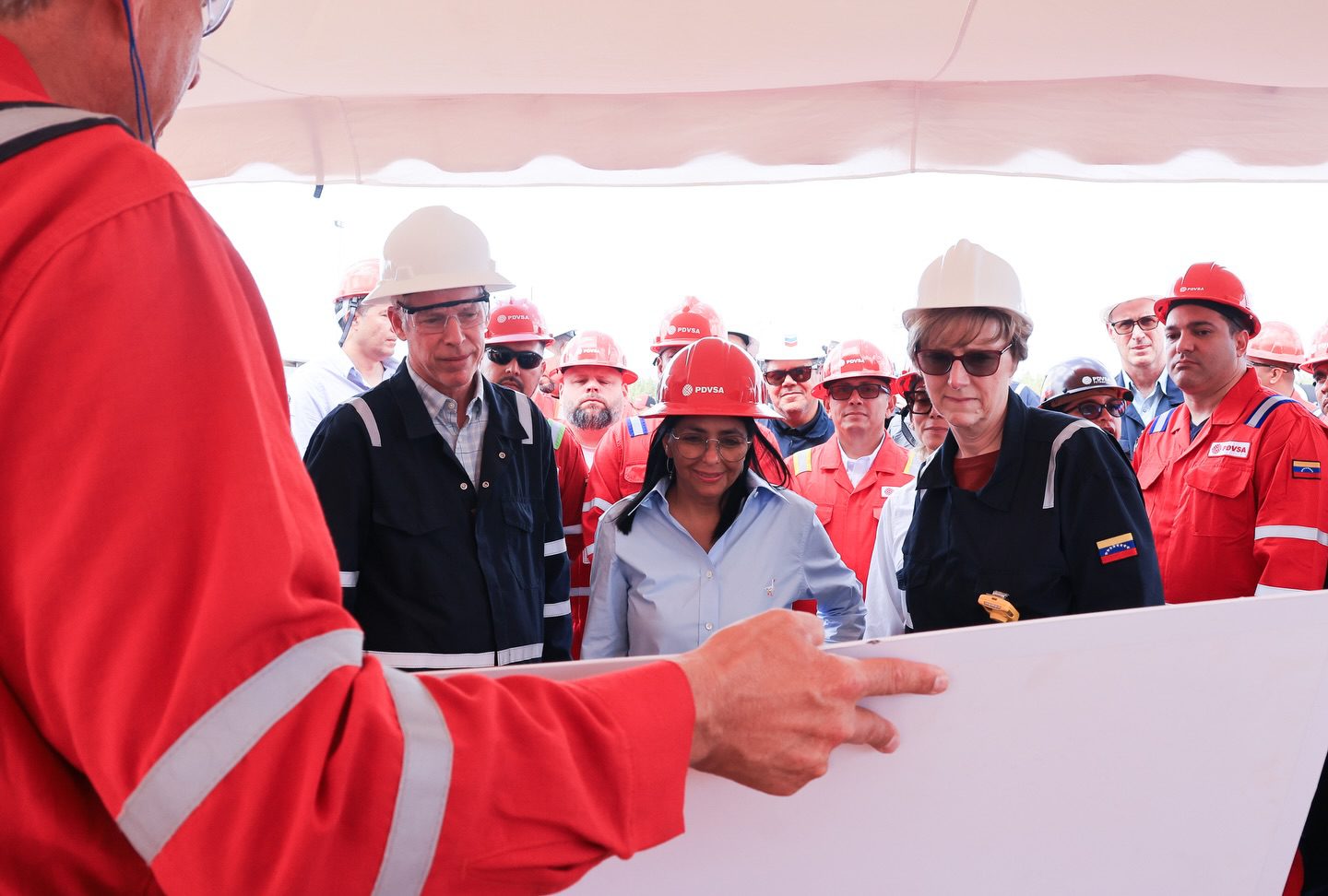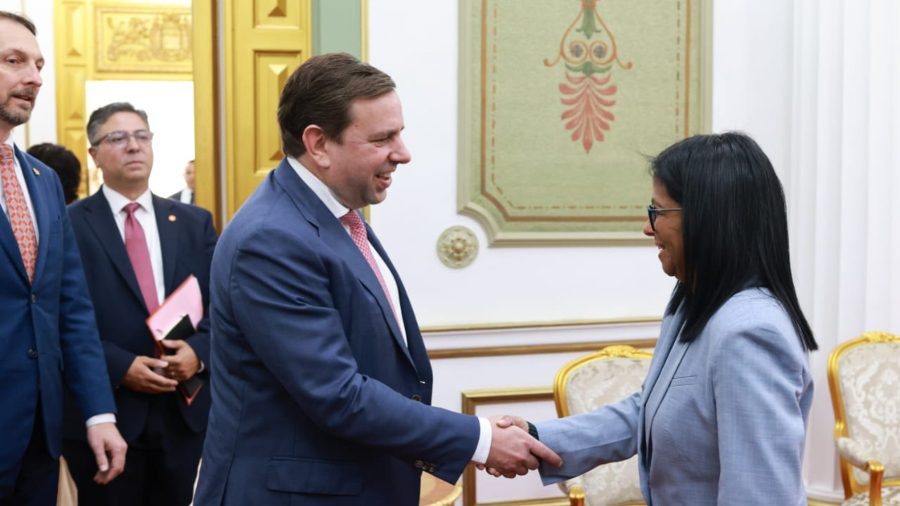
Venezuela is undergoing a profound process of redefining its oil industry and its international economic integration. Pictured: Venezuela’s interim president, Delcy Rodríguez, receives a visit from Shell executives. Photograph: X/ @AlMomento_M.
Guacamaya, February 27, 2026. Venezuela is experiencing a rapid reconfiguration of its energy sector and international economic relations, marked by the easing of sanctions, the return of major oil companies, the review of contracts signed during years of isolation, and new negotiations with Washington and Europe.
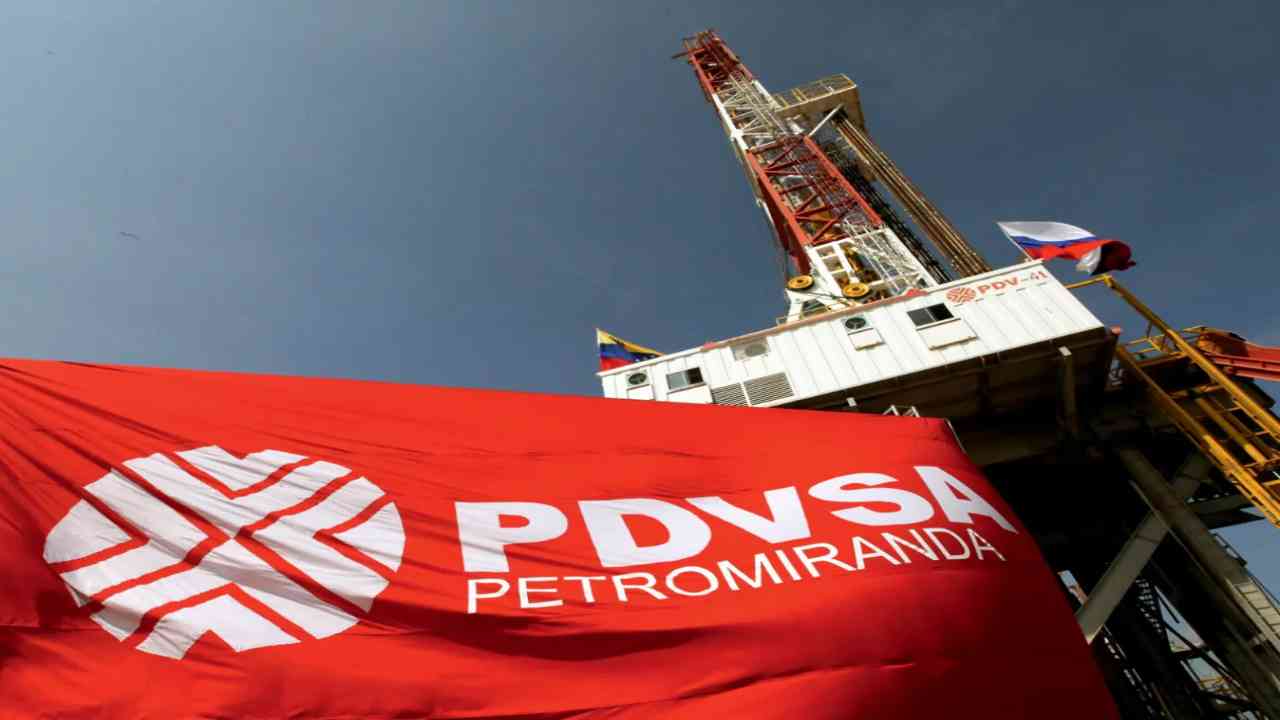
While the interim government led by Delcy Rodríguez seeks to attract investment and reactivate production, Petróleos de Venezuela S.A. (PDVSA) continues operations amidst audits and regulatory changes.
Reports from Reuters and other international news agencies reveal a complex scenario where the interests of US, European, Asian, and regional companies converge, further driven by an energy agreement with the administration of Donald Trump that could redefine the country’s role in the global oil market.
Oil Production Contracts Under International Review
Multiple production sharing contracts and joint ventures are under review by the Ministry of Hydrocarbons and the US Office of Foreign Assets Control (OFAC), according to industry sources. The focus is reportedly on compliance with investment and production targets, as well as adherence to US sanctions.
This process, which should be completed within 180 days following the approval of the Hydrocarbons Law Reform, could lead to the suspension of several production agreements. Primarily, companies with Chinese, US, South American, and national capital that signed “Productive Participation Contracts” under the 2020 Anti-Blockade Law scheme could be at risk.
According to sources consulted by Reuters, 19 of these contracts have already been suspended, although hydrocarbon production has reportedly not yet been affected. The Venezuelan government has denied this claim.
A recent Reuters article mentions gas production sharing contracts, but only one company operates under this model: Proven Reserves. It signed for five blocks, all offshore and greenfield (undeveloped): Golfo de Paria Oeste, Golfo de Paria Noroeste, Punta Pescador, Boca de Serpiente, and Río Caribe.
Many of these companies are little-known or were created specifically for oil production in Venezuela under opaque schemes protected by the Anti-Blockade Law. North American Blue Energy Partners, the largest, has produced over 140,000 barrels per day, while others have struggled to achieve the expected investment.
ExxonMobil, Shell, and BP: Oil Giants Approach Venezuela
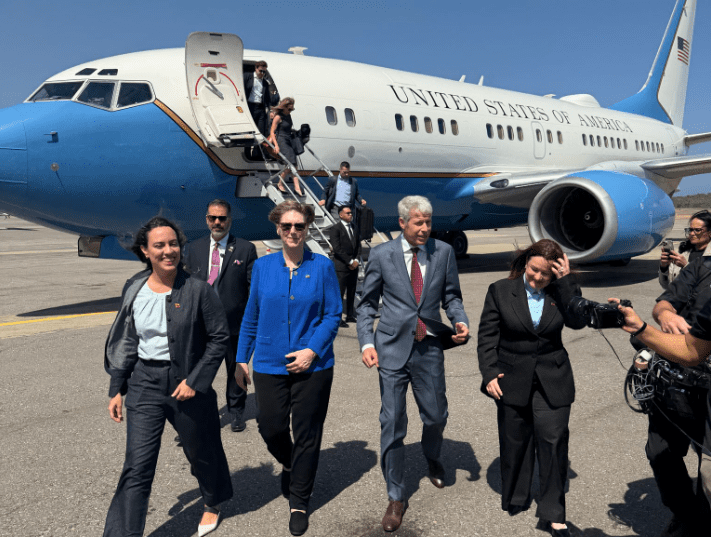
ExxonMobil’s Senior Vice President, Jack Williams, announced that the corporation will send a technical mission to Venezuela in the coming weeks. The assets of the largest US energy company were nationalized twice, leading to its exit from the country in 2007.
On February 26, Venezuela’s interim president, Delcy Rodríguez, held a meeting at the Miraflores Palace with senior Shell executives to evaluate alliances aimed at reactivating oil wells and developing gas fields.
Another British multinational energy company, BP, along with Shell, has authorization from OFAC to advance business with PDVSA. Both have expressed their intention to develop the natural gas fields that cross the maritime border between Venezuela and Trinidad and Tobago.
This process had deteriorated following diplomatic tensions with Prime Minister Kamla Persad-Bissessar, whom Caracas accused of allowing a US military presence in Port of Spain. However, the situation changed after the military incursion into Venezuela and the arrest of Maduro, opening the door to potential bilateral dialogue driven by these companies and accompanied by Washington’s interest.
US Scheme Boosts Exports and Multi-Million Dollar Sales
Venezuelan oil sales under the energy agreement between Caracas and Washington could reach $2 billion by the end of February, according to US Secretary of Energy Chris Wright.
It is estimated that nearly 40 million barrels will have been sold at an approximate price of $50 per barrel, with increasing shipments to Asia and Europe. Additionally, independent Chinese refineries—previously forced to buy sanctioned crude—can now purchase Venezuelan oil on the open market.
Exports to the United States increased significantly, rising from 99,000 barrels per day in December to about 375,000 in February, according to maritime monitoring data.
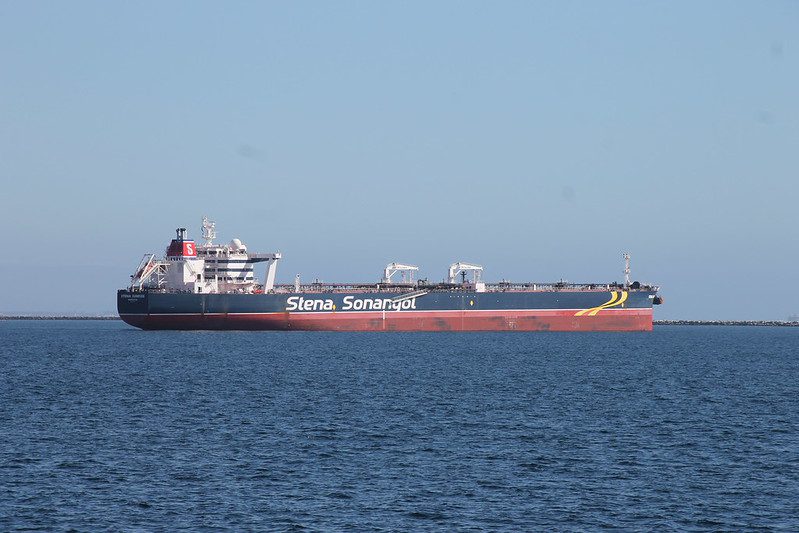
Volumes fell by 6.5% in February compared to January, or 19% compared to the same month last year, due to a combination of factors. Trading companies are adapting to the new framework of sanctions and licenses; they have been unable to charter Very Large Crude Carriers (VLCCs), and the largest market of recent years—China—has been lost.
Aramco, Chevron, and US Refiners Reactivate Venezuelan Crude Purchases
The US trading division of Saudi Aramco purchased a cargo of Boscán heavy crude for delivery in March, its first such purchase from Venezuela.
The cargo was sold by Chevron and will be processed by Motiva Enterprises, owner of the largest US refinery in Port Arthur, Texas. Aramco became Motiva’s exclusive supplier after acquiring its trading division in 2023.
Other US refineries—such as Valero Energy, Phillips 66, and Citgo Petroleum—have also resumed purchases.
Likewise, trading firms Trafigura and Vitol are exporting Venezuelan crude under US licenses, as part of an agreement to market up to 50 million barrels.
Eni Can Collect Debt with Oil and Increase Production
Eni’s CEO, Claudio Descalzi, reported that Venezuela will be able to pay for gas received with oil thanks to the easing of sanctions. The country owes the company around $3 billion.
The gas comes mainly from the offshore Campo Perla, which is key for national electricity generation. It is operated in a 50-50 partnership with Spain’s Repsol.
Eni also participates in the Corocoro oil field and is evaluating increasing production through partnerships with US companies. Part of the gas could be exported to Europe in the future as an alternative to Russian supply.
Following the start of the Ukraine war in 2022, the European Union has sought to reduce its dependence on Russian hydrocarbons to ensure its energy security and limit the use of gas as a tool for geopolitical pressure.
In this context, Venezuela emerges as a potential alternative supplier. Gas extracted from the offshore Perla field, until now mainly destined for domestic electricity generation, could be redirected to European markets. This flow would not only help diversify the continent’s supply sources but could also reduce the impact of sanctions and restrictions on Russia, offering companies like Eni a strategic advantage in terms of availability and price.
However, the operation faces logistical and financial challenges. The infrastructure for liquefying and transporting Venezuelan gas to Europe requires investment and international coordination, in a context where US sanctions remain in place on several energy projects in the South American country. The recent easing of licenses allows for the participation of Western companies, but political and legal stability in Venezuela will be decisive in ensuring a reliable gas flow.
Geopolitically, this development reinforces the relevance of Latin America in global energy security, and particularly of Venezuela as a potentially capable actor offering alternative supplies in the face of geopolitical crises in Eurasia. Furthermore, it positions the Caribbean nation as a strategic player on the European energy chessboard, where competition for reliable natural gas sources has intensified due to the war in Ukraine and the reconfiguration of alliances between the US, the EU, and Russia.
Nevertheless, this could align with Washington’s agenda, which has already sought to leverage Venezuela’s energy potential to pressure Russia. One example was the tariff agreement with India, where it was arranged that the Asian country, which has increased its dependence on sanctioned Russian oil in recent years, should seek other options. In this regard, India has already begun acquiring Venezuelan oil to diversify its sources, a measure promoted by the Trump administration to push for negotiations between Moscow and Kyiv.
A Country in Energy and Geopolitical Reconfiguration
The set of decisions—contract reviews, sanction relaxations, the return of international companies, diplomatic tensions, and internal reforms—paints a picture of profound reconfiguration for Venezuela.
As the country attempts to recover its productive capacity and attract foreign capital, the success of this process will depend on political, legal, and economic factors, both domestically and internationally.