
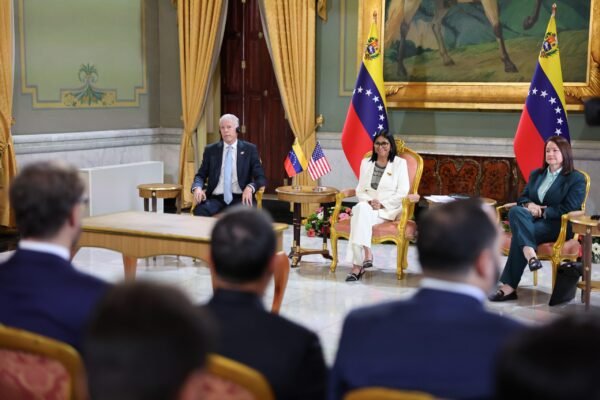
Oil Companies Join a New Wave of Contracts in Venezuela During Chris Wright’s Visit
Chevron announced, during the visit of Secretary of Energy Chris Wright, an investment of over $7 billion to more than double its production in the country.


Chevron announced, during the visit of Secretary of Energy Chris Wright, an investment of over $7 billion to more than double its production in the country.
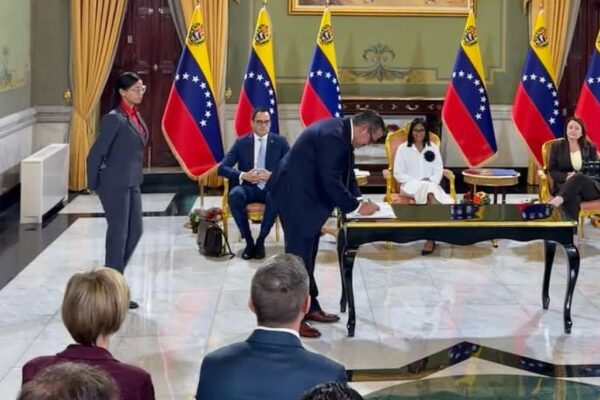
Energy giants Chevron and Shell are strategically positioning themselves to maximize opportunities in Venezuela following a largely unprecedented asset swap involving government participation.

Following the partial easing of U.S. energy sanctions and the political reconfiguration that took place in January, Venezuela is beginning to receive a new wave of international investment in its hydrocarbons sector. Companies such as Chevron, Shell, Repsol and Eni are advancing agreements to expand oil and gas production in the country, while the global energy market tightens amid the crisis in the Middle East and crude prices rising above $100 per barrel.
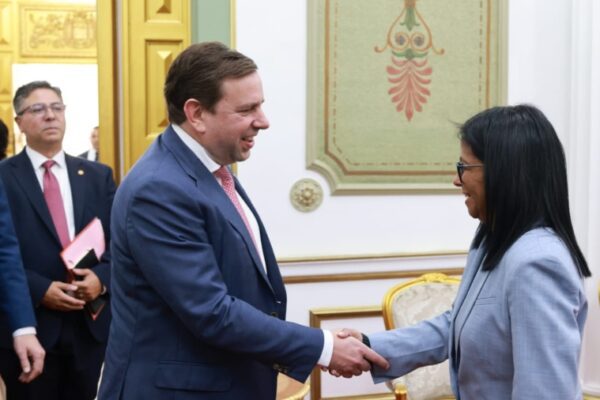
Venezuela is experiencing a rapid reconfiguration of its energy sector and international economic relations, marked by the easing of sanctions, the return of major oil companies, the review of contracts signed during years of isolation, and new negotiations with Washington and Europe.
Venezuela’s oil industry is undergoing a period of reconfiguration marked by a partial increase in domestic refining, new U.S. licenses that are energizing exports and gas projects, the return of supertankers to its terminals, expectations of foreign investment, India’s presence in light of the agreement with the United States, challenges stemming from past debts, the IMF’s interest, and prospects for economic reactivation in the country’s oil-producing regions.
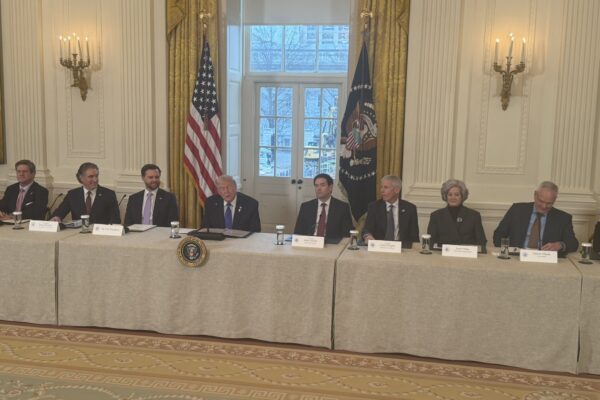
U.S. President Donald Trump led a high-level meeting at the White House on Thursday with leading executives from the international energy sector to address the future of the commercialization, exploitation, and control of Venezuelan oil, in a context marked by U.S. intervention in Venezuela, the installation of interim authorities in Caracas, and the reshaping of the hemispheric energy map.

The Venezuelan economy shows a mixed performance in 2025: GDP grew by 7.7% in the first half of the year, driven by oil production, which reached its highest levels since 2019, and the government implemented increases in public sector income. However, inflation, the devaluation of the bolivar, and U.S. oil sanctions threaten to undermine these advances, according to a report by the United Nations Development Programme (UNDP).
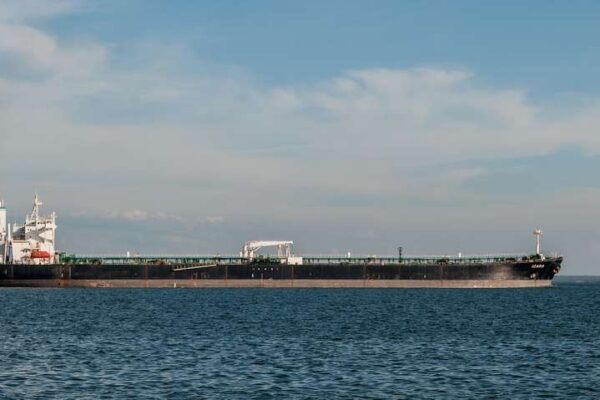
Venezuela’s exports rose to over 966,000 barrels per day (bpd) in August, a nine-month high, according to shipping data quoted by Reuters.
The Canopus Voyager, flagged in the Bahamas, has initiated the resumption of Venezuelan oil shipments to the United States under the current sanctions framework, with a limited load scheduled for August.
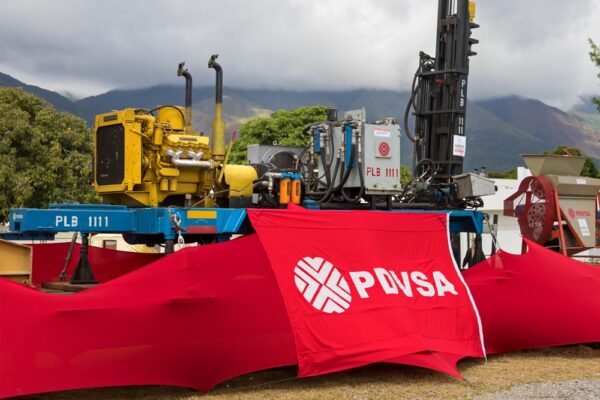
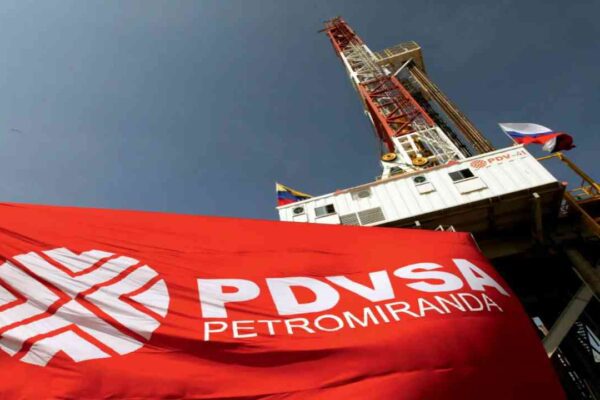
PDVSA sign on a water well drilling platform during FICTEC 2018, an International Science and Technology Fair. Photo: @Testing /…