The debate over labor income arrives amid an economy showing signs of restructuring, but with wages that remain lagging behind inflation and devaluation.
Guacamaya, April 6, 2026. Just under a month before the upcoming May 1st, Workers’ Day, expectations are growing regarding possible adjustments to labor income in Venezuela. To date, beyond a symbolic increase recently reported in state bonuses, there have been no significant announcements in favor of the working class, despite positive projections for the Venezuelan economy in 2026.
The so-called Comprehensive Minimum Income (IMI) for the public sector stands at 190 dollars, which includes 150 dollars from the Bonus Against the Economic War and 40 dollars from the Food Bonus, paid at the exchange rate of the Central Bank of Venezuela (BCV). The last change occurred in mid-March, with a 30-dollar increase in the so-called “War Bonus,” previously set at 120 dollars.
However, this form of bonus-based remuneration is not subject to the same contractual conditions as a salary, as it does not affect social benefits or profit sharing. Precisely, the legal base salary has remained at a minimum of 130 bolivars (equivalent to 0.27 dollars at the official rate) since March 2022, with no subsequent increases.
Added to this is another difficulty faced by workers: the persistent exchange rate gap between the BCV dollar and the USDT market, a key reference for alternative transactions in foreign currency, an index currently hovering around 40%. This disparity, which has been sustained and accentuated for over a year, continues to erode workers’ purchasing power, thereby increasing demands for adjustments.
Government change and initial promises
Delcy Rodríguez assumed the role of acting president on January 5th, an event accompanied by a progressive reestablishment of trade and diplomatic relations with the United States. On January 15th, in her Message to the Nation, she created a Social Protection Fund, which had already received some 300 million dollars in March from oil revenues, intended to improve income through bonuses.
However, a lack of clarity persists regarding the State’s actual revenues. Despite the creation of a transparency portal, increases in oil sales and investments have been announced without budgetary clarity that would allow for realistic projections of the salary income structure.
The structure of the fund, based on the information available on said portal, remains opaque, and so far has only served to facilitate the immediate transfer of those 300 million dollars to the Comprehensive Minimum Income bonus. What is usually expected from such financial resources is that they be accumulated to generate long-term returns, but that did not happen.
Furthermore, Rodríguez proposed an Organic Law for the Protection of Socioeconomic Rights, seeking to protect purchasing power. Although legislative advances include the approval of the Organic Hydrocarbons Law and the ongoing discussion of the Mining Law in favor of encouraging foreign investment, no concrete measures have yet been taken in favor of workers and consumers.
Changes at the Ministry of Labor
By February 2026, the then Minister of Labor, Eduardo Piñate, announced upcoming news on salaries, conditional on increased oil revenues, without providing details. “Let us wait for the increase in the country’s income from oil revenue and other sources, and we will wait for those announcements to be made,” he stated.
A few weeks later, Piñate would be replaced in the position by the then magistrate Carlos Alexis Castillo, from the TSJ’s Social Cassation Chamber, an expert in labor law and labor disputes. This shift suggests that the government seeks to manage the relationship with labor sectors and potential reforms with more technical and political care.
Nevertheless, Piñate has just been appointed as the new Presidential Commissioner for the Labor Constituent Assembly and Labor Consensus. In the words of Delcy Rodríguez, he has been entrusted with the “ability to promote dialogue, organization, and proposals that strengthen labor rights,” which assumes continuity in direct dialogue with the working class.
The position of Presidential Commissioner is a strategic role, with tasks that are more political and coordination-based rather than directly regulatory. This entity is not a regulatory ministry (like Labor), but a presidential enclave for consensus-building between the government, unions, production councils, and communes, providing direct influence on high-level decisions, although it depends on the AN to generate changes.
Voices of the Opposition and civil society
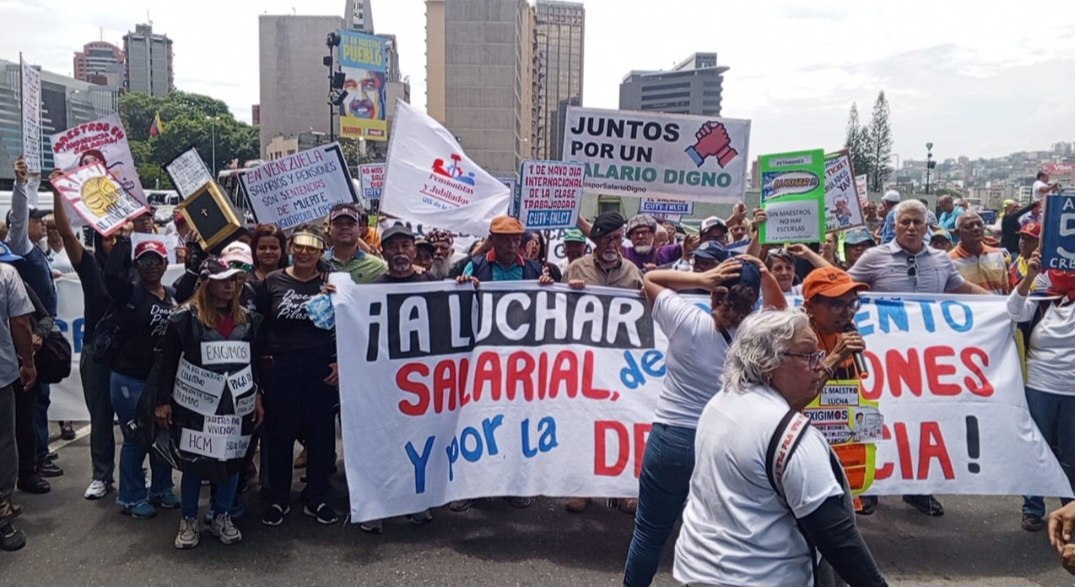
Following a recent transport strike in Caracas, opposition deputy Henrique Capriles warned that the macroeconomy is “disconnected” from popular income, demanding salary improvements for fairer fares. “The country needs solutions and fundamental agreements: to recover Venezuelans’ purchasing power and truly reactivate public systems,” he added at the time.
The discussion is significant, because the cost of the food basket remains far above formal income. Cendas-FVM reported that the food basket stood at $645.67 for February 2026, meaning that up to 1,934 minimum wages, 3.4 IMIs, or 4.40 War Bonuses are required to cover it. This gap summarizes why any salary adjustment has become an urgent demand.
Amidst this context, the Bolivarian Socialist Workers’ Central delivered a proposal to the government contemplating a quarterly increase equivalent to 50 dollars, in addition to compensatory bonuses for vacations and Christmas bonuses. If a direct salary improvement does not occur, the union proposes increasing the War Bonus and Food Bonus by 50 dollars quarterly, along with other improvements.
Increase rumored to be between $80 and $100
Theories point to possible increases in the base salary with a reduction in bonuses, something that would keep total income similar to the current one, but oriented towards legal reforms in a context of reinstitutionalization. Among the supposed proposals of the State is raising the minimum wage in public administration to between 80 and 100 dollars, according to information disseminated on social media.
The apparent proposal details that compensation would be based on the professionalization or academic rank held by the worker. Pensions, for their part, would remain at 50 dollars (an amount similar to their current bonus income), while bonuses would be between 50 and 70 dollars, which would rebalance income with greater weight on the legal base salary and contributions.
For his part, opposition deputy Reinaldo Sifuentes recently pointed out that there could be an increase in the country’s minimum wage, which would be added to the established Comprehensive Minimum Income. “Nothing is official yet, but it is rumored that there will be a salary increase, close to $80, as a minimum wage,” he stated during a televised interview.
Meanwhile, Luis Vicente León, economist and political analyst, publicly asserted that “there will be an announcement of an increase in income, not salaries,” although “a mixed mechanism where there is an increase in the minimum wage and an increase through bonuses” is also being considered. In this regard, the latest possible date for the announcement is expected to be precisely next May 1st, Workers’ Day.
Signs of resistance from business owners
However, an increase in the ranges being considered finds resistance, mainly among economists and business owners. Economist Oscar Doval warned that raising the minimum wage to 100 dollars per month would be unviable, because it “would completely absorb the extra money entering the country from oil revenues” and push the State to finance spending without sufficient backing.
During his statements, given in an audiovisual interview, he asserted that such a measure could generate a temporary effect, which would end up being neutralized by inflationary pressures. Furthermore, Doval added that if the dollar-linked bonuses already offered by the private sector to workers are turned into salary, it would end up “bankrupting” companies.
Likewise, economist Asdrubal Oliveros highlighted during a radio interview that there is currently an “unbalanced” compensation scheme that implies that “for the worker to earn well, you bankrupt the company and make the State unviable.” He emphasized that the goal is not to eliminate the benefit regime but to reform it so that the company and the State become sustainable.
In line with this position, Jorge Roig, employer representative at the International Labour Organization, pointed out that a labor reform is urgently needed to optimize compensation systems: “Today the Labor Law is not useful for workers, nor for employers, nor for the Government.” In his view, the aim is to prevent the rights achieved by the worker from blocking their current income.
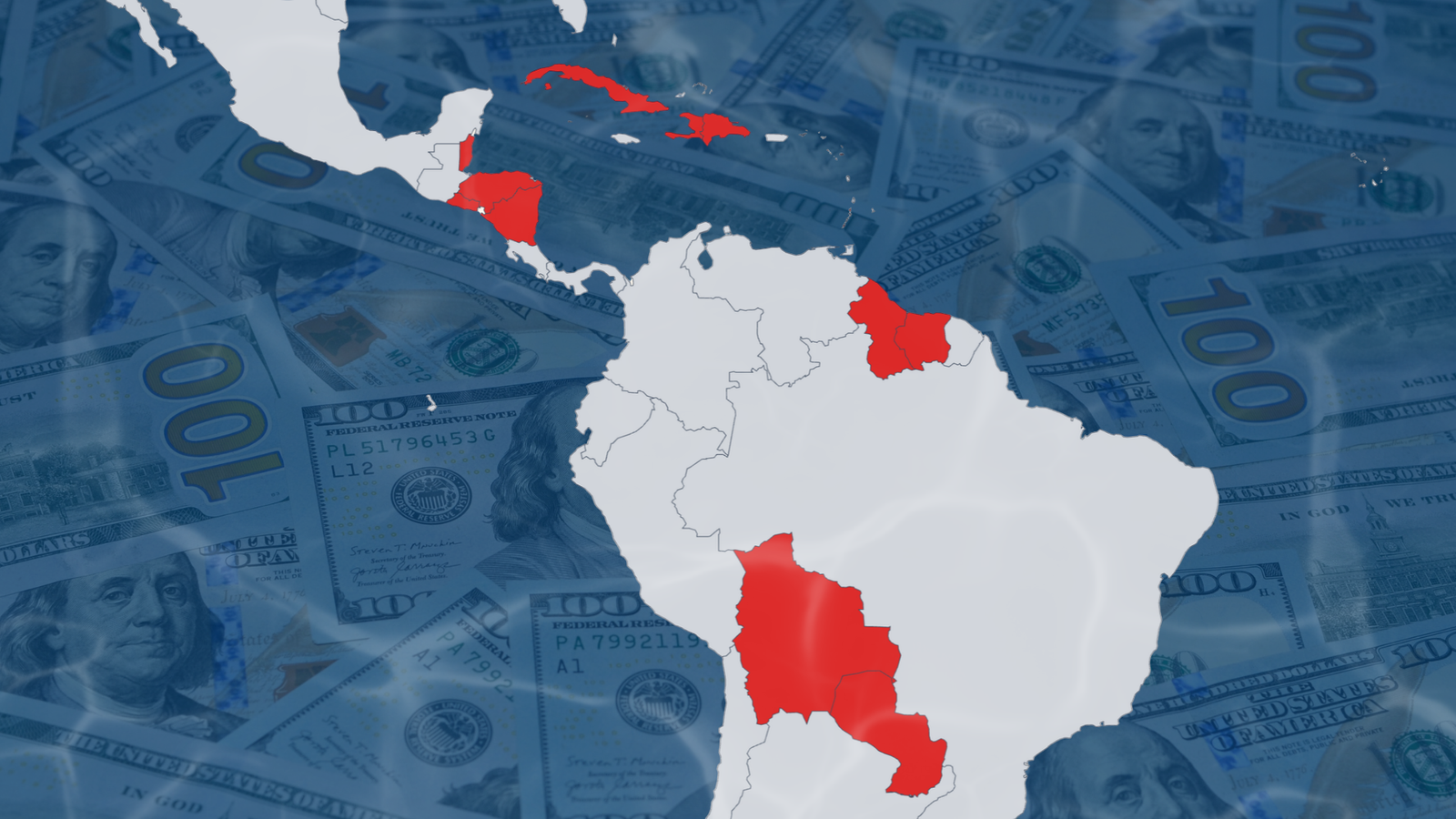
The Venezuelan business community argues that suddenly raising salaries is not viable, but this position clashes with regional reality. At the end of 2025, the average salary in Venezuela was around $262, according to Fedecámaras, when a GDP per capita of $3,103 was estimated by the International Monetary Fund. Countries like Nicaragua and Honduras with similar estimates had average salaries of $384 and $689 respectively.
The informal dollarization of the private sector, which also manages a bonus system for income, does not transfer to the bulk of the workforce active within it, nor does it mitigate the basic basket (~600+ USD). This reveals that the limit is not only fiscal but also demonstrates a structural disparity compared to Central American peers with similar economies in terms of income.
Oil revenues vs. salary distribution
PDVSA’s gross oil revenues in 2024 and 2025 were approximately 18 billion dollars annually each, based on data reported by the BCV and other sources, equivalent to about 1.5 billion monthly on average. For 2026, economists estimate that these revenues will exceed 25 billion dollars and could reach up to 35 billion if non-oil revenues are added.
Taking the most conservative scenario as a reference, average monthly revenues would be above 2 billion dollars. Part of these revenues would be destined for the Social Protection Fund, although the amount is unknown. However, according to recent annual budgets, more than 70% is allocated to social investment, suggesting a similar trend.
Faced with this scenario, Venezuela has around 5.5 million public employees, according to the central state payroll reported in recent budgets such as 2022’s, a figure that remains stable as a reference due to the lack of updated data for 2026. Additionally, there are more than 5.8 million retirees and pensioners, according to IVSS reports.
Thus, Venezuela would have more than 11 million people receiving state income and bonuses, broken down as follows: approximately 5.5 million public employees, and over 1.6 million public sector retirees and 4.2 million pensioners, according to projections aligned with official estimates where pensioners represent 74% due to universalization policies.
Therefore, the $300 million received by the Social Protection Fund were distributed as follows: 5 million public employees went from 120 USD to 150 USD (+30 USD each, $150 million total), 1.56 million retirees rose from 110 USD to 130 USD (+20 USD each, $31.2 million), and 4.24 million pensioners increased from 50 USD to 60 USD (+10 USD each, $42.4 million), summing $223.6 million and leaving a surplus of $76.4 million.
Salary adjustment scenarios and their impact on the economy
The consulting firm AIA Contadores indicates that the IMI increase, which went from $160 to $190 ($150 War Bonus + $40 Food Bonus), should not generate immediate inflationary pressures on the economy. First, because the private sector was already absorbing similar costs, and because being bonuses without salary impact, this increase does not affect the national budget.
Furthermore, the increase is backed by oil revenues channeled into the Social Protection Fund via oil income, which, if maintained at approximately the same $300 million monthly, means the State would not need to create inorganic money to sustain the increase. Consequently, price stability should not be affected.
If the estimates of an $80 increase materialize, it can be foreseen that the $30 added to the so-called War Bonus will be joined by another $50 to reach $240 in total. Although this represents an approximate increase of 25% over current income, it would be almost 50% based on the previous $160. Faced with this, AIA Contadores also outlines different increase scenarios and their economic impacts, whose percentages and amounts have been adjusted by Guacamaya, given the recent March increase in the War Bonus.
In the first scenario, based on current income ($190) and a $50 increase, maintaining the bonus policy, the employee could enjoy 33.3% more than they already receive from the War Bonus. However, having no salary impact on social benefits, profit sharing, and vacations, the effect on the national budget and the price of goods and services would be minimal.
In the second scenario, if what increases is the base minimum wage to $50, although the employee sees a 33.3% increase over what they receive from the War Bonus, the real cost to the State is 45.3% due to the additional payments it must make. When the minimum wage increases, private companies are forced to adjust their costs, which immediately translates into an increase in product prices and results in inflation.
In the third scenario, no increase is foreseen, but rather a complete “salarization” of the War Bonus. Although the worker sees the same $150 they already have monthly, the budget increase for the State would be between 28 and 35%, depending on the source and own calculations. The worker would receive $300 in profit sharing, $300 in social benefits, and $75 in vacation bonuses, but the cost would be passed on to the entire national budget and generate inflation in goods and services.
In conclusion, the source suggests that, given the economic recovery situation, it is preferable to increase monthly income faster than the minimum wage to avoid an immediate inflationary impact affecting purchasing power. This would leave the minimum wage adjustment for when the economy is more stable, making the outlook more viable for both the Government and companies.
What is at stake
The most commented possibility, at least in the short term, is that the Executive branch will opt for a combination of partial adjustment of the base salary and greater weight on bonuses, rather than a linear increase that completely restructures the remuneration system. Legal reforms to sustain this change and broader negotiations on benefits, health, transport, and collective bargaining agreements are also mentioned.
However, the firmest fact is that there is still no significant announcement for the working class, even though the debate is already underway.