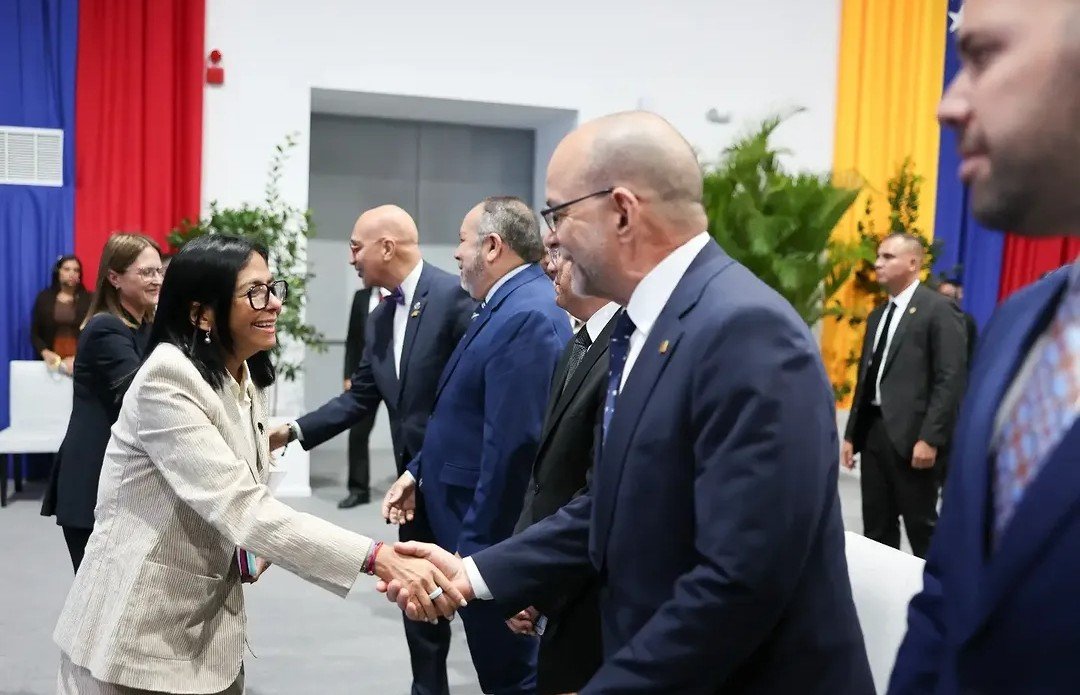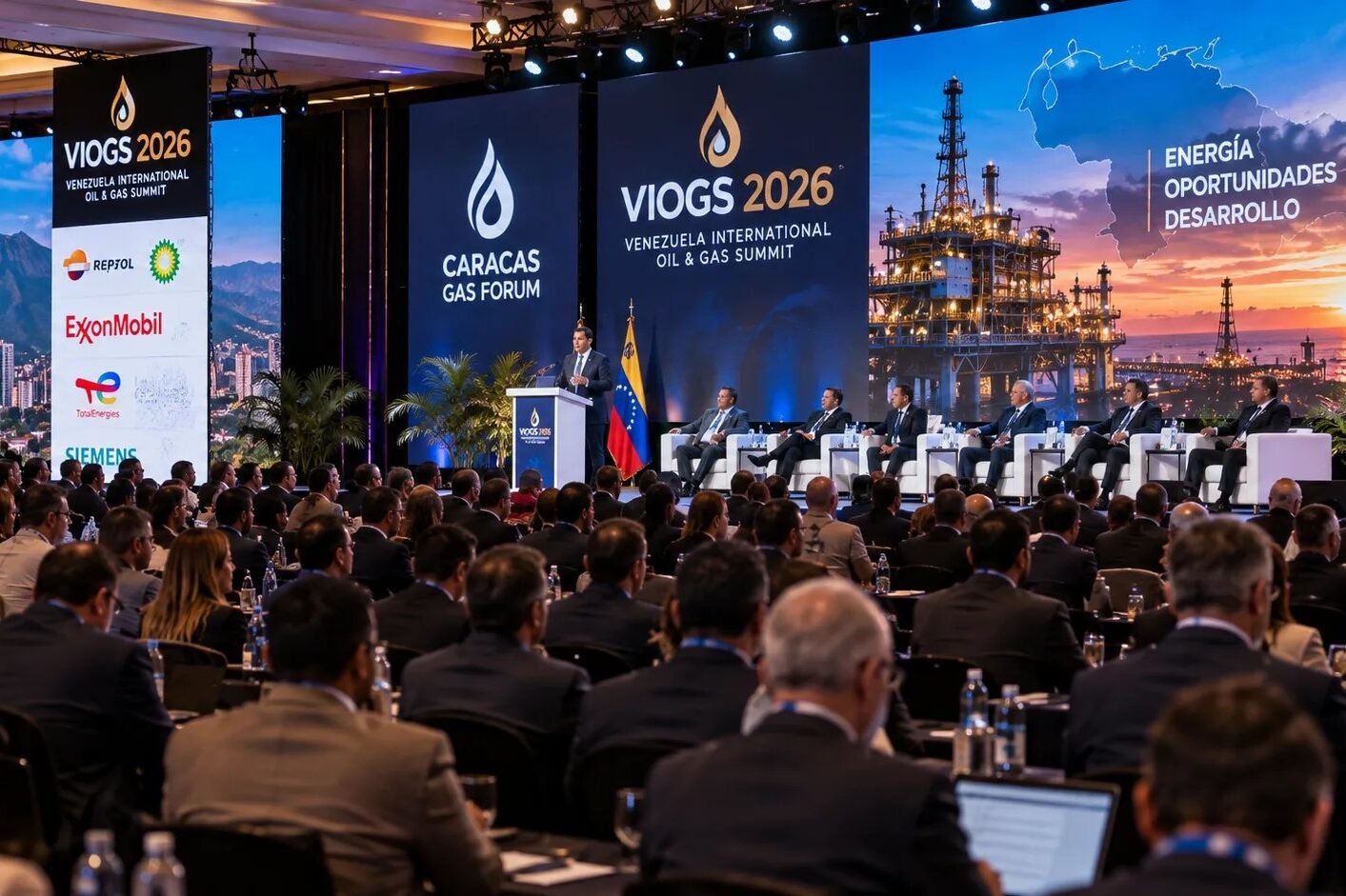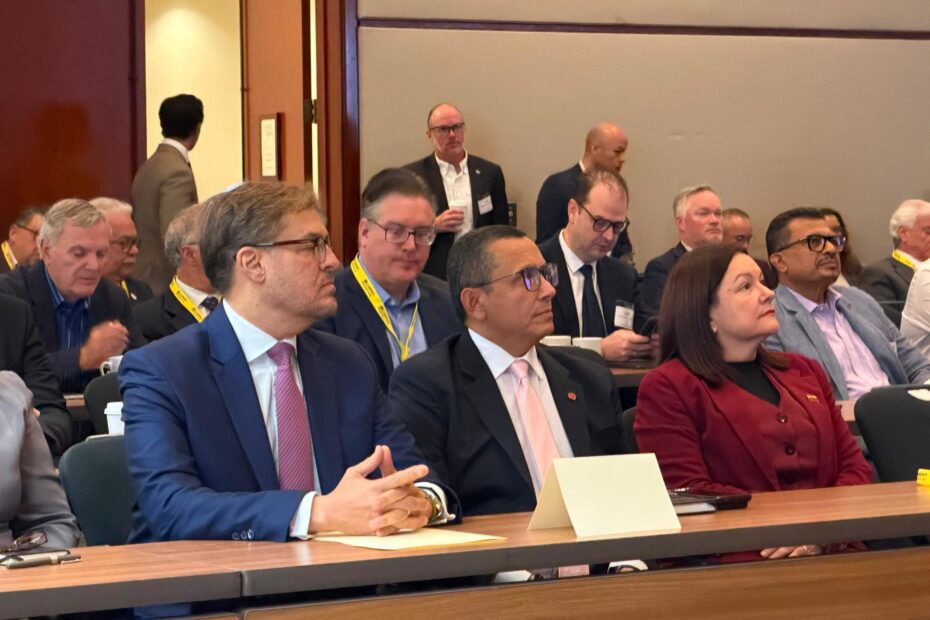
This technical and commercial reopening in 2026 is shaping up as a fundamental milestone in the new phase of reapprochement between the two countries. / Image: Video screenshot – Nathan Crooks
Guacamaya, May 19, 2026. Venezuela’s Minister of Hydrocarbons, Paula Henao, along with Pdvsa’s Vice President of Exploration and Production, Jovanny Martínez, led the Venezuelan delegation at the AAPG Venezuela Technical and E\u0026P Summit 2026, held in The Woodlands, Texas. This marks the first time in decades that senior Venezuelan oil sector officials have made a public appearance of this level on U.S. soil.
The symposium, organized by the American Association of Petroleum Geologists (AAPG), served as a platform for Venezuela to present its ambitious “Strategic Framework for Success.” Its core objectives included attracting investment, optimizing the value chain, ensuring self-sufficiency, positioning itself as a global competitor, and strengthening technological capabilities.
The head of the energy portfolio also reported a record-breaking signing of 30 Production Participation Contracts (PPCs), involving 13 international and 10 national operators. She further highlighted that national production has surpassed one million barrels per day, marking the fastest growth in the last decade.
A Shift in Legal Security and the “Energy Trilemma”
One of the most significant points of the day was the announcement of the Venezuelan government’s openness to resolving disputes through foreign arbitration, a measure aimed at strengthening legal security and attracting private investment. Henao assured that current legislation allows for arbitration mechanisms to resolve any potential conflicts with investors.
“On the issue of legal security, which I know many of you are looking for, the Organic Hydrocarbons Law incorporates all of this through dispute resolution mechanisms, not only within our national territory but also allows and opens the door to using other forums to resolve any dispute that may arise,” Henao told those present.
The minister also positioned Venezuela as a key solution to the “Energy Trilemma,” arguing that the country can guarantee a stable supply for economic growth, ensure affordable prices to reduce energy poverty, and mitigate environmental impact through advanced technologies and the use of its vast reserves.
A Diplomatic and Technical Reencounter
The significance of the event was reinforced by the presence of Kyle Haustveit, U.S. Deputy Secretary of Energy, who supported hemispheric energy integration and stated that “Venezuela plays an incredibly important role in strengthening energy security” in the region, recounting his recent visit to the Orinoco Oil Belt.
This meeting in Houston symbolizes the end of a long period of estrangement. Although routine technical and diplomatic contacts occurred between 2000 and 2010—especially multilateral ones—the complete breakdown of relations in 2019 halted any flow of official visits. Records indicate that to find an official mission of this caliber and with this level of public visibility in the U.S., one would have to go back to the 1990s, before the start of the Chavista political cycle.