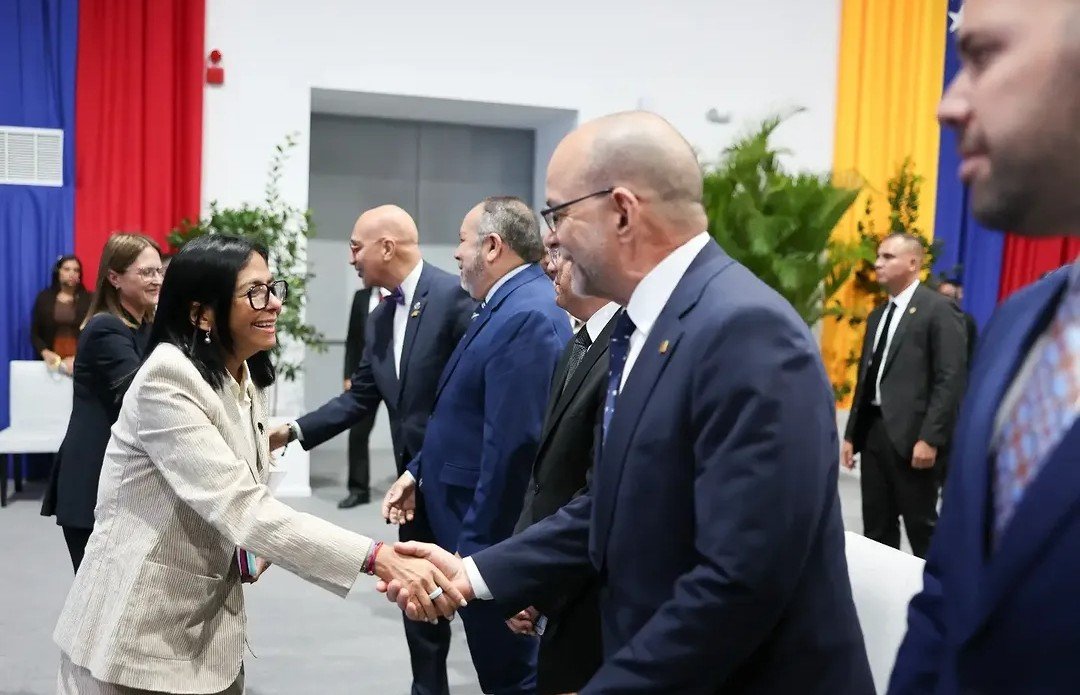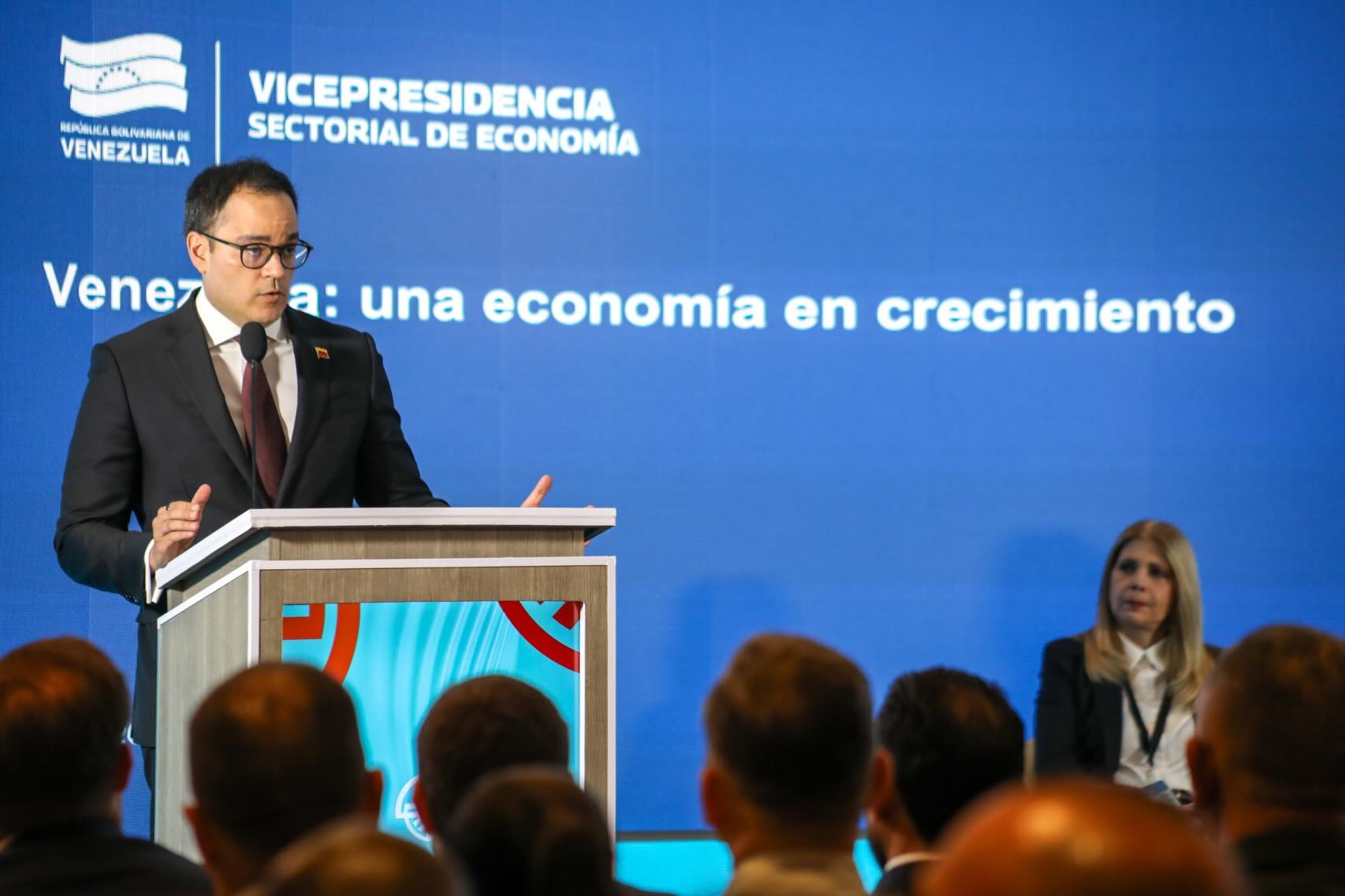
Calixto Ortega Sánchez, Sectoral Vice President for Economic Affairs and Governor to the World Bank and the International Monetary Fund, explained that the plan consists of four pillars: economic growth, fiscal sustainability, strengthening the monetary and financial sector, and strengthening governance, at the ExpoFedeindustria “Global Vision 2026.” Photo: Instagram / @bcodeltesoro.
Guacamaya, May 22, 2026. The Venezuelan administration announced an economic program built around four strategic pillars aimed at stabilizing the economy, reviving productive sectors, reorganizing public finances, and opening the door to a new relationship with multilateral organizations and international markets.
Four months after taking office, the interim government led by Delcy Rodríguez revealed the broad outlines of its economic agenda, a proposal intended to send signals of stability to investors, business leaders, and international creditors amid Venezuela’s ongoing political and financial normalization process.
The announcement was made by Calixto Ortega Sánchez, who explained that the government’s strategy will be structured around four major pillars: productive recovery, fiscal sustainability, monetary stabilization, and institutional strengthening.
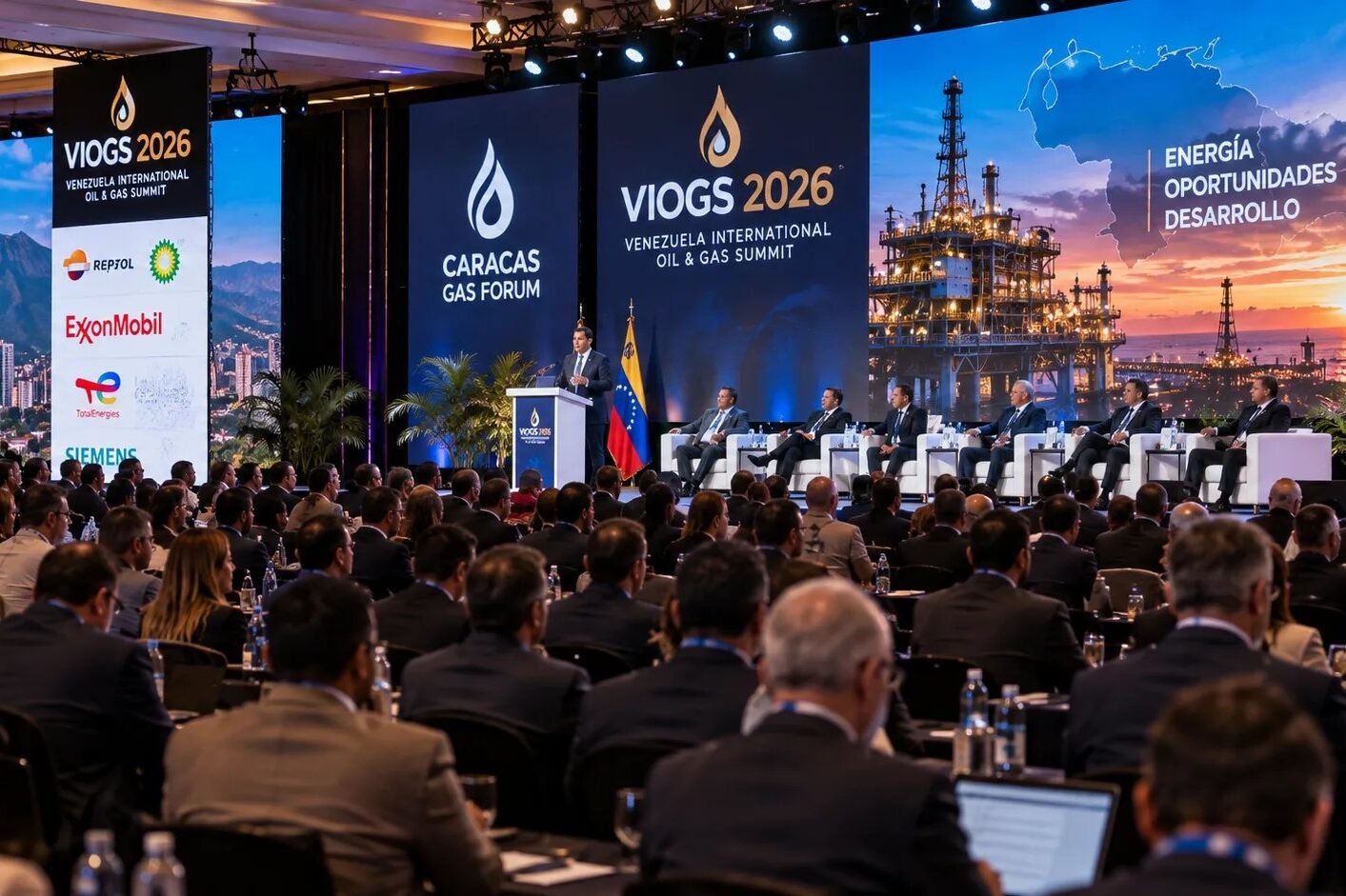
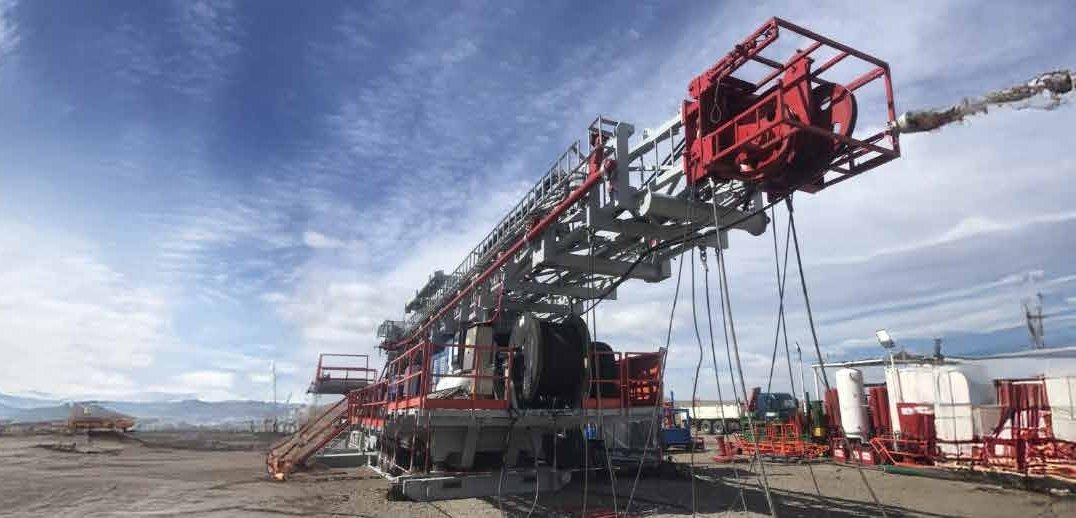
During his speech at the ExpoFedeindustria “Global Vision 2026” event in Caracas, Ortega Sánchez stated that the immediate priority will be to boost economic growth through the recovery of extractive industries, particularly oil, gas, and mining, which are considered essential for increasing state revenues and revitalizing the broader economy.
The official also noted that the administration seeks to promote a gradual diversification of the productive sector by incorporating more competitive industries and reducing the high levels of informality that currently characterize much of Venezuela’s economy. According to Ortega Sánchez, the objective is to integrate the private sector and all productive forces into a long-term national reconstruction strategy.
Another central component of the plan is the reorganization of public finances. The government aims to improve revenue collection capacity and strengthen investment in essential services such as healthcare, education, energy, transportation, and telecommunications, all of which have suffered severe deterioration over recent years.
In that context, Ortega Sánchez acknowledged that normalizing Venezuela’s public debt will be a key element of the economic agenda. The government considers it a priority to regain access to international financing and secure concessional funding to support infrastructure projects and social programs.
The strategy also includes measures aimed at stabilizing sensitive macroeconomic variables, particularly inflation and the foreign exchange market. To achieve this, the economic team will work alongside the Central Bank of Venezuela to strengthen the monetary and financial system, contain volatility, and restore confidence in the national currency.
The fourth pillar of the program focuses on institutional strengthening and economic governance. The administration says it intends to build more transparent policymaking mechanisms and reinforce the technical capacity of state institutions in an effort to improve the country’s credibility among both domestic and international economic actors.
What does this mean for markets and the private sector?
The announcement represents the first structured economic policy presentation by the new government and constitutes an important signal for financial markets, which had been waiting for clearer indications regarding the administration’s economic direction.
The explicit references to macroeconomic stabilization, fiscal discipline, and public debt normalization could be interpreted positively by creditors, investors, and companies interested in a potential Venezuelan economic reopening. Particularly significant is the official recognition of the need to restore access to international credit markets and rebuild financial relations abroad.
Likewise, the emphasis on recovering extractive industries coincides with growing interest from international energy companies in Venezuela, amid partial sanctions easing and increasing oil production.
For the domestic private sector, the government’s message also appears designed to signal a greater willingness for public-private cooperation, with references to productive diversification, economic formalization, and business participation in national reconstruction efforts.
The connection with multilateral organizations
One of the most significant aspects of the plan is the indirect reference to a possible new stage of cooperation with multilateral organizations such as the World Bank, the International Monetary Fund, the Inter-American Development Bank, and CAF – Development Bank of Latin America and the Caribbean.
The government’s emphasis on governance, fiscal sustainability, institutional transparency, and concessional financing aligns closely with the criteria traditionally required by multilateral institutions to support economic stabilization and recovery programs.
Venezuela’s eventual financial normalization could open the door to technical assistance programs, infrastructure credit lines, budgetary support, and debt relief or restructuring mechanisms, particularly if the country advances toward broader political and institutional agreements.
Moreover, the approach outlined by the interim government resembles economic transition programs implemented in other countries that experienced severe crises, where the combination of macroeconomic stabilization, institutional reforms, and multilateral financing proved decisive in restoring growth and market access.
Although no concrete measures or timelines have yet been announced, the presentation of this roadmap appears aimed at rebuilding confidence both domestically and internationally at a time when Venezuela seeks to redefine its relationship with global financial actors and lay the foundations for a new economic phase.
An economy still facing deep structural fragilities
Despite the signals of openness and stabilization sent by the interim government, Venezuela’s economy continues to face severe structural challenges accumulated over more than a decade of crisis, sanctions, declining oil production, and institutional deterioration.
Although some indicators show a partial recovery — especially in sectors linked to oil, trade, and private services — large areas of the country remain affected by chronic infrastructure and public service problems that limit any sustainable economic reactivation.
The electricity crisis remains one of the main obstacles to productive recovery. In several regions of the country, daily rationing and recurrent blackouts continue to affect households, industries, and businesses. Venezuela’s National Survey of Living Conditions (ENCOVI 2025) indicates that around 90% of Venezuelan households experience frequent or occasional power outages.
The deterioration of the electrical system also carries a significant economic impact. Power failures increase operating costs for businesses, force companies to rely on private generators, and undermine the competitiveness of industrial and commercial sectors. Venezuelan experts estimate that restoring the system will require multi-billion-dollar investments and deep structural reforms.
This is compounded by the country’s water supply crisis. Recent ENCOVI data shows that only 19% of households receive continuous access to water, while millions depend on water trucks, household storage, or improvised systems to meet basic needs.
Deficiencies in transportation, telecommunications, domestic gas supply, road infrastructure, and waste collection also continue to affect both quality of life and economic activity. Business groups have warned that the deterioration of public services has become one of the main obstacles preventing new investment and limiting domestic production growth.
At the same time, Venezuela still faces high levels of multidimensional poverty, mass migration, institutional weakness, and external financing restrictions. Although some international investors have begun to reassess opportunities in the country, significant risks remain tied to political uncertainty, accumulated external debt, and fragile infrastructure.
In this context, the success of the new economic plan will depend not only on stabilizing macroeconomic variables, but also on the state’s ability to rebuild basic services, restore institutional trust, and attract long-term investment capable of sustaining a broader and more inclusive recovery.