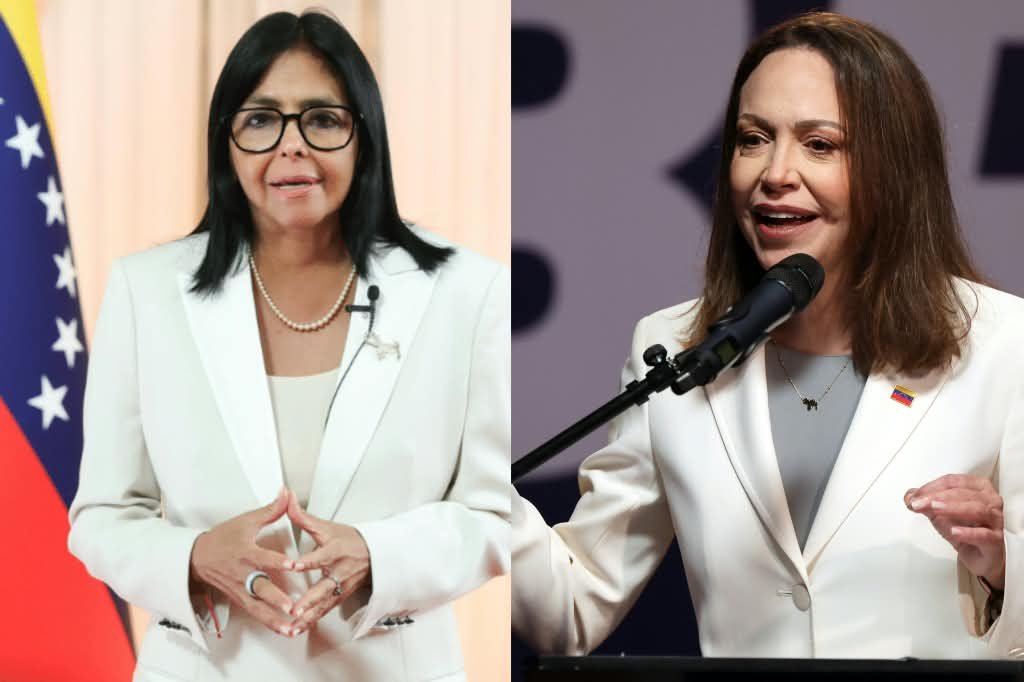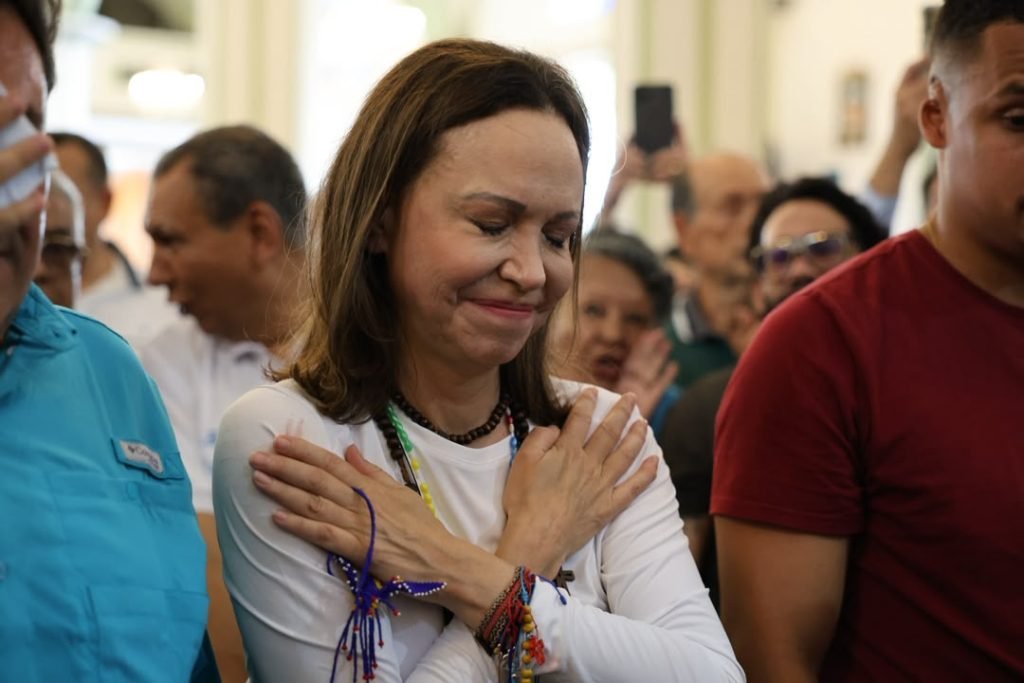
Delcy Rodríguez and Luiz Inácio Lula da Silva met at the COP summit in Antalya, Turkey, on November 11, 2026. Photograph: Presidential Press.
Guacamaya, November 17, 2026. The first in-person meeting between Luiz Inácio Lula da Silva and Delcy Rodríguez, held on November 11 in Antalya, Turkey, opens a new stage in relations between Brazil and Venezuela after a period of distancing.
Both governments agreed to work on normalizing their diplomatic, commercial, and energy ties, with special attention to the possible expansion of Brazilian investments in the Venezuelan oil industry. The rapprochement comes amid the economic opening begun after January 3, 2026, which has sparked the interest of Brazilian businesspeople—including Petrobras—in returning to one of the world’s energy markets with the largest reserves.
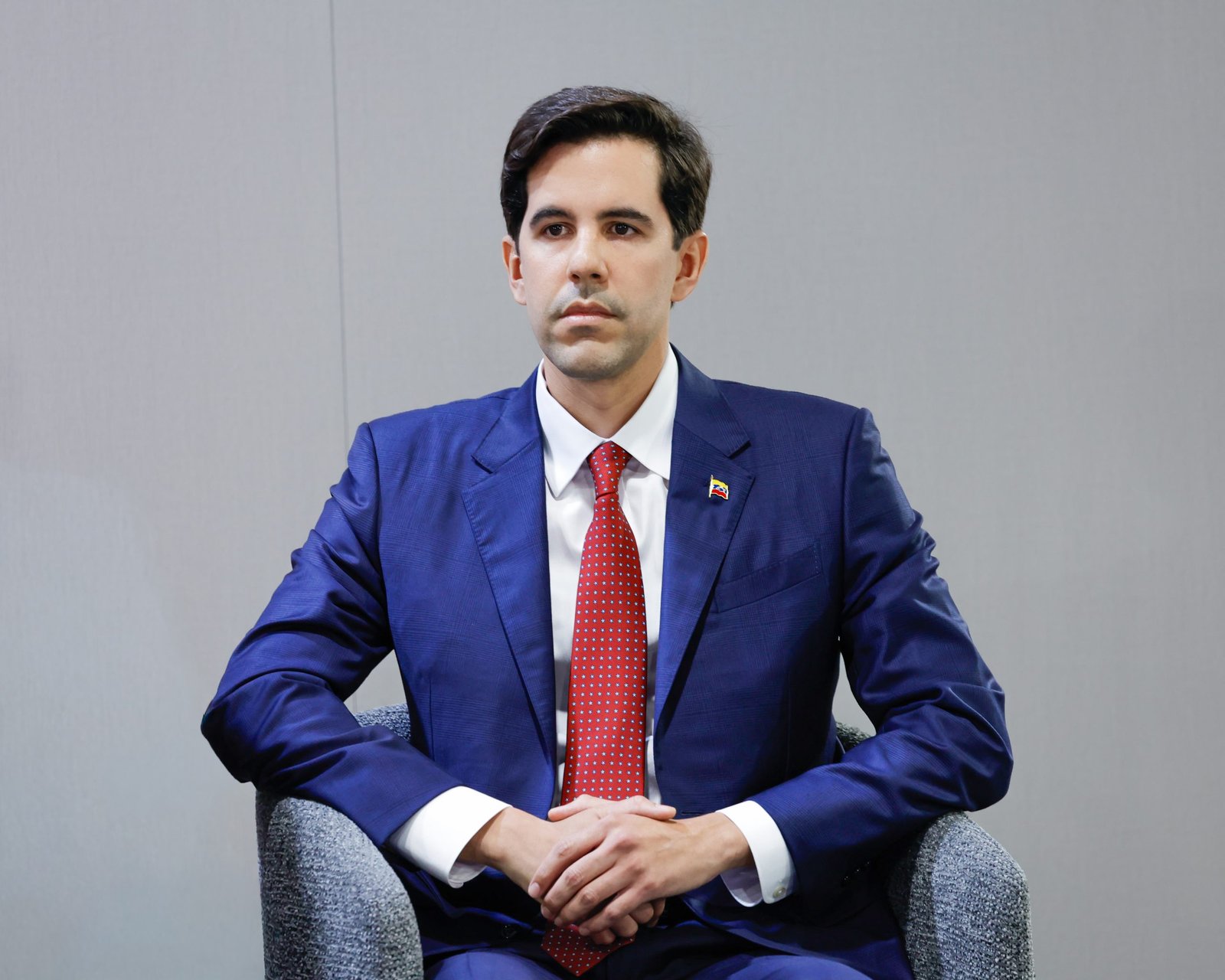
The presidential meeting follows a first meeting between Venezuelan Foreign Minister Oliver Blanco and his Brazilian counterpart, Mauro Vieira, within the framework of the XXX Ibero-American Summit of Heads of State and Government, held on November 4 and 5 in Madrid, Spain.
The conversation between the two heads of state also addressed pending commercial matters. Lula expressed his interest in continuing negotiations to revise Economic Complementation Agreement No. 69, signed in 2012, as well as the tariff conditions that Venezuela applies to vehicles manufactured in Brazil. Rodríguez proposed sending a Brazilian negotiating delegation to Caracas to advance these matters.
The meeting has an additional political dimension: it is the first between the two leaders since the capture of Nicolás Maduro by U.S. forces on January 3. Lula, who had differences with Maduro after the Venezuelan elections of July 2024, when he refused to recognize the results proclaimed by the National Electoral Council and demanded the publication of the electoral records. This position generated tensions with the Venezuelan government. He subsequently condemned the U.S. military intervention and described it as a grave violation of Venezuelan sovereignty.
The coincidence between both governments in rejecting the U.S. operation, together with Brazil’s interest in recovering economic space, provides a basis for rebuilding a relationship that had gone through significant political disagreements.
The new race for Venezuelan oil and the Brazilian business landing
Brazil’s interest did not begin with the Antalya meeting. Since the first months after January 3, Brazilian companies have begun positioning themselves in the process of reopening Venezuelan industry, seeking opportunities in oil fields, gas production, specialized services, and energy infrastructure.
The transformation of the political and economic environment has opened opportunities that were previously conditioned by international sanctions, regulatory uncertainty, and difficulties in operating with PDVSA. However, the opening does not mean that all companies have obtained definitive authorizations or that the announced projects are in the production phase.
One of the standout actors is Alvorada, a Brazilian holding company founded in 2021 that has had a presence in Venezuela since 2023. The company operates in three oil fields in the Orinoco region, where Venezuela’s largest crude reserves are concentrated. In April 2026 it announced an expansion of its operations, taking advantage of the opportunities offered by the new configuration of the energy sector. Its presence demonstrates that Brazilian business interest did not arise exclusively after January, although subsequent transformations have favored new growth prospects.
Another significant move is that of Globe, linked to the business conglomerate of Brazilian brothers Wesley and Joesley Batista, owners of the J&F group. Through its subsidiary Fluxus, Globe acquired in 2026 a stake of nearly half of Petrororaima, a mixed company linked to PDVSA. The operation allows it to participate in oil exploration and production activities in Venezuela, particularly in the Orinoco region. The Batistas are also important intermediaries between Donald Trump’s circle and Lula da Silva and maintain important ties with Venezuelan authorities.
The entry of this group is especially interesting given the dimension of its business activities, which span sectors such as energy, food, and infrastructure. Its presence could facilitate connections between the Venezuelan market and other segments of the Brazilian business community.
Eneva represents another actor of special interest. It is one of Brazil’s main private natural gas operators, with experience in production, commercialization, and power generation.
Its CEO, Lino Cançado, confirmed in October that the company was evaluating opportunities in Venezuelan onshore fields, especially mature assets that stopped producing or reduced their operations due to lack of investment.
Eneva also contemplates the possibility of supplying electricity to other oil companies operating in the country. This possibility has strategic importance: recovering hydrocarbon production requires not only investments in wells but also electricity, infrastructure, transportation, and industrial services.
In September, Eneva signed a memorandum of understanding with the U.S. company Halliburton to identify and develop opportunities in Venezuela. The agreement allows taking advantage of Halliburton’s technical experience in the Venezuelan market and its existing operating infrastructure.
However, Cançado clarified that there is still no definitive investment decision and that the company’s priority remains the Brazilian market.
Beyond oil: the interest of the Brazilian business community
The Venezuelan opportunity is also awakening interest in sectors that could benefit indirectly from the recovery of the energy industry, as demonstrated by a business mission this year with manufacturing, agro-industrial, construction, pharmaceutical, and other sector companies.
In October, the LIDE business group, founded by former São Paulo governor João Doria, agreed with the firm Orinoco Research to explore opportunities for Brazilian companies interested in the Venezuelan market.
Among the sectors identified as being of greatest interest are construction and engineering, agriculture and agro-industry, energy services, transportation infrastructure, vocational training, and business services such as logistics.
This last aspect deserves attention. The recovery of the oil industry can generate a multiplier effect on the Venezuelan economy by stimulating demand for services, construction, commerce, transportation, and specialized training.
In this sense, the rapprochement with Brazil could become a gateway for medium and large companies that do not necessarily participate directly in hydrocarbon extraction but find opportunities in the reconstruction of Venezuela’s productive infrastructure.
An additional element is that Brazilian participation can offer Venezuela a nearby geographic and business alternative. Brazil’s experience in tropical agriculture, power generation, engineering, and mature field exploitation constitutes an asset that could prove particularly useful in the country’s economic recovery.
The geopolitical dimension: Brazil seeks to recover its space in Venezuela
The rapprochement between Lula and Delcy Rodríguez must be interpreted beyond a commercial agenda. It also represents a Brazilian attempt to recover capacity for dialogue and influence in a country that has historically occupied an important place in its foreign policy.
From Brasilia’s perspective, Venezuela is a strategic neighbor for geographic, energy, commercial, and regional security reasons. Its stability has a direct impact on northern Brazil, especially on the state of Roraima, which has experienced the consequences of the Venezuelan crisis through migration flows and border security difficulties.
During the governments of Lula and Hugo Chávez, the bilateral relationship reached one of its most dynamic moments. Both countries promoted regional integration initiatives, energy cooperation, and political coordination in multilateral organizations.
For Lula, restoring relations with Caracas means maintaining a channel of dialogue with the new Venezuelan government, protecting Brazilian economic interests, and preserving the capacity to influence the political evolution of its neighbor.
The announced visit of Alexandre Silveira therefore has a significance that goes beyond oil cooperation. It entails the possibility of institutionalizing a work agenda between the two governments and opening spaces for direct dialogue between their business sectors, especially following the reported interest of Petrobras.
Petrobras and Venezuela: an energy relationship with two decades of history
The possible return of Petrobras to Venezuela has an important precedent: during the governments of Lula da Silva and Hugo Chávez, the two state oil companies developed one of the most ambitious energy cooperation agendas in Latin America.
The relationship was not limited to crude oil exploration and production. It included natural gas projects, petrochemicals, shipbuilding, hydrocarbon transportation, and regional energy infrastructure development.
However, a combination of business differences, regulatory changes, financial difficulties, and strategic priorities ended up weakening that partnership.
The business presence linked to the Petrobras group in Venezuela initially developed through oil operating contracts awarded during the opening rounds of the 1990s.
Among the main assets were Oritupano-Leona, whose contract was awarded in 1994, and La Concepción, Acema, and Mata, whose contracts were awarded in 1997. The latter had a contractual duration of twenty years.
The assets were distributed between western Venezuela and the eastern states of Anzoátegui and Monagas. The business participation was developed through Petrobras Energía Venezuela and structures linked to Petrobras Energía, an Argentine company that was part of the Petrobras group.
According to documentation submitted to the International Finance Corporation, operations increased the joint production of the fields from approximately 13,800 to 74,800 barrels per day during their development stage.
In 2002, the International Finance Corporation began evaluating financing for new investments to expand operations at these assets, including well drilling, surface facilities, and recovery of existing wells.
This experience is important because it demonstrates that the business group linked to Petrobras had already developed operational capabilities in Venezuelan fields and knew their geological and regulatory characteristics.
With Lula’s arrival to the Brazilian presidency in 2003, the energy relationship acquired a strategic dimension.
Both governments considered that cooperation between Petrobras and PDVSA could contribute to South American energy integration and strengthen regional autonomy vis-à-vis the major international centers of hydrocarbon production and commercialization.
The year 2005 was particularly important. According to a study by Brazil’s Institute of Applied Economic Research, fifteen energy cooperation agreements were defined between the two countries, eleven of them signed directly between Petrobras and PDVSA.
Among the most relevant initiatives were the Carabobo I project, through which Petrobras contemplated participating in the exploitation of extra-heavy crude from the Orinoco Oil Belt. The oil would subsequently be processed in a joint refinery planned to be built in Pernambuco, Brazil.
Petrochemical cooperation contemplated initiatives between Petrobras and Pequiven to develop fertilizers and expand industrial capacity. In parallel, shipbuilding projects were discussed to produce tankers, support vessels, and oil platforms, accompanied by technology transfer.
The scope of these initiatives makes it possible to understand the importance that both governments attributed to energy integration. It was not only about Petrobras investing in Venezuela but about building a network of industrial complementarity between two of South America’s largest energy economies.
However, it is important to distinguish announced agreements and projects from investments effectively materialized. Many of the most ambitious binational projects never went beyond the planning and negotiation phases.
The main turning point occurred during Hugo Chávez’s government, when Venezuela began to modify the legal regime of oil operating agreements.
In April 2005, the Ministry of Energy and Oil ordered a review of the contracts signed between PDVSA and various foreign companies during the opening rounds of the 1990s.
The objective was to convert them into mixed companies where the Venezuelan state, through PDVSA or its subsidiaries, would have a majority stake.
The reform established that foreign companies had to accept a structure in which the Venezuelan state partner would control at least 60% of the capital.
Petrobras Energía and its affiliated companies negotiated the transformation of their four Venezuelan operations.
Petrobras Energía’s indirect economic interests in these companies were reduced, according to its corporate documents, to 22% in Oritupano-Leona, 36% in La Concepción, and 34.5% in Mata and Acema.
The operational transfer was completed between December 2006 and March 2007.
This process is fundamental to understanding Petrobras’s subsequent exit from its operations in Venezuela. The transformation of the contracts implied a loss of operational control and a substantial modification of the conditions under which the company had developed its investments.
However, these initiatives faced financial problems, differences between the companies, difficulties in coordinating investments, and changes in Brazilian energy priorities.
The discovery and development of Brazil’s pre-salt reserves substantially changed Petrobras’s prospects. The company began to concentrate a growing proportion of its resources in its own offshore assets, reducing the attractiveness of some international projects.
At the same time, Venezuelan regulatory changes and difficulties in executing joint projects reduced the viability of the partnership.
Consequently, the bilateral energy relationship lost much of the ambition that had characterized the 2003-2007 period.
Financial problems, business differences, and the development of Brazil’s pre-salt reserves weakened cooperation. Projects such as Abreu e Lima and the Great Southern Gas Pipeline lost momentum.
The eventual visit of Alexandre Silveira could facilitate institutional dialogue, identify concrete opportunities, and examine the conditions necessary for a possible return.
It is also important to remember that Petrobras would not be a company arriving in unknown territory. Its historical experience and accumulated knowledge of Venezuelan fields could represent an advantage over other investors.
However, the new context is different from that of the 2000s, since Venezuelan industry needs investments to rehabilitate facilities, recover infrastructure, modernize production systems, and rebuild technical capabilities.
Petrobras’s return will therefore depend on finding sufficiently attractive contractual, financial, and regulatory conditions.
The geopolitical implications of the Brazilian return
One of the most important aspects is the position Brazil can occupy within Venezuela’s new political configuration.
Since January 2026, the United States has acquired determining influence over the reorganization of Venezuela’s energy sector. The opening to foreign investment is developing under a framework in which Washington’s decisions and U.S. authorizations carry considerable weight.
This introduces a strategic question for Brazil: how to recover economic and political presence in Venezuela without becoming subordinate to U.S. priorities?
Lula has condemned the military intervention that led to Maduro’s capture, but his government also recognizes that Venezuela’s new reality requires dialogue with Delcy Rodríguez and with the international actors participating in the country’s economic reorganization.
Brazilian participation would allow Venezuela to diversify its partners and prevent its energy recovery from depending exclusively on U.S. companies or countries that have a privileged relationship with Washington.
In this sense, the possibility of Petrobras returning to Venezuela and the rapprochement between Lula and Delcy Rodríguez have implications of various kinds.
It does not necessarily imply a confrontation with the United States. Brazil has incentives to develop a pragmatic policy capable of cooperating with Washington on certain matters while at the same time preserving autonomy in its economic and diplomatic relations.
There is also an element that conditions any investment: U.S. authorizations, which are not a secondary matter.
This means that political rapprochement with Caracas does not automatically guarantee that a Brazilian company can develop any project.
Brazilian foreign policy has traditionally considered South America a priority space for its international projection.
During his first governments, Lula promoted a regional integration agenda that sought to strengthen commercial, energy, and political relations among South American countries.
Venezuela occupied a particularly relevant place within that strategy. Its incorporation into Mercosur, cooperation with PDVSA, and regional infrastructure projects were components of a broader vision of integration.
The Venezuelan crisis weakened that architecture. Venezuela’s suspension from Mercosur, political differences between Brazil and Caracas, and the deterioration of regional consultation mechanisms reduced Brasilia’s capacity to influence Venezuelan events.
Now, the rapprochement with Delcy Rodríguez offers an opportunity to recover part of that space.
Alexandre Silveira’s visit could represent the first step toward a broader agenda that includes energy cooperation, trade, infrastructure, border security, and diplomatic coordination.
For Lula, moreover, there is a political incentive to demonstrate that Brazil retains the capacity to participate in the main transformation processes in Latin America and that it can maintain dialogue with governments of different political orientations.
Venezuela possesses the world’s largest proven oil reserves, but its production is far below its historical levels.
Estimates mentioned by PDVSA place current production at around 1.2 million barrels per day and project reaching 1.5 million by the end of 2027.
However, that growth will depend on the availability of capital, technology, infrastructure, and contractual stability.
Brazil has particular advantages for participating in this recovery: geographic proximity, experience in hydrocarbon exploitation, industrial capabilities, companies with experience in mature fields, and an important domestic market that can offer long-term commercial opportunities.
There is also energy complementarity. Brazil has developed important capabilities in oil production, while Venezuela has enormous reserves and infrastructure that needs rehabilitation.
Cooperation could benefit both economies if adequate commercial and contractual conditions are established.
However, Brazil is not the only interested party. Chevron, Repsol, Eni, and other international companies are also seeking to expand or recover their participation in Venezuela.
The border dimension: Roraima and Venezuelan stability
There is another dimension that usually receives less attention: the relationship between Venezuelan recovery and Brazil’s security interests.
Venezuela shares an extensive border with Brazil, particularly through the state of Roraima.
In recent years, the Venezuelan crisis has produced significant migration flows into Brazilian territory and generated pressures on public services, border infrastructure, and humanitarian assistance mechanisms.
A Venezuelan economic recovery could help reduce some of these pressures, facilitate the normalization of border exchanges, and generate commercial opportunities for Brazil’s northern states.
The reactivation of commercial and energy connections could also benefit Roraima and Amazonas through new logistics opportunities.
An opportunity to rebuild a strategic partnership
The Antalya meeting may represent the beginning of a new stage in relations between Brazil and Venezuela.
The importance of the rapprochement lies not exclusively in the possible return of Petrobras, but in the possibility of rebuilding an economic relationship that during the governments of Lula and Chávez had much broader regional integration aspirations.
Brazil has incentives to participate in Venezuela’s recovery: it has companies with experience, industrial capabilities, geographic proximity, and a tradition of energy cooperation with PDVSA.
Venezuela, for its part, needs to diversify its economic partners, recover productive infrastructure, and generate confidence among international investors.