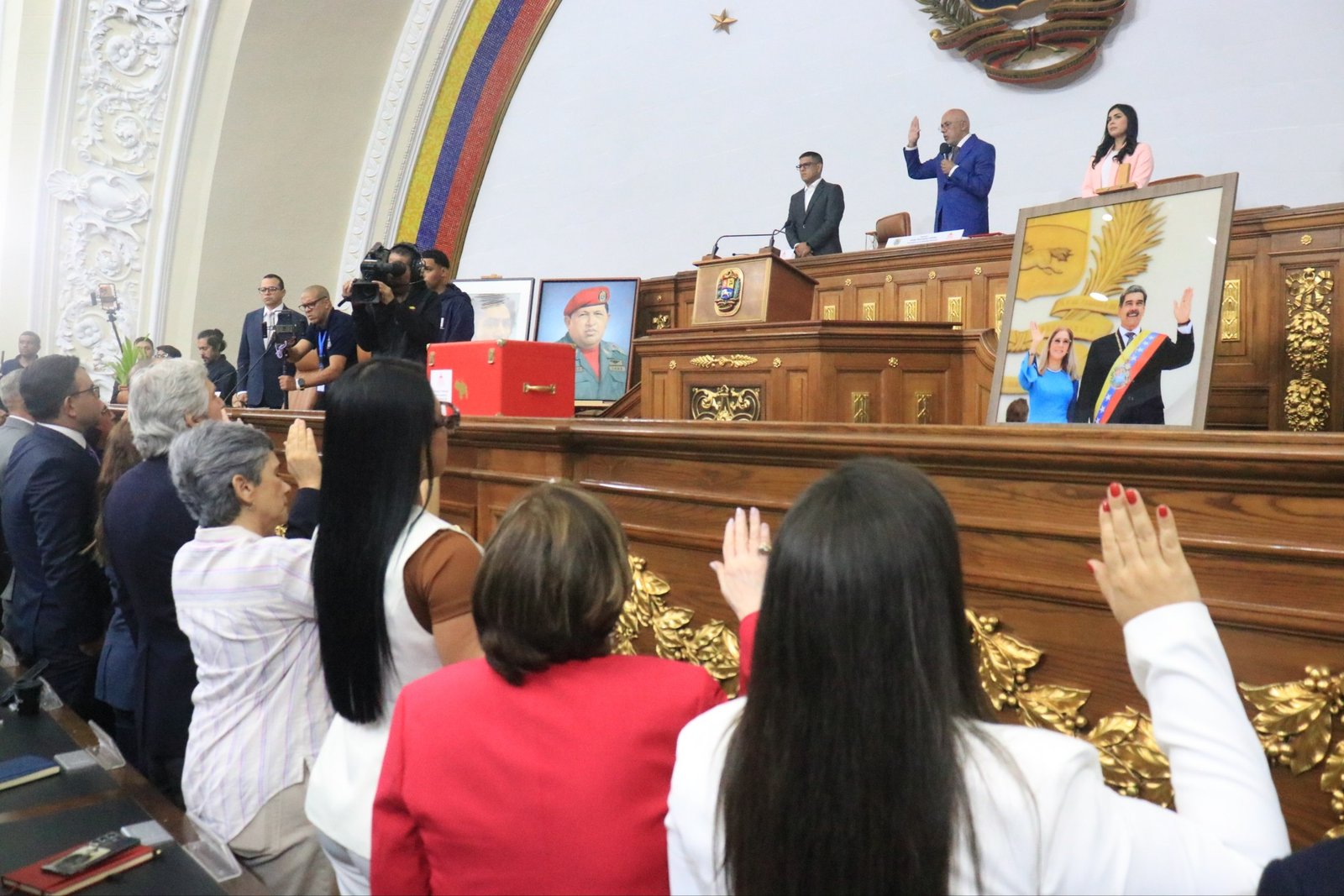
Despite these legislative advances and agreements with international companies such as GE Vernova, the execution of infrastructure works has been slowed by delays in government payments. Photograph: National Assembly website
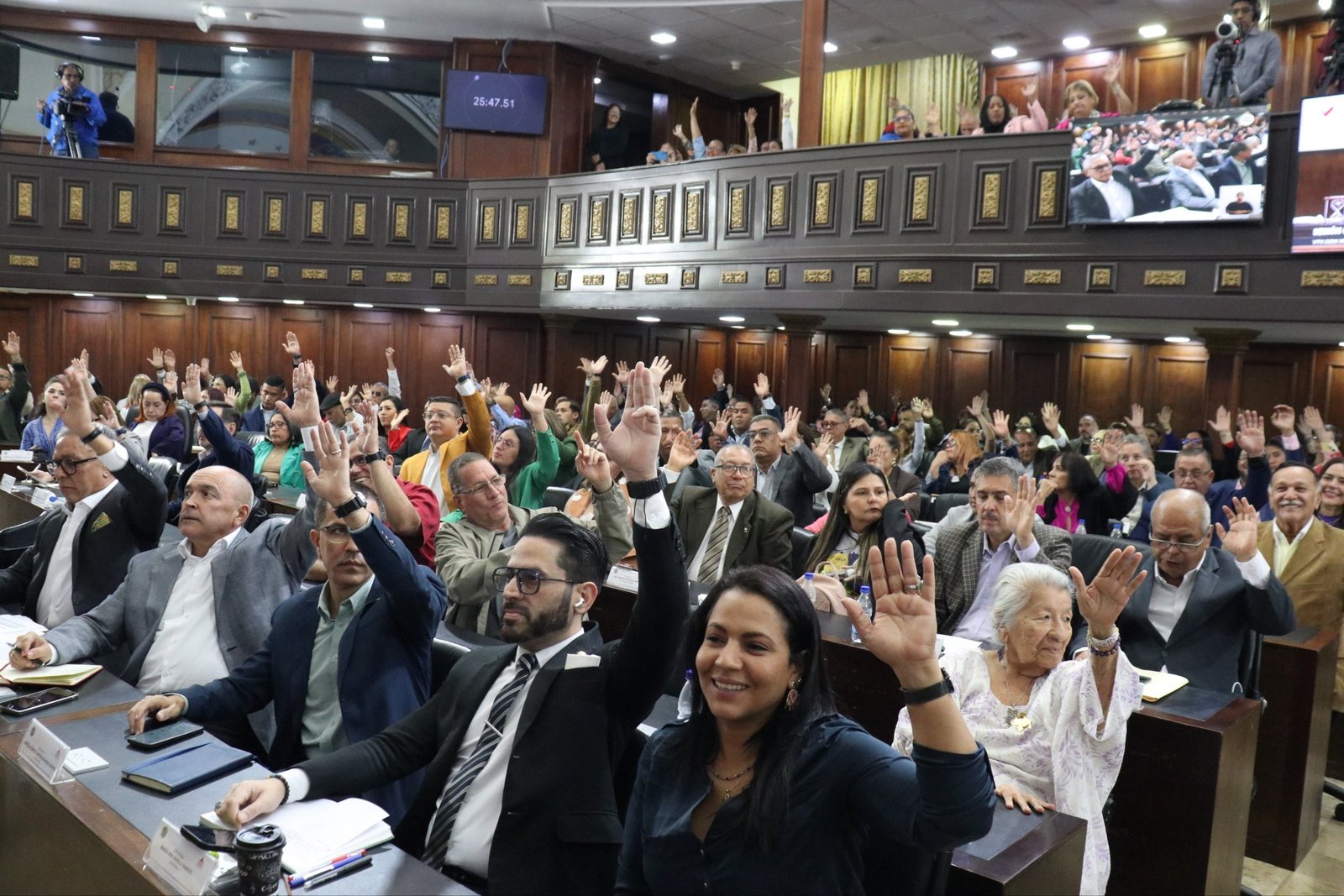
Guacamaya, November 11, 2026. In an ordinary session marked by the speed of the final stretch, the National Assembly of Venezuela unanimously sanctioned the Organic Law of Partial Reform of the Organic Law of the Electric System and Service. The legal instrument, which consists of 119 articles, formally opens the electricity sector to private and foreign capital, putting an end to almost 20 years of state monopoly and centralization.
The approval of this legislation represents the most significant regulatory shift in the matter since the wave of nationalizations of 2007 driven by Hugo Chávez—which included the acquisition of Electricidad de Caracas—and the subsequent promulgation of the Organic Law of the Electric System and Service of 2010, which reserved the entirety of the energy value chain for the State.
In recent months, the National Electric System (SEN) has registered historic demand records of up to 15,579 megawatts (MW), against a constant operating deficit that exceeds 2,000 MW. This gap translates into severe rationing and prolonged outages that sometimes exceed 12 hours in various states of the country.
Meanwhile, the sanctioned legal text comes in a critical context for the population and the Venezuelan economy. The energy deficit affects not only residential communities, but also oil and industrial production hubs in the Orinoco Belt and the Lake Maracaibo basin.
The Path from Debate to Final Sanction
The parliamentary processing of the reform went through different political and technical stages throughout 2026, which ended up extending it for more than five months from its formal submission to the final vote. The journey began last June 2 with the approval in first discussion of the original reform bill of 42 articles (31 modifications and 11 new ones proposed).
The public consultation process began a week later, on June 10, at the headquarters of the Ministry of Electric Energy in San Bernardino, Caracas, in which workers of the National Electric System, the National Electric Corporation (Corpoelec), governors, mayors, engineers, technical energy roundtables and business sectors participated.
The start of the second discussion in the National Assembly was postponed for several months after the tragic seismic events that affected various infrastructures in the country in the middle of the year. However, at the start of the article-by-article debate held in plenary on October 22, the first 13 articles of the bill were approved.
After advances in the discussions, with the inclusion of technical observations raised by opposition parliamentarians (Libertad Group and Democratic Alliance), on November 3, 21 modifications, headings and normative deletions reported by the Permanent Commission on Administration and Services chaired by deputy Pedro Carreño were approved.
On November 5, the progress was characterized by a substantial restructuring, with the approval of 70 normative provisions up to article 95, in a text that repealed 61 articles of the 2010 law and incorporated 65 new ones. Finally, in the fourth and last day of the second discussion, this November 10, the plenary completed the review of the remaining articles and referred it to the National Executive.
The Novelties of the Law
Regarding private and mixed participation, the public service is declared, but the participation of mixed companies (State with >50% of the share capital) and national or foreign private companies in generation and commercialization is enabled. Meanwhile, the State maintains exclusive stewardship over hydroelectric basins, the trunk transmission network and national dispatch.
Concessions are granted by the ministerial entity governing electric energy for up to 15 years, extendable for 15 years and, at the end, the State operates the free reversion of assets built to Corpoelec. Regarding energy self-generation, a special regime is established for primary hydrocarbon activities, with priority dispatch of surpluses to the SEN.
But one of the most significant changes is the creation of the Efficient Cost Technical Tariff, indexed to the currency of greatest value published by the BCV. The explicit discrimination of tariff, subsidy and net amount in the invoice is added. There will also be a Superintendency of the SEN in charge of calculating tariffs, issuing authorizations, supervising service quality and applying administrative sanctions.
The law severely hardens the catalog of pecuniary and administrative penalties. For self-generators and industrialists there are fines of 1,000 to 10,000 times the currency of greatest value of the BCV in case of denying supply during states of emergency. Owners of plants greater than 2 MW that deny support in states of exception will suffer the direct revocation of their authorization.
For general users, offenses such as unauthorized connections, tampering with meters or resale of energy will be sanctioned with fines ranging between 50 and 50,000 times the official exchange rate. In addition, prison sentences of 4 to 8 years are established for anyone who intentionally causes the interruption of service, and 1 to 5 years in prison for businesses and industries that alter or manipulate meters.
The Official Narrative in Defense of the Expansion
After the sanction of the norm, the president of the National Assembly, Jorge Rodríguez, offered statements to the media at the Federal Legislative Palace to establish the position of the ruling bloc and respond to questions about a possible privatization. “The law does not promote in any way the privatization of the National Electric System,” he said.
The head of Parliament asserted that with the legislative advances what is being achieved is “the expansion of the provision of the service.” “The State maintains the permanent obligation to guarantee the service to the population and to vulnerable areas, but space is opened for the private sector to generate, self-generate or import electricity for large consumers, such as industries and shopping centers,” he added.
Rodríguez recalled that in 2007 the nationalization of Electricidad de Caracas did not constitute a dispossession, but rather a “commercial transaction of purchase from known private sectors.” Likewise, he emphasized that the creation of the Superintendency will guarantee oversight against misleading offers and service failures, while tariff indexing will allow self-sustainability without neglecting the subsidy.
The Critical View That Analyzes the Reform
Faced with government enthusiasm, political spokespersons and experts in public policies and administrative law have expressed serious reservations about the real effectiveness of the sanctioned legal text.
Jesús Armas, industrial engineer, political leader and director of the organization Monitor Ciudad, harshly questioned the law’s approach through his account on the X network. “Rodríguez says it does not promote privatization, but although they recognize the failure of the centralist model, they do not let go of control. The Ministry becomes a tollgate and Corpoelec will remain intact,” he stated.
In the specialist’s judgment, the law configures a scheme where the Executive acts as judge and party by appointing the regulatory superintendent, setting tariffs, discretionally granting concessions and competing directly with private parties through its own company, Corpoelec. “With those rules, serious investment does not arrive; what arrives is the kind that has sponsors, that is, the connected ones,” he expressed.
For his part, José Ignacio Hernández, constitutional lawyer, regulatory risk consultant and university professor, offered a technical analysis through his digital channels on the sanctioned text. Hernández acknowledged that the sanctioned law represents a substantial improvement, highlighting as a success the regulation of self-generation to alleviate supply restrictions.
However, the jurist emphasized that the law suffers from a structural diagnostic failure. “The law does not introduce any structural measure that improves governance nor that allows stabilizing the system through effective operating contracts. Therefore, beyond being a palliative measure, the new law does not provide instruments that in the short term manage to stabilize the sector,” he added.
The Clash with Reality: The Financial Gap
The legislative debate contrasts drastically with the figures of the electricity crisis. According to projections from the Venezuelan Association of Electrical, Mechanical Engineering and Related Professions (AVIEM) and energy sector consultants, the integral recovery of the SEN requires a minimum investment of between 24,000 and 40,000 million dollars, articulated in a 10-year master reconstruction plan.
The practical viability of the new legal framework finds its first major obstacle in the case of the U.S. corporation GE Vernova Inc. In September 2026, the firm signed a strategic alliance with Corpoelec and Pdvsa for the rehabilitation of substations, transmission network and thermal generation parks in the country, an agreement finalized after the visit to Caracas of Energy Secretary Chris Wright.
Subsequently, in October, Carlos Mousadi, president of GE Vernova Venezuela, revealed after sending a mission of technicians and engineers to the Venezuelan plants that the condition of the turbines and substations is “quite precarious” due to the impossibility of executing maintenance under manufacturer standards for years, valuing nevertheless the capacity of local personnel.
However, the physical execution of the works was paralyzed. GE Vernova’s global CEO, Scott Strazik, publicly confirmed to Bloomberg agency that repairs in Venezuela are frozen awaiting payments. “Despite having selected the contractors and completed the engineering and planning, this is not a market environment in which we are going to act without receiving payment before starting to do the work,” he said.
Thus, delays in the restructuring of the payment mechanisms of the administration headed by Delcy Rodríguez have slowed the start of individual repair contracts, which demonstrates that the mere promulgation of laws does not guarantee the flow of capital if there are no timely financial settlements.
The Crossroads of the Reform in the Face of the Deficit
The sanction of the Organic Law of Partial Reform of the Organic Law of the Electric System and Service marks a point of no return in the economic policy of the Venezuelan parliament. Given the fiscal incapacity of the State to finance the reconstruction of the SEN, Chavismo has had to pragmatically cede ground that it kept state-controlled for two decades.
However, the distance between the promulgated text and its practical application is anticipated to be complex. With regulatory deadlines of 180 days for the assignment of the National Dispatch Center and the promulgation of the general regulation, one year for the subsidy fund and two years for the user census, the normative framework faces the challenge of generating confidence in the market.
For the common user and the productive sector, the immediate unknown lies in whether indexed tariffs and the entry of private self-generators will manage to stop the wave of blackouts that paralyzes the country, or whether the persistence of political control and the lack of independent safeguards will end up frustrating the promised modernization of the national electric system.