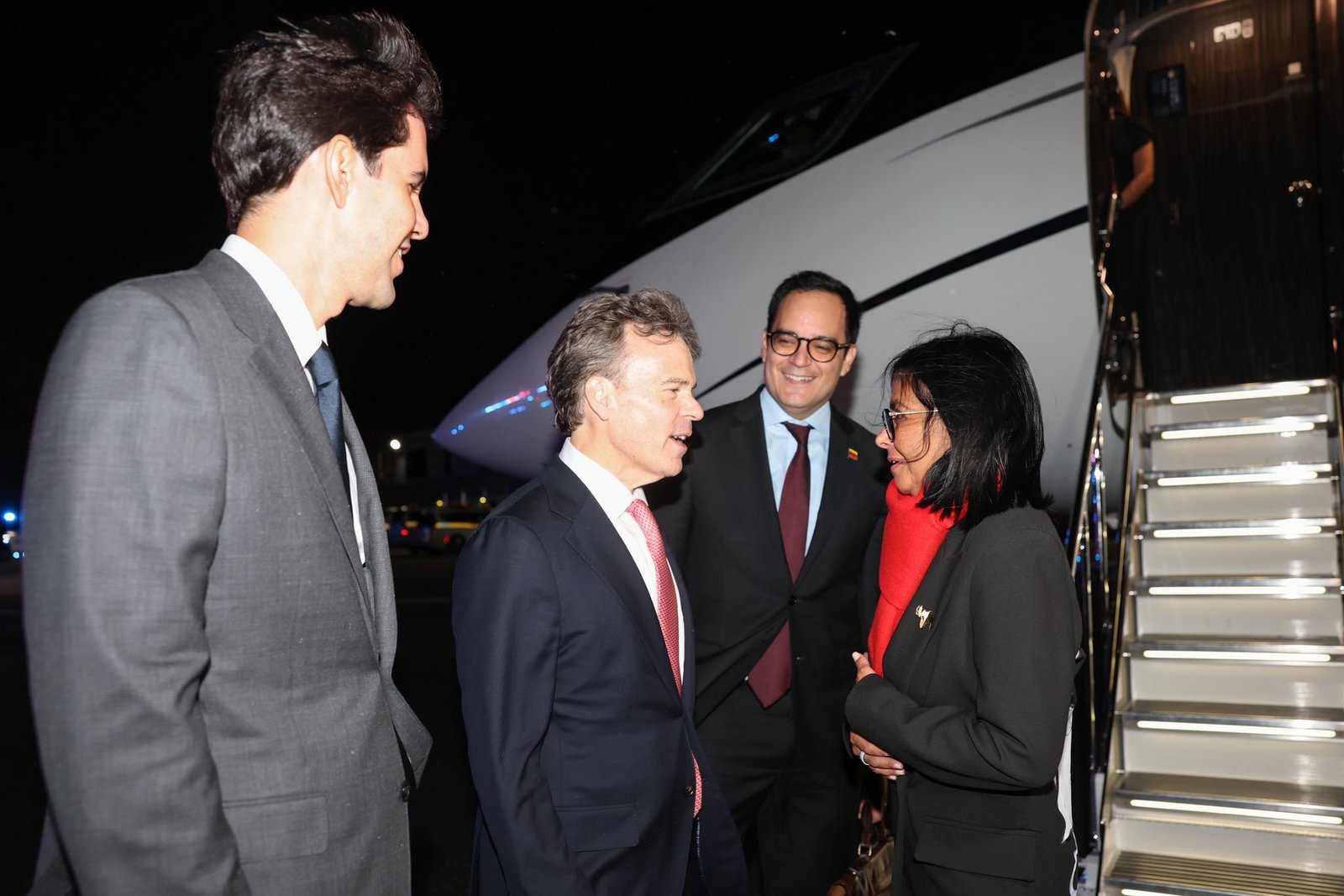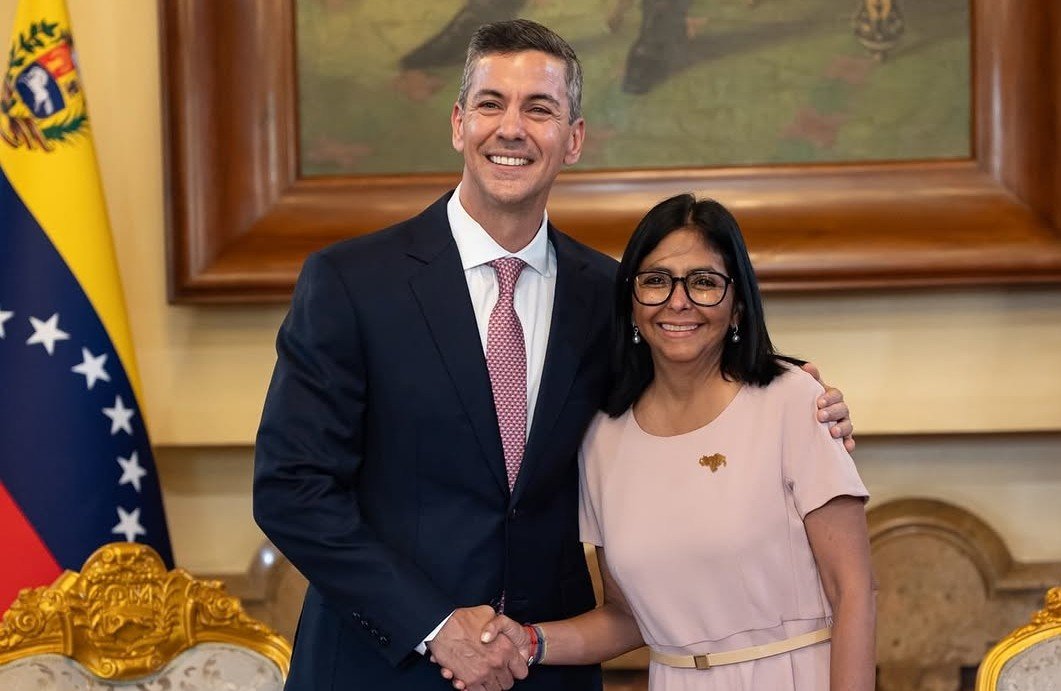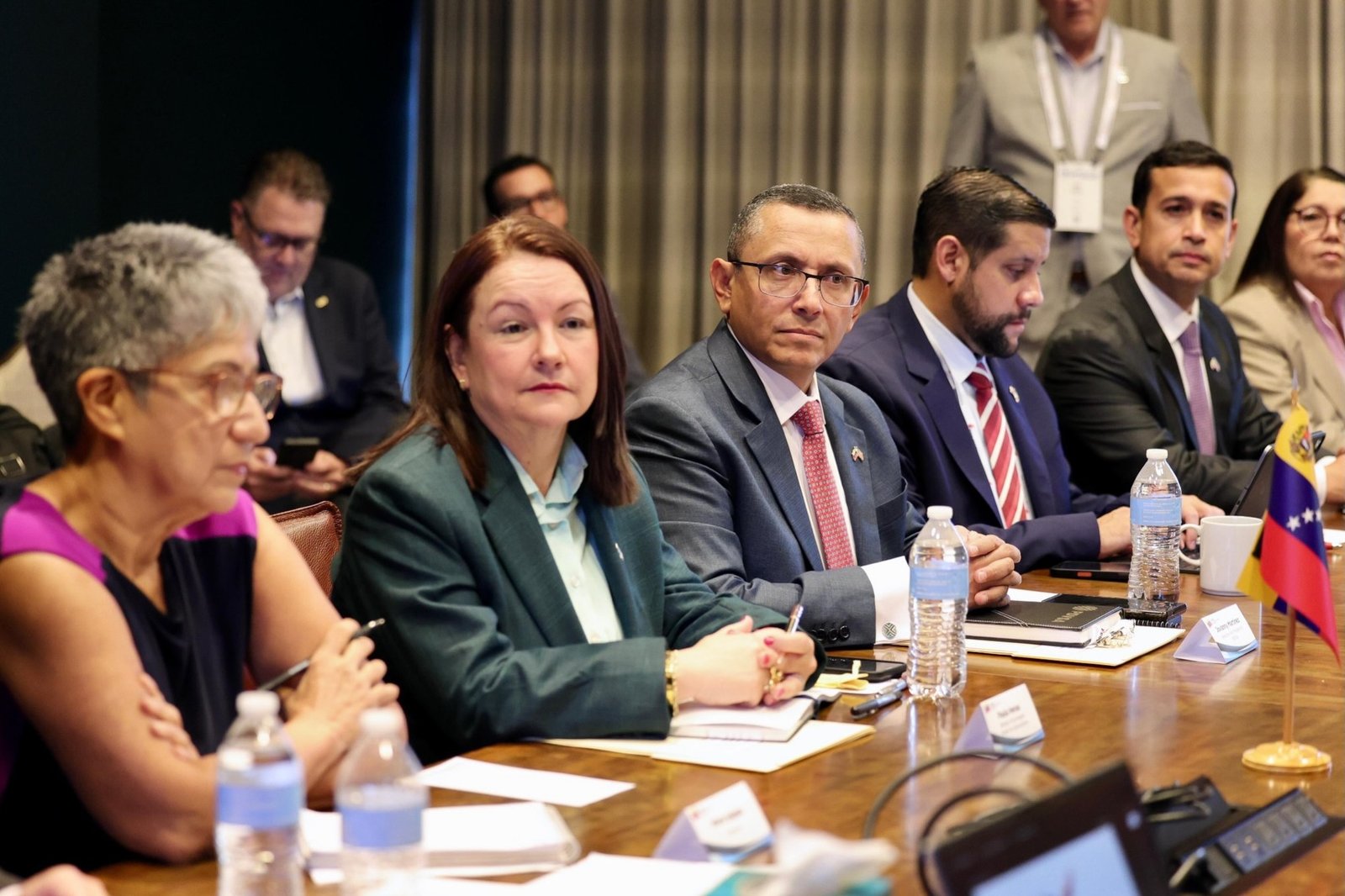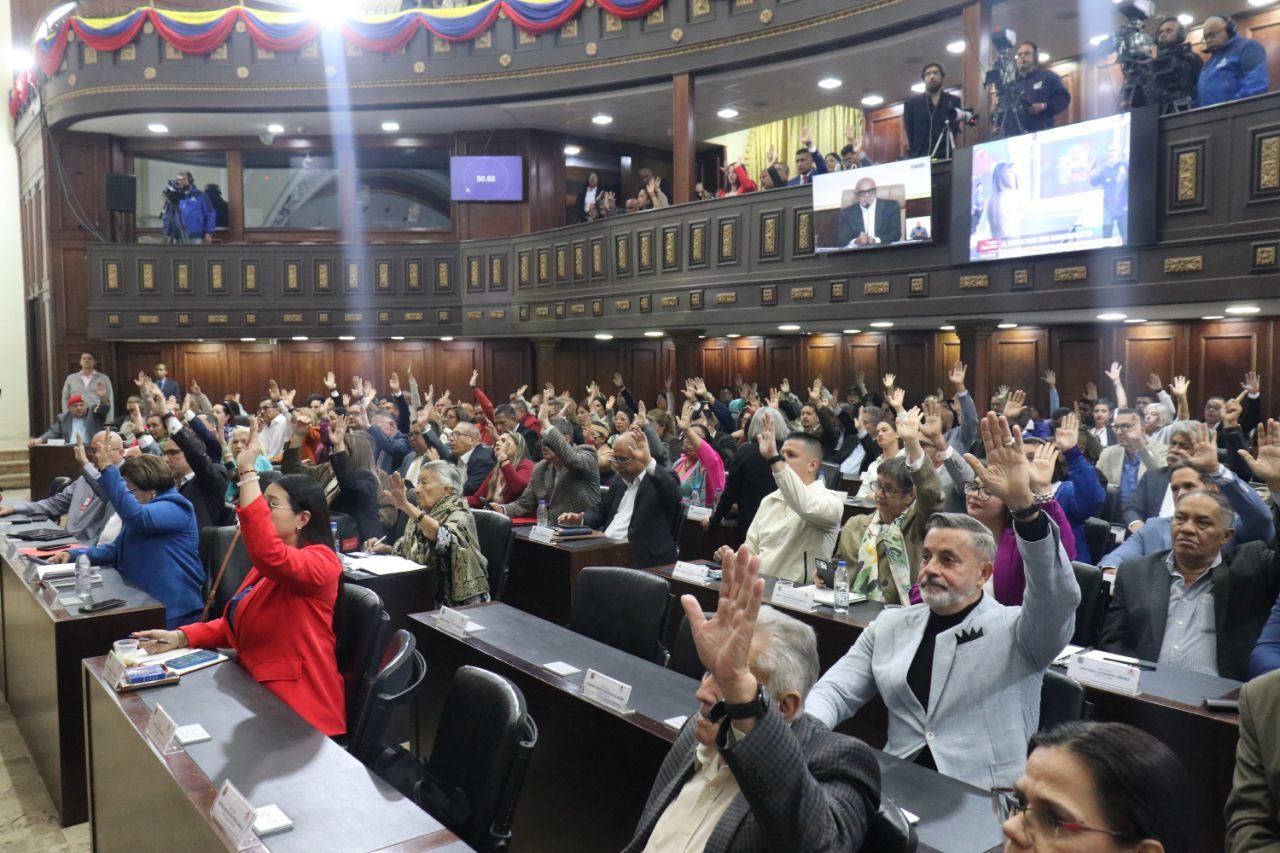
The Parliament approved key decisions in the reconfiguration of the Citizen Power, the Office of the Attorney General, and the diplomatic corps, while also extending oversight of the Amnesty Law / Photo: @Asamblea_Ven
Guacamaya, March 24, 2026. Venezuela’s National Assembly (AN) prioritized key decisions in the country’s institutional restructuring during its ordinary session this Tuesday. Although the continuation of the second debate on the Mining Law was removed from the agenda, the Parliament advanced in administrative and diplomatic appointments, as well as extensions of commissions and deadlines essential to the reorganization of the Public Power.
Among the approved resolutions, the Assembly granted a 48‑hour extension to the Citizen Power Nominations Committee, due to the lack of consensus to appoint the Attorney General and the Ombudsman. The president of Parliament, Jorge Rodríguez, proposed the extension to receive new applicants and reassess pre‑admitted candidates, in a session marked by the resignation of Ernesto Villegas—aligned with the ruling party—as a nominee for the Ombudsman’s Office.
The Attorney General’s Office shifts to a figure close to Delcy Rodríguez
Another highlight was the unanimous approval of Arianny Seijo Noguera as the new Attorney General of the Republic, replacing Reinaldo Muñoz Pedroza after his resignation following 10 years in the position. Seijo, a lawyer graduated from the Central University of Venezuela (UCV), holds international postgraduate studies and has experience in private law firms and public institutions.
It is noteworthy that this appointment was made at the request of acting president Delcy Rodríguez, since the position falls under the authority of the Executive Branch. Seijo Noguera previously served as an external advisor to the Attorney General’s Office and as legal counsel for Petróleos de Venezuela (Pdvsa), underscoring her close ties to Delcy since her tenure at the Ministry of Hydrocarbons.
Diplomatic reshuffling in the region and a new Venezuela–U.S. parliamentary group
In the diplomatic sphere, the AN appointed Rubén Darío Molina as ambassador to Nicaragua and Ramón Orlando Maniglia as ambassador to Colombia, aiming to strengthen regional integration. Molina is a career Venezuelan diplomat with a trajectory centered in the Foreign Ministry and multilateral‑regional affairs. Maniglia, meanwhile, served as Chávez’s Minister of Defense and had been ambassador to Germany since 2014.
The Parliament also authorized the appointment of deputy Mervin Maldonado as acting head of the Great Mission Return to the Homeland (GMVP), a Foreign Ministry‑affiliated program that manages the repatriation of Venezuelans abroad. The initiative had been led by Camilla Fabri, wife of businessman Álex Saab, a key figure in the business and logistics network close to Maduro.
In the realm of parliamentary diplomacy, deputy Antonio Ecarri (Lápiz / Nacional) proposed the creation of the Venezuela–United States Parliamentary Friendship Group, which received the approval of AN president Jorge Rodríguez. Rodríguez tasked Ecarri and first vice president Pedro Infante (PSUV / Miranda) with coordinating its formation.
Extension and oversight: Parliament recalibrates the amnesty process
The session extended for 30 days the mandate of the Special Commission for Monitoring the Amnesty Law, following the review of 123 applications from Venezuelans abroad. Jorge Rodríguez revealed that only 22% (27 cases) had valid judicial requirements, urging the commission to maintain “rigor” to defend Venezuela’s “legal sovereignty.”
Jorge Arreaza, president of the Special Commission for Monitoring the Amnesty Law for Democratic Coexistence, reported that Venezuelan courts have granted 8,084 full releases under the law enacted in February 2026. Of these, 7,782 individuals were under precautionary measures and 302 were in actual detention.
The updated total reflects an increase of 16 new amnesties since Arreaza’s previous report on March 20. However, tensions persist: activist Javier Tarazona reported that a court denied him amnesty, illustrating potential inconsistencies in the law’s application.
Among other complementary developments, deputy Oliver Rivas (PSUV / Guayana Esequiba) assumed the presidency of the Permanent Commission on Ecosocialism, replacing Jacqueline Farías, who now heads the Ministry of Transportation. The session thus reflected an emphasis on administrative continuity in filling vacant responsibilities.
This Tuesday’s session confirmed the momentum of the institutional restructuring promoted by the Executive, while exposing challenges in external legitimacy and internal consensus. Meanwhile, Parliament continues to serve as an institutional channel among active political actors and seeks to project an image of “dialogue” and “openness” toward external stakeholders.